How To Clean A Washing Machine Door – Guide
To clean your washing machine door, start by wiping the outside and rubber seals with a damp microfiber cloth after each use. Pull back the seal and remove debris with a small brush. Then spray a vinegar-water solution on stubborn stains or mold.
Scrub gently and dry thoroughly to prevent mildew and odors. Leave the door open to air out moisture. Run monthly hot water cycles with vinegar to maintain freshness.
Proper routine care keeps your machine efficient. Following more detailed steps can guarantee thorough maintenance.
Why You Should Clean Your Washing Machine Door
Although you mightn’t notice it, cleaning your washing machine door regularly prevents mold, mildew, and bacteria buildup on the rubber seals and door surfaces. Dirt, detergent residue, and moisture trapped in these areas cause odors and stains on your clothes.
If you neglect this cleaning, grime accumulates, compromising the hygiene of the appliance and risking damage to the seals. Over time, damaged rubber seals may lead to leaks, reducing the machine’s efficiency and lifespan.
Maintaining clean door surfaces and gaskets minimizes mold growth, preserves seal integrity, and supports efficient washing conditions. By prioritizing this task, you guarantee a hygienic environment inside the machine, prevent unpleasant odors, and avoid costly repairs linked to seal deterioration and leaks.
Tools and Products Needed to Clean the Door
Before you begin cleaning your washing machine door, gather essential tools and products to guarantee an efficient and thorough process. You’ll need items designed to tackle grime and stubborn stains, especially around the door seal. Here’s what to prepare:
Prepare essential tools to efficiently clean grime and stubborn stains from your washing machine door, focusing on the door seal.
- Two microfiber cloths: one for applying cleaning solutions and one for drying to avoid moisture buildup.
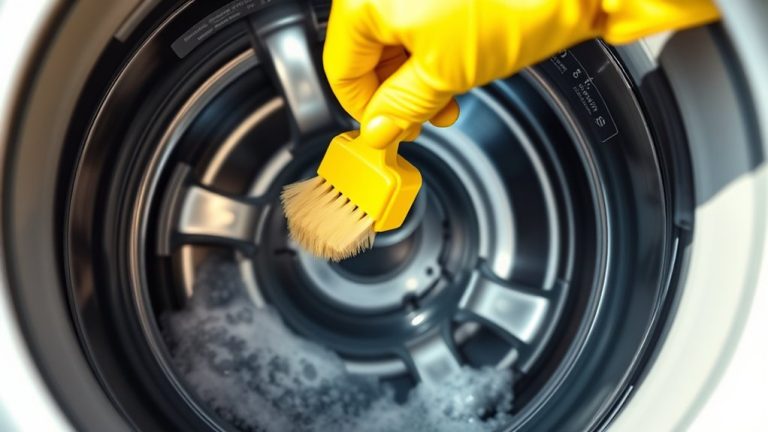
- A small brush: perfect for scrubbing hard-to-reach crevices and the door seal.
- Cleaning solutions: use either white vinegar or a specialized appliance cleaner to disinfect and break down grime.
- A shallow basin: for soaking cloths, helping to remove stubborn stains effectively.
Wearing rubber gloves is also recommended to protect your skin from harsh chemicals during cleaning. It makes the whole process safer and more comfortable.
How to Clean the Washing Machine Door (Inside and Outside)
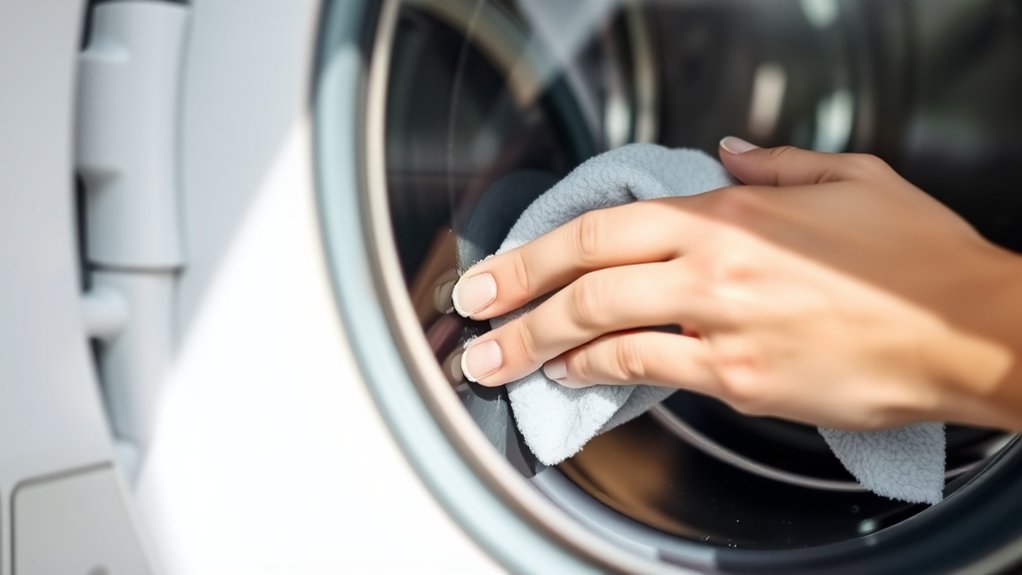
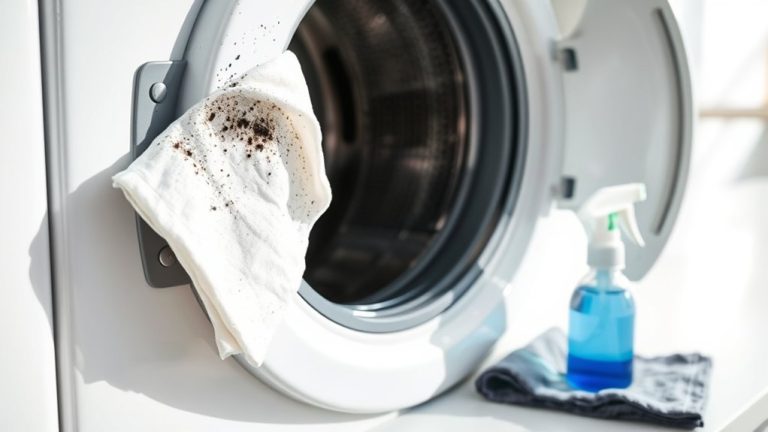
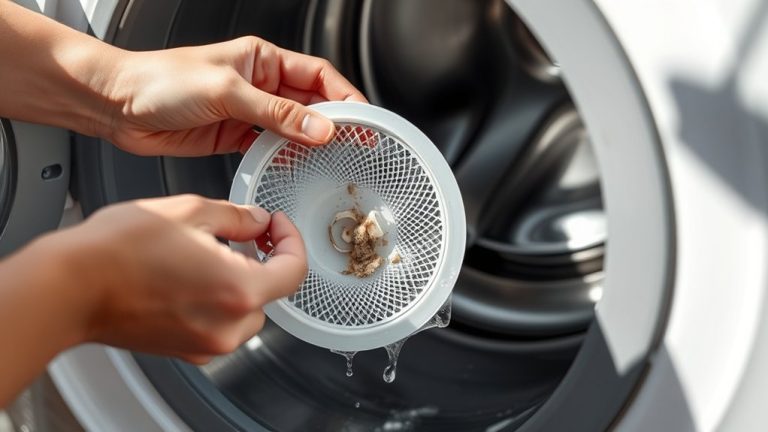
First, pull back the rubber seal on your washing machine door and wipe away any trapped debris and moisture with a damp cloth or a disinfectant wipe. It’s important to get in there carefully to remove all the gunk.
Then, move on to cleaning the outside of the door. Use some mild soap and water, and try to avoid harsh chemicals since they can damage the finish.
Once you’ve wiped everything down, make sure to dry the door and gasket thoroughly with a microfiber cloth. This step helps prevent mold and mildew from building up, keeping your machine fresh and clean.
Cleaning Door Seals
When cleaning the washing machine door, pay close attention to the rubber door seal, as it often traps mold, detergent residue, and debris. The door seal, or rubber gasket, requires regular mold removal and stain removal to maintain hygiene and functionality.
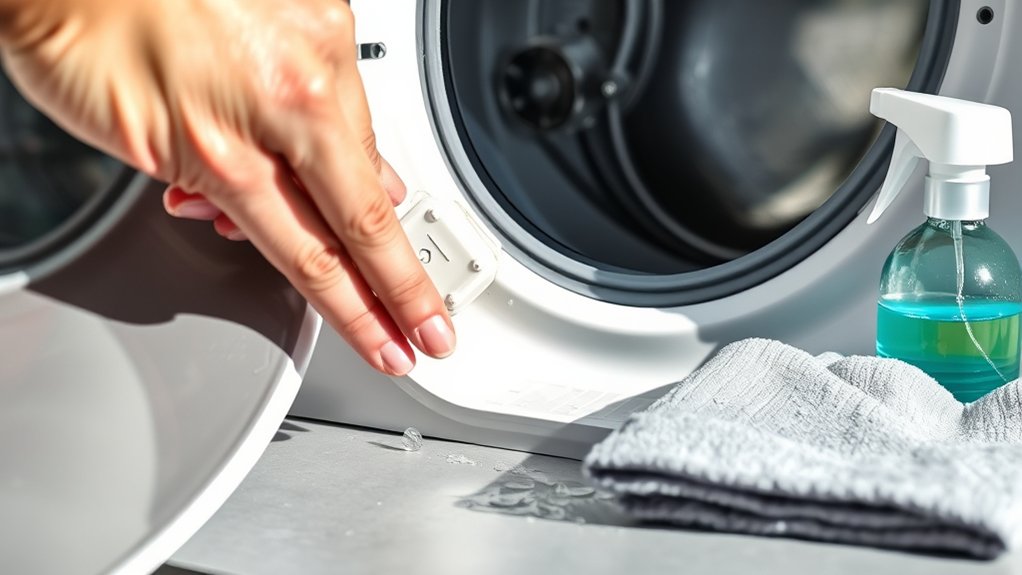
Follow these steps: Wipe the door seal with a damp cloth or disinfectant wipe to remove surface grime. Spray a cleaning solution of equal parts white vinegar and water on stubborn stains; let it sit for 10 minutes before wiping. Use a soft brush to scrub inside the folds to dislodge dirt and prevent mold buildup.
Make sure the seal is completely dry and inspect it for any damage. This helps preserve an airtight, odor-free seal. Proper care prevents mold buildup and extends the seal’s lifespan.
Wiping Exterior Surfaces
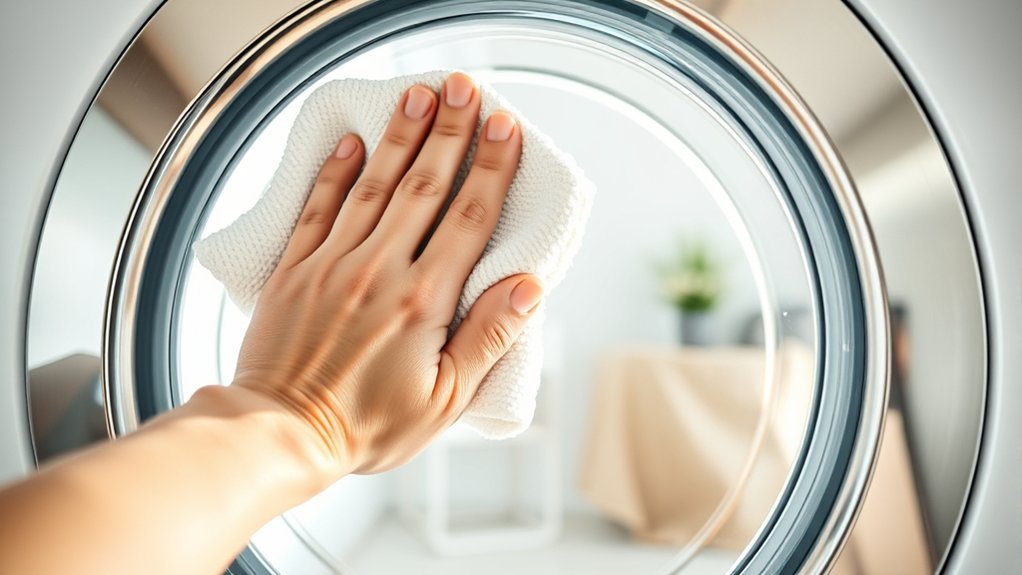
After thoroughly cleaning the door seal, focus on the exterior surfaces of the washing machine door to keep it looking good and working well. Use a damp microfiber cloth to wipe down all exterior surfaces, including the door handle and control panel.
If you come across stubborn stains or smudges, just apply a small amount of all-purpose cleaner to the cloth before wiping. Avoid abrasive scrubbers or harsh chemicals since they can damage the door’s finish.
Make sure to clean every accessible area to prevent dirt buildup and keep the exterior nice and clean. Once you’ve wiped everything down, dry the surfaces thoroughly with a clean, dry cloth to prevent water spots and keep that polished look.
Doing this regularly will help your washing machine door stay looking pristine and functioning smoothly.
Removing Mold From the Rubber Gasket and Door Seals
Because mold tends to thrive in the folds of rubber gaskets and door seals, especially in front-loading washers, you’ll need to tackle these areas carefully. For effective mold removal, wear rubber gloves and follow a precise cleaning method.
Mold hides in rubber gaskets of front-loaders; wear gloves and clean carefully for best results.
Soak a cloth in a water and white vinegar solution to disinfect the rubber gasket and door seals. Use a scrub brush or toothbrush to reach crevices, loosening mold and detergent buildup.
Then, thoroughly dry the gasket and seals with a clean cloth to prevent mold re-growth.
Make it a habit to inspect and wipe down these areas after each wash. This routine helps keep your washing machine clean, safe, and mold-free. Plus, it extends the lifespan of the rubber gasket and door seals.
Cleaning Soap Scum and Debris From Door Crevices
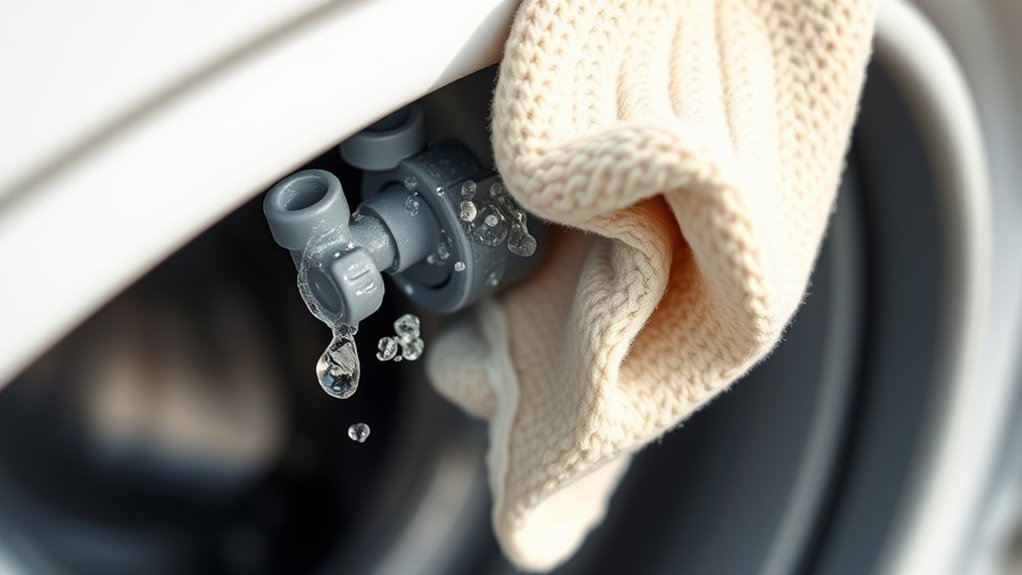
Maintaining the cleanliness of your washing machine door involves more than just addressing mold on the rubber gasket and seals. Focus on cleaning soap scum and debris from the door crevices to prevent buildup.
Use a damp cloth or an old toothbrush to scrub the crevices, especially around the rubber door seal. Pull back the seal to expose hidden mold and dirt, then wipe thoroughly.
Apply a mixture of equal parts vinegar and water to loosen soap residue and mineral deposits. For stubborn residue, spray a mild bathroom cleaner or mold remover onto the crevices and let it sit briefly before scrubbing again.
Always rinse the area with a damp cloth to remove all cleaning agents and residue. This will help keep the door free of soap scum and debris, making sure your washing machine stays fresh and clean.
Tips for Preventing Odors and Mold Around the Washing Machine Door
If you want to prevent odors and mold around your washing machine door, start by leaving the door open after each use to let moisture evaporate. This simple step reduces mildew growth and keeps the damp environment at bay.
Focus on the door gasket and rubber seal, where moisture and detergent residue often accumulate.
Wipe the rubber seal regularly with a damp cloth to remove buildup and support mold prevention. Apply mold-resistant sprays on the door gasket to inhibit mold spores and enhance odor control.
Always dry the gasket and surrounding areas thoroughly before closing the door to discourage mildew growth.
Run a monthly hot water cycle with vinegar or a commercial cleaner to eliminate odor-causing bacteria and maintain cleaning effectiveness.
These cleaning tips will help keep your washing machine door fresh and mold-free. Give them a try and notice the difference!
How Often to Clean Your Washing Machine Door for Best Results
You should clean your washing machine door and seals at least once a month to keep mold and odors at bay.
But if you start noticing any buildup or a musty smell, it’s a good idea to step up your cleaning routine to every two weeks.
Keeping up with regular maintenance not only helps with hygiene but also makes your machine last longer.
Cleaning Frequency Guidelines
How often should you clean your washing machine door to keep it in ideal condition? Establishing a consistent cleaning frequency is crucial for odor prevention and avoiding mold and mildew buildup, especially around door seals and rubber gaskets.
Follow these cleaning guidelines to maintain optimal hygiene: perform regular cleaning of the washing machine door, including seals and gaskets, at least once every 30 days.
If your machine tends to develop odors or you notice visible mold, increase the frequency to weekly.
For persistent stains or odors, clean the door every two weeks.
Also, adjust your maintenance schedule based on how often you use the washer—machines that run more frequently need more attention.
Sticking to this cleaning routine helps keep your washing machine door fresh and functional. It reduces residue buildup and can even extend the life of your appliance.
Signs to Clean Sooner
Although a monthly cleaning schedule suits most situations, certain signs indicate you should clean your washing machine door sooner to maintain ideal hygiene. If you notice mold, mildew, or soap scum buildup around the rubber gasket, increase your cleaning frequency immediately.
Inspect the door and gasket after each wash; visible mold, sticky residue, or discoloration require prompt disinfecting to prevent odors and residue accumulation. Heavy or soiled laundry loads accelerate mold growth, demanding more frequent cleaning.
Persistent musty odors also signal the need to clean sooner. Address these signs by thoroughly cleaning and disinfecting the door and rubber gasket to maintain the best hygiene. Ignoring these indicators compromises cleanliness and promotes microbial growth, so adjust your cleaning frequency based on these observable conditions.
Benefits of Regular Cleaning
Recognizing signs that demand more frequent cleaning helps maintain your washing machine door’s condition. But sticking to a regular cleaning schedule delivers consistent benefits. Cleaning the door and door seal at least once a month prevents mold, mildew, and detergent buildup.
This proactive maintenance reduces odor and residue accumulation. It also ensures leak prevention and gives you the best appliance care.
Regular cleaning benefits include:
- Preventing mold and mildew growth on the door seal
- Minimizing detergent residue that impairs sealing function
- Reducing unpleasant odors caused by trapped moisture
- Extending appliance lifespan through consistent maintenance
Maintaining a Fresh and Odor-Free Washing Machine Door
To maintain a fresh and odor-free washing machine door, you should regularly wipe the door and rubber seals with a damp cloth. This helps remove detergent residue and prevent mold growth.
After each use, leave the door open to promote air circulation and let moisture evaporate. It really makes a difference in keeping things dry and fresh.
Use a vinegar solution weekly to clean door seals and rubber gasket areas. This helps eliminate mold and mildew before they become a problem.
Make sure to thoroughly dry all surfaces with a microfiber cloth. Reducing dampness discourages bacteria from settling in.
Also, avoid leaving wet laundry inside the machine. That’s a quick way to cause persistent odors and damage.
Establish a consistent cleaning routine—it’s the best way to keep your washing machine door fresh and working well.
| Task | Tool/Material | Frequency |
|---|---|---|
| Wipe door & seals | Damp cloth | After each use |
| Clean with vinegar | Vinegar solution | Weekly |
| Dry gasket & door | Microfiber cloth | After each use |
Frequently Asked Questions
Can I Use Bleach to Clean the Washing Machine Door?
Yes, you can use bleach to clean your washing machine door, but only if your machine’s manual confirms it’s safe. Always dilute the bleach properly and apply it with a damp cloth or spray to avoid damage.
Try not to overdo it, since too much bleach can cause rubber seals to crack or discolor. After cleaning, make sure to rinse thoroughly to get rid of any bleach residue that might harm your clothes or the machine.
Is It Safe to Clean the Door With a Pressure Washer?
No, you shouldn’t use a pressure washer to clean the washing machine door. The high pressure can damage rubber seals and force water into electrical parts. This risks mold growth or electrical shorts.
Instead, use a damp cloth or a soft brush.
If you really have to use a pressure washer, make sure to set it to the lowest pressure. Also, avoid spraying seals, hinges, or any electrical areas. This helps prevent damage and leaks.
How Do I Fix a Leaking Washing Machine Door Seal?
About 30% of washing machine leaks come from door seal issues. To fix yours, start by checking the rubber gasket for any cracks or tears.
Give it a good clean with a damp cloth and some mild detergent to get rid of mold and residue.
Make sure the door closes tightly when you use the machine.
If you find damage that cleaning won’t fix, go ahead and replace the seal. This will stop leaks and keep your washer working well.
Can Washing Machine Door Cleaning Prevent Mechanical Issues?
Yes, cleaning your washing machine door regularly prevents mechanical issues. You’ll stop mold, mildew, and detergent residue from building up around the seal, which can cause leaks and damage.
Dirt removal reduces corrosion risks on moving parts and helps the door seal properly, lessening motor strain.
Plus, you’ll spot early wear or damage, allowing you to fix problems before they lead to costly breakdowns. Consistent cleaning is essential maintenance.
It’s a simple step that can save you a lot of trouble down the line.
Are There Eco-Friendly Alternatives to Vinegar for Cleaning?
Yes, you can use baking soda to deodorize and gently clean your washing machine door.
Lemon juice works well as a natural disinfectant and removes soap scum.
Diluted castile soap provides a mild, biodegradable option for cleaning seals and surfaces.
Hydrogen peroxide disinfects effectively without vinegar’s acidity.
Plus, plant-based commercial cleaners offer safe, eco-friendly alternatives.
Choosing these options helps you keep things clean without harsh chemicals or vinegar’s strong odor.
Conclusion
By regularly cleaning your washing machine door, you’ll keep grime and mold from building up like shadows in a forgotten corner. Picture a spotless door seal, free from soap scum and odor. This ensures each wash feels fresh and efficient.
With simple tools and consistent care, you maintain not just cleanliness but the machine’s performance. Make this routine part of your maintenance. Your washing machine will stay in peak condition, ready for every load.