How To Clean Rubber Gasket In Washing Machine – Easy Guide
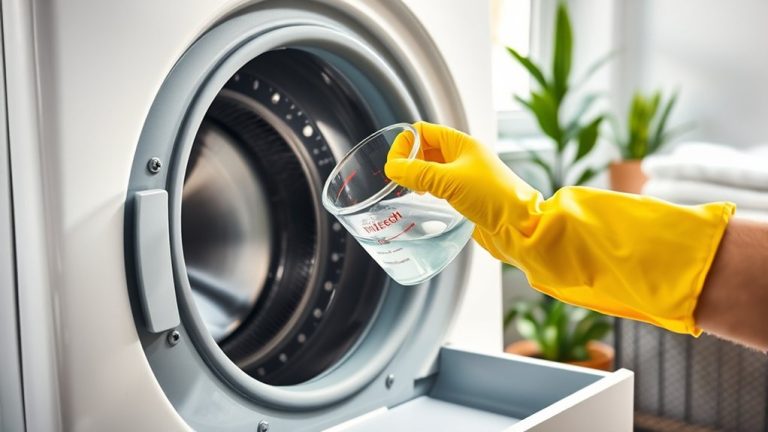
To clean your washing machine’s rubber gasket, start by unplugging the machine and inspecting the folds for dirt and mold. Use rubber gloves and a soft cloth with an all-purpose cleaner or diluted bleach for tough stains. Wipe away grime, rinse with warm water, and dry thoroughly to prevent moisture buildup.
Keep the door open after use to promote airflow. Also, regularly wipe the gasket dry to avoid mold. These simple steps help keep your washer fresh and efficient.
Stick to this routine and you’ll maintain a clean gasket. Plus, you can explore deeper tips for ongoing care to make your machine last longer.
Why Cleaning Your Washer Gasket Is Important
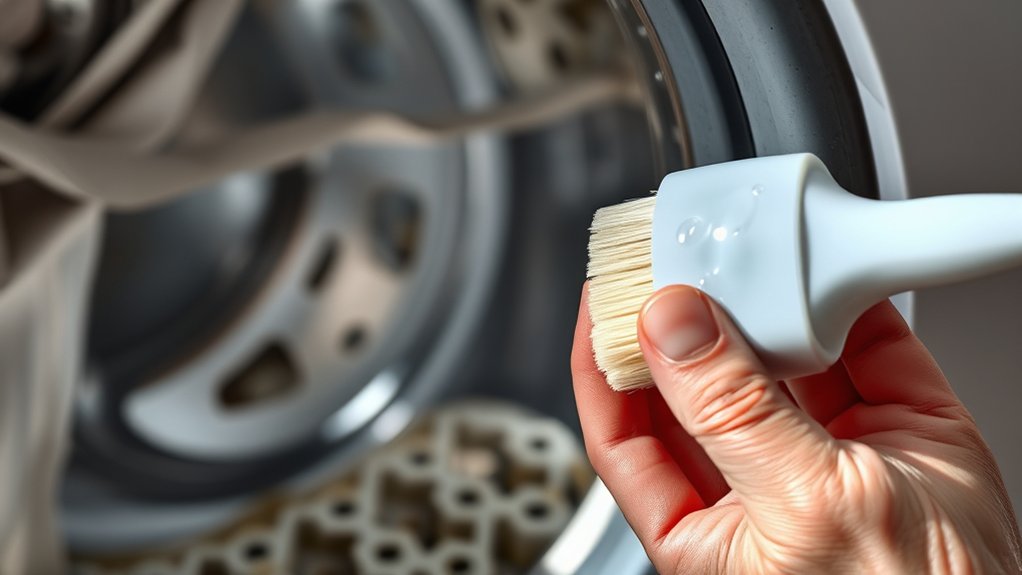
Although it’s easy to overlook, cleaning your washer gasket regularly is crucial to prevent mold and mildew buildup caused by trapped moisture.
When you clean the rubber seal, you effectively prevent mold growth that can compromise your machine’s efficiency and cause unpleasant odors. These odors often transfer to your laundry, ruining the fresh smell you expect.
Regular maintenance helps maintain performance by avoiding leaks and mechanical issues linked to damaged seals. By eliminating accumulated dirt and bacteria, you guarantee a hygienic laundry experience for your household.
Regular maintenance prevents leaks and mechanical issues, ensuring a clean, hygienic laundry experience for your home.
Consistently caring for the gasket also helps extend the lifespan of your washing machine, reducing the risk of costly repairs or premature replacement.
So, make it a habit to clean your washer gasket. It’s a simple step that keeps your appliance running effectively and your laundry smelling fresh.
Prioritize gasket cleaning—it really makes a difference!
What Causes Dirt and Mold Buildup on Your Gasket
You’ll often see dirt and mold building up on your gasket because washing at low temperatures lets detergent residue stick around.
When you use too much detergent, it leaves behind soap scum that traps grime.
Plus, moisture and debris tend to gather in the rubber seal over time.
All of this creates the perfect environment for mold to grow and cause unpleasant odors if you don’t take care of it.
Low Temperature Washing
When you wash clothes at low temperatures, detergent residues and dirt don’t get removed effectively, causing buildup on the rubber gasket.
Low temperature washing often leaves behind detergent residue that the rubber seal needs to stay clean and functional. This residue, combined with trapped moisture, creates an ideal environment for mold and mildew to thrive.
To prevent the growth of these contaminants and keep your washing machine’s gasket in good condition, use periodic hot water cycles to break down residues and sanitize the gasket.
Also, make sure to rinse thoroughly to minimize soap scum and lint accumulation.
After each cycle, leave the door open to allow moisture to evaporate.
Following these steps helps prevent mold and mildew buildup and keeps the rubber seal in good shape.
Excess Detergent Residue
Since using too much detergent overwhelms your washing machine’s ability to rinse effectively, excess residue often accumulates on the rubber gasket. This soap scum buildup creates an ideal environment for mold growth, especially when combined with hard water deposits.
Washing at low temperatures and inadequate rinsing cycles worsen this problem by leaving detergent behind.
To prevent excess detergent residue, use the correct detergent type and amount suited for your machine and water hardness. Proper maintenance includes regularly cleaning your washing machine’s gasket to remove any soap scum and residue before mold takes hold.
By controlling detergent use and following recommended washing settings, you minimize buildup. This helps ensure the rubber gasket stays clean and mold-free.
Plus, it extends your machine’s lifespan and keeps everything hygienic.
Moisture And Debris
Although rubber gaskets are designed to seal tightly, trapped moisture creates a perfect breeding ground for mold and mildew, especially in front-loading washers.
Excess moisture in the folds of the rubber seal encourages mildew growth, which leads to unpleasant odors and stains.
To keep your gasket clean and functional, focus on these key points:
- Residual soap and detergent build-up mix with dirt and debris, worsening contamination.
- Low-temperature washes fail to kill bacteria, increasing mold risks.
- Lint and fabric particles accumulate, trapping moisture.
Use soap and water regularly to perform a thorough rubber seal clean, preventing mildew growth.
Following these cleaning tips will help you maintain a hygienic washer environment and extend the life of your front load washers’ gasket.
What You Need to Clean Your Washer Gasket
You’ll want to grab some rubber gloves, a soft cloth, warm water, and an all-purpose cleaner to get started on cleaning your washer gasket.
If you come across tougher stains, mixing up a diluted bleach solution can really help break down mold and grime safely.
Just remember to always wear your protective gear and have the right cleaning solutions on hand to keep things effective and safe.
Essential Cleaning Supplies
Gathering the right cleaning supplies is essential for effectively removing dirt and mold from your washing machine gasket. To maintain your washer and prevent moisture buildup, you’ll need a few essential cleaning supplies.
Start with a soft cloth to gently scrub the gasket without damaging it. Use an all-purpose cleaner combined with warm water to break down grime and residue efficiently. For persistent stains, a diluted bleach solution works well. Let it sit for five minutes before rinsing thoroughly.
Finally, a dry towel is necessary to wipe the gasket completely dry, preventing mold growth.
Your checklist includes:
- Soft cloth and dry towel
- All-purpose cleaner and warm water
- Optional bleach solution for tough stains
Having these supplies ready guarantees a thorough, effective gasket cleaning.
Protective Gear Needed
A key step in cleaning your washer gasket safely involves wearing the right protective gear. Start by wearing gloves to shield your hands from mildew, mold, and harsh cleaners. Use a soft cloth or sponge to clean the rubber surface gently, preventing scratches.
If you use spray cleaners, put on eye protection to avoid irritation from splashes. For strong-smelling agents like bleach, a mask is advisable, especially if you’re sensitive to odors.
Make sure the area is well-ventilated by opening windows or running a fan to minimize inhalation of fumes.
This protective gear combination helps you clean effectively while safeguarding your skin, eyes, and respiratory system from potential hazards during the gasket cleaning process. It’s a simple way to keep yourself safe and get the job done right!
Recommended Cleaning Solutions
Protecting yourself with gloves and proper ventilation sets the stage for effective cleaning.
But choosing the right solutions makes all the difference in removing grime and mold from your washer gasket.
To wipe away detergent residue and tackle tough stains on the rubber door seal, consider these options: use an all-purpose cleaner to remove grime and detergent residue efficiently.
You can also apply a diluted bleach solution for tough stains and mold. Just let it sit for 5 minutes before rinsing.
Another great option is spraying Dettol Mould and Mildew Remover, which is designed specifically to eliminate mold growth on rubber seals.
For routine cleaning of your washer, mix equal parts water and mild detergent for gentle scrubbing.
Regularly using Dettol Washing Machine Cleaner helps maintain gasket cleanliness and freshness. This prevents buildup and keeps your machine running smoothly.
How to Inspect and Prepare the Gasket for Cleaning
Before you start cleaning, unplug your washing machine and make sure the drum is empty to avoid any accidents.
Next, take a close look at the rubber gasket, especially its folds, because that’s where dirt and debris usually hide.
Inspect the rubber gasket folds carefully, as they often trap hidden dirt and debris.
Check for signs of mold like black spots or discoloration, paying special attention to the edges of the gasket. Also, look out for any cracks or tears that might cause leaks or make your machine less efficient.
Catching these problems early helps you decide if cleaning is enough or if you need to replace the gasket.
Once you’ve inspected everything, gather your cleaning supplies like a soft cloth, all-purpose cleaner, and gloves.
This way, you’ll be ready to clean safely and effectively. Taking these steps ensures you don’t miss any trouble spots and keeps your machine running smoothly.
How to Remove Dirt, Grime, Mold, and Mildew From Your Gasket
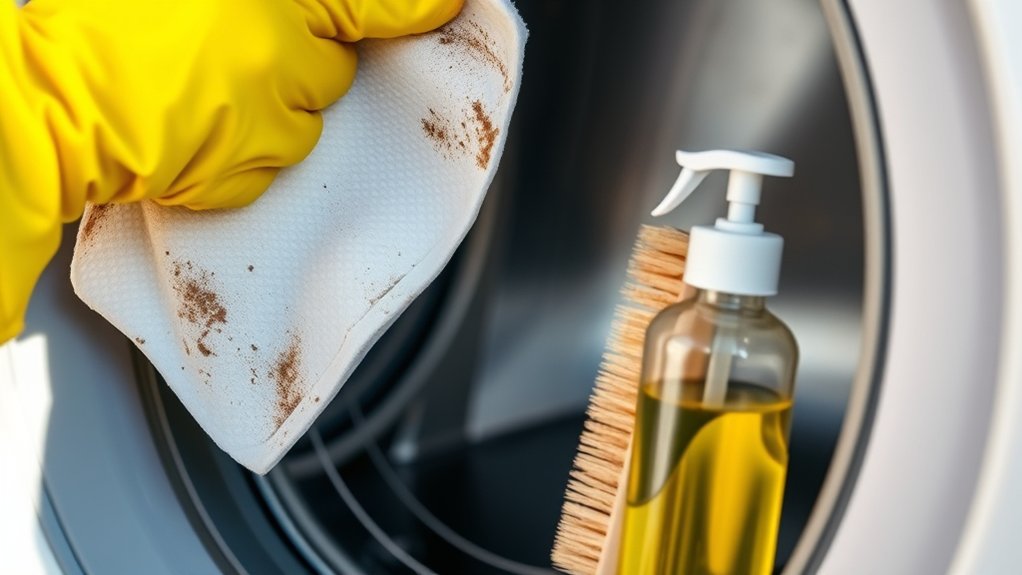
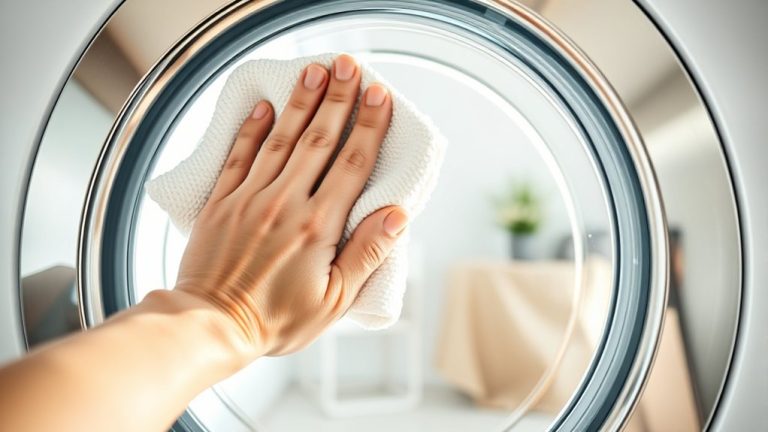
Start by wiping the gasket with a soft cloth to get rid of any loose dirt and grime.
When it comes to mold and mildew, you’ll want to use a specialized cleaner like Dettol Mould and Mildew Remover Spray—just be sure to follow the instructions carefully.
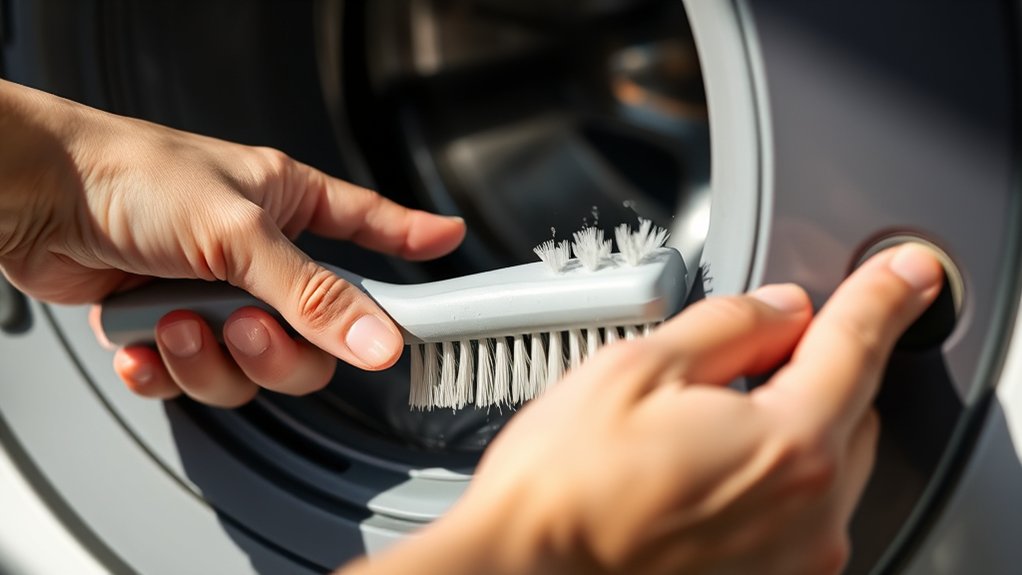
After that, go over any stubborn stains with a mild detergent solution and a soft-bristled brush to give it a good, thorough clean.
Effective Cleaning Solutions
Although dirt, grime, mold, and mildew can build up quickly on your washing machine’s rubber gasket, you can remove them effectively using targeted cleaning solutions.
To clean the gasket thoroughly, follow these practical steps:
Use a mixture of equal parts water and mild detergent with a damp cloth to scrub the rubber seal, removing surface dirt and grime.
Apply Dettol Mould and Mildew Remover Spray directly on affected areas to treat mold and mildew effectively without damaging the gasket.
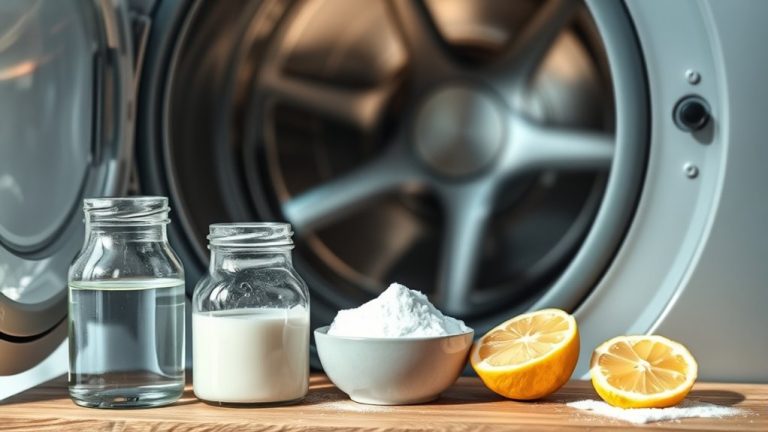
Run a hot water cycle adding a cup of white vinegar to eliminate deep-seated scum and odors, revitalizing the gasket and drum.
These effective cleaning solutions help maintain a hygienic seal and prolong your washing machine’s life.
Regular wiping and airflow also prevent buildup.
Mold and Mildew Removal
Maintaining the rubber gasket means tackling mold and mildew promptly, as these fungi thrive in the moist environment inside your washing machine.
Regular cleaning is essential to prevent buildup on the rubber seal, which can cause unpleasant odors and hygiene issues. Use a solution of equal parts water and mild detergent or a specialized mold remover to scrub the gasket thoroughly, focusing on dark spots or visible mold growth.
After scrubbing, run a hot cycle with white vinegar or a washing machine cleaner to disinfect and eliminate residue.
Always dry the rubber seal completely after cleaning and leave the door ajar to reduce moisture retention.
Doing this consistently helps keep your washer fresh and extends the life of the gasket. It’s a simple routine that really pays off over time.
Best Practices for Rinsing and Drying Your Washer Gasket
Rinse the rubber gasket thoroughly with warm water to remove cleaning agents and prevent residue buildup that fosters mold growth.
After cleaning your washing machine, it’s essential to remove any remaining moisture to avoid mildew. Use a soft cloth to dry the gasket meticulously, focusing on all crevices where water can linger.
Then, leave the washer door open for several hours to promote air circulation. This helps prevent mold by reducing moisture retention.
Leaving the washer door open for hours boosts airflow, cutting moisture and stopping mold growth.
Follow these best practices:
- Wipe the gasket dry immediately after rinsing to eliminate trapped water.
- Keep the washer door open post-cleaning to enhance drying.
- Regularly inspect and dry the gasket to maintain peak cleanliness.
These steps guarantee effective drying and prevent mold growth on your washer gasket. It’s a simple routine that really makes a difference.
Daily Habits to Prevent Mold and Odors on Your Gasket
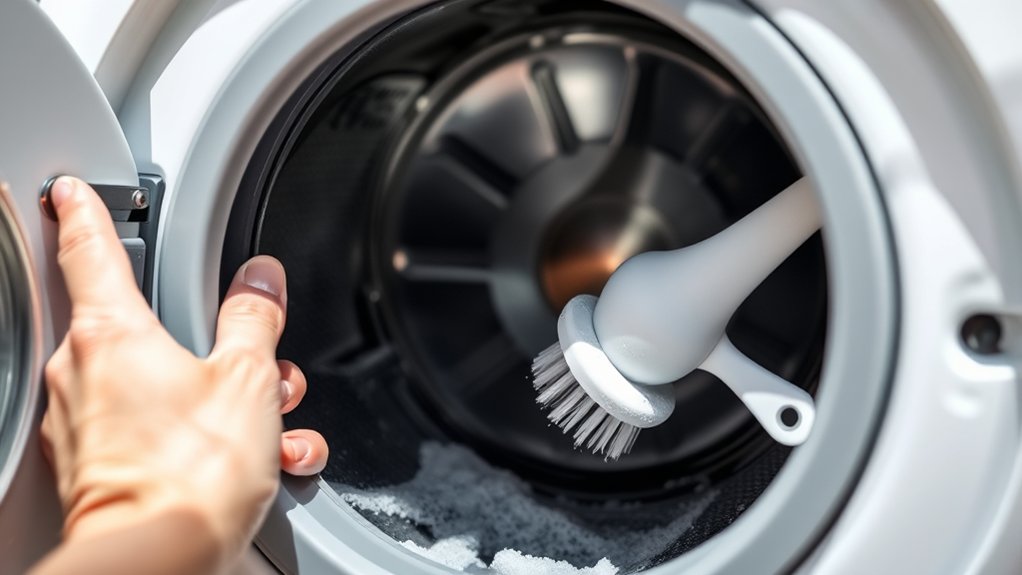
To keep mold and odors from developing on your washing machine gasket, you need to adopt consistent daily habits. Always wipe the seal dry after each wash to remove moisture and prevent mold growth. Leave the door ajar between uses for better air circulation, reducing trapped humidity.
Make sure to use the recommended detergent amount to avoid residue buildup that causes odors. And don’t forget to promptly remove wet laundry to minimize moisture around the gasket. Regularly running a Clean Washer cycle helps eliminate buildup and keeps things fresh.
| Habit | Purpose | Frequency |
|---|---|---|
| Wipe the seal | Remove moisture, prevent mold | After every wash |
| Leave the door open | Enhance airflow, reduce humidity | Between uses |
| Use correct detergent | Prevent residue and odors | Every wash |
| Remove wet laundry | Minimize trapped moisture | Immediately post-cycle |
| Run Clean Washer cycle | Eliminate buildup, freshness | Weekly or biweekly |
How Often to Deep Clean Your Washer Gasket and Why
How often should you deep clean your washer gasket to keep it free from mold and mildew? You should deep clean the washer gasket every month or after about 30 wash cycles. This cleaning frequency helps prevent mold buildup and unpleasant odors, maintaining hygiene effectively.
If you notice stains or odors, it’s a good idea to increase how often you clean it. That way, you stay ahead of any issues and keep your washer fresh.
To maintain ideal gasket condition and prevent mold, follow these tips:
- Deep clean monthly or after 30 cycles.
- Run a Clean Washer cycle regularly to boost gasket cleanliness.
- Wipe the gasket dry after each use to reduce moisture buildup.
Doing this consistently helps prevent leaks and keeps your washing machine running efficiently. Plus, it extends your machine’s lifespan while keeping those odors away.
Troubleshooting Common Gasket Problems (Mold, Odor, Leaks)
When you spot black or green spots on your washer gasket, it signals mold growth that needs immediate attention to stop it from spreading.
Mold loves the damp folds of the rubber gasket, so regular cleaning with a diluted bleach solution is a must.
Unpleasant odors often come from trapped moisture and leftover grime. That’s why thorough drying and routine maintenance are so important.
Leaks can happen if the gasket is damaged or dirty. It’s a good idea to inspect your gasket regularly to catch any wear or debris early.
After cleaning, make sure to rinse the gasket well to avoid bleach residue, which can actually make things worse.
If mold or odors stick around even after proper cleaning, there might be a deeper issue that calls for a professional check.
Keeping up with consistent cleaning and maintenance of the rubber gasket is really the best way to prevent mold, odors, and leaks.
Washer Features That Help Keep Your Gasket Fresh
Several advanced features in modern washers work together to keep your gasket fresh and free from mold, mildew, and odors. These washer features specifically target moisture retention and microbial growth on the rubber seal. This helps enhance durability and hygiene.
Key technologies include antimicrobial protection, which coats the rubber seal to inhibit mold and mildew growth.
Then there’s the FreshFlow Vent System, which uses fan-powered air circulation to reduce moisture retention around the gasket.
Plus, the Clean Washer Cycle helps with regular internal cleaning, preventing buildup and odors.
Together, these features maintain gasket integrity and freshness with minimal effort.
Using them regularly means you can avoid manual deep cleaning. It also extends your washer’s lifespan, making sure your machine runs efficiently and hygienically over time.
Frequently Asked Questions
Can I Use Bleach Instead of Vinegar to Clean the Gasket?
Yes, you can use bleach instead of vinegar for gasket maintenance, but you should be cautious. Bleach effectively kills mold, which helps prevent it from coming back.
However, using bleach too often can damage the rubber. It’s a good idea to alternate between bleach and gentler options like vinegar to keep your washing machine in good shape.
Always rinse the gasket thoroughly after cleaning, and don’t forget to wear gloves for protection. You might also want to use rubber care products to keep the gasket in great condition.
Is It Safe to Clean the Gasket During a Wash Cycle?
No, it’s not safe to clean the gasket during a wash cycle. For effective gasket maintenance, follow safe cleaning methods after the cycle ends.
If you notice issues like mold, tackle them by using mold prevention techniques regularly. It’s best to clean the gasket about once a month to keep things in good shape.
Using the right tools helps a lot too—try microfiber cloths and gentle sprays. This way, you avoid damage and keep things safe.
Plus, your washing machine will perform its best without any risk of injury or incomplete cleaning.
How Do I Replace a Damaged Rubber Gasket?
Think of your washing machine’s rubber gasket as its waterproof shield. To replace a damaged one, first check gasket materials for compatibility to avoid leaks and common problems.
Unplug the machine, remove panels, and carefully detach the old gasket.
Clean the area thoroughly before installing the new gasket evenly. Secure clamps tightly.
Keep an eye on replacement costs and stick to a maintenance schedule to extend gasket life and avoid future issues.
Can Cleaning the Gasket Improve Washing Machine Efficiency?
Yes, cleaning the gasket directly boosts appliance performance by removing mold and detergent buildup that can hinder water flow.
Following gasket maintenance tips like regular wiping and mold prevention strategies guarantees a tight seal, preventing leaks and enhancing washing machine longevity.
Using efficient cleaning methods with rubber care essentials keeps the gasket flexible and durable.
This proactive approach not only improves washing efficiency but also reduces energy use, saving you money while extending your machine’s lifespan.
Are There Specific Detergents That Prevent Gasket Mold Buildup?
Think of mold prevention as your washing machine’s armor. You’ll want detergents labeled mold and mildew resistant, with antimicrobial agents that fight mold buildup.
High-efficiency (HE) detergents reduce residue, which helps keep the gasket clean by limiting mold’s playground.
Enzyme-based detergents break down oils, making it easier to remove mold.
Combine these with routine cleaning and washing tips, like using the right amount of detergent. That way, you’ll keep your gasket fresh and free from mold effectively.
Conclusion
You might overlook your washer gasket, but neglecting it invites mold, odors, and leaks. These issues can really disrupt your laundry routine.
With simple, regular cleaning and quick inspections, you can keep it spotless and working smoothly. Don’t wait for problems to get worse. A few minutes now saves you hours of hassle later.
By staying proactive, you protect your machine’s lifespan. Plus, you get fresher, cleaner clothes every wash.