How To Clean Mold From Washing Machine – Safe Removal Guide
To safely remove mold from your washing machine, first wear gloves and an N95 mask for protection. Pull back the rubber gasket and spray affected areas with a bleach solution or vinegar mix. Scrub stubborn spots with a soft brush.
Clean and dry the detergent drawer thoroughly. Then, run a hot water cycle with white vinegar to kill lingering spores. Keep the door open after use for ventilation.
Follow these steps, and you can also explore detailed techniques to maintain a mold-free washer. It’s easier than you might think to keep your machine fresh and clean!
Understand Why Mold Grows in Washing Machines
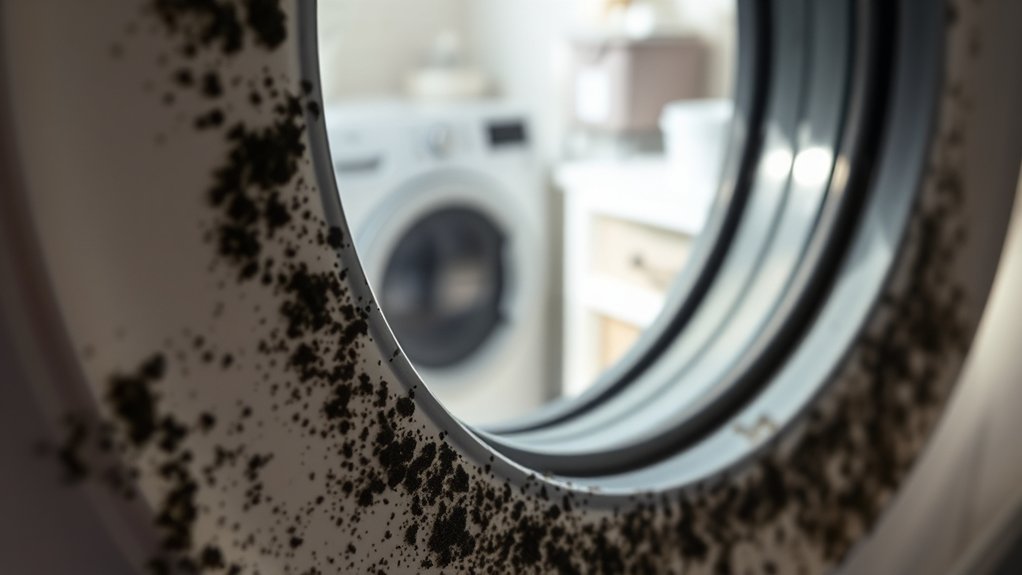
Because mold thrives in damp, warm environments, your washing machine becomes a prime target when moisture lingers after cycles.
Mold growth happens because trapped moisture inside the drum and seals creates the perfect habitat. Detergent residue makes this worse by forming a sticky film that traps moisture and provides organic material for mold to feed on.
Poor ventilation is another big factor. Leaving the washer door closed stops evaporation and lets moisture build up. Plus, warm temperatures after washing cycles speed up mold and bacteria growth.
Dirt and oils from laundry mix with moisture, creating a cozy environment for mold to grow.
When you understand these conditions, it’s easier to see why keeping your washer dry, clean, and well-ventilated is key to preventing mold buildup.
Spot Mold Early in Your Washer
You should regularly check your washer for musty or sour odors because these are key signs that mold might be growing.
Take a close look at the rubber gasket and detergent drawer—if you see black, brown, or green spots, that usually means mold is there.
Catching these signs early is really important since it helps you deal with the mold before it spreads all over.
Detect Musty Odors
Musty odors often serve as the first indicator of mold growth in your washing machine. They’re caused by trapped moisture and leftover organic residue.
To detect musty odors effectively, pay close attention to any sour or damp smells coming from freshly washed clothes or the machine itself. These odors suggest mold spores have settled in the drum, gasket, or detergent drawer.
Regularly smelling your washer after cycles helps spot mold issues early. This way, you can clean washing machine components promptly.
Ignoring persistent musty odors risks mold spreading deeper inside, which makes removal more complicated.
When you detect musty odors, start a thorough cleaning routine using the right mold removal methods. This will eliminate mold spores and prevent further contamination, keeping your washer hygienic and odor-free.
Identify Visible Spots
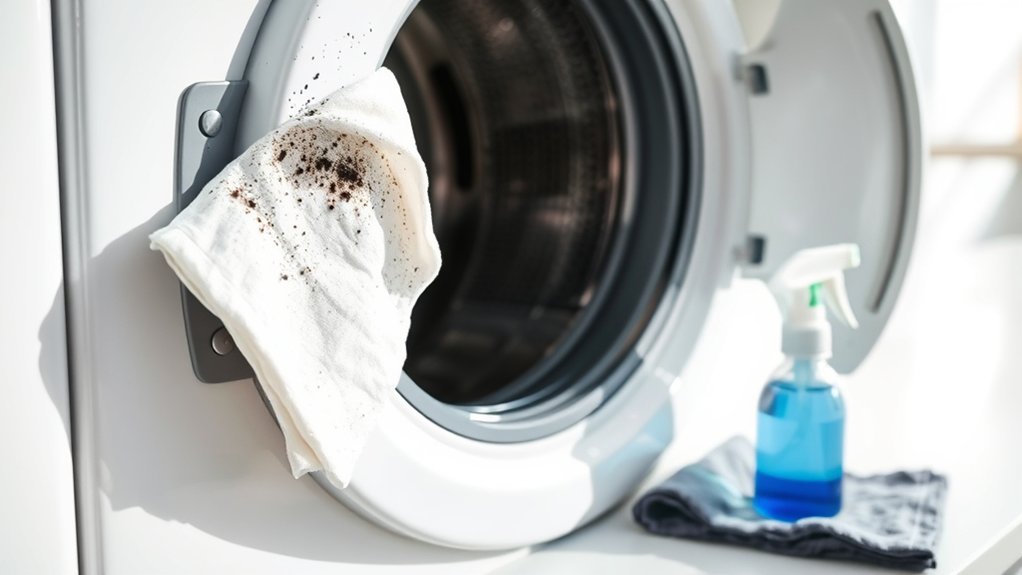
When inspecting your washing machine for mold, focus on visible spots that often appear as black, brown, or green discolorations around the rubber gasket and detergent dispensers.
Carefully examine the rubber seal for slimy residue or discoloration, as these are clear indicators of mold growth.
Don’t overlook the inside of the drum, especially after a wash cycle. Mold can cling there and cause musty odors on your laundry.
Check detergent compartments and the lint trap for buildup that may harbor mold.
If you detect any musty odors but see no visible spots, this still signals potential mold presence requiring thorough cleaning.
Early identification of mold on the rubber seal and other components prevents further contamination and helps keep your washing machine hygienic.
What You Need to Clean Mold Safely
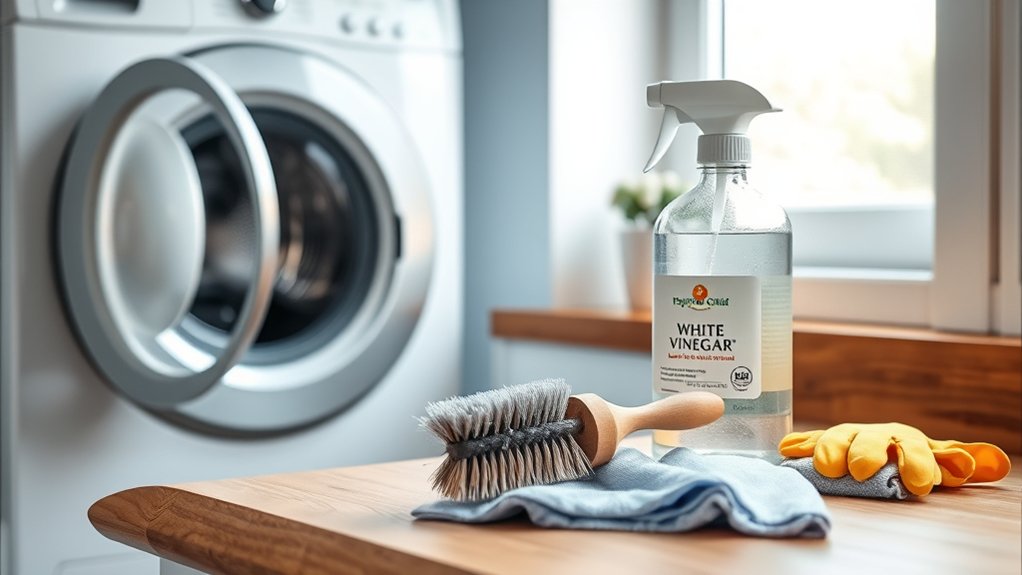
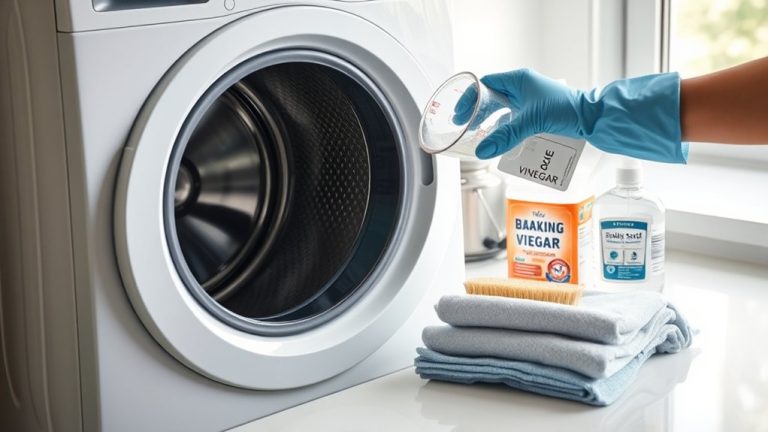
Three essential components guarantee safe and effective mold cleaning in your washing machine: protective gear, proper cleaning solutions, and adequate ventilation.
Start by wearing protective gloves, goggles, and a NIOSH-approved N95 respirator to prevent exposure to mold spores.
Begin mold cleaning by wearing gloves, goggles, and an N95 respirator to avoid spore exposure.
Next, prepare a cleaning solution, either a bleach mixture (1 cup bleach per gallon of water) or a mold-specific appliance cleaner. This will help you remove the mold thoroughly.
Make sure to maintain proper ventilation by opening windows and doors. This minimizes inhalation of spores and fumes while you work.
Use scrubbing tools like stiff brushes and microfiber cloths to get rid of mold from surfaces effectively.
After cleaning, safely dispose of contaminated cloths or materials in sealed bags to keep spores from spreading.
Following these steps guarantees a controlled and safe approach to mold removal in your washing machine.
Deep Clean the Rubber Gasket
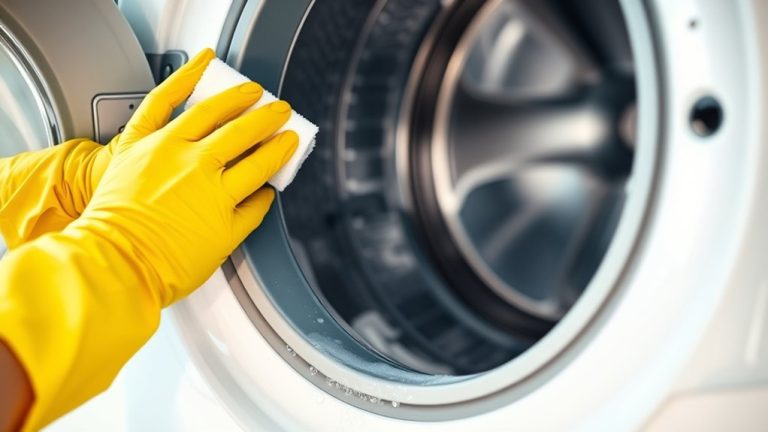
You’ll want to pull back the rubber gasket to expose all those folds and crevices where mold tends to hide.
Then, spray an equal mix of vinegar and water or some diluted bleach generously over these areas.
After that, grab a soft brush and scrub gently to get rid of the mold effectively.
Finally, rinse everything off and make sure to dry it well.
Mold-Prone Areas
Since the rubber gasket retains moisture and traps organic debris, it becomes a hotspot for mold growth in washing machines. Mold typically develops in the folds of the rubber gasket where water lingers after cycles.
To prevent mold, regularly inspect the gasket for visible mold, slime, or foul odors. Moisture buildup encourages fungal growth, so keeping the washer door open between uses helps reduce dampness.
When you clean mold from the rubber gasket, focus on these crevices to remove trapped contaminants effectively. Ensuring the gasket is wiped dry after cleaning minimizes moisture retention.
By maintaining a dry, clean rubber gasket, you greatly limit mold proliferation and extend your washing machine’s hygienic operation. Make sure to prioritize this area during routine maintenance to prevent mold accumulation.
It really makes a difference!
Effective Cleaning Methods
The rubber gasket’s folds often hide mold and debris that regular surface cleaning misses. To deep clean this area effectively, follow these steps:
- Pull back the rubber gasket carefully to expose hidden mold and debris.
- Spray vinegar or a diluted bleach solution directly onto moldy spots; let it sit for 10-15 minutes to kill mold spores.
- Use a soft scrub brush to gently scrub the gasket, focusing on stubborn mold patches.
- Wipe the gasket thoroughly with a clean, dry microfiber cloth to remove moisture and cleaning residues, preventing mold regrowth.
Regularly inspecting and wiping the rubber gasket after each wash will help keep it mold-free.
Using vinegar and a scrub brush ensures you get all the mold out from the gasket’s folds.
Remove and Clean Detergent Dispensers
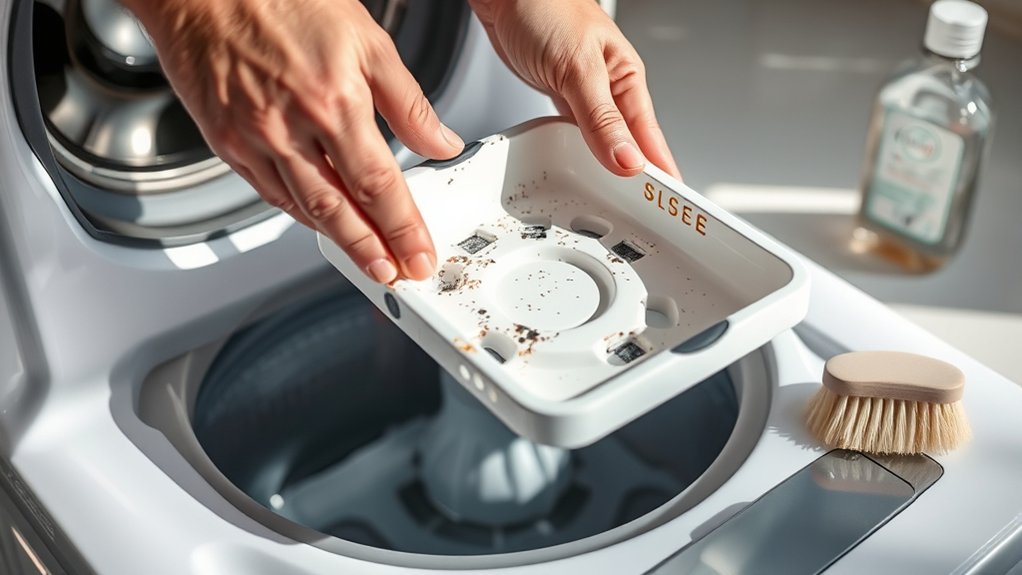
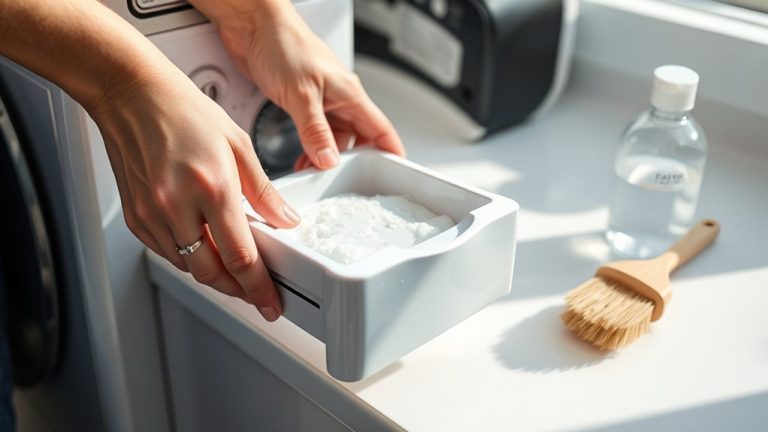
Start by carefully removing the detergent dispensers from your washing machine to gain full access for cleaning.
Soak the dispensers in hot water mixed with vinegar to dissolve detergent buildup and loosen mold. Use a toothbrush or small scrub brush to scrub all corners and crevices, ensuring you remove any mold or residue.
Rinse the dispensers thoroughly under warm running water to eliminate leftover detergent and cleaning solution.
Before reinstalling, wipe the inside of the detergent compartment with a bleach solution or mold cleaner to eradicate mold spores.
Make sure the dispensers are completely dry before reassembling to prevent moisture accumulation, which promotes mold growth.
This precise process effectively removes mold and maintains your washing machine’s hygiene.
It might seem a bit detailed, but it’s worth it to keep everything fresh and clean!
Run a Hot Wash Cycle to Remove Mold
Run a hot wash cycle at the highest temperature setting to effectively kill mold spores and bacteria lurking inside your washing machine. This method uses hot water to penetrate and sanitize internal surfaces, eliminating mold growth.
Follow these steps:
- Confirm the washing machine drum is empty to maximize cleaning efficiency.
- Add two cups of white vinegar to the detergent compartment to break down mold and neutralize odors.
- Select the hottest water setting and run a full wash cycle.
- After completion, leave the washer door open to promote ventilation and drying, preventing mold reformation.
You’ll want to repeat this process monthly to keep your washing machine clean. It helps reduce mold buildup and keeps your appliance hygienic.
Scrub and Deodorize the Drum Effectively
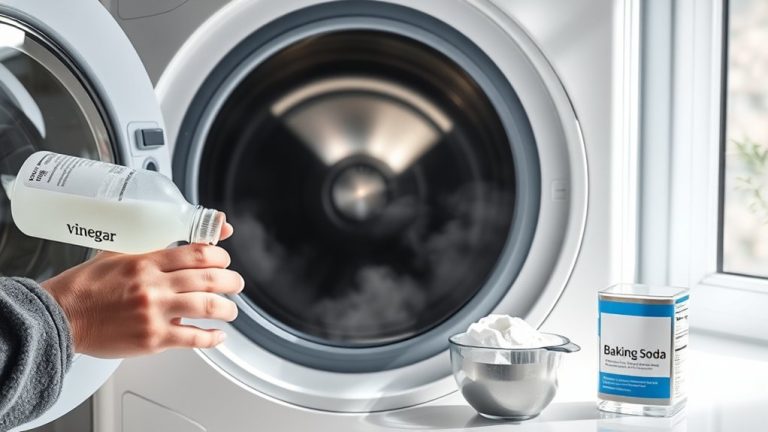
Start by sprinkling baking soda evenly inside the drum. This helps absorb odors and loosen any mold that might be lurking.
Then, spray some vinegar over the baking soda. You’ll notice a foaming reaction—that’s the magic working to break down grime.
After that, grab a stiff brush and give the drum a good scrub. Focus on any visible mold and stains to make sure it’s really clean.
Baking Soda Application
Sprinkle about one cup of baking soda directly into your washing machine drum to leverage its natural deodorizing and mild abrasive properties. This method effectively scrubs away mold and residues without damaging the drum surface.
Follow these steps for ideal results:
- Add one cup of baking soda into the drum.
- (Avoid vinegar spray here; this is covered in the next subtopic.)
- Run a hot water cycle to dissolve mold and bacteria thoroughly.
- After the cycle, wipe the drum and door seal with a microfiber cloth to remove residue and moisture.
Using baking soda monthly in this way helps maintain freshness and prevents mold buildup.
The hot water cycle boosts the cleaning process by activating baking soda’s mold-fighting properties efficiently. It’s a simple step that really makes a difference.
Vinegar Spray Technique
While baking soda helps neutralize odors and gently scrub the drum, vinegar offers a more potent solution for breaking down mold and disinfecting surfaces.
To start cleaning your washer, mix equal parts of white vinegar and water in a spray bottle. Spray the solution generously onto the drum, focusing on visible mold from a washing machine.
Let it sit for 15-30 minutes to penetrate and loosen mold residues. Next, use a soft scrub brush or microfiber cloth to scrub the drum thoroughly, targeting stubborn mold spots.
After scrubbing, run a hot water cycle with the empty machine to rinse away vinegar and dislodged mold particles.
This process effectively deodorizes and guarantees mold removal while using a natural, safe method with vinegar and water to clean.
It’s a simple trick that really gets the job done without harsh chemicals. Give it a try, and your washer will thank you!
Drum Scrubbing Tips
Select the hottest cycle on your washing machine to effectively loosen mold and debris before scrubbing.
Once that’s done, follow these steps to clean and deodorize the drum.
First, sprinkle half a cup of baking soda directly into the drum.
Then add two cups of vinegar to break down mold and neutralize odors.
Next, grab a scrub brush dipped in warm water with mild soap and scrub the drum interior thoroughly.
Focus especially on any visible mold spots.
After that, run another hot water cycle with just vinegar.
This helps rinse and disinfect the drum, getting rid of any leftover buildup.
Finally, wipe the drum dry with a microfiber cloth.
Leave the door open for at least an hour to make sure it dries completely and prevent mold from coming back.
This method guarantees your drum will be clean, fresh, and ready to use.
Clean the Washing Machine’s Lint Trap and Drain Pump
Regularly clean your washing machine’s lint trap and drain pump to prevent clogs that hinder proper drainage and promote mold growth.
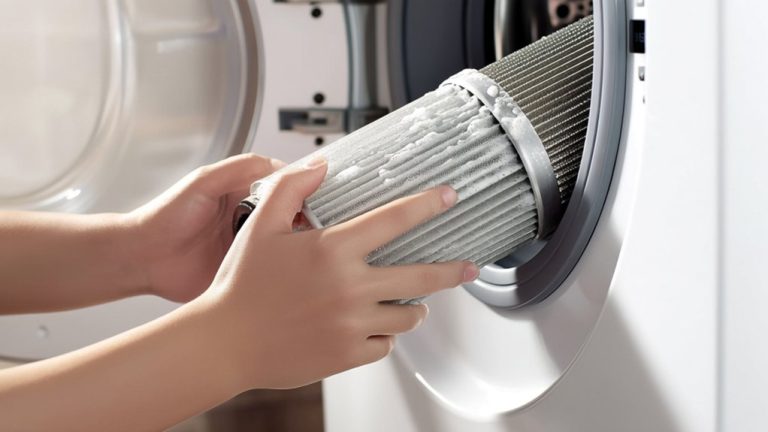
Start by removing accumulated lint from the lint trap. Rinse the filter thoroughly with hot water to eliminate residues and any mold spores.
Next, inspect the drain pump for debris or blockages that can impede water flow and create a damp environment.
Check the drain pump regularly for blockages that may restrict water flow and cause dampness.
If you notice visible mold, scrub both the lint trap and drain pump components with a vinegar solution to disinfect and remove mold spores effectively.
Performing this maintenance monthly guarantees ideal drainage, reduces moisture buildup, and prevents mold from recurring.
Consistent cleaning of these parts maintains your washing machine’s efficiency and curbs conditions favorable to mold development.
It’s a simple step that makes a big difference!
Tips to Keep Your Washer Mold-Free
To keep your washer mold-free, you should always leave the door open after each cycle to allow airflow and reduce moisture. This step is essential to prevent mold growth inside the machine.
Follow these tips:
- Keep the door open after each use to promote drying and inhibit mold development.
- Clean the detergent drawer regularly to remove odor-causing residues that foster mold buildup.
- Run a hot water cleaning cycle with a mold-killing cleaner monthly to eliminate spores and residue.
- Wipe down the rubber gasket and other damp areas to prevent moisture accumulation.
When Should You Call a Pro for Mold Removal?
How do you know when mold removal in your washing machine requires professional intervention?
If mold appears in hard-to-reach areas like behind the drum or inside internal components, you should seek professional help to guarantee safe and thorough removal.
Persistent mold odors despite cleaning efforts often signal deeper contamination that needs expert assessment.
If you have health issues such as asthma, COPD, or a weakened immune system, avoid DIY removal to prevent exposure and call a pro.
Moreover, if mold covers more than 10 square feet or if you suspect hidden moisture problems causing regrowth, professionals can conduct a detailed inspection and remediation.
Relying on professional help in these cases ensures effective mold removal while minimizing health risks.
Frequently Asked Questions
Can Mold in Washing Machines Cause Health Problems?
Yes, mold exposure in washing machines can cause health problems. You might experience allergic reactions like sneezing or skin irritation, and respiratory issues such as coughing or asthma attacks.
To protect yourself, follow prevention methods like regular cleaning, drying the machine’s interior, and using mold-resistant products.
Taking these steps reduces mold growth and minimizes your risk of health complications linked to mold exposure in your washing machine.
Is It Safe to Use Natural Cleaners Instead of Bleach?
Before electricity was even a thing, people relied on natural cleaning options. And you can too. Yes, it’s safe to use vinegar effectiveness, baking soda benefits, and essential oils for mold removal in your washing machine.
Vinegar’s acetic acid kills fungi. Baking soda scrubs and neutralizes odors. Essential oils add antifungal power.
These methods are gentler than bleach but might need more frequent application for stubborn mold infestations.
How Often Should I Clean My Washing Machine to Prevent Mold?
You should set your cleaning frequency to at least once a month for effective mold prevention.
Regular washing machine care involves running a hot water cycle with vinegar or a specialized cleaner every 30-40 washes.
Also, make sure to wipe the gasket and detergent dispensers after each use.
Leaving the door open helps reduce humidity inside the machine.
These simple steps really help keep mold at bay and extend your machine’s lifespan through consistent upkeep.
It’s all about staying on top of it!
Can Mold Damage the Washing Machine Permanently?
Think of mold as rust slowly eating away at your machine’s heart. Yes, mold can cause permanent damage by degrading seals and gaskets, which leads to leaks and costly repairs.
To protect your washing machine, follow mold prevention tips like consistent washing machine upkeep, controlling humidity, and maintaining proper cleaning frequency.
These steps help you catch mold early. That way, you preserve your machine’s integrity and effectively extend its lifespan.
Are Front-Load or Top-Load Washers More Prone to Mold?
Front load design washers are more prone to mold because their airtight seals trap moisture. This makes mold prevention really important.
You’ll want to focus on washer maintenance by regularly cleaning the rubber gasket and running hot water cycles.
On the other hand, top load design washers allow better airflow when left open, which helps reduce mold risk.
So, to prevent mold effectively, prioritize maintenance on front load washers.
Make sure to address moisture retention areas promptly for a cleaner machine.
Conclusion
By following these steps, you’ll banish mold from your washing machine faster than a lightning bolt strikes! Regular deep cleaning, especially the gasket and dispensers, keeps your washer fresh and safe.
Don’t forget the lint trap and drain pump for a thorough cleanse. Staying vigilant prevents mold buildup and protects your laundry.
If mold persists despite your best efforts, calling a pro guarantees the problem is handled with expert precision and care.