What Laundry Detergent Does Not Cause Cancer – What to Know
You should avoid laundry detergents containing 1,4-Dioxane, synthetic fragrances with phthalates, and ethoxylated surfactants, as these chemicals pose cancer risks. Look for clear labels, steer clear of ingredients ending in “-eth” or containing PEG, and prioritize brands verified for safety like Branch Basics or Puracy.
Choosing plant-based, biodegradable products protects your health and the environment. If you want to understand how to identify these risks and switch safely, there’s more important information to reflect upon.
Key Takeaways
- Avoid detergents containing 1,4-Dioxane, sodium laureth sulfate, phthalates, and optical brighteners to reduce cancer risk.
- Check labels for ingredients ending in “-eth” or containing PEG, indicating potential carcinogenic contaminants.
- Choose detergents with clear ingredient lists and credible certifications like EWG Verified for safer options.
- Prefer non-toxic brands like Branch Basics, Molly’s Suds, Ecos, and Puracy that use plant-based, biodegradable ingredients.
- Select chemical-free, fragrance-free detergents to protect health, skin, and the environment from harmful toxins.
Potentially Carcinogenic Ingredients in Laundry Detergents
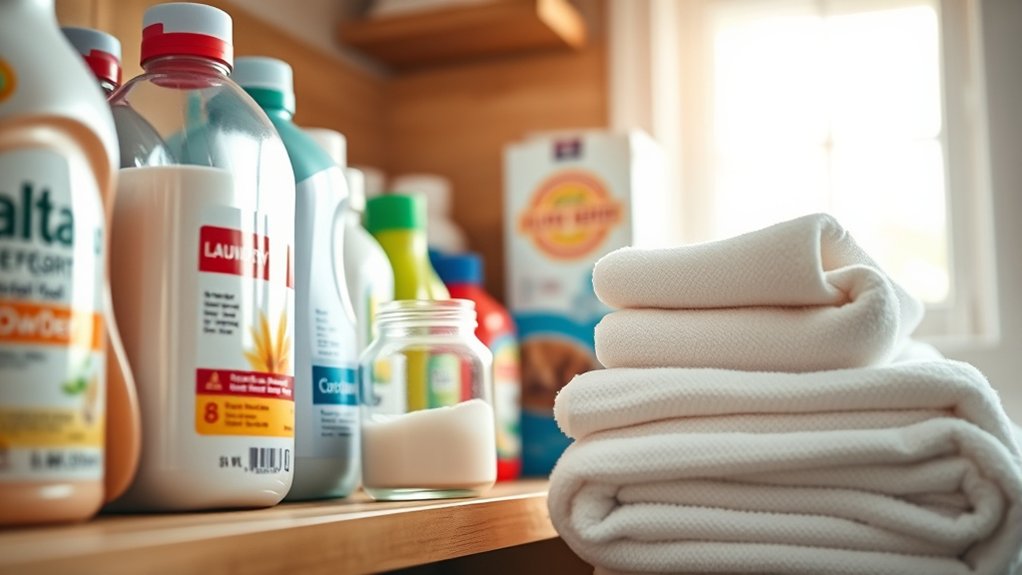
While you might expect your laundry detergent to be harmless, many conventional formulas contain 1,4-Dioxane, a synthetic chemical the EPA classifies as a likely human carcinogen. This compound can persist on fabrics and absorb through your skin, increasing exposure risks.
Many laundry detergents contain 1,4-Dioxane, a likely carcinogen that can linger on fabrics and absorb through skin.
Furthermore, sodium laureth sulfate (SLES), often present in detergents, may introduce 1,4-Dioxane as a byproduct of its manufacturing process.
Phthalates, commonly added for fragrance, act as endocrine disruptors and are linked to potential cancer risks, further complicating safety concerns.
Optical brighteners, designed to enhance whiteness, not only cause skin irritation but also raise environmental and health questions due to their non-biodegradable nature.
Being aware of these potentially carcinogenic ingredients empowers you to choose safer, more transparent laundry products.
How 1,4-Dioxane Hides in Your Detergent
Because 1,4-Dioxane forms as a byproduct during the ethoxylation process used to create surfactants like Sodium Laureth Sulfate (SLES), it often contaminates laundry detergents without being listed on labels. You won’t see 1,4-Dioxane explicitly named, but ingredients like PEG compounds or “-eth” suffixes hint at its presence.
To avoid harsh chemicals, you need to scrutinize labels carefully. Choosing eco-friendly laundry detergents helps reduce exposure to this likely carcinogen.
| Ingredient Indicator | Common in Detergents Contain | Risk Level |
|---|---|---|
| Sodium Laureth Sulfate (SLES) | Yes | High (1,4-Dioxane) |
| PEG Compounds | Yes | Moderate |
| “-eth” Suffix | Yes | High |
| Natural Surfactants | Rare | Low |
| Eco-Friendly Brands | Minimal | Minimal |
Ingredients to Avoid in Laundry Detergents
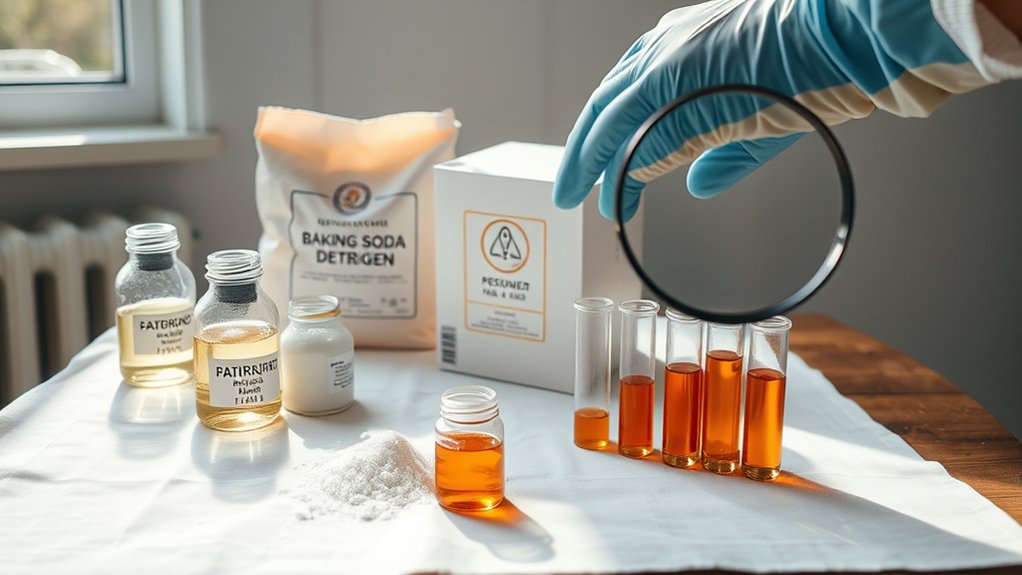
You’ll want to steer clear of detergents that have carcinogenic chemicals, like phthalates and those sneaky ethoxylated compounds. These can be pretty harmful to your health.
Often, synthetic fragrances are added to cover up these bad ingredients, but they’re not harmless either—they can cause respiratory problems and skin irritation.
Carcinogenic Chemical Ingredients
Although laundry detergents promise cleanliness, many contain carcinogenic chemicals that pose serious health risks. You should avoid toxic ingredients like 1,4-dioxane, classified by the EPA as a likely human carcinogen even at low exposure levels.
Phthalates, common in synthetic fragrances, disrupt endocrine function and increase cancer risk, yet their presence often remains undisclosed.
Chlorine bleach and optical brighteners aggravate sensitive skin and contribute to respiratory problems and environmental harm.
Choosing a non-toxic laundry detergent free from these chemicals can reduce your cancer risk and minimize skin irritation.
Hidden Ethoxylated Compounds
When you examine laundry detergent labels closely, you’ll notice many contain ethoxylated compounds, such as Sodium Laureth Sulfate (SLES). These often harbor traces of 1,4-dioxane, a likely human carcinogen not explicitly listed on packaging.
These hidden ethoxylated compounds pose significant health risks, including cancer and organ damage from long-term exposure. To avoid them, watch for ingredients ending in “-eth” or containing PEG.
Safer alternatives utilize plant-based surfactants, eliminating harmful byproducts like 1,4-dioxane.
| Ingredient Type | Common Examples | Health Concerns |
|---|---|---|
| Ethoxylated Surfactants | SLES, PEG compounds | Contain 1,4-Dioxane, carcinogenic |
| Non-ethoxylated Surfactants | Plant-based surfactants | Safer, no carcinogenic residues |
| Label Disclosure | Not listed explicitly | Hidden 1,4-Dioxane presence |
Synthetic Fragrance Risks
Since synthetic fragrances in laundry detergents often contain phthalates and a complex mix of undisclosed chemicals, they pose significant health risks that you should be aware of.
These phthalates disrupt endocrine functions and link to hormone-related cancers, while undisclosed compounds make it hard to identify carcinogens.
Exposure to certain synthetic fragrances in cleaning products can cause skin irritation and respiratory problems, raising concerns about long-term effects.
Furthermore, synthetic fragrances increase volatile organic compounds (VOCs) indoors, worsening air quality and potentially elevating cancer risk.
To protect your health, opt for fragrance-free or naturally scented laundry detergents, which reduce exposure to harmful ingredients.
Being selective helps minimize risks associated with synthetic fragrances and promotes safer cleaning choices.
How to Read Laundry Detergent Labels for Hidden Carcinogens
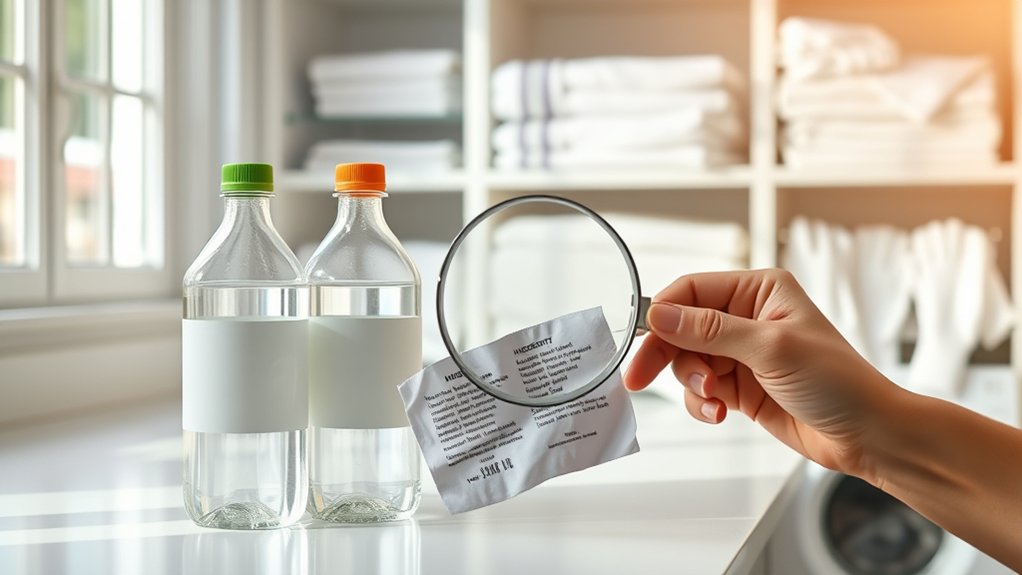
If you want to avoid hidden carcinogens in your laundry detergent, you need to scrutinize ingredient labels carefully.
Watch for chemicals ending in “-eth,” like Sodium Laureth Sulfate, which may contain 1,4-Dioxane, a carcinogen not listed outright.
PEG compounds also pose risks, as their ethoxylation can leave harmful residues.
Don’t be misled by vague claims such as “non-toxic” or “natural”; these labels often mask harmful chemicals.
Instead, prioritize products with credible certifications like EWG Verified, which guarantee transparency and safer ingredients.
Moreover, steer clear of synthetic fragrances and optical brighteners. They can cause skin irritation and often derive from questionable chemicals.
How to Switch to Safer Laundry Detergents
Understanding how to identify harmful chemicals on detergent labels sets the stage for making safer laundry choices.
To shift to safer laundry detergents, focus on products free from 1,4-dioxane, synthetic fragrances, and phthalates. These chemicals pose cancer risks and cause skin irritation.
Rely on third-party ratings, such as EWG Verified or EPA Safer Choice, to verify environmental protection and product safety.
Prioritize natural laundry options with plant-based or biodegradable ingredients because they reduce toxic exposure and environmental harm.
Avoid vague “natural” claims by scrutinizing ingredient lists for transparency.
Change gradually by testing small amounts of non-toxic detergents to assess cleaning effectiveness and skin response.
This analytical approach guarantees you adopt safer detergents without compromising laundry quality or health.
Top Non-Toxic Laundry Detergent Brands
You’ll find plenty of trusted non-toxic laundry detergent brands out there that really get the job done without any harsh chemicals. They focus on using plant-based or natural ingredients, which helps cut down on skin irritation and is better for the environment too.
If you’re looking for reliable options, brands like Branch Basics or Puracy are great picks. They deliver solid cleaning power while giving you peace of mind about what’s going into your laundry.
It’s a win-win!
Trusted Non-Toxic Brands
Choosing a trusted non-toxic laundry detergent means prioritizing both your health and the environment without sacrificing cleaning power. Brands like Branch Basics and Molly’s Suds are safe and effective, using natural ingredients that are gentle on sensitive skin.
Ecos stands out as an eco-friendly option, relying on plant-based, biodegradable components to minimize environmental impact.
Truly Free offers scented formulations that avoid harsh chemicals, maintaining safety while enhancing your laundry experience.
Puracy combines plant-derived ingredients with a strong commitment to environmental responsibility, guaranteeing both efficacy and safety.
By selecting from these trusted non-toxic brands, you guarantee your laundry routine supports health without toxic risks, while contributing to sustainability.
This approach balances performance with conscientious ingredient choices, meeting your rigorous standards.
Effective Chemical-Free Options
Effective chemical-free laundry detergents offer powerful cleaning without exposing you to harmful substances like 1,4-Dioxane, synthetic fragrances, or optical brighteners. Non-toxic brands such as Branch Basics and Molly Suds eliminate carcinogens by avoiding these ingredients, reducing health risks.
Eco-friendly options like Dirty Labs harness bioenzymes for effective stain removal while remaining free of sulfates and synthetic preservatives, supporting both your health and the environment.
If you have sensitive skin, products from Truly Free and NaturOli provide gentle yet efficient cleaning, showing that safety doesn’t compromise effectiveness.
The Environmental Working Group’s verification system helps you confidently select detergents free from harmful chemicals.
Moreover, brands like Puracy and AspenClean use biodegradable, plant-based ingredients, ensuring eco-friendly choices that protect aquatic life and promote sustainability.
Simple Tips for Safe and Effective Laundry Cleaning
Although many laundry detergents promise a thorough clean, selecting products labeled as “1,4-Dioxane free” and certified by trusted organizations like EWG or EPA Safer Choice can greatly reduce your exposure to harmful chemicals.
To guarantee safe and effective laundry cleaning, opt for fragrance-free and dye-free detergents, as synthetic additives often cause skin irritation and respiratory issues.
Choose eco-friendly, plant-based detergents that balance cleaning efficacy with gentler health impacts.
Always scrutinize ingredient labels, avoiding ambiguous terms like “natural” or “non-toxic” without certification.
By prioritizing verified, non-toxic laundry detergents, you minimize carcinogen exposure and protect your skin during cleaning.
This evidence-based approach enhances laundry safety without compromising cleanliness or fabric care.
Frequently Asked Questions
Can Laundry Detergent Residue Affect Sensitive Skin or Allergies?
Yes, laundry detergent residue can affect your sensitive skin and trigger allergies. Residues often contain synthetic fragrances and chemicals that irritate delicate skin, causing rashes or redness.
Children under six are especially vulnerable.
To protect yourself, use non-toxic, fragrance-free detergents and rinse clothes thoroughly to minimize residue.
This approach greatly reduces irritation risks, ensuring your skin stays comfortable and healthy, even if you have sensitivities or allergies.
How Does Water Temperature Impact Detergent Effectiveness and Safety?
Water temperature directly impacts how well your detergent works and its safety.
Cold water helps certain eco-friendly detergents clean effectively while reducing chemical release and microplastic shedding.
Hot water dissolves detergent better but can increase harmful chemical emissions.
You should choose detergents formulated for cold water to maintain cleaning power without risking exposure to toxins or damaging your clothes.
This way, you balance effectiveness with health and environmental safety.
Are Homemade Laundry Detergents Safer Than Commercial Ones?
You’re likely to find homemade laundry detergents gentler on your health compared to many commercial options. By controlling ingredients, you avoid hidden substances like 1,4-Dioxane, linked to cancer risks.
Research shows natural components like baking soda and castile soap clean effectively without synthetic fragrances or preservatives.
Though no product is entirely risk-free, DIY detergents reduce your exposure to questionable chemicals.
That makes them a safer, cost-effective choice for your household’s laundry needs.
Do Natural Fragrances in Detergents Cause Fewer Health Risks?
Yes, natural fragrances in detergents generally cause fewer health risks than synthetic ones.
You’ll avoid harmful chemicals like phthalates and endocrine disruptors, which are common in artificial scents.
Plus, natural fragrances often reduce skin irritation and respiratory issues.
Studies suggest they might even boost mood without toxic side effects.
Choosing detergents with natural fragrances can improve indoor air quality and lower chemical exposure, especially if you have allergies or sensitive skin.
How Should I Store Laundry Detergent to Maintain Safety?
You should store laundry detergent in a cool, dry place away from direct sunlight to preserve its active ingredients and effectiveness.
Keep the container tightly sealed to prevent moisture and air exposure, which can cause clumping or degradation.
Always use the original packaging and store it out of reach of children and pets for safety.
Avoid humid areas like bathrooms, as moisture can compromise detergent quality and potentially affect its safety.
Conclusion
When you pour detergent into your washer, imagine choosing a shield that protects your health, not a hidden threat. Avoiding carcinogenic ingredients like 1,4-dioxane means reading labels carefully and opting for trusted, non-toxic brands.
By making informed choices, you reduce exposure to harmful chemicals, turning laundry day into a safer, cleaner ritual. Your clothes come out fresh, and your peace of mind stays intact. Science-backed, simple, and smart.