What Is Downy – Everything to Know
Downy is a fabric softener that helps your clothes feel softer, smell fresh, and resist static cling. You can choose from liquid conditioners, scent beads, or dryer sheets depending on whether you want softer fabrics, longer-lasting fragrance, or less static.
Use liquid Downy in your washer’s dispenser or rinse cycle and follow the product label. It isn’t detergent, so it won’t clean away dirt and oils. Check care labels since softener may affect towels and moisture-wicking activewear.
You’ll find more details on choosing and using Downy below.
What Is Downy and What Does It Do?

Downy is a fabric softener brand that helps make laundry feel softer, smell fresh, and resist static cling. When you use it during laundry, its conditioning ingredients coat fabric fibers, reducing friction between them.
That can make clothes and linens feel smoother against your skin and easier to handle. Downy can also help reduce wrinkles and static, so garments may cling less and look neater after drying.
Downy helps fabrics feel smoother, reduces wrinkles and static, and leaves garments looking neater after drying.
Its fragrance leaves fabrics with a fresh scent, though how long it lasts can vary with the product and wash conditions. You can add fabric softener to the designated dispenser in your washing machine or follow the care label’s directions for another method.
Use the recommended amount: too much may leave residue or affect how well towels absorb water. Check garment labels before use.
Which Downy Products Can You Choose From?
You’ve got a few Downy products to pick from when caring for your laundry. You can add liquid fabric conditioner or scent beads right in the wash to make your clothes soft or give them a nice fragrance.
And if you want an easy finishing touch, just toss in some dryer sheets. They’re super simple to use and leave your laundry feeling fresh.
Liquid Fabric Conditioner
If you want softer clothes and a fresh scent, Downy liquid fabric conditioners come in several options. These include classic scents, scent-free formulas, and products designed to reduce static and wrinkles. Choose the type that fits your laundry needs:
| Option | What it offers |
|---|---|
| Classic scents | Adds softness and a lasting fragrance |
| Free & Gentle | Provides softness without added fragrance or dyes |
| Wrinkle and static care | Helps reduce wrinkles, static cling, and fuzz |
You’ll typically add liquid conditioner to your washer’s dispenser, where it releases during the rinse cycle. Follow the bottle’s directions and use the marked dispenser line to avoid overpouring.
If you have sensitive skin, check the label and consider a fragrance-free formula. For everyday laundry, a scented option can leave fabrics feeling softer and smelling fresh. Product names and formulas may vary by store, so check current packaging before you buy.
Scent Beads
For a longer-lasting scent, Downy scent beads dissolve in the wash and add fragrance to your laundry. You add them directly to the empty washer drum before loading your clothes, so they release fragrance throughout the wash.
Unlike liquid fabric conditioner, beads focus on scent rather than softening fibers.
Downy offers several scent-bead options, including Unstopables, which come in fragrances such as Fresh, Lush, and Shimmer. You can also find seasonal or limited-edition scents, depending on what’s available in your area.
Choose a fragrance that suits your preferences, then adjust the amount of beads to control the scent’s intensity. Use less for a subtle result or more for a stronger fragrance, following the package directions.
The beads work with most wash cycles and fabrics, but check garment care labels and product instructions before use. Keep the container sealed and out of children’s reach.
Dryer Sheets
Downy dryer sheets go in the dryer with your clothes to help reduce static cling and add a fresh scent. You can choose from several options, depending on your laundry needs and preferred fragrance.
Downy April Fresh dryer sheets offer a classic, clean scent, while Calm features lavender and vanilla notes. If you prefer a lighter fragrance, try Free & Gentle, which is made without dyes or perfumes.
Downy Infusions sheets come in scents such as Refresh and Bliss, giving you more fragrance choices. Some varieties also help repel pet hair or reduce wrinkles, so check the package to find the benefits you want.
Add one sheet to the dryer with your load, following the label’s directions. For a small load, use less if the package recommends it.
Don’t use dryer sheets on fabrics labeled for a liquid fabric softener alternative or flame resistance.
How Do You Choose the Right Downy Product?
First, think about what your laundry really needs—are you looking for extra softness, a fresh scent, or maybe something that helps with wrinkles?
Once you know that, take a look at the different Downy products available. Comparing them will help you find the one that fits perfectly into your routine.
Choose Your Laundry Needs
Choosing the right Downy product starts with identifying what your laundry needs most. Think about the results you want from each load, such as softer fabrics, a fresh scent, or help reducing static.
Your priorities may change depending on what you’re washing, how often you do laundry, and who wears the clothes.
Consider your household’s sensitivities, too. If someone reacts to fragrance or has sensitive skin, look for options designed with those needs in mind, and check the label before use.
For busy routines, you might value a product that makes laundry feel fresher between washes or helps clothes stay comfortable throughout the day.
You can also factor in your budget and preferred scent strength. Once you’ve identified your main concerns, you’ll have a clearer idea of what to look for when choosing Downy.
Compare Product Types
Once you know what you want from your laundry routine, compare Downy’s product types by how you use them and the results they offer.
Liquid fabric softener goes in your washer’s dispenser or during the rinse cycle. Choose it if you want softer clothes, less static, and fragrance in one step.
Dryer sheets go in with wet laundry, making them convenient for reducing static and adding scent as clothes dry. Choose beads if fragrance is your priority; add them directly to the drum before clothes so the scent lasts through wear.
Check each product’s label for machine compatibility and dosing instructions.
If you have sensitive skin, look for a fragrance-free option and follow the recommended amount.
Your washer, drying method, scent preference, and desired benefits can help you select the Downy product that fits your routine.
How Do You Use Downy in the Washer or Dryer?
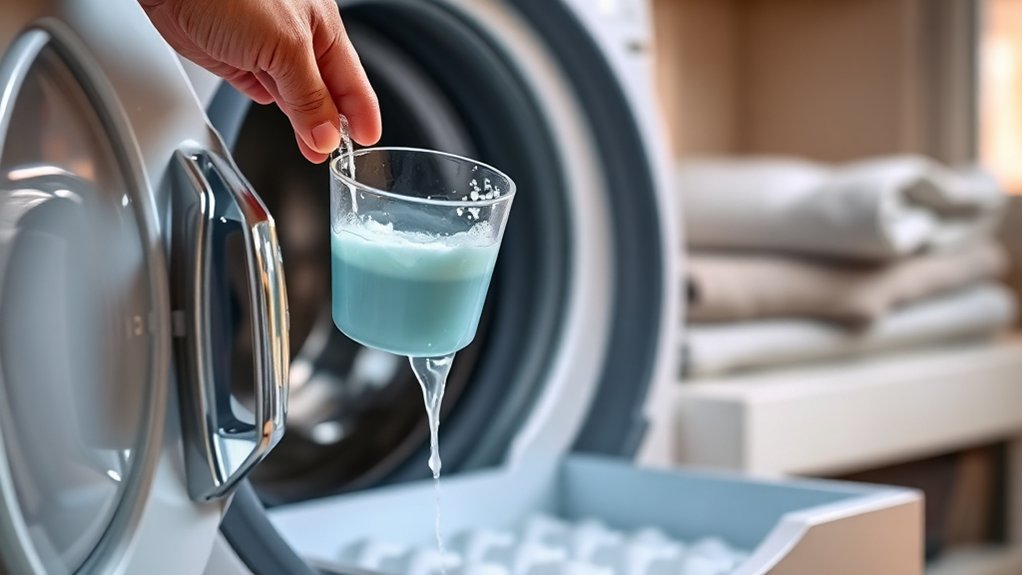
Use Downy according to your washer’s instructions: add liquid fabric softener to the dispenser, or place a Downy sheet in the dryer with your clothes.
For a top-loading washer without a dispenser, check the manual for when to add liquid softener during the rinse cycle. Don’t pour it directly onto dry clothes, as it may leave marks.
If your machine has a dedicated dispenser, follow its fill line and avoid overfilling. For a front-loader, use the compartment marked for fabric softener.
In the dryer, add a sheet before starting the cycle, following the package directions for load size. Remove it when the cycle ends, and discard it after one use.
Keep sheets away from lint filters and vents. Don’t use a dryer sheet with items labeled “do not use fabric softener.” Check garment and product care instructions first.
How Does Downy Fabric Softener Work?
Whether you add it to the washer or dryer, Downy fabric softener works by coating fibers with conditioning ingredients. These ingredients settle on fabric as your laundry tumbles or rinses, creating a thin layer around individual fibers.
That layer helps reduce friction, so clothes feel softer against your skin and may cling less from static. It can also help fibers move smoothly past one another, making fabrics feel less rough and helping reduce wrinkles.
You may notice a fresh scent, too, depending on the Downy product you choose. The effect varies with fabric type, product formula, and how much you use.
Follow the label’s directions to get the intended results without leaving excess residue.
In short, Downy conditions fabric surfaces, improving feel and reducing static during everyday wear.
How Is Downy Different From Detergent?
Downy fabric softener and laundry detergent serve different purposes: detergent cleans clothes by removing dirt and oils, while Downy conditions fibers to soften fabric and help reduce static.
You shouldn’t use Downy as a substitute for detergent; it won’t wash away everyday grime. Instead, add each product to its designated dispenser or follow your washer’s instructions.
- Cleaning: Detergent lifts soil, sweat, and odors from garments during the wash.
- Conditioning: Downy coats fibers to make fabrics feel softer and can help reduce static cling.
- Timing: Use detergent in the wash cycle; add Downy to the softener compartment so it releases during the rinse.
Check garment care labels before using fabric softener. Some items, including moisture-wicking activewear and towels, may perform less effectively when treated with it.
Frequently Asked Questions
Who Manufactures Downy Products?
Procter & Gamble (P&G) manufactures Downy products. When you buy Downy fabric softener, scent beads, dryer sheets, or other laundry care items, you’re buying products from this American consumer goods company.
P&G also owns brands such as Tide, Gain, and Febreze. You can find Downy products in many countries, though specific products and packaging may vary by market.
Check the label or P&G’s website if you need details about a particular item.
Is Downy Safe for Sensitive Skin?
Downy can be a skin-sensitivity storm for some people, so you shouldn’t assume it’s safe for you. Fragrances and other ingredients may irritate sensitive skin or trigger a reaction.
Check the product label, choose a fragrance-free option if available, and use only the recommended amount.
You can also skip fabric softener or try a small load first. If you develop a rash or itching, stop using it and ask a healthcare professional.
Can Downy Cause Allergic Reactions?
Yes, Downy can cause allergic reactions or skin irritation in some people, especially if you’re sensitive to fragrance or other ingredients.
You might notice itching, redness, a rash, or hives after contact with treated clothing.
Stop using the product and wash affected clothes with fragrance-free detergent.
If symptoms are severe, spread, or include trouble breathing or facial swelling, seek urgent medical care.
Check the label and consider a fragrance-free alternative if you’re concerned.
Is Downy Tested on Animals?
Downy’s parent company, Procter & Gamble (P&G), says it doesn’t test its products on animals unless regulators require it.
However, animal-welfare groups have criticized P&G because it sells products in markets where authorities may require animal testing.
So, whether you consider Downy cruelty-free depends on your criteria.
P&G says it avoids animal testing, but Downy isn’t universally certified as cruelty-free.
You can check current policies and certifications before choosing a fabric softener.
Are Downy Products Environmentally Friendly?
Downy’s environmental record is a mixed bag, so you shouldn’t assume its products are fully eco-friendly. Some formulas use biodegradable ingredients, but fabric softeners can contain chemicals that persist in waterways, and plastic packaging adds waste.
You can check each product’s label and the manufacturer’s current sustainability details since ingredients and claims vary.
To reduce your impact, use less, choose concentrated formulas, and consider reusable dryer balls or fragrance-free alternatives when they suit your needs.
Conclusion
Downy can help your laundry feel softer, smell fresher, and resist static, but it isn’t a substitute for detergent. Choose a product that suits your fabrics, scent preferences, and washer or dryer, then follow the label directions for best results.
Use the right amount, since more isn’t always better. With a little know-how, you can make laundry day a smoother ride and enjoy clothes that feel comfortable straight from the wash or dryer.