How To Get Oxiclean Out Of Carpet – Step-by-Step Guide
To get OxiClean out of carpet, blot the area with a clean, dry white cloth, working from the edges inward without rubbing. Check your carpet’s care instructions, then test any cleaner on a hidden spot.
Dab the residue with small amounts of cool water and blot with a fresh towel to lift moisture. Let the carpet air-dry away from heat. Check for discoloration or lingering marks once dry; the steps below can help you handle them safely.
Blot Up Fresh OxiClean Without Rubbing
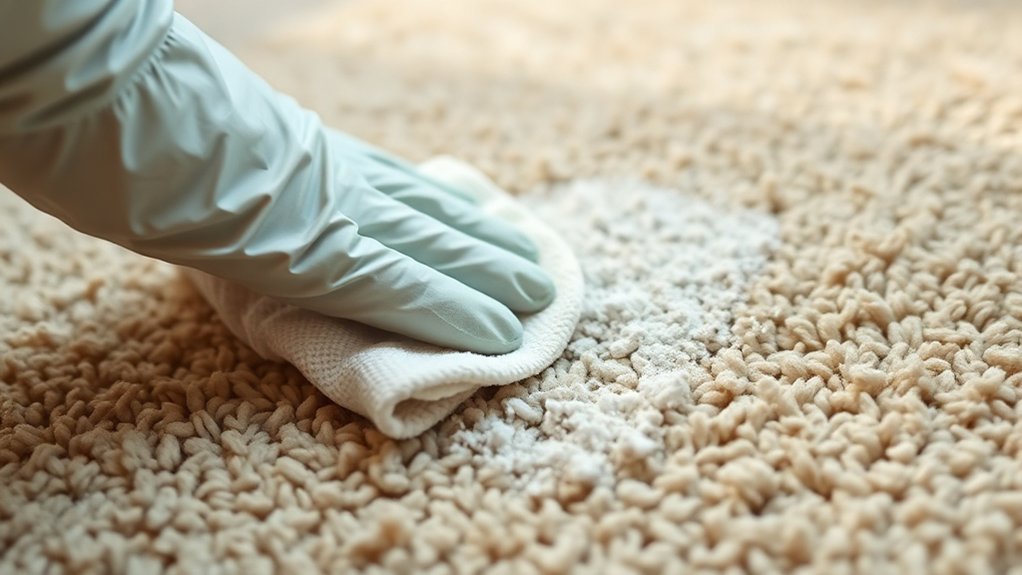
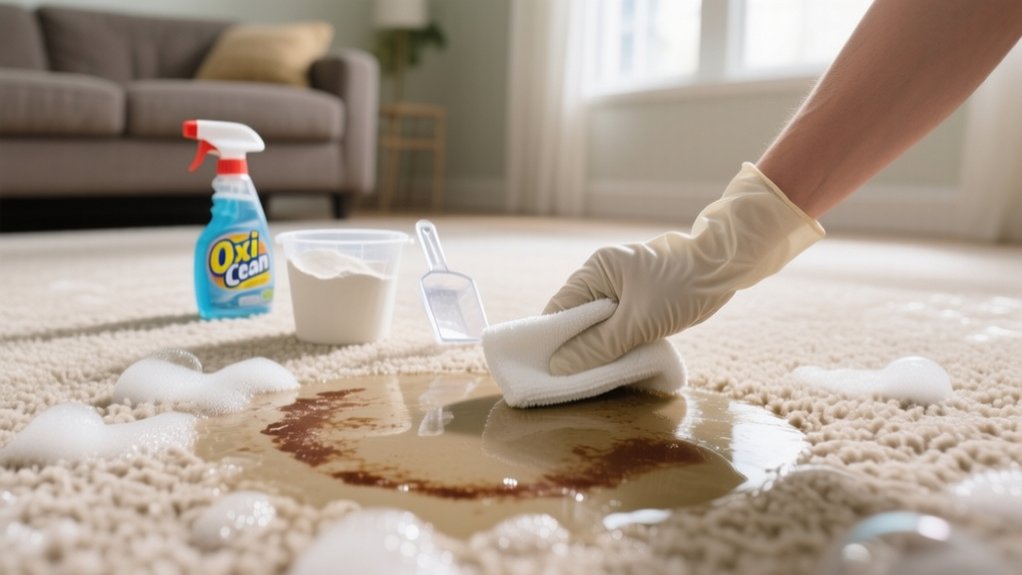
Blot the fresh OxiClean spill with a clean, dry white cloth, pressing gently to absorb as much liquid as possible. Work from the outside edge toward the center to keep the wet area from spreading.
Lift the cloth straight up, then move to a dry section and press again. Don’t rub, scrub, or drag the fabric across the carpet; friction can push the cleaner deeper into the fibers and spread it farther.
Lift the cloth straight up and blot with a dry section; rubbing can push the cleaner deeper and spread it farther.
Keep blotting with fresh, dry cloths until they pick up little or no moisture. If the spill covers a large area, use several cloths so you don’t transfer the cleaner back onto the carpet.
Apply steady, gentle pressure rather than standing on the cloth.
Once you’ve absorbed the excess liquid, pause before taking further steps, and avoid adding more cleaner or water yet.
Check Your Carpet’s Care Instructions
Before you start treating the stain, take a moment to find your carpet’s care label and look over the manufacturer’s cleaning guidelines.
It’s always a good idea to know what your carpet can handle.
Next, try testing OxiClean on a small, hidden spot first.
This way, you can make sure it won’t damage or discolor your carpet before you use it on the stain.
Find the Care Label
Check your carpet’s care label before trying to remove OxiClean, since the wrong cleaning method can damage its fibers or backing. Look for the label on the carpet’s underside, near an edge, or on a tag attached to a remnant. If your carpet is wall-to-wall, check any paperwork or product tags you kept after installation.
Read the care symbols and instructions carefully. They may indicate whether you can use water, which cleaning products to avoid, or whether the carpet needs professional care.
Pay attention to fiber-specific warnings, since wool and other delicate materials may react poorly to certain treatments.
If the label is missing or unreadable, don’t guess. Identify the carpet’s fiber and construction as best you can, and use a cautious approach until you find reliable care information.
This helps you avoid making the stain or damage worse.
Check Manufacturer Guidelines
Your carpet manufacturer’s care instructions can tell you whether OxiClean is safe for its fibers and backing. Check the booklet, product page, or manufacturer’s website for cleaning recommendations specific to your carpet’s material.
Some fibers require special care, and certain products may damage them or affect the backing. Look for warnings about oxygen-based cleaners, bleach, or stain removers, and follow any stated restrictions.
If the instructions don’t mention OxiClean, contact the manufacturer or retailer and ask whether the product is appropriate for your carpet. Share the carpet’s fiber type and construction details, if available, so you can get relevant guidance.
Keep the instructions handy as you work. They can also explain which cleaning methods and solutions the manufacturer recommends.
Don’t rely on general advice when your carpet’s care guidance specifies otherwise.
Test Cleaning Compatibility
Even if the care instructions don’t rule out OxiClean, test it on an inconspicuous spot first. Choose an area hidden beneath furniture or inside a closet, and check that it’s clean and dry.
Mix the solution according to its label, then apply a small amount with a white cloth. Don’t pour cleaner directly onto the carpet.
Wait the time specified on the product label, then blot the test area with a clean, damp cloth to remove residue. Let the spot dry completely before judging the result.
Check for color fading, discoloration, roughness, or changes in the carpet fibers. If you notice any damage, don’t use OxiClean on the stain. Instead, contact a carpet-cleaning professional.
If the test area looks unchanged, proceed cautiously and follow the label directions. Keep children and pets away while the carpet dries.
Test a Cleaner in a Hidden Spot
Before treating the stain, test your cleaning solution on a hidden patch of carpet to make sure it won’t cause discoloration or damage.
Choose an inconspicuous area, like inside a closet or beneath a piece of furniture. Apply a small amount of the solution to a clean, white cloth, then gently dab the patch. Don’t pour cleaner directly onto the carpet; using a cloth helps you control the amount and spot any unwanted reaction.
Wait several minutes, or follow the product label’s recommended test time. Check the fibers and backing for color changes, fading, stiffness, or other damage.
Blot the test area with a dry white cloth to see whether dye transfers. If you notice any change, stop and choose a carpet-safe alternative. If the patch looks unchanged, go ahead and proceed cautiously.
Rinse OxiClean From the Carpet
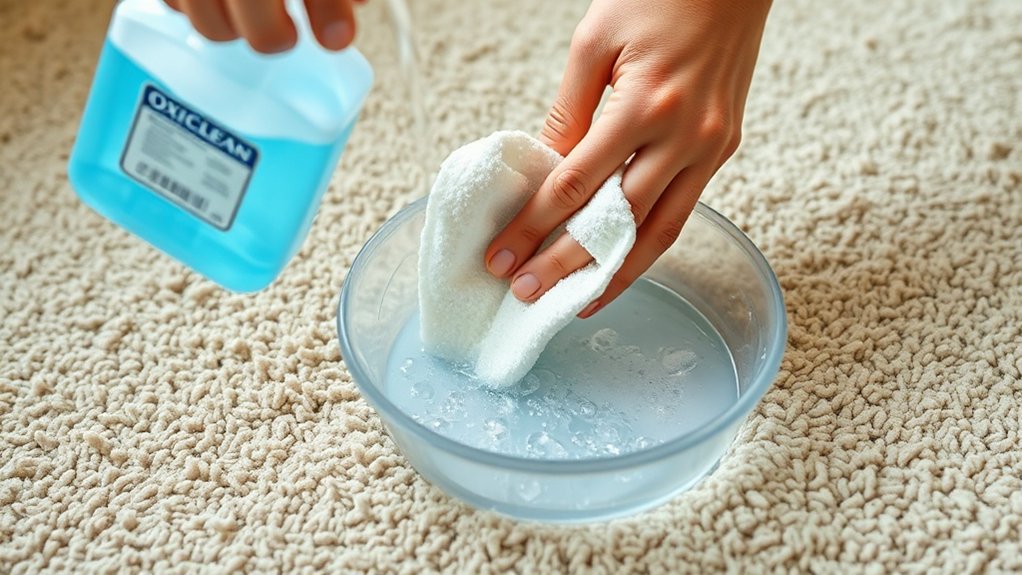
Once the test patch looks unchanged, rinse the carpet to remove OxiClean residue. Use cool, clean water and apply only a small amount at a time. You want to dilute the cleaner without soaking the carpet or pushing residue deeper into its backing.
Choose a method suited to the spot’s size:
- For a small area, dampen a clean cloth with water and gently press it over the treated fibers.
- For a larger spot, use a spray bottle to mist water evenly across the area.
- If you have a carpet-cleaning machine, follow its instructions and use its rinse-only setting, without adding detergent.
Work from the outside edge toward the center to keep the affected area contained. Don’t scrub or pour water directly onto the carpet.
Stop once the fibers feel free of cleaner; you’ll handle remaining moisture next.
Blot Up OxiClean Residue and Water
Press a clean, dry towel firmly onto the damp carpet to absorb water and loosened OxiClean residue. Don’t rub; friction can push moisture deeper or roughen the fibers. Lift the towel, move to a dry area, and press again. Repeat with fresh towels until they pick up little moisture.
| Step | What you do | Why it helps |
|---|---|---|
| 1 | Press gently | Draws up liquid |
| 2 | Lift straight | Avoids spreading residue |
| 3 | Shift towel | Uses a dry section |
| 4 | Repeat patiently | Removes more moisture |
For a larger damp area, work in small sections, overlapping each pass slightly. Use your body weight for steady pressure but don’t twist or scrub. If towels become saturated, replace them promptly so you’re not transferring moisture back onto the carpet. Keep blotting until the carpet feels only slightly damp to the touch.
Check for Remaining Stains or Color Changes
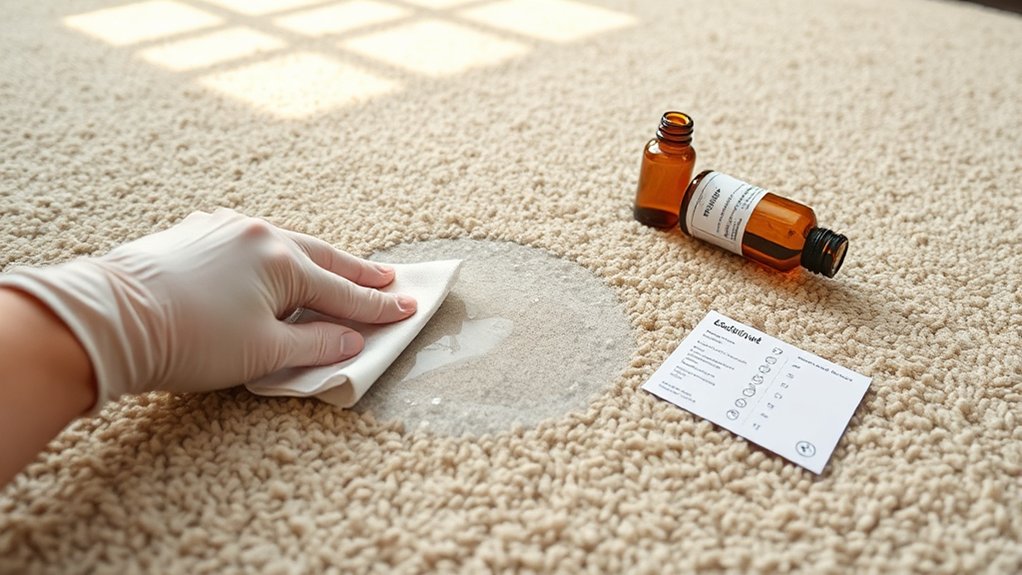
When the carpet is nearly dry, inspect the treated area in good light for lingering stains or changes in color. Compare it with the surrounding fibers, checking from several angles because dampness can make shades look uneven.
Don’t judge the final result while the pile still feels wet; moisture may temporarily darken the carpet.
Look closely for these signs: a visible outline where the stain or cleaning solution sat, a yellow, pale, or bleached-looking patch, or fibers that appear dull, stiff, or different in texture.
Check the area again once it’s fully dry, and note whether any difference remains. If you’re unsure, compare the spot with a nearby section of the same carpet rather than relying on memory.
Keep pets and foot traffic away during your inspection so dirt doesn’t affect what you see. Record the location and appearance of any persistent mark for the next step.
Treat Any Remaining OxiClean Stain
If a mark remains after the carpet dries, treat it gently rather than applying more OxiClean, which could worsen discoloration or leave residue.
First, blot the spot with a clean, damp white cloth to lift any leftover product. Don’t scrub; rubbing can spread the mark or damage carpet fibers.
If the stain persists, mix a few drops of mild dish soap into a cup of cool water. Test this solution on a hidden area, then dab the stain from its outer edge toward the center.
Blot with a fresh cloth until the mark fades, rinsing the cloth often.
Next, dab with plain water to remove soap, then press a dry towel over the area to absorb moisture.
Let the carpet air-dry, and check the spot again before repeating the gentle treatment.
Avoid Heat and Harsh Carpet Cleaners
Keep heat away from the treated spot until it’s completely dry. Hot water, steam, or a hair dryer can set discoloration or damage carpet fibers.
Let the area air-dry, and keep people and pets off it while it’s damp. Don’t try to speed up drying with a heater or heated cleaning tool.
Avoid strong products that could react with OxiClean residue or strip carpet color. Check your carpet’s care label and test any cleaner on a hidden area before applying it to the stain.
Use only a carpet-safe product and follow its directions.
Skip bleach, ammonia, and solvent-based cleaners. Don’t scrub with abrasive brushes; blot gently with a clean cloth.
Avoid mixing cleaning products, which can create harmful fumes.
If you’re unsure what’s safe for your carpet, contact its manufacturer or a professional cleaner.
Frequently Asked Questions
Can Oxiclean Permanently Discolor Carpet?
Yes, OxiClean can permanently discolor carpet, though it doesn’t always.
Its oxygen-based bleach may lighten dyes, especially on wool, silk, or other delicate fibers.
Prolonged contact or strong mixtures increase the risk.
Test the product on a hidden spot first, follow label directions, and rinse thoroughly.
If you notice color fading, stop applying it; a professional cleaner may help, but the original color mightn’t be restorable.
Is Oxiclean Safe for Wool or Silk Carpets?
OxiClean isn’t generally safe for wool or silk carpets. Its oxygen-based bleach and alkaline ingredients can weaken natural fibers, fade dyes, or cause damage, especially if you use a concentrated solution.
Check the product label, but don’t assume a carpet-safe claim applies to these delicate materials.
Instead, blot spills with cool water and contact a professional cleaner experienced with wool or silk.
Always test any approved cleaner in a hidden spot first.
How Long Does Oxiclean Take to Damage Carpet Fibers?
Oxiclean can start damaging carpet fibers within minutes if you use too much, leave it concentrated, or apply it to sensitive wool or silk.
You might see color fading, roughness, or weakened fibers sooner, while damage may take longer to appear on synthetic carpets.
Don’t rely on a fixed safe time. Follow the product label, test an inconspicuous spot, and rinse promptly.
If you notice changes, stop and contact a carpet-care professional.
Can a Professional Carpet Cleaner Remove Oxiclean Damage?
A professional carpet cleaner may improve Oxiclean damage, but can’t always reverse it.
If residue or discoloration remains, a technician can assess the fibers, rinse out leftover product, and try appropriate spot treatment or dye repair.
However, if the cleaner has weakened, bleached, or permanently altered the carpet fibers, cleaning won’t restore them.
Contact a reputable professional promptly, explain what product you used, and avoid adding more chemicals before they inspect the affected area.
What Should I Do if My Pet Ingests Oxiclean?
If your pet ingests OxiClean, call your veterinarian or an animal poison-control hotline now.
Your pet shouldn’t audition for a laundry commercial. Check the product label and share its ingredients, your pet’s weight, the amount swallowed, and when it happened.
Don’t induce vomiting or give food, milk, or medication unless a professional directs you.
If your pet struggles to breathe, collapses, or has severe symptoms, go to an emergency veterinary clinic immediately.
Keep the package handy.
Conclusion
You’ve learned how to remove OxiClean from carpet without rubbing, overheating, or risking color damage. Blot, rinse, and check each step against your carpet’s care instructions, testing cleaners in a hidden spot first.
If a faint mark remains, treat it gently and avoid harsh products. Sometimes, the stain you feared turns out to be only damp fibers catching the light, a small coincidence that reminds you to let the carpet dry completely before deciding whether it needs another pass.