Does Oxiclean Have Chlorine – Yes or No?
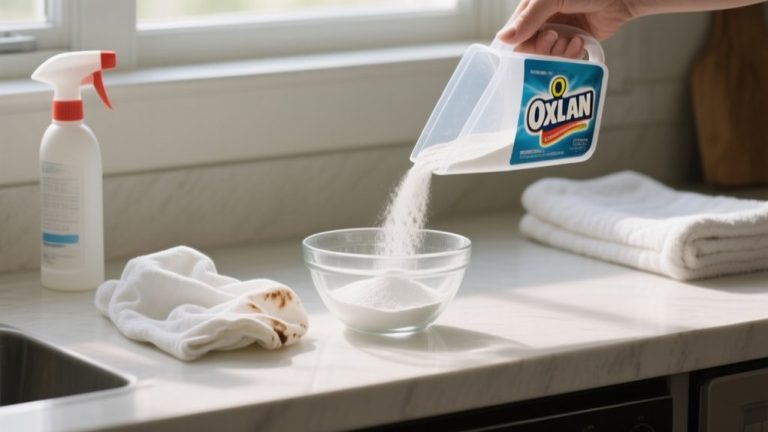
No, OxiClean doesn’t contain chlorine bleach. Its oxygen-based formula typically uses sodium percarbonate, which releases hydrogen peroxide in water to help lift stains.
That makes it different from chlorine bleach, which uses sodium hypochlorite and can strip color or weaken some fabrics. You can use OxiClean on many colorfast items, but check the product label and test a hidden spot first. Formulas vary, so the details ahead can help you choose and use the right one safely.
Does OxiClean Have Chlorine?
No, OxiClean doesn’t contain chlorine bleach. If you’re checking the label before using it, you won’t find chlorine bleach listed as its bleaching agent. OxiClean products are generally marketed as chlorine-free, so you can choose them when you want to avoid chlorine bleach in your laundry routine.
That doesn’t mean every OxiClean product works the same way or suits every fabric. Check the specific package, since product names and directions can vary. Follow the label’s instructions, and test the product on a hidden area if you’re unsure how a fabric will respond.
Don’t mix OxiClean with chlorine bleach or other cleaners. Combining products can create hazards or damage materials.
If you need a product that contains chlorine bleach, choose one that clearly identifies it on its label instead.
What Ingredients Make OxiClean Work?
You’ll find that OxiClean’s cleaning power starts with sodium percarbonate. When mixed with water, it releases oxygen, which helps break down stains.
Then there’s soda ash—it gives the cleaning a nice boost. Surfactants come into play too; they lift dirt and stains away from fabrics and surfaces.
Plus, there are additives that support the formula’s overall performance and make sure it works well for different cleaning tasks.
Sodium Percarbonate
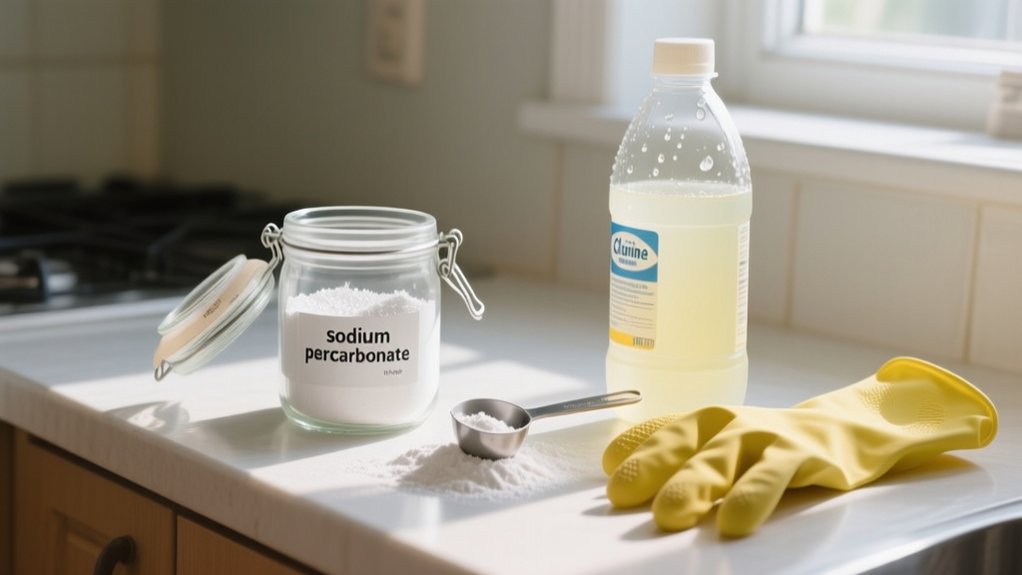
Sodium percarbonate is the main ingredient that gives many OxiClean products their cleaning power. When you dissolve it in water, it releases hydrogen peroxide, an oxygen-based bleach. That reaction helps lift stains and brighten washable fabrics without relying on chlorine bleach.
You can use it on many colorfast items, but always check the product label and test a hidden spot first.
| Feature | What it means for you |
|---|---|
| Active ingredient | Sodium percarbonate |
| In water | Releases hydrogen peroxide |
| Cleaning action | Helps loosen stains |
| Bleaching type | Oxygen-based, not chlorine |
| Best practice | Follow the label |
The formula’s effect depends on water temperature, concentration, and the stain. Don’t mix OxiClean with chlorine bleach or other cleaners unless the label says it’s safe.
Keep the powder dry and out of children’s reach.
Soda Ash
Soda ash, or sodium carbonate, helps OxiClean work by raising the water’s pH, which can boost cleaning and help loosen some stains. When you add the powder to water, this alkaline ingredient creates conditions that can make certain soils easier to remove.
It also helps the cleaning solution work effectively across a range of water conditions. Soda ash isn’t chlorine bleach, and it doesn’t disinfect or whiten fabric in the same way chlorine bleach does. Instead, it supports the oxygen-based cleaning process described in the previous section.
You can follow the package directions to use the recommended amount and water temperature for your load. Don’t assume that a higher dose will clean better; too much product may leave residue or affect delicate items.
Check garment care labels before washing.
Surfactants and Additives
Alongside oxygen-based cleaners and soda ash, OxiClean may contain surfactants and other additives that help lift soil and improve cleaning. Surfactants reduce water’s surface tension, helping it spread through fabric and loosen oily or greasy residue.
They can also keep loosened dirt suspended in the wash water, so it’s less likely to settle back onto your clothes.
Other ingredients may support the formula’s performance, stability, or scent, depending on the specific OxiClean product. Formulas vary, so check your package’s ingredient list for details.
These ingredients don’t make OxiClean a chlorine bleach: its standard stain-fighting action comes from oxygen-based compounds, not sodium hypochlorite.
Follow the label’s directions, and test the solution on a hidden area first, especially when you’re treating delicate or colorfast fabrics.
How Is OxiClean Different From Chlorine Bleach?
OxiClean and chlorine bleach actually use different active ingredients, so they clean in different ways. OxiClean releases oxygen to lift stains, which is pretty effective.
On the other hand, chlorine bleach works through oxidation and also disinfects as it cleans.
Because they work differently, they can affect your fabrics in different ways too.
Active Ingredients
OxiClean’s main active ingredient is sodium percarbonate, which releases hydrogen peroxide and oxygen when mixed with water.
You’ll also find sodium carbonate in many OxiClean formulas; it helps create an alkaline solution.
Some products include surfactants, enzymes, or fragrance, so check the label for the specific ingredients in your chosen version.
Chlorine bleach, by contrast, typically contains sodium hypochlorite as its active ingredient. That chemical is a chlorine-based compound, while sodium percarbonate contains no chlorine.
The two products consequently differ in their primary active ingredients, even though both may be sold as laundry boosters or stain removers.
If you need to avoid chlorine, look for “chlorine-free” wording on the OxiClean package and review its ingredient information.
Formulas vary by product, so don’t assume every OxiClean item has identical ingredients.
Cleaning Mechanisms
Their different active ingredients also shape how they clean: OxiClean releases hydrogen peroxide, which oxidizes stains, while chlorine bleach uses sodium hypochlorite to break down stains and whiten fabric.
When you use OxiClean, oxygen-based reactions help loosen many organic stains, such as food, grass, and wine. The released oxygen can also help lift soil from fibers, making it easier to rinse away.
Chlorine bleach works through a stronger oxidation process that alters stain compounds and removes color, which gives it a whitening effect.
You’ll often find OxiClean in powder form, so it needs water to activate its cleaning action. Chlorine bleach is typically sold as a liquid and can act quickly when diluted as directed.
Both products tackle stains, but their chemistry and cleaning effects differ.
Fabric Safety
Because it doesn’t contain chlorine bleach, OxiClean is generally gentler on colorfast fabrics, though it can still fade or damage some materials.
Chlorine bleach can weaken fibers, strip color, and leave permanent spots, especially on dyed clothing.
OxiClean uses oxygen-based ingredients that release stain-fighting oxygen in water, so you can often use it on washable colors when the care label allows.
However, don’t assume every fabric is safe: wool, silk, leather, and fabrics labeled dry-clean-only may be damaged.
Check the product label and your garment’s care instructions before treating it.
Test a hidden area first, particularly on bright or dark colors, and follow the recommended soaking time and dose.
Never mix OxiClean with chlorine bleach or other cleaners.
For delicate or uncertain items, choose a fabric-specific product or consult a professional cleaner.
Do OxiClean Formulas Vary by Product?
Yes, OxiClean formulas vary by product, so you shouldn’t assume every one has the same ingredients. The brand sells powders, liquids, sprays, and specialized cleaners, and each formula serves a different purpose.
Many OxiClean products use oxygen-based cleaning ingredients rather than chlorine bleach, but the exact ingredients depend on the product. Some formulas may also include surfactants, enzymes, or other cleaning agents.
Many OxiClean products use oxygen-based cleaners, but ingredients vary by formula and may include surfactants, enzymes, or other cleaning agents.
Check the ingredient list and label on the specific package to confirm what it contains; don’t rely on the OxiClean name alone. If you’re checking for chlorine, look for terms such as sodium hypochlorite, a common chlorine-bleach ingredient.
Product names and formulas can change, so the package provides the most reliable information. You can also consult the manufacturer’s website or contact its customer service team with questions.
Can You Use OxiClean on Colors and Delicate Fabrics?
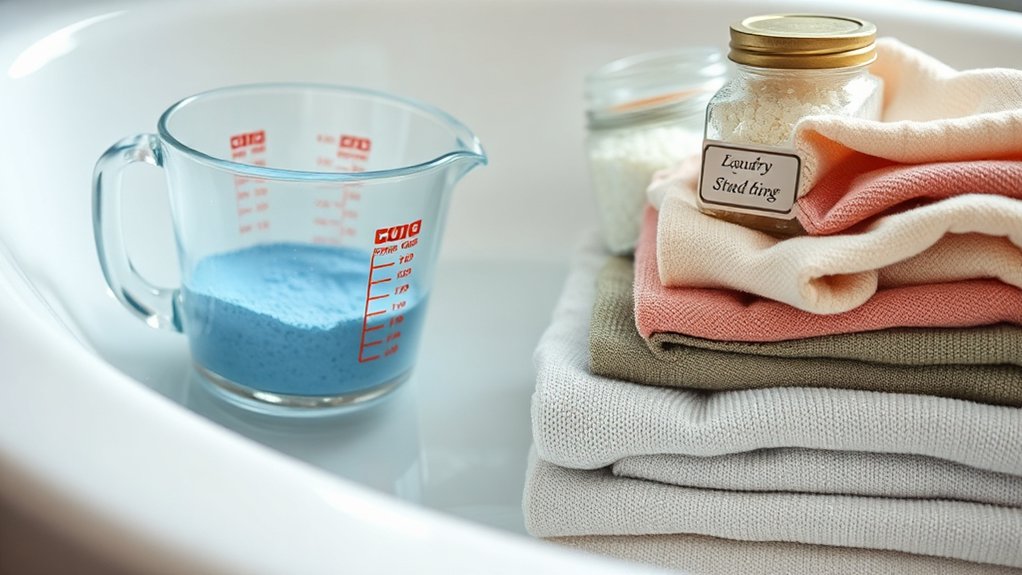
Can you use OxiClean on colors and delicate fabrics? You can often use oxygen-based OxiClean on colorfast items, but results depend on the fabric and product. Test a hidden spot first, and don’t soak wool, silk, leather, or garments marked for dry cleaning. For delicate items, choose a gentle method and follow care instructions.
| Item | Guidance |
|---|---|
| Colorfast cotton | Usually suitable; test first |
| Bright colors | Spot-test to check for fading |
| Wool or silk | Avoid; fibers may be damaged |
| Delicate blends | Use caution and a brief soak |
OxiClean doesn’t work like chlorine bleach, yet it can still affect dyes or finishes. Keep the solution away from metal fasteners when soaking, and rinse treated fabrics thoroughly. If you’re unsure how a garment will react, skip the treatment rather than risk permanent damage.
How Do You Check an OxiClean Label?
To check an OxiClean label, look for the active ingredients and directions for use. Check the ingredient list for sodium percarbonate, which releases hydrogen peroxide in water and provides oxygen-based cleaning.
Don’t confuse this with chlorine bleach: the label should identify the product’s ingredients rather than simply call it bleach. Formulas can vary, so read the specific package instead of assuming every OxiClean product is identical.
Next, follow the directions for measuring, dissolving, soaking, or adding the product to laundry. Review warnings, fabric restrictions, and first-aid information before use.
Look for guidance on colorfastness, and test a hidden area when the label recommends it. If the package is missing or unclear, check the manufacturer’s website for that exact product.
Never mix cleaners unless the label says it’s safe.
Frequently Asked Questions
Can Oxiclean Remove Old, Set-In Stains?
Yes, OxiClean can remove some old, set-in stains, but results depend on the stain, fabric, and how long it’s been there.
You’ll usually get better results by treating the stain promptly, though soaking can help loosen older marks.
Check the garment’s care label, test a hidden area first, and follow the product directions.
Don’t use it on wool, silk, or leather, and avoid drying the item until the stain is gone.
How Long Should Oxiclean Soak on a Stain?
Soak a stain in OxiClean for 1 to 6 hours, depending on the product and how severe the stain is.
Don’t soak it for more than six hours.
Mix the solution as directed on the label, then fully submerge the item.
Check the stain every now and then, and rinse or wash the fabric once the stain starts to lift.
For delicate or colored materials, test a hidden spot first and always follow the care label.
Also, don’t let the solution dry on the fabric because residue might be left behind.
Can Oxiclean Be Used in a Washing Machine?
Yes, you can use OxiClean in a washing machine to boost your detergent and brighten laundry.
For a simple start, sprinkle the recommended amount into the washer drum before adding clothes, or follow the package directions for your machine type.
You can also use the dispenser if the label allows it.
Check care tags first, avoid using it on wool, silk, or leather, and never mix it with chlorine bleach.
Is Oxiclean Safe for Septic Systems?
Yes, you can generally use OxiClean with a septic system when you follow the product label and use the recommended amount.
Its oxygen-based ingredients break down differently from chlorine bleach. But excessive use of any household cleaner can disrupt septic bacteria.
Don’t pour concentrated solution into a drain or combine it with other cleaners.
If your system is sensitive or you’re unsure, check your septic-system guidance or contact a professional.
How Should Oxiclean Be Stored Safely?
For a little extra peace of mind, store OxiClean in its original, tightly closed container in a cool, dry, well-ventilated place.
Keep it away from moisture, heat, direct sunlight, and incompatible products such as acids or chlorine bleach.
You should place it out of children’s and pets’ reach, and never transfer it to a food or drink container.
Follow the label’s specific directions, and wash your hands after handling the powder.
Conclusion
OxiClean doesn’t contain chlorine bleach; it typically uses oxygen-based ingredients to lift stains. Still, formulas can vary, so check the label before you use a product, especially on colors or delicate fabrics.
Follow the care tag and product directions, and test an inconspicuous spot first. Want to protect your clothes while treating stains? A quick label check helps you choose the right cleaner and use it with confidence.