Does Oxiclean Stain Remover Have Bleach – What to Know
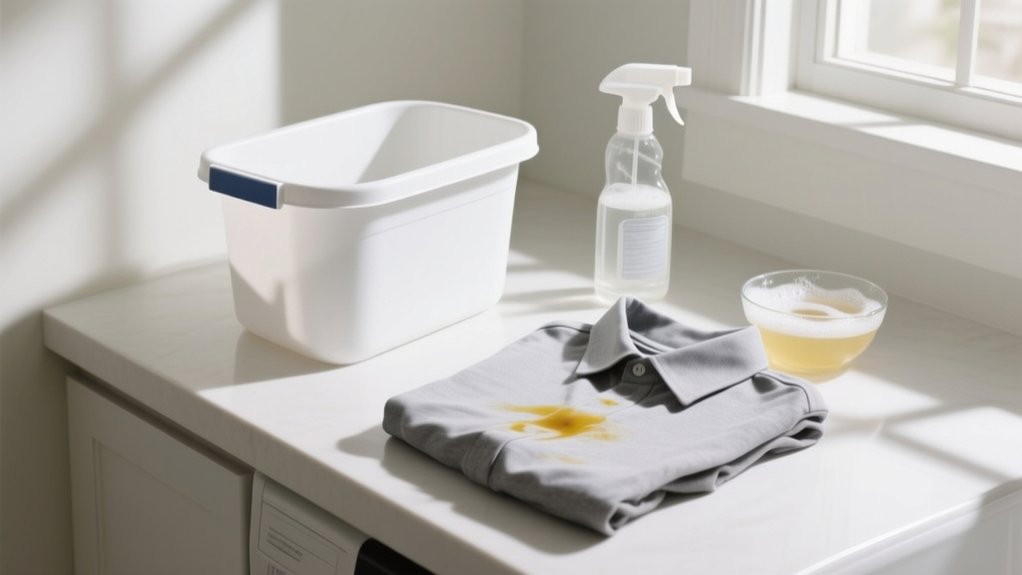
Many people worry about whether a stain remover is safe for their clothes, especially when bleach can be so harsh. If you’ve ever wondered whether OxiClean contains bleach or could damage your fabrics, you’re not alone.
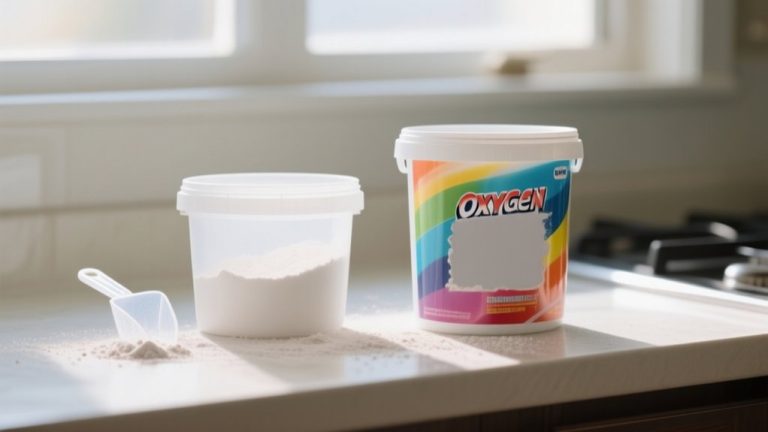
OxiClean stain remover doesn’t contain traditional chlorine bleach; instead, it uses sodium percarbonate, which releases oxygen-based cleaning power when mixed with water. This means it’s safer for most fabrics, won’t cause damage or discoloration like bleach can, and works effectively on organic stains.
However, you should never mix it with bleach or ammonia to avoid harmful fumes. If you want to understand the chemistry and best usage tips, there’s more useful information ahead.
What Is OxiClean and How Does It Work
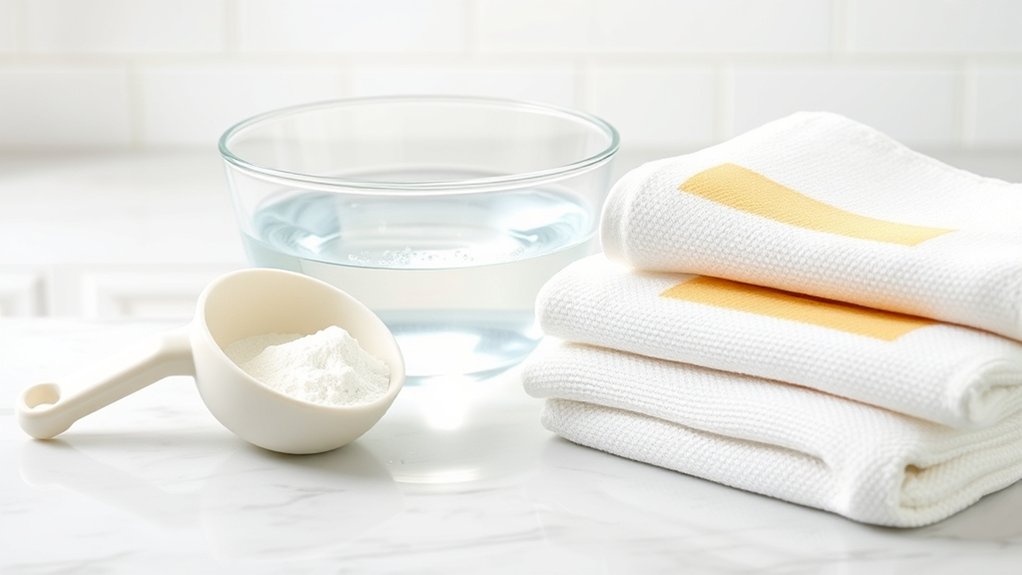
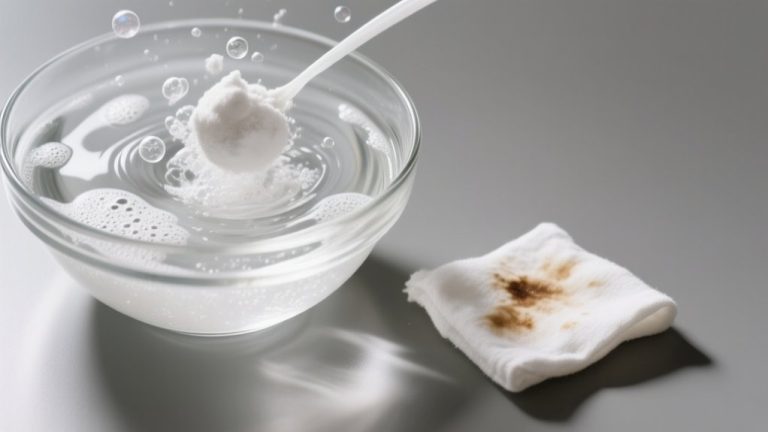
OxiClean is a powerful stain remover that works by releasing hydrogen peroxide when you dissolve its active ingredient, sodium percarbonate, in water. This hydrogen peroxide attacks stains through oxidation, breaking down organic compounds like wine, blood, and grass quickly and effectively.
The formula also contains sodium carbonate, which boosts alkalinity, helping water penetrate fabrics better while dissolving fats and oils tied to stains.
You’ll find OxiClean highly versatile. It works well alongside your regular laundry detergent and excels in various cleaning tasks beyond laundry. Importantly, it doesn’t contain chlorine, so you’re avoiding harsh chemicals while still getting strong stain removal.
When you use OxiClean, you’re leveraging a scientifically designed cleaner that acts fast and treats a broad spectrum of tough stains safely and efficiently.
Is OxiClean the Same as Bleach?
How does this popular stain remover compare to traditional bleach? OxiClean isn’t the same as bleach; it contains sodium percarbonate, which releases hydrogen peroxide when mixed with water, offering a gentler, non-chlorine alternative.
Unlike bleach, which can damage or discolor delicate fabrics, OxiClean is safe for most materials and effective on tough stains without harsh chemicals. It works through a different chemical process, breaking down safely in the environment, whereas bleach may leave toxic residues behind.
Importantly, you should never mix OxiClean and bleach, as their combination produces harmful fumes.
How OxiClean’s Active Ingredient Breaks Down
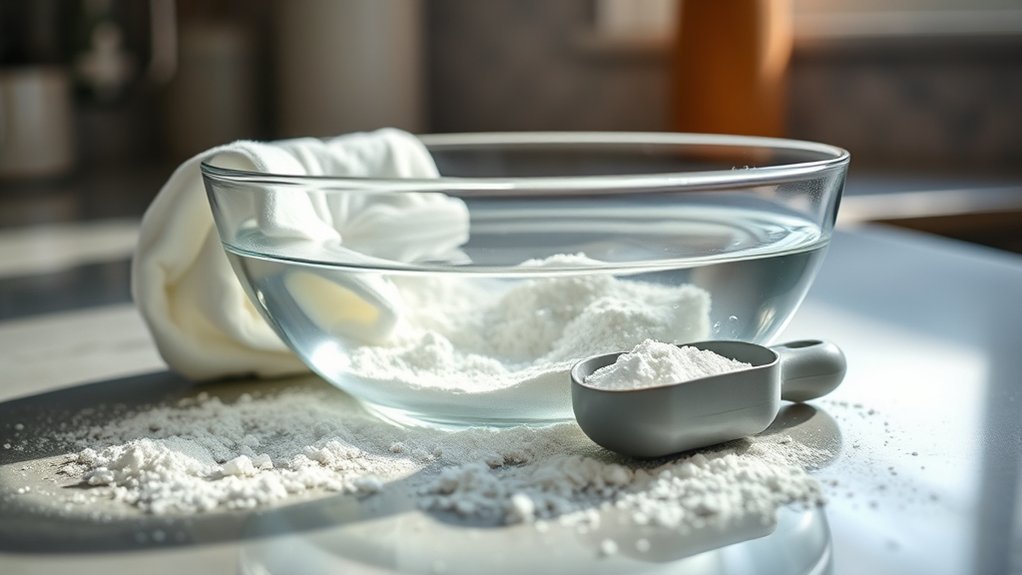
The effectiveness of this stain remover hinges on the breakdown of its active ingredient, sodium percarbonate. When you dissolve OxiClean in water, sodium percarbonate breaks down into hydrogen peroxide, a powerful yet gentle bleaching agent.
This reaction releases active oxygen, which targets and lifts stains efficiently. Warmer water speeds up this process, boosting cleaning power without the harshness of traditional chlorine bleach.
Here’s what happens when you use OxiClean:
- Sodium percarbonate reacts with water, releasing hydrogen peroxide
- Active oxygen attacks and breaks down stain molecules
- The process is gentler than chlorine bleach, protecting your fabrics
- Higher temperatures accelerate the breakdown, enhancing stain removal
Understanding this helps you use OxiClean confidently for effective, safe stain removal.
Is OxiClean Safe on Different Fabrics?
When treating stains on different fabrics, you need to take into account how each material reacts to cleaning agents. OxiClean works well on many fabrics but can harm delicate ones like wool and silk, causing damage or discoloration. Avoid using it on “dry-clean only” items.
Always perform a spot test on carpets or upholstery to check for adverse effects. For sensitive fabrics, you should opt for gentler alternatives to prevent damage from OxiClean’s strong formula.
| Fabric Type | OxiClean Safety |
|---|---|
| Cotton | Safe, effective |
| Polyester | Safe, effective |
| Wool | Not recommended |
| Silk | Not recommended |
| Dry-clean Only | Avoid use |
Why You Should Never Mix Oxiclean With Bleach or Ammonia
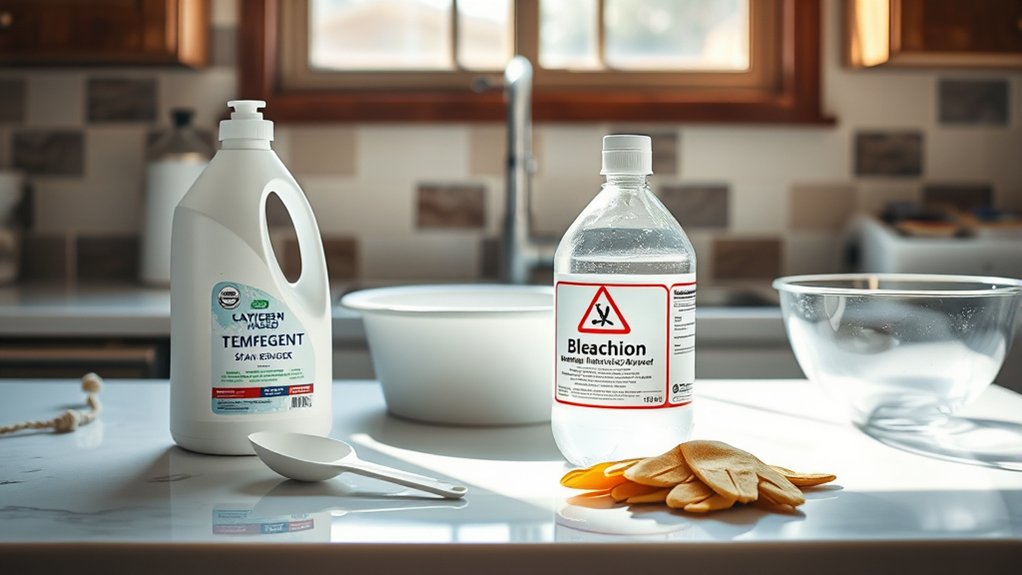
Although OxiClean is a powerful stain remover on its own, you should never mix it with bleach or ammonia because doing so can produce toxic gases and dangerous chemical reactions.
OxiClean contains sodium percarbonate, which breaks down into hydrogen peroxide.
OxiClean’s active ingredient, sodium percarbonate, releases hydrogen peroxide for effective stain removal.
Combining it with bleach risks poisonous gases and even explosive reactions. Ammonia mixed with OxiClean creates harmful fumes that can severely damage your respiratory system and skin.
Here’s why you must keep them separate:
- Inhaling toxic gases can cause serious health complications
- Explosive chemical reactions pose immediate physical danger
- Skin contact with mixtures may result in burns or irritation
- Ignoring warnings risks your safety and that of others
Always follow product guidelines and use OxiClean, bleach, or ammonia in separate cleaning applications to stay safe.
Debunking Common Myths About OxiClean and Bleach
Understanding the risks of mixing OxiClean with bleach or ammonia highlights the importance of separating fact from fiction about these cleaning agents.
One common myth is that OxiClean contains bleach. This isn’t true. Its active ingredient is sodium percarbonate, which releases hydrogen peroxide, not chlorine bleach.
Another misconception is that OxiClean and bleach function the same way. They don’t. OxiClean uses oxygen to lift stains gently, avoiding bleach’s harsh, sometimes damaging effects.
You might also hear that bleach is better for all stains, but OxiClean effectively tackles organic stains like blood and wine, which bleach may struggle with.
Knowing these facts helps you use OxiClean safely and effectively without risking harmful chemical reactions or ineffective cleaning.
How to Use OxiClean Safely Without Bleach Damage
Proper storage also keeps the product ready for the stain-treatment steps ahead.
Safe Mixing Practices
Since OxiClean contains sodium percarbonate that releases hydrogen peroxide, it’s essential not to mix it with bleach to prevent dangerous chemical reactions and toxic gas formation.
To use OxiClean safely and effectively, follow these key practices:
- Always prepare fresh OxiClean solutions. Don’t store mixed liquids longer than six hours to avoid pressure buildup.
- Perform a spot test on fabrics or surfaces before full application to check for adverse reactions.
- Follow the manufacturer’s recommended mixing ratios precisely to maximize stain removal without damaging materials.
- Never combine OxiClean with bleach or other harsh chemicals to eliminate the risk of toxic gases.
Proper Storage Tips
To keep OxiClean effective and prevent any risk of bleach-related damage, proper storage plays an essential role.
Store OxiClean in a sealed, airtight container to block moisture and prevent clumping, which compromises its potency. Avoid humid areas, since moisture accelerates product degradation and can create safety hazards.
Transfer powder from its original cardboard box to a more secure container for long-term storage, as cardboard doesn’t control moisture well.
When using OxiClean, always prepare fresh solutions and avoid storing mixed solutions longer than six hours to prevent pressure build-up and risks.
Finally, follow the manufacturer’s dosage and mixing instructions precisely to protect your fabrics and guarantee safe use without bleach-related harm.
Proper storage and handling keep OxiClean both effective and safe.
Environmental Benefits of Using OxiClean Instead of Bleach
Although traditional bleach is a common choice for stain removal, OxiClean offers significant environmental advantages that make it a smarter option for eco-conscious users.
OxiClean’s sodium percarbonate breaks down into harmless oxygen and water, avoiding toxic fumes and persistent contaminants typical of bleach.
When you choose OxiClean, you actively reduce environmental harm and support sustainable cleaning practices.
Here’s why OxiClean stands out:
- It contains no chlorine, preventing damage to aquatic ecosystems.
- Its biodegradable formula guarantees it doesn’t linger in water systems.
- It breaks down into safe byproducts, minimizing water pollution.
- Its stain-fighting power means you wash less often with harsh chemicals.
Switching to OxiClean helps you protect the environment while effectively tackling stains.
Alternatives to Bleach for Effective Stain Removal
When you want to remove stains effectively without relying on harsh bleach, several alternatives offer powerful cleaning while protecting your fabrics and health.
OxiClean, for example, uses hydrogen peroxide, delivering potent stain removal without the damaging effects of chlorine bleach.
Enzymatic cleaners like Biz Laundry Booster break down organic stains gently yet efficiently, making them a safe choice.
Natural options include vinegar, which tackles odors and light stains. Just avoid mixing it with OxiClean to prevent reactions.
Baking soda acts as a mild abrasive and deodorizer, ideal for delicate fabrics.
Oxygen bleach products, including OxiClean, also minimize the risk of discoloration, especially on colored fabrics.
These options let you maintain fabric integrity and achieve effective stain removal without the risks associated with traditional bleach.
Frequently Asked Questions
Can Oxiclean Remove Mold and Mildew Stains?
Yes, you can remove mold and mildew stains with OxiClean by applying it directly and letting it soak. Test it first, avoid porous surfaces, and repeat the treatment for stubborn stains if needed.
Does Oxiclean Have a Strong Chemical Odor?
No, it does not have a strong chemical odor like bleach. It may have a mild scent, especially when concentrated, but fresh solutions and thorough rinsing keep any smell minimal.
Is Oxiclean Safe for Use in Septic Systems?
Yes, OxiClean is generally safe for septic systems when you use it as directed. Don’t overdose it or mix it with harsh chemicals, and follow the label instructions to help keep your septic system’s bacteria balanced.
Can Oxiclean Be Used in Cold Water Washes?
Yes, you can use OxiClean in cold water washes. It dissolves well and helps remove stains while preserving fabric quality.
For best results, soak the items long enough to improve stain removal. Cold water also avoids the risk of damage from heat.
How Long Should Oxiclean Soak on Tough Stains?
1 to 6 hours is usually enough for tough stains. Fully submerge the fabric and rinse it after soaking, then repeat as needed if the stain is still there.
Conclusion
Now that you know OxiClean isn’t bleach but packs a powerful punch against stains, you can confidently tackle your laundry without fear. Just remember, mixing it with bleach or ammonia is a recipe for disaster. Stick to the instructions and treat your fabrics gently.
You’ll get great results without damage. When it comes to stain removal, OxiClean offers a safer, eco-friendly alternative that lets you kill two birds with one stone: clean clothes and peace of mind.