What Was Persil Before – What to Know
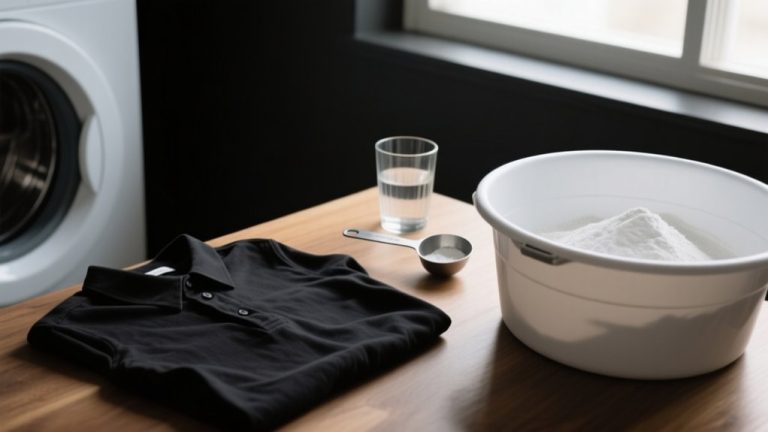
Before today’s liquids, capsules, and specialist detergents, Persil was a powdered laundry product launched by Henkel in 1907. Its original formula combined soap and soda with sodium silicate and sodium perborate, which released oxygen to help whiten clothes.
This all-in-one blend reduced the need for separate bleach and strenuous scrubbing. Persil’s name came from “perborate” and “silicate.” Over time, formulas evolved to include enzymes and suit modern machines; there’s more to discover about how this changed laundry care.
What Was Persil When It First Launched?
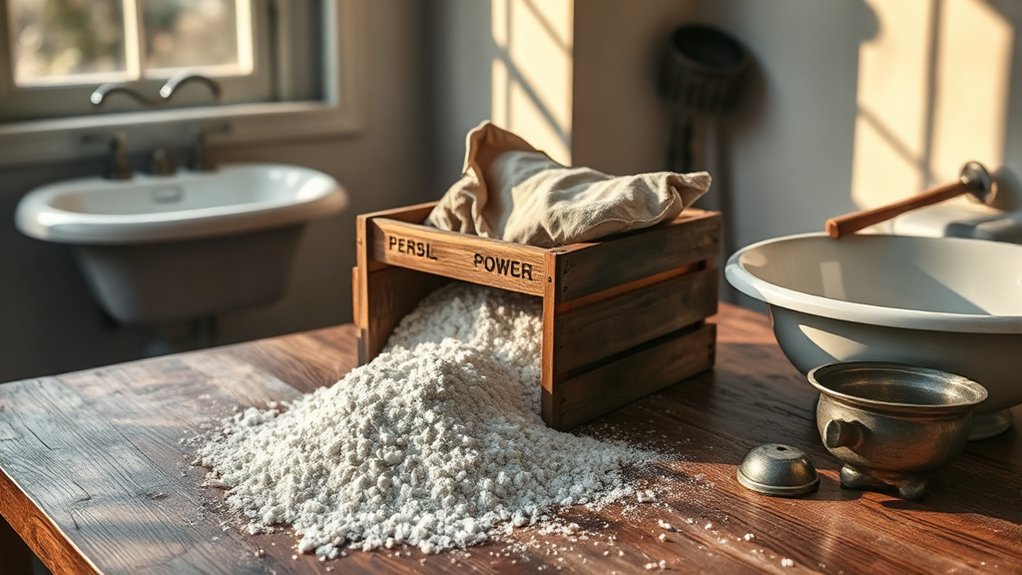
Persil launched in 1907 as a self-acting laundry detergent made by the German company Henkel. You could wash clothes without the usual manual rubbing and bleaching, making laundry less labor-intensive. The product’s name combined parts of two ingredients, but its significance went beyond branding.
Persil introduced a new approach to household cleaning. Before its arrival, you generally had to scrub garments by hand and manage several washing steps. Persil simplified that routine by bringing cleaning and bleaching action together in one product.
Persil made laundry simpler by combining cleaning and bleaching, reducing the need for scrubbing and multiple washing steps.
Henkel marketed it as a practical innovation for everyday households, and its convenience helped it stand out in a crowded market. When you look at Persil’s launch, you’re seeing an early milestone in modern laundry care.
It changed what you could expect from detergent and helped establish Henkel as a major name in household products.
What Did Persil’s Original Formula Contain?
When Persil debuted in 1907, its formula paired sodium silicate and sodium perborate. The powder also contained soap and soda, ingredients that helped you wash clothes in hot water.
Sodium perborate supplied oxygen during washing, while sodium silicate supported the mixture’s cleaning action. Together, these components formed the original recipe, which Henkel developed and sold as a ready-made laundry detergent.
You’d measure the powder and add it to your wash rather than prepare a separate bleach treatment. The formula’s ingredients worked in the wash water, helping you tackle ordinary laundry soil and keep fabrics clean.
Early Persil came as a powder, not as the liquid or capsule products you might recognize today. Its exact composition changed over time as Henkel revised the product, so descriptions of the 1907 recipe refer to its original core ingredients.
Why Was Persil’s Formula a Breakthrough?
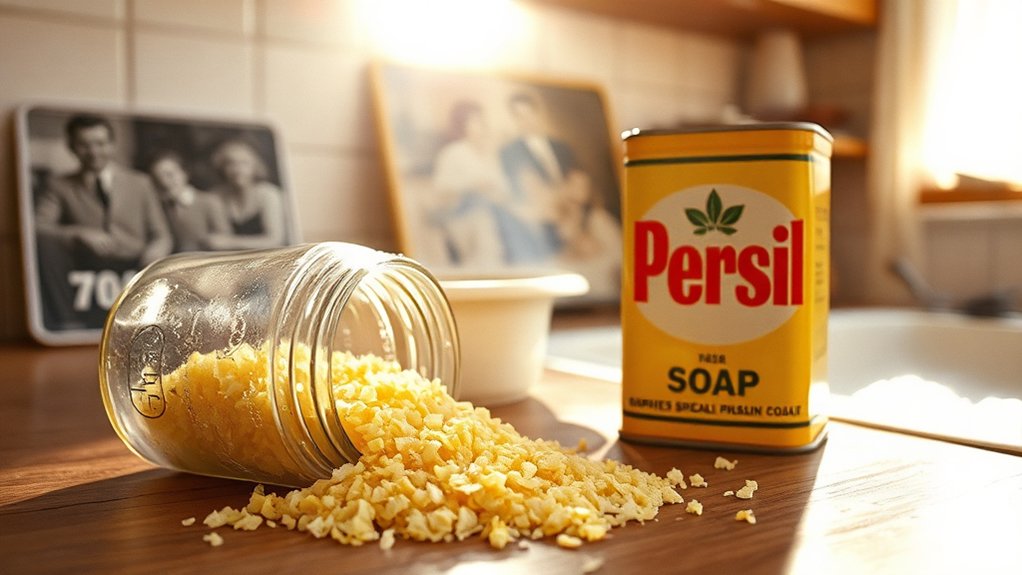
Persil’s breakthrough was combining soap, soda, sodium silicate, and sodium perborate in one ready-made powder. Instead of making you mix separate ingredients or scrub every stain by hand, this blend helped simplify laundry.
Sodium perborate released oxygen during washing, giving the powder a bleaching effect, while the other ingredients supported cleaning and helped loosen dirt. For you, that meant a more convenient way to tackle white clothes at home.
Sodium perborate helped brighten whites, while the other ingredients loosened dirt for a simpler wash at home.
- You could use one prepared product instead of several laundry ingredients.
- The oxygen-based action helped brighten whites.
- The formula reduced reliance on laborious scrubbing.
- Its ingredients worked together during washing.
- A repeatable powder made laundry routines easier to manage.
This combination marked a practical shift: you could approach washing as a more systematic process, with a product designed to clean and brighten in one step.
Where Did the Name Persil Come From?
You can actually trace the name “Persil” back to two key ingredients in its original formula: perborate and silicate.
It’s pretty clever how the brand took these chemical components and turned them into a name that’s easy to remember.
This early branding really helped Persil stand out and introduced shoppers to a whole new kind of laundry product.
The Ingredients Behind the Name
- Perborate released oxygen during washing, helping lift stains and brighten fabrics.
- Silicate supported cleaning and helped protect the washing process.
The name joins the opening syllables of the two ingredient names. You can read “Persil” as a practical shorthand for its formula.
The word reflects the product’s original chemistry, not a place or person.
That ingredient-based name gives you a quick glimpse of what made the early product distinctive: its formula inspired the word itself.
Persil’s Early Branding
That chemistry-based name also gave Persil a memorable identity. When you look at the brand’s origins, you’ll find that “Persil” combines the names of two key ingredients: perborate and silicate. Henkel introduced the detergent in Germany in 1907, presenting its name as a concise clue to the product’s chemistry.
The branding also helped Persil stand apart from traditional laundry methods. Its oxygen-based formula could clean clothes without the vigorous scrubbing and boiling many households relied on, so the name became linked with a modern, convenient wash.
Early advertising emphasized that practical difference and helped customers recognize Persil on shop shelves.
As you trace the name’s history, you can see how a simple blend of ingredient names became a lasting brand. Persil’s early identity connected scientific innovation with an easy-to-remember name.
How Did Persil Change Laundry Care?

By combining bleach and detergent in one product, Persil changed laundry care in 1907. Before then, you generally had to wash clothes through several labor-intensive stages, including soaking, scrubbing, and bleaching.
Persil’s formula brought cleaning and whitening together, helping you tackle both jobs in one wash. That shift offered practical benefits you could notice at home:
Persil combined cleaning and whitening in one wash, making laundry simpler, less strenuous, and more convenient.
- You spent less time scrubbing stubborn dirt.
- You could brighten white clothes during washing.
- You didn’t need to handle bleach separately.
- You’d a simpler routine for everyday laundry.
- You could wash with less physical effort.
Persil’s early formula used sodium perborate as a bleaching agent and sodium silicate to support cleaning. The product made laundry more convenient, though you still needed to follow washing instructions and care for different fabrics appropriately.
Its innovation lay in combining tasks, not in eliminating every challenge of washing clothes.
How Did Persil Become a Household Brand?
Persil’s one-wash approach helped it stand out, but consistent performance and growing availability turned the detergent into a household brand. When you could rely on a detergent to clean clothes effectively, laundry became easier to manage. That dependable result encouraged families to choose Persil again and recommend it to others.
Henkel supported that trust by making the product easier to find. The company expanded distribution beyond its original German market, bringing Persil to more households across Europe and later other regions.
Advertising also helped you recognize the name and associate it with reliable cleaning.
As shops stocked the detergent and generations of families used it, Persil became a familiar part of everyday laundry routines. Its reputation grew through repeated use, word of mouth, and broad availability, not simply through its early innovation.
How Has Persil’s Formula Changed Since?
To understand how Persil’s formula has changed, let’s start by looking at the ingredients in its earliest powders.
From there, you can follow how enzyme technology was introduced and how it boosted stain removal.
And finally, we’ll explore how modern formulas have evolved to meet new washing needs.
Early Persil Ingredients
When Persil launched in 1907, its formula combined soap with sodium perborate and sodium silicate. You could wash clothes without the usual hard scrubbing or boiling. Sodium perborate released oxygen that helped lift stains, while sodium silicate supported cleaning and protected the wash process.
The ingredients made Persil an early self-acting laundry detergent, a practical change for households.
- Soap tackled everyday dirt on fabrics.
- Sodium perborate helped whiten and loosen stains.
- Sodium silicate assisted cleaning and helped protect equipment.
- The blend reduced the need for laborious wash-boiling.
- Later formulas evolved as detergent science and household needs changed.
Persil’s original recipe wasn’t the same as the product you buy today. Manufacturers adjusted ingredients over time to improve performance and suit changing washing methods.
These early components, however, established the product’s distinctive approach: combining cleaning with stain removal in one wash.
Enzyme Technology Arrives
As washing machines became common, Persil’s formula evolved beyond its original soap-and-oxygen blend. Enzymes helped you tackle stains that soap alone struggled to remove. These biological ingredients break down specific soils, such as proteins and starches, making them easier to wash away.
Their arrival marked a shift toward targeted cleaning rather than relying only on the original ingredients.
| Formula element | What it does | What you notice |
|---|---|---|
| Soap | Lifts oily soil | Everyday cleaning |
| Oxygen bleach | Helps brighten fabric | Reduced discoloration |
| Enzymes | Break down some stains | Easier stain removal |
For you, enzyme technology meant a detergent better suited to machine washing and a wider range of laundry. It also helped Persil clean effectively at lower temperatures, reducing the need for hot-water washing. This stage set the foundation for later formula developments.
Modern Formula Changes
Since enzyme technology arrived, Persil’s formulas have continued to change, with newer versions adapting to different washing machines, fabrics, and cleaning needs.
Today, you can choose liquids, powders, capsules, and specialist products, depending on your laundry routine.
Formulas may also vary by country and product line, so check the label for ingredients and directions.
Modern versions aim to clean effectively at lower temperatures, helping you save energy when your garments allow it.
You’ll also find options designed for color care, sensitive skin, or concentrated dosing.
These changes reflect shifts in how you wash, not one single worldwide formula.
Choose liquid for convenient measuring and pretreatment.
Pick powder for many everyday loads.
Try capsules for premeasured doses.
Use color-care options to help protect bright clothes.
Follow pack directions for your machine and load.
Frequently Asked Questions
Which Company Currently Owns the Persil Brand?
Henkel currently owns the Persil brand in most markets, including the United States and Canada.
You’ll find that ownership differs in the United Kingdom and Ireland. Unilever owns and markets Persil there under a licensing arrangement with Henkel.
So, if you’re asking who owns Persil worldwide, Henkel is the brand’s principal owner, while Unilever controls its use in those specific markets.
This regional split explains why Persil’s packaging and product range can vary.
In Which Countries Is Persil Sold Under a Different Name?
As the saying goes, a rose by any other name: you’ll find Persil sold as Wisk in the United States and Canada, and as Dixan in Greece.
Henkel has used different names for its laundry detergent in some markets, so check the brand on local packaging if you’re shopping abroad.
Names and availability can change over time, and product formulas may differ, too.
You can confirm the current name through Henkel’s country-specific websites.
What Persil Products Are Available Besides Laundry Detergent?
Besides laundry detergent, you can find Persil products such as fabric softener, stain removers, and laundry additives, depending on your country.
Some markets also offer Persil washing capsules, which combine detergent with other cleaning ingredients.
There are products designed for handwashing or specific fabric-care needs as well. Availability varies by region, so check your local Persil website or retailer to see what’s sold near you.
You may also find different formulas for colors, whites, or sensitive skin.
Is Persil Detergent Suitable for Sensitive Skin?
Persil detergent may suit your sensitive skin, but it isn’t guaranteed to. Some Persil formulas are fragrance-free or designed for sensitive skin; check the label since ingredients vary by product and region.
Choose a fragrance-free option, use the recommended amount, and run an extra rinse to remove residue.
Before washing a full load, test the detergent on a small batch.
If you develop irritation, stop using it and ask a healthcare professional for advice.
Where Can Consumers Find Persil’s Current Product Safety Information?
Check the package, visit Persil’s website, or contact the manufacturer to find current product safety information.
You can read the label for ingredients and handling directions, search the site for product-specific safety data sheets, or ask customer service for guidance.
If you’re concerned about a reaction, review the warnings and follow the first-aid instructions.
Don’t rely on old listings. Confirm that the information matches your exact Persil product and formulation.
Conclusion
Persil began as a powder that changed laundry forever: its name came from two ingredients, perborate and silicate. Imagine a wash day in 1907, when you could clean clothes without the usual hard scrubbing.
Today’s Persil formulas have evolved, but that original leap still shapes how you tackle laundry. So next time you pour detergent, remember: you’re using a brand with more than a century of history and a name that preserves the chemistry that started it all.