How To Dry Clean A Coat At Home – Easy Guide
To dry clean your coat at home, first check its care label to guarantee fabric compatibility and follow any dry-clean-only instructions. Perform a spot test on an unseen area to prevent damage.
Use dry cleaning sheets in the dryer on medium heat for 15-20 minutes or gently hand wash delicate fabrics with mild detergent if allowed. Air dry flat, avoid direct heat, and refresh wrinkles with a steamer or baking soda.
For detailed techniques and safety tips, keep exploring the process.
Check Your Coat’s Care Label Before Dry Cleaning
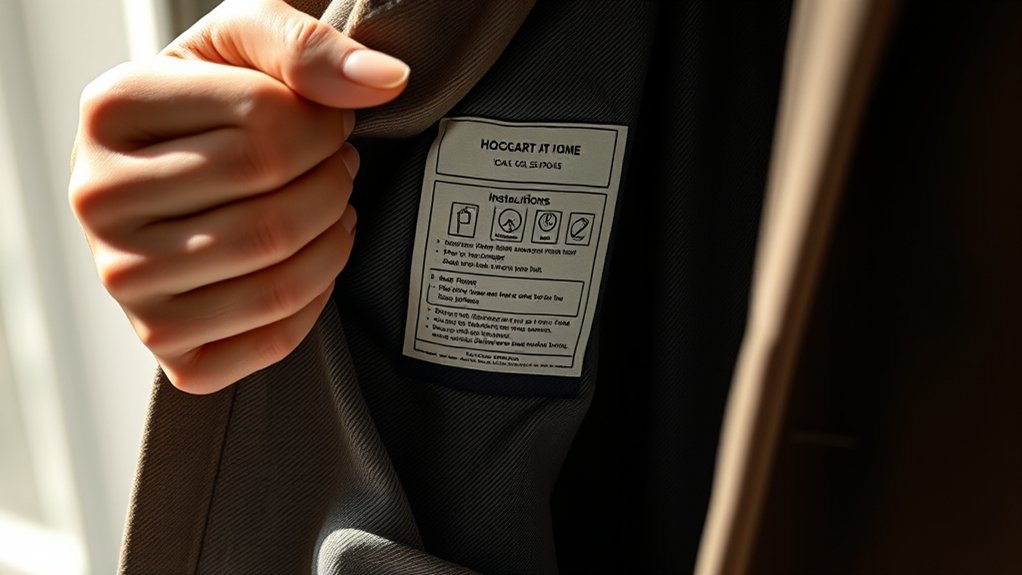
Before you begin the dry cleaning process, always check your coat’s care label to identify the recommended cleaning method. Locate the label inside the coat and carefully read the printed instructions and symbols.
Look for the open circle symbol, which indicates dry cleaning, and note any accompanying letters such as A, P, or F specifying the solvent type.
If the label states “dry clean only,” don’t attempt home washing. Instead, seek professional cleaning to prevent damage.
Fabrics like silk, wool, or embellished materials often have precise instructions that must be followed exactly.
Adhering to the care label’s guidelines guarantees you select the correct cleaning approach. This helps preserve fabric integrity and appearance while avoiding costly mistakes during the dry cleaning process.
Spot Test Fabrics to Prevent Damage
Before you apply any cleaning solution, it’s a good idea to spot test an inconspicuous area, like an inside seam. This helps you check for colorfastness and fabric sensitivity. Just use a cotton swab or a soft cloth with a small amount of cleaner.
Then, wait 24 hours to see if there are any changes, such as bleeding or damage.
Testing different fabric types on your coat makes sure the cleaning method won’t harm any delicate or embellished sections. It’s a simple step that can save your favorite coat from potential damage.
Importance Of Spot Testing
Although dry cleaning a coat might seem straightforward, conducting a spot test is essential to prevent irreversible fabric damage. You apply a small amount of cleaning solution with a clean cloth to an inconspicuous area, checking for color bleeding or weakening of delicate fabrics.
Follow manufacturer instructions carefully and avoid harsh chemicals during this process. Waiting 15-30 minutes is vital to observe any changes in texture or color before proceeding. Without this step, you risk damaging your coat beyond repair.
| Step | Purpose | Notes |
|---|---|---|
| Apply solution | Test reaction | Use clean cloth/swab |
| Wait 15-30 minutes | Observe changes | Avoid rubbing |
| Check fabric | Detect damage/color bleed | Focus on delicate fabrics |
| Follow guidelines | Prevent damage | Manufacturer instructions |
How To Perform Spot Test
When you start cleaning your coat, perform a spot test on a hidden area like inside the hem or seam to avoid visible damage.
Apply a small amount of the cleaning solution using a cotton swab or soft cloth to ensure precise application without saturating the fabric.
Wait at least 10 minutes to monitor any fabric reaction, such as discoloration or weakening.
Make sure the test spot is completely dry before evaluating the results.
If you notice any fabric damage or color change, avoid using that cleaning agent on the entire coat.
Conducting a spot test on this inconspicuous area helps you safely determine if the cleaning solution is compatible with your coat’s fabric.
This way, you prevent unwanted damage and preserve your coat’s appearance throughout the cleaning process.
It’s a simple step that can save you from bigger problems later on.
Prepare Your Coat for At-Home Dry Cleaning
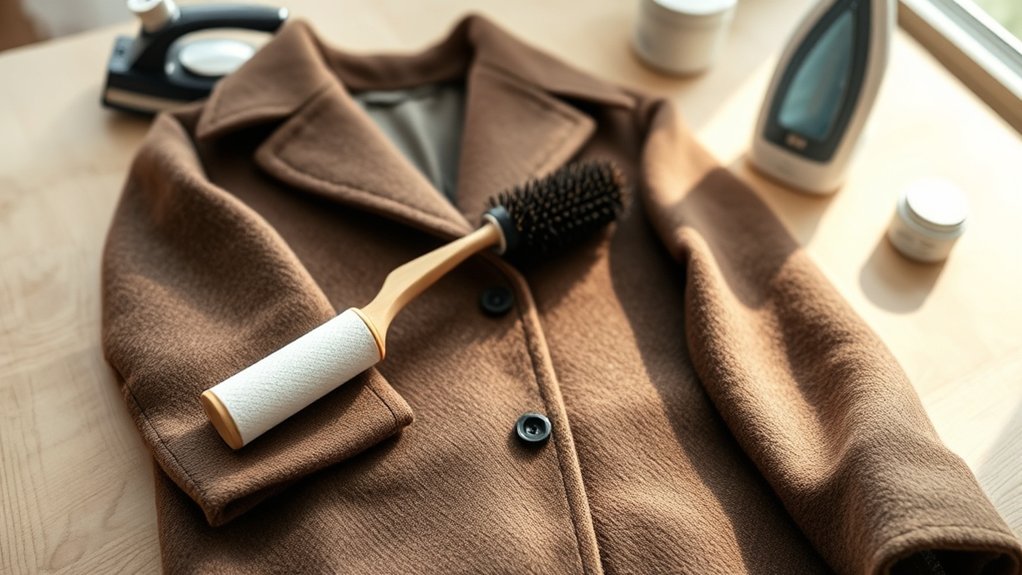
Since proper preparation directly impacts the effectiveness of your at-home dry cleaning, start by checking the care label to confirm whether your coat is suitable for home cleaning methods or strictly “dry clean only.” Next, hang your coat in a well-ventilated area or outdoors to air out any odors or moisture.
Perform a spot test on an inconspicuous seam to guarantee the fabric won’t discolor or weaken. Gently brush or shake your coat to remove dust and lint before cleaning. For small stains, pre-treat with a mild detergent spray or a vinegar-water mix.
| Step | Purpose |
|---|---|
| Care Label | Verify cleaning suitability |
| Spot Test | Ensure fabric safety |
| Pre-Treat Stains | Remove localized discolorations |
Proper preparation ensures ideal cleaning and drying results. It might seem like extra work, but it really helps your coat come out looking great.
How to Use Dry Cleaning Sheets Safely
Before using dry cleaning sheets, you’ll want to check your coat’s care label to make sure they’re safe to use. Using them on the wrong fabric can cause damage, especially with delicate materials. So, it’s always better to be cautious.
To dry clean at home safely, follow these steps carefully:
Place the coat and a dry cleaning sheet in the dryer, making sure the coat fits comfortably. Don’t overload the dryer—that way, air can circulate properly.
Set the dryer to medium heat and run it for 15 to 20 minutes. This timing helps clean your coat effectively without harming the fabric.
Once the cycle is done, take the coat out right away to avoid wrinkles. Then hang it up properly to keep its shape and help with garment care.
If you stick to these simple steps, your coat will get cleaned and dried just right. You’ll keep it looking great after every at-home dry cleaning session.
Hand Wash Delicate Coats at Home (When Needed)
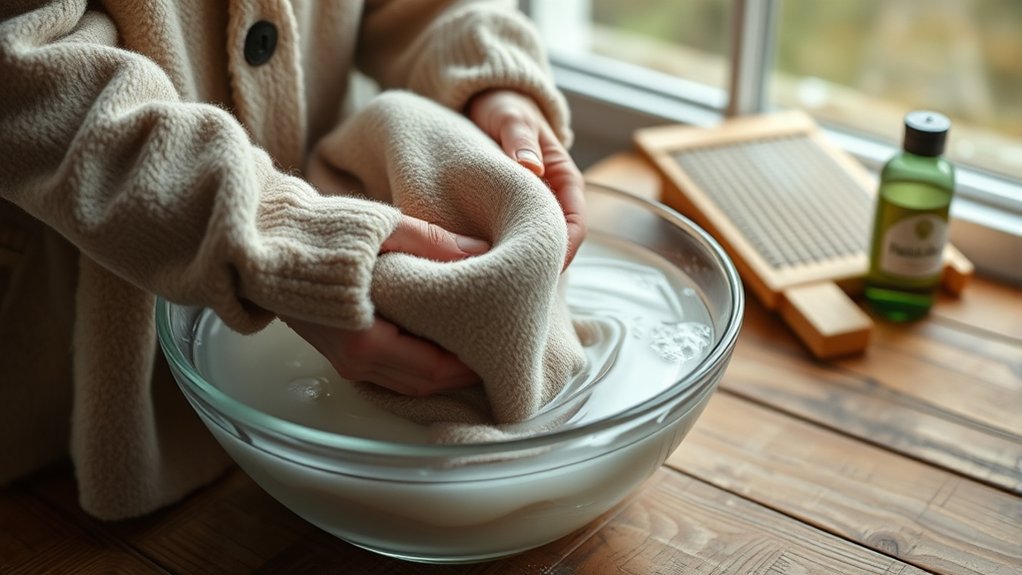
Start by filling a large basin with cool water and dissolving one teaspoon of mild detergent until you see some suds form.
Then, gently submerge your delicate coat, making sure it’s fully covered.
Let it soak undisturbed for about 20 to 30 minutes.
After it’s soaked, go ahead and rinse it thoroughly with cool water to get rid of all the detergent residue before moving on.
Preparing Water And Detergent
When hand washing a delicate coat at home, you’ll want to prepare cold water mixed with about a teaspoon of mild detergent or a wool-specific wash. Before submerging your garment, check the care label to verify hand washing suits the fabric.
To prevent fabric damage, perform a spot test with diluted detergent on an inconspicuous area. Use cool water to avoid shrinking or color bleeding.
Follow these steps for preparation:
- Fill a basin with cool water and add the measured mild detergent, stirring gently to disperse.
- Test a hidden section of the coat for colorfastness and fabric reaction.
- Confirm detergent is fully dissolved before immersing the coat to ensure even cleaning.
This method optimizes cleaning while protecting delicate garments. It helps you rinse thoroughly and maintain fabric integrity.
Gentle Soak And Rinse
After preparing the water and detergent mixture and confirming fabric compatibility, you’ll submerge the coat fully in the basin.
Gently agitate the delicate fabric to loosen dirt without wringing or twisting, preserving the fibers.
Allow the coat to soak for 20 to 30 minutes, enabling the mild detergent to work effectively yet gently.
When soaking is complete, rinse the coat thoroughly using cool water to remove all soap residues.
Maintain gentle handling throughout the rinse to avoid fiber damage.
To remove excess water, press the coat between two towels without wringing.
Finally, lay the coat flat on a clean surface to air dry, ensuring it dries evenly without distortion.
This method protects delicate coats while efficiently cleaning them at home.
Treat Stains at Home With Vinegar and Mild Detergents
How exactly can you remove stains from your coat without professional cleaning? Start by preparing a vinegar solution, mixing equal parts white vinegar and water. Test this on a hidden spot first to make sure it won’t damage delicate fabrics.
For effective stain removal, follow these steps: use a clean cloth or sponge dipped in the vinegar solution for spot cleaning. Apply gentle blotting from the outside inward. Avoid scrubbing harshly to protect the fibers and fabric integrity.
Once you’ve treated the stain, allow the area to air dry completely before wearing your coat or doing any further cleaning. This method targets stains precisely, keeping the fabric quality intact.
Plus, it’s a safe, home-based alternative to harsh chemicals, which is always a win.
Air Dry Your Coat Properly to Preserve Fabric
Although drying your coat might seem straightforward, improper methods can lead to fabric damage or distortion. To air dry your coat effectively, lay it flat on a clean, dry surface in a well-ventilated area. This setup helps prevent wrinkles and preserves the coat’s original shape.
Avoid placing it in direct sunlight or near heat sources, as they can cause fading and weaken fibers. Use a gentle patting motion to smooth out any wrinkles, maintaining the fabric’s texture. Turn the coat occasionally to ensure even airflow, promoting uniform drying and preventing misshaping.
Make certain the coat is completely dry before storing it to avoid mold, mildew, and odors. Following these steps preserves your coat’s integrity and prolongs its lifespan. Just take your time with it, and your coat will thank you!
Refresh Your Coat With Baking Soda and Steaming
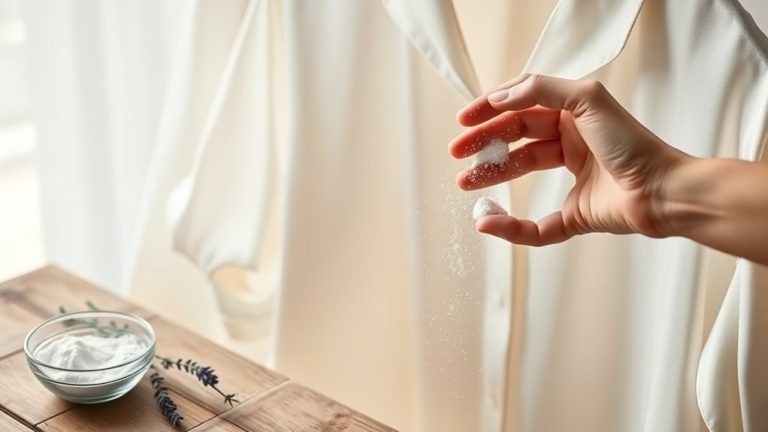
To get rid of odors, just sprinkle a thin, even layer of baking soda all over your coat. Let it sit in a well-ventilated area for a few hours before brushing it off.
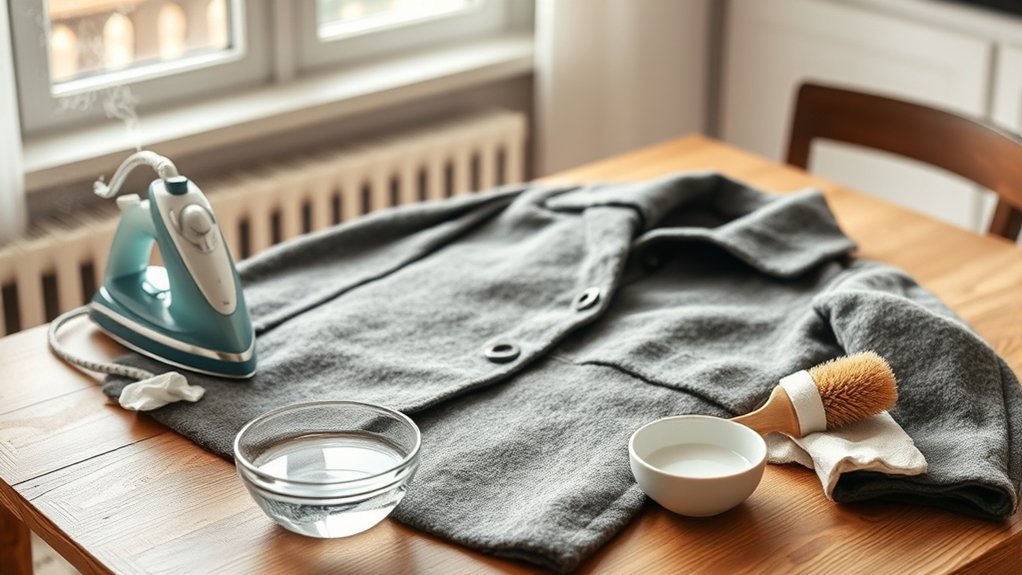
Then, grab a handheld garment steamer and hold it at a safe distance to gently smooth out wrinkles and freshen up the fabric without soaking it.
This simple combo tackles both odors and wrinkles, helping to keep your coat looking and smelling great between cleanings.
Odor Removal Techniques
Where can you find an effective, gentle way to remove odors from your coat without resorting to harsh chemicals? Baking soda offers a simple at-home solution for odor removal.
To refresh your coat, sprinkle a thin, even layer of baking soda over the fabric and leave it in a well-ventilated area for several hours or overnight.
Then, thoroughly shake off or brush away any residue. Follow this by steaming your coat with a handheld garment steamer, holding it at a safe distance to prevent fabric damage.
This process freshens the material and further eliminates odors without water immersion.
To maintain freshness, store your coat in a breathable garment bag after treatment.
Key steps include:
- Applying baking soda to absorb odors
- Using gentle steaming to refresh fabric
- Proper storage to preserve freshness
Wrinkle Removal Tips
When you want to remove wrinkles from your coat without risking fabric damage, using baking soda combined with steaming offers an effective method. Start by sprinkling a thin layer of baking soda evenly over the coat to absorb odors and refresh the fabric.
Hang the coat in a well-ventilated area or bathroom, allowing natural steam to loosen wrinkles.
Next, use a handheld steamer, holding it a few inches from the fabric to apply steam gently and avoid excess wetness. Direct the steam over wrinkled areas to smooth the fibers and restore the coat’s smooth appearance.
After wrinkle removal, store the coat in a garment bag to protect it from dust and maintain its freshly pressed look. This method efficiently refreshes your coat without water immersion or harsh treatments.
Easy, right? Give it a try and see the difference!
When to Skip Home Dry Cleaning and See a Pro
Although home dry cleaning can be effective for many coats, you should skip it if your garment features delicate fabrics like leather, suede, or fur. These materials require professional dry cleaning to avoid fabric damage.
You should also avoid home methods if your coat is labeled dry clean only, as water or machine washing can cause shrinking or color bleeding.
Furthermore, heavy stains or intricate detailing demand specialized cleaning techniques beyond home capabilities.
Consider professional dry cleaning when:
- Your coat has delicate fabrics prone to damage
- The label specifies dry clean only care
- You face tough stain removal or complex fabric blends
Trusting specialists ensures proper handling, preserving your coat’s integrity and appearance without risking irreversible harm. It’s always better to be safe than sorry when it comes to your favorite outerwear.
Troubleshoot Common Issues When Dry Cleaning at Home
If you encounter issues during home dry cleaning, addressing them promptly can prevent further damage to your coat. First, always check the care label to confirm the suitability of home dry cleaning.
Promptly addressing issues and checking care labels ensures safe home dry cleaning and protects your coat from damage
For stains, apply a stain remover cautiously after testing for colorfastness on a hidden area.
Avoid using water when washing delicate items like silk or wool. Instead, opt for gentle hand washing as the proper cleaning method.
Overloading the dry-cleaning bag can cause ineffective cleaning, so clean in small batches.
After cleaning, thoroughly inspect for damage such as fabric shrinkage, stiffness, or color fading. If any adverse effects appear, halt the process immediately to avoid permanent harm.
Following these steps guarantees safe, effective home dry cleaning.
Frequently Asked Questions
Can I Dry Clean a Coat With Leather or Fur Accents at Home?
You shouldn’t dry clean a coat with leather or fur accents at home. These materials are very sensitive to water and cleaning chemicals. Using the wrong method can cause cracking, drying, or color fading.
Instead, try spot cleaning minor stains with a damp cloth and a specialized leather or fur cleaner. It’s a gentler way to handle small messes without harming the material.
For a deep clean, it’s best to rely on professional services. They know the right techniques to preserve your coat’s look and feel without risking any permanent damage.
How Often Should I Dry Clean My Coat to Maintain Its Quality?
You should dry clean your coat every 1 to 3 seasons, depending on how often you wear it and the type of fabric. If your coat has stains or odors, it’s a good idea to clean it at least once a season.
Delicate fabrics like wool or silk don’t need frequent cleaning. About once a year is enough to avoid any damage.
In the meantime, regularly airing out your coat and spot cleaning can really help. This way, you can stretch the time between full dry cleanings and keep your coat looking great longer.
Are There Any Homemade Alternatives to Commercial Dry Cleaning Sheets?
Yes, you can make homemade alternatives to commercial dry cleaning sheets. Use a clean, damp cloth with a few drops of essential oil or a mild, fabric-safe cleaning solution.
Placing a dry dryer sheet or a cloth sprinkled with baking soda inside a fabric bag also works to absorb odors.
Furthermore, lightly spray a microfiber cloth with water and white vinegar, then place it in the dryer with your coat for a gentle refresh. It’s a simple trick that helps freshen up your clothes without harsh chemicals.
Give it a try next time you want to freshen your garments at home!
What’s the Best Way to Store a Coat After Dry Cleaning?
A stitch in time saves nine. Store your coat properly right after dry cleaning. Hang it on a sturdy, padded hanger to keep its shape intact and prevent shoulder dents.
Use a breathable garment bag to protect it from dust and pests while still allowing airflow. Make sure the coat is completely dry before storing it in a cool, dry place away from direct sunlight.
Try not to overcrowd your closet to prevent wrinkles and fabric damage.
Taking these simple steps will help keep your coat looking great for a long time.
Can Dry Cleaning Damage the Water-Resistant Coating on Coats?
Yes, dry cleaning can damage the water-resistant coating on your coat. Harsh solvents, high heat, and vigorous agitation may strip or degrade this protective layer.
Professional cleaners use specialized treatments to preserve or restore water repellency, which typical home methods just don’t have.
To keep your coat performing well, it’s best to avoid aggressive cleaning techniques.
After cleaning, consider reapplying a water-repellent spray. This helps restore any lost protection effectively and keeps your coat working like new.
Conclusion
Dry cleaning your coat at home can save you time and money, but it’s important to follow each step carefully to avoid damaging your fabric. Always check the labels first, spot test any cleaners, and use dry cleaning sheets properly to keep your coat in great shape.
If you’re ever unsure, don’t try to do too much yourself. Some fabrics really do need professional care.
With a little attention to detail, you’ll keep your coat looking fresh and durable season after season. It’s easier than you might think!