Why Are Suits Dry Clean Only – Explained
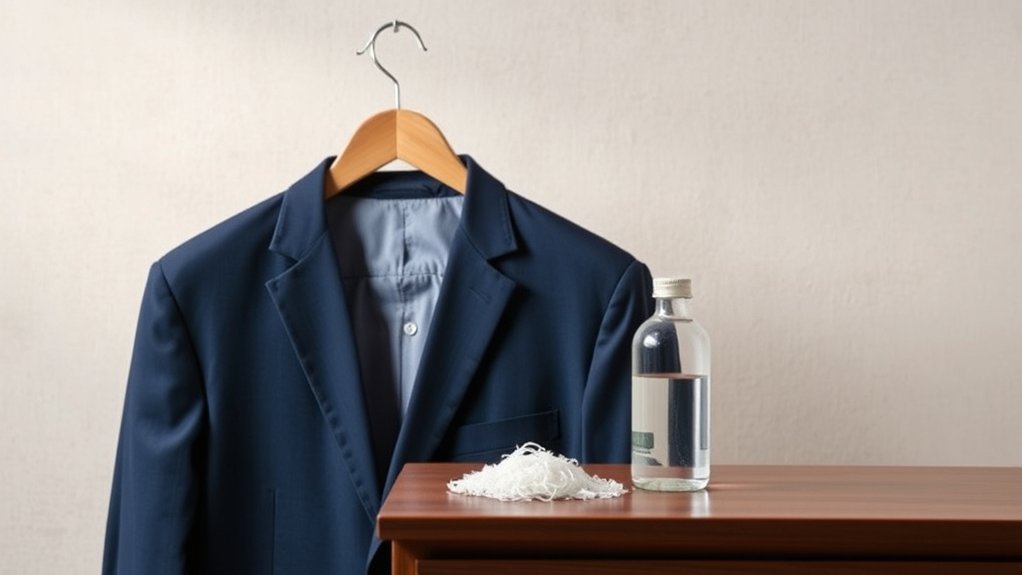
Suits are labeled “dry clean only” because their delicate fabrics like wool and silk can shrink, distort, or lose color when exposed to water and agitation. Home washing risks damaging linings, padding, and stitching, which can mess up the suit’s shape and texture.
Dry cleaning uses water-free solvents that gently remove stains and oils without harming the fibers. This process helps preserve your suit’s structure and appearance.
Knowing these details makes it easier to keep your suit looking great and lasting longer. It’s all about maintaining that sharp, professional look you want.
Why Suits Are Labeled Dry Clean Only
Why does your suit come with a “dry clean only” label? It’s because the delicate fabrics and intricate construction require specialized care.
The dry cleaning process uses chemical solvents that effectively remove oils and stains without exposing your suit to water, agitation, or heat. These factors can cause shrinking, warping, or distortion.
Regular washing methods risk damaging the suit’s structured tailoring, padding, and linings, which rely on precise fabric integrity. Manufacturers determine these labels through rigorous testing. This ensures you avoid compromising the fabric’s finish or shape.
Regular washing can harm your suit’s structure and fabric, which is why careful, tested care instructions are essential.
By following the dry cleaning instructions, you preserve the suit’s durability and appearance. You’re safeguarding its delicate fibers and tailored silhouette against damage that home laundering can easily cause.
It’s a small step that keeps your suit looking sharp for longer.
How Water Damages Suit Fabrics Like Wool and Silk
You’ll notice that when wool gets wet, the fibers tend to shrink and lose their natural shape. This ends up messing with the suit’s silhouette, making it look distorted.
Now, silk is a bit different— even just a little moisture can dull its lovely sheen and cause puckering.
Wool Fiber Water Sensitivity
Although water might seem harmless, it poses significant risks to suit fabrics like wool and silk. Wool fibers exhibit high water sensitivity. When exposed to moisture, they swell and distort, causing permanent shape changes.
This swelling breaks down the microscopic scales on wool fibers, leading to felting, which is a fuzzy texture that compromises fabric strength and elasticity. Water also induces stubborn wrinkles in both wool and silk, making garment care more complicated.
Additionally, moisture can trigger color bleeding or dye loss, further degrading the fabric’s appearance.
Understanding wool fibers’ water sensitivity helps explain why suits require dry cleaning. Avoiding water preserves fiber integrity, prevents shrinkage and felting, and maintains the fabric’s original structure and durability.
You can protect your suit by steering clear of water exposure. This ensures its longevity and keeps it looking professional.
Silk Sheen Loss
Water exposure not only affects wool’s structure but also considerably diminishes silk’s natural sheen and luster. When you expose silk to water, the fibers weaken, causing irreversible silk sheen loss. Dry cleaning prevents this by using a water-free liquid solvent.
Wool, too, suffers shrinkage and distortion. Avoiding water preserves fabric integrity and appearance by preventing dye bleeding, fading, and pilling.
Key impacts of water on suits include:
- Weakening silk fibers, reducing their natural sheen
- Shrinking and felting wool fibers
- Causing dye bleeding and color fading
- Inducing pilling in delicate fabrics
- Increasing fabric stiffness and reducing softness
Understanding these effects makes it clear why suits require dry cleaning. It maintains fabric quality through gentle, water-free liquid processes.
How Dry Cleaning Protects Your Suit

How exactly does dry cleaning protect your suit’s delicate fabric and structure? Dry cleaning uses a water-free solvent that effectively lifts stains and oils without harming delicate fibers like wool or silk.
Dry cleaning lifts stains and oils with gentle, water-free solvents that protect delicate fibers like wool and silk.
Unlike traditional washing, it avoids agitation and heat, which can cause shrinkage, distortion, and color fading.
By steering clear of water, dry cleaning helps preserve your suit’s shape, structure, and all the intricate details like lapels, lining, and stitching.
Professional cleaners pay close attention to these elements, making sure your suit keeps its original form.
Plus, regular dry cleaning removes dirt and oils that can wear down the fabric over time.
How Dry Cleaning Solvents Keep Your Suit Looking Sharp
You know, dry cleaning solvents are pretty amazing when it comes to keeping your suit looking sharp. They work by dissolving oils and stains without causing your suit’s fabric to swell or shrink.
What’s great is that these solvents are gentle on delicate fibers, so they help maintain the garment’s original shape. They remove dirt carefully, which means your suit doesn’t get distorted in the process.
Plus, they evaporate quickly, leaving your suit crisp and sharp—just the way you want it—ready to wear whenever you need it.
Solvent Action On Oils
Although dry cleaning might seem similar to traditional washing, the solvents used target oils and grease with remarkable efficiency. This helps preserve the integrity of your suit’s fabric.
These cleaning solvents dissolve oil-based stains without causing swelling or shrinkage, which are common issues with water-based methods.
They lift body oils and dirt gently yet thoroughly, ensuring your suit looks impeccable.
Key characteristics of solvent action on oils include:
- Effective dissolution of non-polar oils and grease
- Preservation of delicate fibers like wool and silk
- Rapid evaporation, preventing moisture retention
- Removal of stubborn oil-based stains without fabric damage
- Maintenance of natural fabric oils, sustaining texture and appearance
Preventing Fabric Damage
Building on the ability of dry cleaning solvents to target oils without harming fabric fibers, these chemicals also play a vital role in preventing damage during the cleaning process.
Dry cleaning solvents dissolve oil-based stains and body oils effectively, ensuring dirt removal without swelling or penetrating the fibers.
This prevents stretching, shrinking, or distortion that water-based methods often cause. Because these solvents evaporate rapidly, they leave no residual moisture, which protects delicate fabrics like silk and wool from damage.
Furthermore, dry cleaning avoids weakening or distorting intricate stitching and beading.
The precise chemical formulation preserves the color, texture, and finish of your suit’s fabric, maintaining its sharp appearance.
Maintaining Suit Structure
When you choose dry cleaning solvents, you guarantee your suit retains its precise shape and sharp appearance. Unlike water, these solvents gently dissolve oils and stains without swelling fabric fibers. This helps preserve the tailored fit and structural integrity.
Dry cleaning prevents distortion of key suit components such as lapels, shoulders, and seams, which water-based methods often compromise. It also maintains the crispness of pressed edges, ensuring your suit looks impeccably sharp after each cleaning.
Key benefits of dry cleaning for garment care include:
- Dissolves stains without penetrating fibers
- Prevents wool shrinkage and felting
- Maintains structural integrity of tailoring
- Retains fabric crispness and pressed edges
- Minimizes fabric stress for long-term fit preservation
Dry cleaning is essential for maintaining your suit’s professional appearance and longevity. It’s definitely worth the effort to keep your suit looking its best.
Risks of Home Washing vs. Professional Dry Cleaning for Suits
Since suits are crafted from delicate fibers like wool and silk, washing them at home risks causing shrinkage, fabric distortion, and loss of shape. You might also encounter color bleeding, especially with dyed or patterned fabrics, which can mess up your suit’s appearance.
Delicate fibers in suits risk shrinkage, distortion, and color bleeding when washed at home.
Water-based cleaning can damage padding, lining, and stitching, which reduces the suit’s structural integrity and professional look. Plus, home washing might set stains or odors permanently since you don’t have access to the specialized solvents used in dry cleaning.
Regular machine or hand washing weakens fibers, making your suit wear out faster and shortening its lifespan.
On the other hand, professional dry cleaning uses controlled solvents that preserve fabric quality, remove stains effectively, and keep the suit’s original form intact. This way, your suit stays durable and polished over time.
How Often to Dry Clean Your Suit
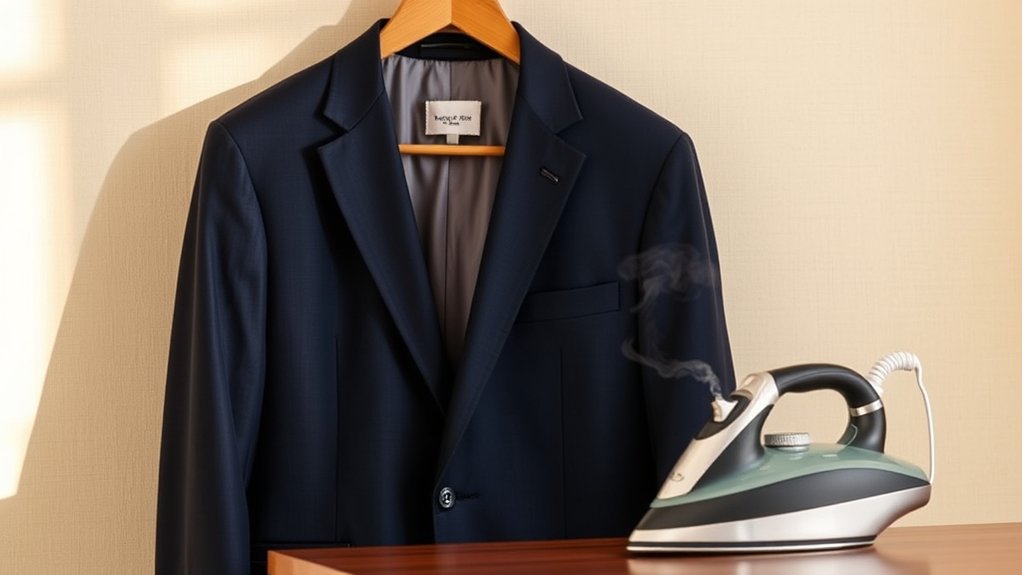
You should dry clean your suit every three to four wears to maintain its shape, color, and overall appearance. Understanding how often to dry clean your suit depends on fabric type, usage frequency, and suit style.
Formal suits like tuxedos require more frequent dry cleaning, often after each wear or once per season. This helps prevent odors and wrinkles.
Key considerations include:
- Wool and silk suits benefit from regular professional cleaning to preserve fabric integrity.
- Over-cleaning accelerates fabric wear and weakens fibers.
- Dry cleaning removes oils, dirt, and perspiration that degrade materials.
- Suits worn less frequently can safely extend the time between cleanings.
- Always follow manufacturer care labels and professional recommendations precisely.
Tips to Care for Your Suit Between Dry Cleanings
Although dry cleaning is essential for maintaining your suit’s condition, proper care between cleanings can really extend its lifespan. To minimize how often you need to dry clean, hang your suit on a broad-shouldered hanger and store it in a breathable garment bag away from sunlight.
You can use a handheld steamer or steam it in the bathroom to safely remove wrinkles. Avoid direct ironing unless you’re using a pressing cloth on low heat. Make it a habit to regularly check for stains or odors and treat them with spot cleaners or freshening sprays.
| Care Aspect | Method | Benefit |
|---|---|---|
| Hanging | Broad-shouldered hanger | Maintains shape, prevents stretch |
| Wrinkle Removal | Handheld steamer or steam | Avoids water damage |
| Stain Management | Spot cleaning, freshening spray | Minimizes dry cleaning frequency |
Taking good care of your suit between dry cleanings helps preserve its fabric integrity and overall appearance.
How to Pick the Right Dry Cleaning Service for Your Suit
When selecting a dry cleaning service for your suit, prioritizing expertise in delicate fabrics like wool and silk is essential. Choose dry cleaners renowned for professional dry cleaning methods tailored to structured garments.
Verify their use of high-quality, eco-friendly solvents such as perchloroethylene or hydrocarbon-based options suitable for suits.
Make sure they specialize in gentle handling and precise stain removal to preserve your suit’s integrity.
Convenience factors like pickup and delivery services also matter. Consider these criteria:
- Established reputation with positive reviews for delicate fabrics
- Use of industry-standard, environmentally safe solvents
- Experience handling tailored suits with linings and padding
- Commitment to meticulous pressing and specialized stain treatments
- Availability of storage and convenient logistics services
Selecting a professional dry cleaner who meets these standards safeguards your suit’s appearance and longevity. It’s worth taking the time to find the right one so your suit looks sharp and lasts longer.
Benefits of Regular Dry Cleaning for Suit Longevity
Regular dry cleaning delivers multiple critical benefits that directly enhance your suit’s longevity and appearance. It maintains your suit’s shape and fit by preventing fabric distortion and wrinkles that degrade structure over time.
Regular dry cleaning preserves your suit’s shape and prevents fabric distortion, enhancing longevity and appearance.
Dry cleaning efficiently removes body oils, dirt, and stains that weaken fibers, consequently avoiding premature fabric deterioration.
This process preserves color intensity, preventing fading and keeping your suit looking sharp and professional. Unlike traditional laundering, dry cleaning uses gentle solvents that eliminate water-related damage such as shrinking, felting, or pile damage.
By committing to routine professional dry cleaning, you extend your suit’s usable lifespan, reducing the need for costly repairs or early replacement.
Ultimately, regular dry cleaning is essential for preserving both the aesthetic and structural integrity that define suit longevity.
Frequently Asked Questions
Can I Use a Home Dry Cleaning Kit Instead of Professional Services?
You shouldn’t rely on home dry cleaning kits instead of professional services for suits. These kits use limited solvents and don’t have the specialized equipment needed to safely clean structured, delicate fabrics.
While they might freshen lightly soiled garments, they won’t remove deep stains or odors effectively.
Using them risks shrinking, color fading, or damaging your suit’s shape.
For best results, always choose professional dry cleaning to maintain fabric integrity and appearance.
It’s really worth it to keep your suits looking sharp and lasting longer.
Are All Suit Fabrics Equally Sensitive to Water Damage?
Imagine a delicate flower wilting in a sudden rainstorm. That’s how water affects some suit fabrics. Not all suit fabrics react the same to water damage.
Wool shrinks, silk weakens and bleeds, rayon distorts, and velvet loses its softness. Meanwhile, more resilient fabrics may tolerate moisture better.
But structured suits risk losing shape regardless.
You need to treat each suit fabric according to its unique sensitivity to avoid irreversible damage.
How Does Dry Cleaning Affect Suit Accessories Like Buttons or Lining?
Dry cleaning can cause metal buttons to tarnish or corrode if they aren’t specially treated. You’ll find that delicate linings, often silk or satin, might stiffen, lose shape, or develop stains due to the solvents used.
Also, decorative elements like embroidery or beading can loosen or detach from chemical exposure and agitation.
Suit accessories such as shoulder pads risk losing their structure or adhesive bonds if dry cleaned improperly, so you must handle them cautiously.
Can Dry Cleaning Remove All Types of Stains From Suits?
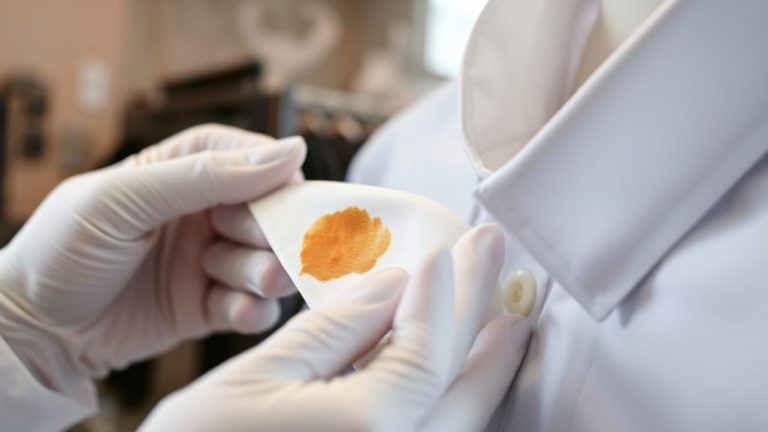
You can’t expect dry cleaning to be a magic wand that removes all stains from your suit. While it excels at eliminating oil-based dirt without harming fabric, it struggles with water-soluble stains like sweat or wine.
It also can’t always tackle deeply set protein stains such as blood.
Some dyes may bleed or fade during the process. And stubborn spots often need extra, specialized treatments beyond standard dry cleaning.
Is It Safe to Store a Suit in a Plastic Garment Bag After Dry Cleaning?
No, it’s not safe to store your suit in a plastic garment bag after dry cleaning. Plastic traps moisture and heat, which can promote mildew growth and cause the fabric to deteriorate.
It also restricts airflow, leading to wrinkles and weakening the fibers over time.
Instead, use a breathable fabric garment bag. This allows proper ventilation, protects against dust, and helps maintain your suit’s shape and integrity.
Always hang your suit in a cool, well-ventilated closet for the best preservation. This way, your suit stays fresh and lasts longer.
Conclusion
You now know that suits labeled dry clean only avoid water damage that can shrink or weaken delicate fibers like wool and silk. Notably, over 70% of suit damages reported by professionals stem from improper home washing.
By relying on specialized solvents and expert care, dry cleaning preserves your suit’s structure and sharp appearance. Remember, regular professional cleanings combined with proper interim care extend your suit’s life.
This way, your suit always looks impeccable and performs well. Taking care of it properly really makes all the difference.