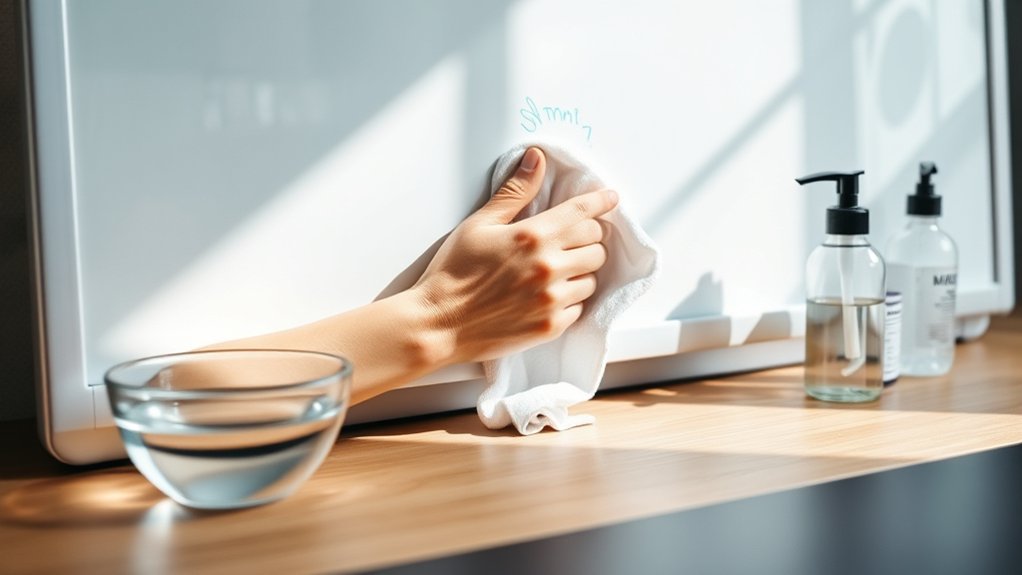
How To Clean Dry Erase Markers – Easy Guide
To clean dry erase markers effectively, erase fresh stains immediately with a dry microfiber cloth or eraser to avoid ghosting. For stubborn stains, apply 90-99% isopropyl alcohol on a microfiber cloth and scrub gently.
If permanent marker appears, trace over it with a dry erase marker, then wipe. Avoid abrasive materials and harsh chemicals to protect your board.
Regular, gentle cleaning preserves your whiteboard’s clarity and lifespan. Discover more expert tips to keep your surface pristine.
Erase Fresh Dry Erase Marker Stains Quickly
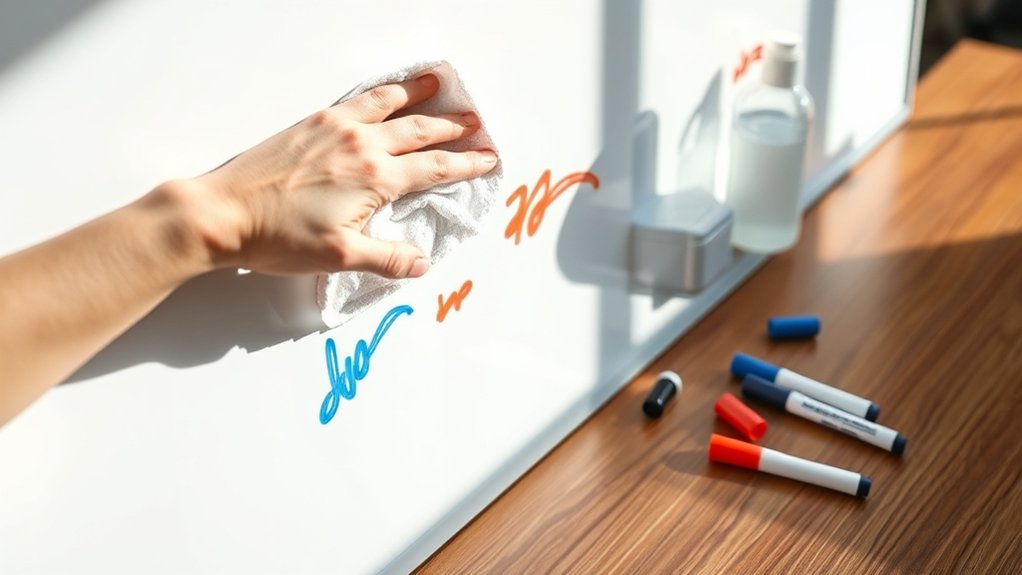
When you catch dry erase marker stains fresh, wipe them immediately with a dry microfiber cloth or eraser to stop the ink from setting and ghosting. Promptly erasing fresh marks on your whiteboard prevents ink from saturating the surface, making future cleaning easier.
Wipe fresh dry erase marker stains immediately with a dry cloth to prevent ink from setting and ghosting.
Use a clean, damp microfiber cloth to gently lift any remaining ink without smudging. If stains prove stubborn, apply a small amount of rubbing alcohol to the cloth and carefully clean the affected area.
Another effective trick is to write over the fresh mark with a dry erase marker and then erase, which loosens the ink for easier removal.
Consistent, timely cleaning reduces ghosting and preserves your whiteboard’s clarity for reliable, long-term use.
What You’ll Need to Clean Your Whiteboard
Although cleaning a whiteboard seems simple, having the right tools makes the process efficient and prevents damage. Start with a clean microfiber cloth. It effectively lifts dry erase markers without scratching.
Use a whiteboard cleaner or a mild cleaning solution in a spray bottle. Apply it to the cloth, not directly on the board to avoid oversaturation. Keep isopropyl alcohol (90 to 99%) on hand for tougher stains, but only use it when regular cleaning solutions aren’t enough.
Avoid abrasive materials like steel wool or gritty cleaners because they can damage the surface. For regular maintenance, a damp microfiber cloth usually removes most marker residue quickly and safely.
Use Isopropyl Alcohol for Stubborn Marker Stains
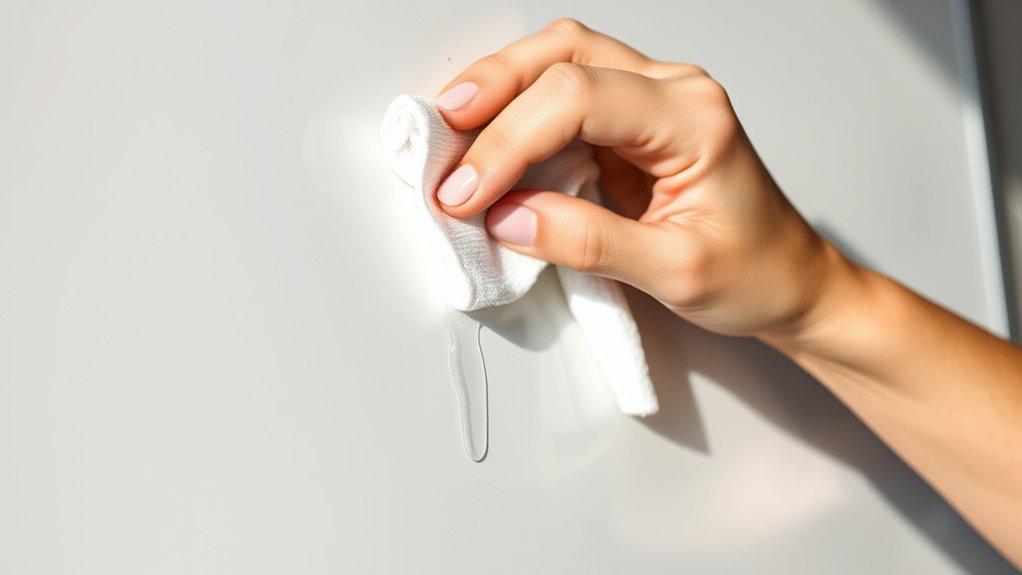
If stubborn dry erase marker stains won’t budge with regular cleaning, reach for 90 to 99% isopropyl alcohol. Apply it directly to a clean cloth or microfiber towel for the best results.
For tough dry erase stains, use 90 to 99% isopropyl alcohol applied with a clean microfiber cloth.
Use firm, circular motions to scrub the stubborn stains on your whiteboard until the ink buildup starts to lift.
For deep-set marks, just repeat the application and scrubbing process as needed until the surface is clear.
Avoid using lower concentrations like 70% because they’re less effective on persistent ink.
Once the stains are gone, wipe the whiteboard with a damp cloth to remove any remaining residue.
Finish by drying the surface with a dry microfiber towel.
Using isopropyl alcohol ensures you tackle tough ink buildup quickly and restore your whiteboard’s clean, smooth finish.
It’s a simple trick that really works!
Remove Permanent Marker Marks From Whiteboards
Wondering how to get permanent marker off your whiteboard without damaging it? First, trace over the stain with a dry erase marker, then wipe it off with a microfiber cloth to lift the ink. This is a simple trick that works most of the time.
If the stain is tougher, try applying isopropyl alcohol on a cloth and gently rubbing the area. It’s effective but use it cautiously to avoid any damage.
Nail polish remover with acetone works well for stubborn marks. Just remember to use it sparingly because it’s a powerful solvent.
Hairspray can help with small spots but it might leave some residue behind. For large or persistent stains, commercial whiteboard cleaners or adhesive removers like Goo Gone can safely break down the ink.
| Method | Best For | Notes |
|---|---|---|
| Dry Erase Marker | Light permanent stains | Simple, non-damaging |
| Isopropyl Alcohol | Moderate stains | Effective, use cautiously |
| Nail Polish Remover | Stubborn stains | Use sparingly, powerful solvent |
| Commercial Cleaners | Large/persistent stains | Safe, specialized |
Household Items That Safely Clean Dry Erase Markers
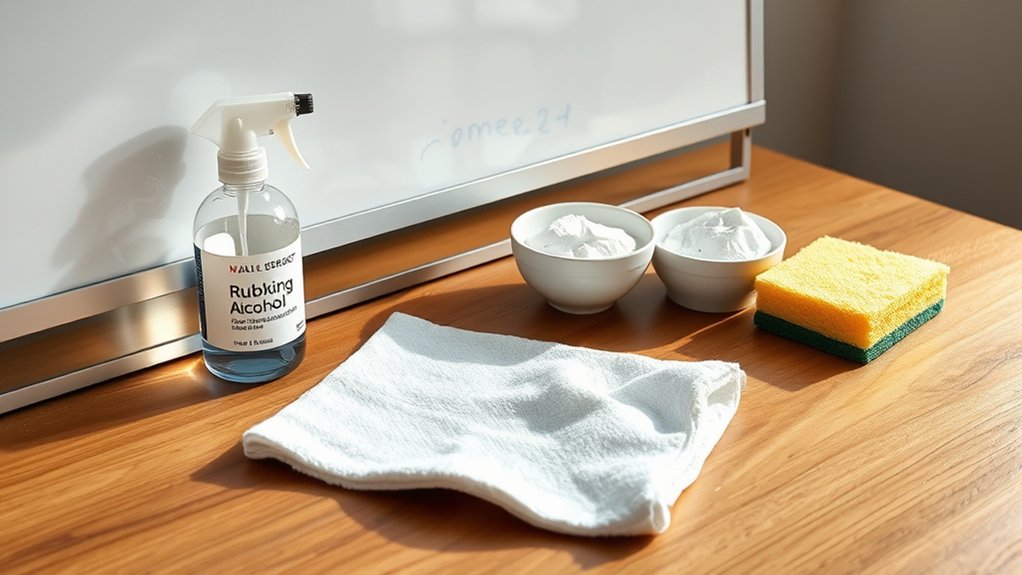
When you need to clean dry erase marker stains, several common household items can do the job safely and effectively. Isopropyl alcohol, found in many homes at 90-99% concentration, is highly effective at removing marker residue from your whiteboard. Use a soft cloth dampened with it to clean thoroughly without damage.
A magic eraser is another household item that gently removes ghosting and stubborn marks when used with care. For light stains, diluted vinegar works as a natural cleaner, though it’s less powerful on tougher spots.
Simply wiping your whiteboard with a damp microfiber cloth, either with water or isopropyl alcohol, offers a safe and affordable method to maintain a pristine surface.
These household items guarantee your whiteboard stays clean without harsh chemicals. It’s easy to keep your board looking great using things you probably already have around the house. Just give them a try and see what works best for you!
Avoid These Common Mistakes That Damage Whiteboards
Don’t use abrasive cleaners because they can scratch your whiteboard’s surface. Instead, always erase properly to prevent stains from setting in.
Also, avoid harsh chemicals since they can damage the protective coating and shorten your board’s lifespan.
Using Abrasive Cleaners
Although abrasive cleaners might seem effective at removing stubborn marks, they can seriously damage your whiteboard. Using harsh abrasives like scouring pads or steel wool causes scratches that permanently harm the surface.
These micro-scratches trap ink, making stains harder to remove and increasing ghosting over time.
Frequent application of abrasive cleaners erodes the laminate coating, which speeds up surface damage and reduces your board’s smoothness and reflectivity.
Grit-based products, like certain toothpastes or powders, make things worse by leaving abrasive residues behind.
To keep your whiteboard in good shape, avoid abrasive cleaners and scouring pads altogether. Instead, use soft cloths and gentle cleaning solutions.
This way, you protect your board’s integrity and avoid scratches and surface damage that you can’t fix.
Ignoring Proper Erasing
If you skip proper erasing techniques, your whiteboard will quickly develop ghosting and stains that are hard to remove. Using a dry cloth or eraser without enough pressure leaves residual ink, which leads to ghosting on the whiteboard surface. Erasing too lightly or too fast won’t fully clear the marker, causing permanent stains over time.
Proper erasing requires using the right erasers or microfiber cloths to avoid scratching or dulling the surface. Relying solely on dry erasing without a suitable cleaning method, like occasional alcohol wipes, allows ink buildup that damages the board’s usability.
Always guarantee thorough, deliberate erasing combined with regular cleaning to maintain your whiteboard’s clarity and longevity. Ignoring these steps undermines the board’s effectiveness and shortens its lifespan.
Applying Harsh Chemicals
Proper erasing keeps your whiteboard clean, but using the wrong cleaning agents can undo all your efforts. Avoid harsh chemicals like bleach or abrasive cleaners, as they can damage the surface, causing scratches or discoloration. Applying strong solvents directly risks the laminate or coating to peel or degrade over time.
Using excessive amounts of chemical cleaners often leaves residue that makes erasing marker ink harder. Even rubbing alcohol above 70% can dry out or warp the board if overused. Always follow manufacturer recommendations to protect your whiteboard’s lifespan and avoid voiding warranties.
Stick to approved cleaning methods and gentle solutions to maintain a smooth, clean surface without risking damage from harsh chemicals or abrasive cleaners. It’s really worth keeping things simple to make your whiteboard last longer.
Maintain Your Whiteboard to Prevent Marker Build-Up
To keep your whiteboard free from marker build-up, you should clean it regularly with a microfiber cloth dampened with water. This simple habit prevents stubborn stains and ghosting from setting in.
Follow these key steps to maintain your whiteboard effectively:
- Erase markers within 24-48 hours using a high-quality dry eraser or microfiber cloth to minimize ghosting.
- Apply a light spray of isopropyl alcohol weekly as a cleaner to break down residual ink without damaging the surface.
- Avoid abrasive cleaners or rough cloths that can scratch your whiteboard, making it prone to marker residue.
Doing these little things regularly really helps keep your board looking fresh and easy to write on. It’s not hard, and it saves you from dealing with stubborn marks later on.
Frequently Asked Questions
Can Dry Erase Markers Be Cleaned From Surfaces Other Than Whiteboards?
Yes, you can clean dry erase markers from surfaces beyond whiteboards. For smooth, non-porous materials like glass, metal, or plastic, use isopropyl alcohol or a specialized cleaner with a cloth to wipe off the ink effectively.
On porous or textured surfaces, removal is trickier since the ink can soak in. But here’s a neat trick: applying a fresh dry erase marker over the stain before wiping can help lift it.
Regular cleaning also prevents permanent marks, so it’s a good idea to tackle stains early.
How Do I Dispose of Expired or Dried-Out Dry Erase Markers?
You should tightly cap expired or dried-out dry erase markers before throwing them in your regular trash to prevent leaks.
If your community offers recycling or special drop-off programs for writing instruments, take advantage of those.
Don’t flush markers or pour ink down drains, as that harms plumbing and the environment.
Alternatively, repurpose dried markers for art or crafts to reduce waste and get extra use out of them.
Are There Eco-Friendly Alternatives to Traditional Dry Erase Markers?
Imagine your whiteboard as a garden, and traditional markers as heavy machinery that scars the soil. Eco-friendly dry erase markers let you tend that garden gently. They use non-toxic, water-based ink and recyclable barrels, causing less harm.
Brands like Expo EcoSmart act like careful gardeners, offering refillable options that reduce waste. By choosing these, you nurture both your workspace and the planet. You keep your writing clean and your conscience clearer.
Can I Use Dry Erase Markers on Glass or Mirrors?
Yes, you can use dry erase markers on glass or mirrors. The smooth, non-porous surfaces let the ink wipe off easily without staining.
Just write, then clean with a damp cloth or glass cleaner to remove any residue.
This makes glass and mirrors perfect for temporary notes or decorations.
Just try not to leave the ink on too long because it can cause ghosting.
Also, keeping the surface clean with regular maintenance helps you get the best results.
How Long Do Dry Erase Markers Typically Last Once Opened?
Once opened, your dry erase markers typically last between 1 and 3 years, depending on how often you use them.
If you use them daily, expect to replace them within 6 to 12 months due to ink depletion.
To extend their life, always cap them tightly and store them in a cool place.
Watch for signs like faint writing or skipping ink. That means it’s time to get new markers.
Taking a little extra care can really help your markers last longer.
Conclusion
You’ll erase fresh stains with ease, wipe away stubborn marks using alcohol, and banish permanent ink with household items, all without damaging your whiteboard. You’ll avoid common mistakes that wear down your surface, maintain your board regularly, and keep it looking crisp and clear.
By following these steps, you’ll clean confidently, preserve your whiteboard’s life, and enjoy a smooth writing experience every time. Keep it clean, keep it sharp, keep it lasting.