How Much Vinegar In Laundry For Softener – The Real Numbers
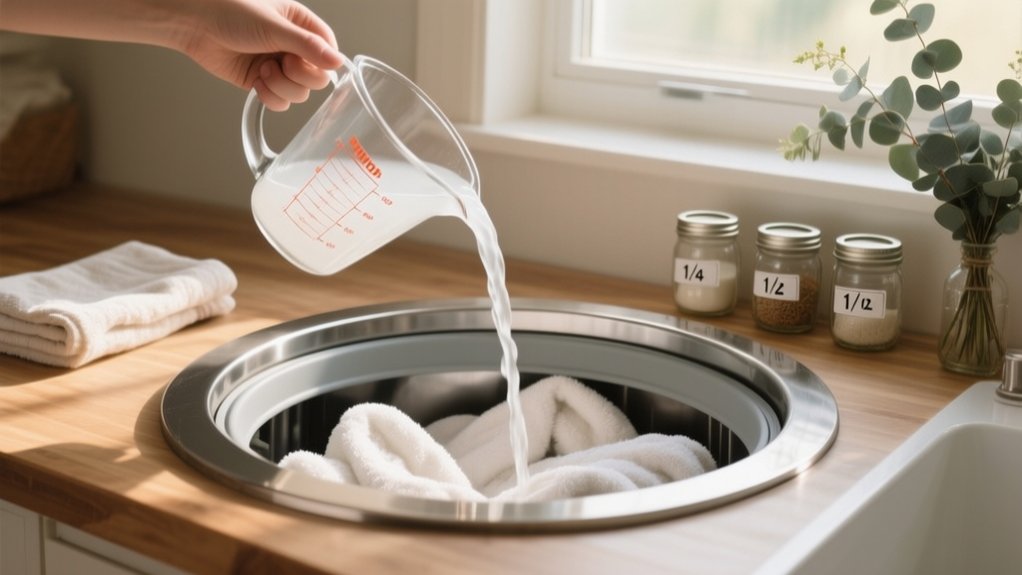
You should add ½ cup (120 ml) of white vinegar in your fabric softener compartment for a standard load to soften clothes effectively. For larger loads or hard water, increase to 1 cup (240 ml).
Use up to 2 cups (480 ml) for cotton or wool blankets during the last rinse. Always add vinegar during the rinse cycle for best results and test delicate fabrics first to avoid damage.
Keep going to discover how to fine-tune amounts and guarantee safe, ideal use.
Key Takeaways
- Use 1/2 cup (120 ml) of white vinegar in the fabric softener dispenser for standard laundry loads.
- For larger loads or hard water, increase vinegar to 1 cup (240 ml) for better softness.
- Add 2 cups (480 ml) of undiluted vinegar when washing cotton or wool blankets in the last rinse.
- Always add vinegar during the rinse cycle to dissolve residues, soften fabrics, and neutralize odors.
- Test vinegar on delicate fabrics first and avoid mixing vinegar with bleach or ammonia for safety.
How To Use Vinegar As A Fabric Softener In Laundry
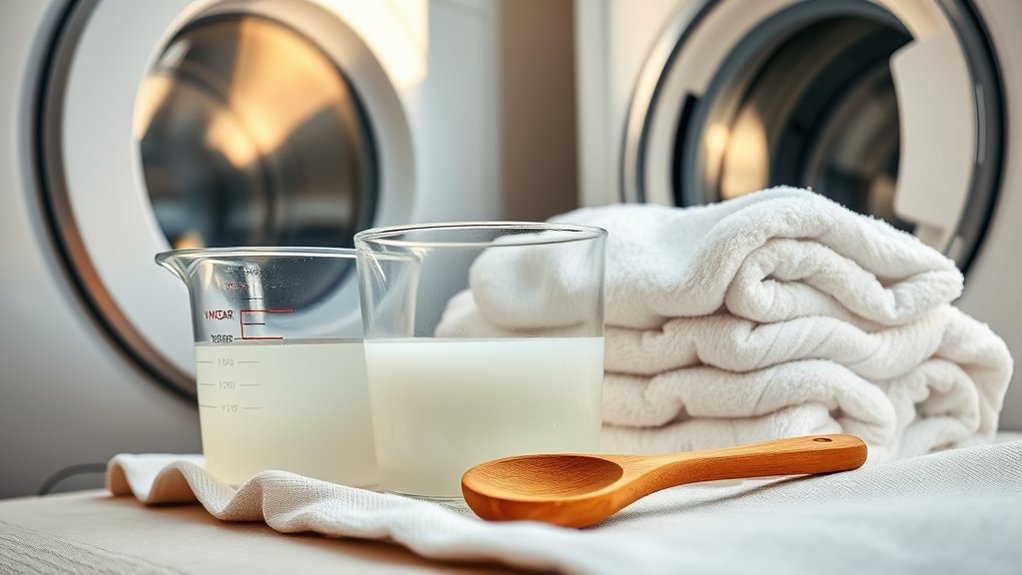
When you want to soften your laundry naturally, add 1/2 cup of white vinegar to the fabric softener dispenser during the rinse cycle.
Vinegar acts as a gentle fabric softener, breaking down detergent residues and reducing lint buildup.
Vinegar gently softens fabrics by dissolving detergent residues and minimizing lint accumulation.
For larger loads or thicker fabrics, increase the vinegar amount to 1 cup to achieve ideal softness.
Cotton or washable wool blankets benefit from 2 cups of undiluted vinegar in the last rinse for enhanced softness.
You can also combine vinegar and baking soda for a deeper clean, but add them separately during different wash stages to avoid neutralizing each other.
Always test vinegar on delicate fabrics first to prevent damage.
Using vinegar as a fabric softener is an effective, natural alternative to commercial softeners that also helps control pet hair cling.
Recommended Vinegar Dosage For Fabric Softening
To achieve the best results with vinegar as a fabric softener, you’ll want to use the right amount based on your load size and fabric type. Typically, adding 1/2 cup (about 120 ml) of white vinegar to the softener compartment during the rinse cycle works well for standard loads.
If you’re dealing with larger loads or hard water, increase the dosage to 1 cup (240 ml) to enhance softness and reduce mineral buildup.
For cotton or washable wool blankets, use 2 cups (480 ml) of undiluted vinegar in the last rinse.
Vinegar works by naturally softening fabrics without leaving residue, so adding it through the softener compartment guarantees even distribution.
Regular use, about 1 to 2 times per week, keeps fabrics soft and lint-free.
Why Add Vinegar During The Rinse Cycle For Best Results
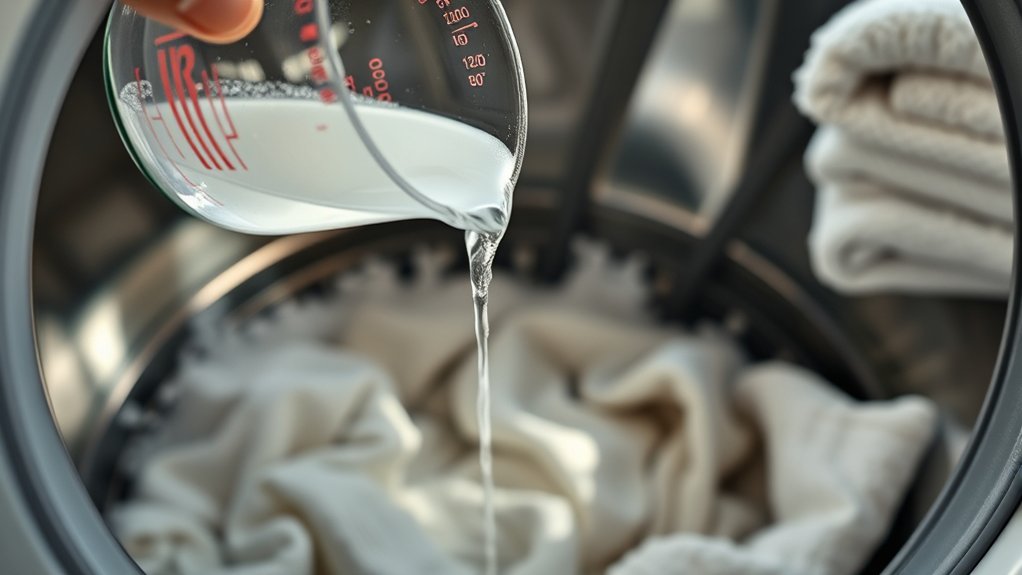
You should add about 1/2 cup of vinegar during the rinse cycle. This helps break down detergent residue and mineral buildup effectively.
By adding it at this stage, the vinegar can neutralize odors and soften your fabrics without interfering with the wash.
Plus, using vinegar this way can reduce lint and pet hair, making your laundry feel fresher overall.
It’s a simple trick that really boosts your laundry results!
Vinegar’s Rinse Cycle Role
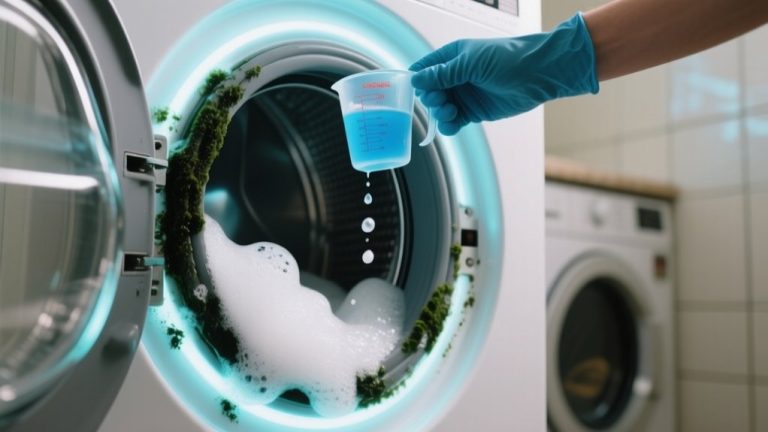
Although vinegar works throughout the wash, adding it during the rinse cycle maximizes its softening and deodorizing effects. When you pour about 1/2 cup of white vinegar into the fabric softener dispenser, it releases at the ideal time, dissolving limescale and detergent residues that often make fabrics stiff.
This process leaves your laundry softer and fresher without any vinegar smell.
Vinegar in the rinse cycle also neutralizes odors linked to mineral build-up and helps maintain color vibrancy by brightening dull fabrics. This method is especially beneficial if you have hard water since vinegar reduces stiffness and enhances overall laundry quality.
Using vinegar specifically in the rinse cycle guarantees you get these advantages efficiently and effectively.
Optimal Vinegar Dosage
When you add about 1/2 cup of white vinegar during the rinse cycle, it effectively softens fabrics by breaking down detergent residues and mineral deposits. This dosage is ideal for most laundry loads, ensuring your clothes feel softer without any vinegar smell.
For very hard water or stiff fabrics, increasing vinegar to 2/3 cup can enhance softening effects. Adding vinegar during the rinse cycle dissolves buildup that fabric softeners might miss, improving softness and reducing static cling.
You should use vinegar as a natural alternative to commercial fabric softeners, ideally 1 to 2 times per week in hard water areas.
This simple step deodorizes laundry and keeps fabrics feeling fresh, making vinegar a practical and eco-friendly addition to your laundry routine.
How To Adjust Vinegar Amounts For Hard Water And Stiff Clothes
If your laundry feels stiff or your water is particularly hard, increasing the amount of vinegar can make a noticeable difference. For regular hard water, add 100 to 150 ml (1/2 to 3/4 cup) of white vinegar to the fabric softener compartment during the rinse cycle.
For very hard water or extra stiff clothes, increase to 150 to 200 ml (3/4 to 1 cup) for maximum softness. Always add vinegar in the softener compartment, never directly with detergent.
| Water Hardness Level | Vinegar Amount (ml) | Vinegar Amount (cups) |
|---|---|---|
| Moderate Hard Water | 100 – 150 | 1/2 – 3/4 |
| Very Hard Water | 150 – 200 | 3/4 – 1 |
| Stiff Clothes | 150 – 200 | 3/4 – 1 |
How Often To Add Vinegar To Your Laundry Routine
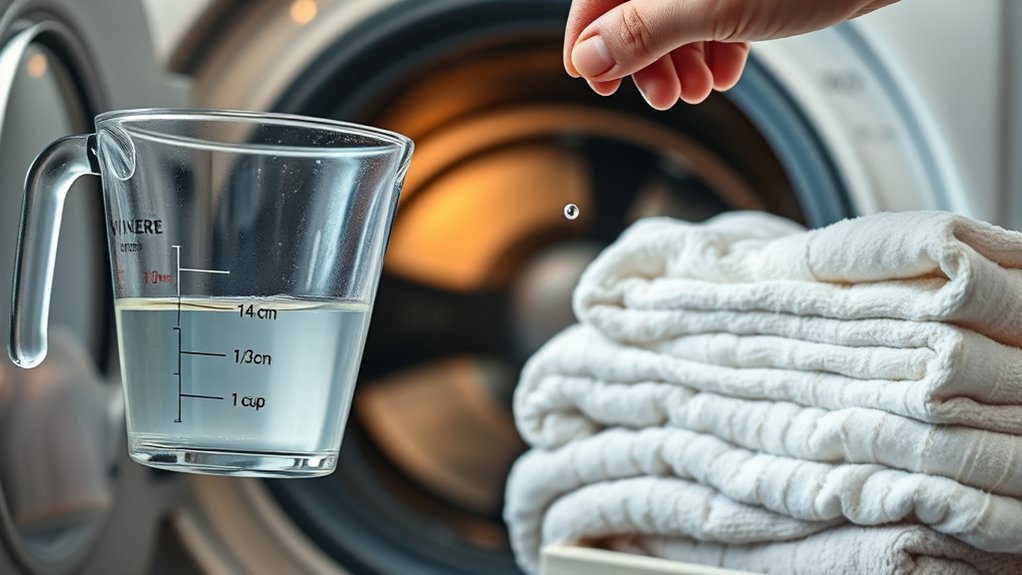
Since hard water can cause stiffness and reduce fabric softness, you should add vinegar to your laundry routine one to two times per week. This frequency helps counteract mineral buildup that laundry detergents alone mightn’t fully remove.
For regular washes, pour 1/2 cup of white vinegar into the fabric softener compartment to guarantee it dispenses during the rinse cycle. If your water is very hard, consider increasing the vinegar to 150-200 ml for better softening results.
Add 1/2 cup vinegar in the fabric softener compartment; increase to 150-200 ml for very hard water.
Using vinegar consistently at this rate maintains fabric softness and keeps your clothes fresh without interfering with laundry detergents.
Adjust the frequency if you notice any lingering stiffness, but once or twice weekly typically balances effectiveness with convenience in most households.
Safety Tips For Using Vinegar On Delicate Fabrics
Adding vinegar to your laundry can improve fabric softness and freshness, but you need to handle delicate fabrics with care to avoid damage.
Always test vinegar on a hidden area first to check for adverse effects.
For hand-washing delicates, add 1-2 tablespoons of vinegar during the final rinse to soften and deodorize effectively.
When cleaning silk, use a mixture of 1/2 cup mild detergent, 2 tablespoons vinegar, and 2 quarts cold water for rinsing.
Limit how long delicate fabrics stay in vinegar; brief dips or rinses prevent fiber weakening.
Also, avoid vinegar contact with rubber parts on delicate items, as it can cause corrosion.
Following these safety tips guarantees your delicate fabrics benefit from vinegar without risk.
Vinegar Fabric Softener Vs. Commercial Softeners: What To Expect
How does vinegar compare to commercial fabric softeners when it comes to softening your laundry?
Vinegar acts as a natural fabric softener by dissolving detergent residues and mineral deposits, which enhances softness without harsh chemicals. Using 1/2 cup of distilled white vinegar during the rinse cycle provides ideal results.
Unlike commercial softeners, vinegar doesn’t leave a synthetic fragrance; instead, it neutralizes odors for fresher-smelling clothes.
It also reduces lint and pet hair cling, a benefit that many commercial softeners lack.
However, vinegar doesn’t offer lubrication or static control like traditional commercial softeners do.
If you want a chemical-free option that softens effectively and tackles odors, vinegar is a practical choice, but expect some differences in feel and static reduction compared to commercial softeners.
Mixing Vinegar With Other Laundry Additives: Dos And Don’ts
You definitely shouldn’t mix vinegar with bleach because it releases harmful chlorine gas—yikes!
And mixing vinegar with baking soda isn’t a great idea either since they basically cancel each other out when it comes to cleaning.
Instead, try using vinegar and other additives separately to get the best results in your laundry. That way, each one can do its job properly!
Vinegar And Baking Soda
Although vinegar and baking soda are popular natural laundry additives, mixing them together during the same wash phase cancels out their cleaning benefits due to a neutralization reaction.
To get the most from vinegar and baking soda, add baking soda during the wash cycle to boost detergent power and help remove stains.
Then, add vinegar during the rinse cycle to soften fabrics and deodorize effectively.
This separation prevents the two substances from reacting and losing effectiveness.
Vinegar works well as a natural fabric softener, while baking soda enhances cleaning.
By using vinegar and baking soda at different stages, you maximize their benefits without compromising your laundry’s cleanliness or freshness.
Avoid combining vinegar with bleach or ammonia to keep your laundry safe and effective.
Avoid Mixing Bleach
When using vinegar in your laundry, never mix it with bleach, as this combination produces toxic chlorine gas that can pose serious health risks.
To use vinegar safely, always add it to the fabric softener compartment, ensuring it releases during the rinse cycle without reacting with laundry detergent or bleach.
Avoid mixing bleach with vinegar to prevent harmful fumes and keep your laundry environment safe.
Besides bleach, don’t combine vinegar with other cleaning agents like baking soda, as this neutralizes vinegar’s effectiveness.
Use vinegar sparingly, no more than once or twice a week, to protect your washing machine’s rubber seals from damage.
Frequently Asked Questions
Can Vinegar Remove Odors From Clothes During Laundry?
Yes, vinegar can remove odors from clothes during laundry. When you add about 1/2 cup of white vinegar to the fabric softener dispenser during the rinse cycle, it neutralizes stubborn smells and breaks down mineral buildup that traps odors.
For stronger odors, you can soak your clothes in a vinegar-water solution before washing.
Vinegar won’t leave your clothes smelling like vinegar; instead, it leaves them fresh and clean.
Does Vinegar Affect the Color of Dyed Fabrics?
You might be surprised, but vinegar can actually help maintain your dyed fabrics’ colors rather than harm them. When used properly, like adding about half a cup to your rinse cycle, it prevents yellowing and dullness, keeping colors vibrant.
Just test it first on a hidden spot, since its acidity can affect some sensitive dyes.
Can Vinegar Help Prevent Static Cling in Laundry?
Yes, vinegar can help prevent static cling in your laundry. Adding about 1/2 cup of white vinegar to the fabric softener dispenser during the rinse cycle softens fabrics and reduces static by neutralizing electrical charges.
It also decreases lint and pet hair buildup, which contribute to cling.
While vinegar works well for mild static, you might still need dryer sheets for stronger static problems.
Is Vinegar Safe for Use in All Types of Washing Machines?
Yes, vinegar is safe for use in most washing machines, including front-loaders and top-loaders.
You just need to pour about ½ cup into the fabric softener dispenser to protect your machine’s parts.
Avoid adding vinegar directly to the drum or mixing it with bleach.
Also, don’t overuse it, as excessive vinegar can wear down rubber seals over time.
Always test delicate fabrics first to be safe.
How Does Vinegar Impact the Lifespan of Washing Machine Parts?
If you want your washing machine to feel like it’s been marinated in acid, go ahead and pour vinegar like it’s a magic potion.
But realistically, vinegar can extend your machine’s life by dissolving mineral buildup, keeping parts cleaner.
Just don’t overdo it. Too much can corrode rubber seals and hoses.
Stick to 100-200 ml, avoid mixing with bleach, and ventilate well to protect your machine while softening laundry effectively.
Conclusion
So, who knew that your kitchen staple vinegar could double as your laundry’s best friend? Just a half cup in the rinse cycle softens your clothes without drowning them in chemicals.
Sure, it’s not as flashy as commercial softeners, but it works quietly and effectively. No fancy scents or foams needed. Just don’t mix it with bleach unless you want a science experiment. Simple, safe, and surprisingly smart, vinegar’s got your laundry covered.