How Does A Washing Machine Clean Clothes – Explained
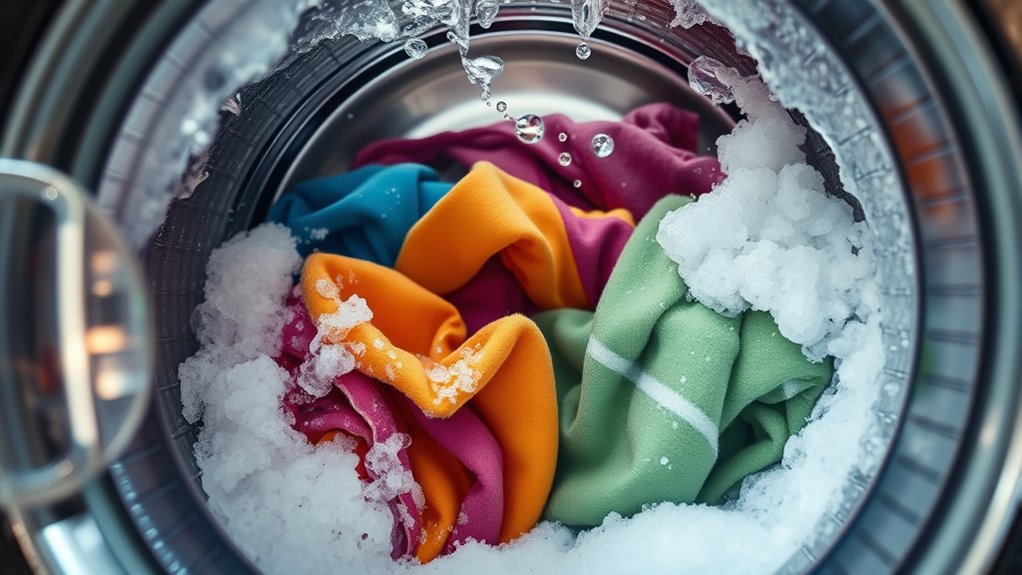
Your washing machine cleans clothes by combining water temperature, detergent chemistry, and mechanical action. It uses sensors to measure load size and soil level, adjusting water and detergent precisely. Hot, warm, or cold water dissolves stains while agitators, impellers, or tumbling motions loosen dirt.
After washing, rinse cycles flush away residues, and high-speed spins remove excess water. This careful coordination guarantees effective cleaning and fabric care.
Understanding these processes reveals how different machines optimize performance and efficiency. It’s pretty cool to see how all these parts work together to get your clothes fresh and clean every time.
How Washing Machines Use Water and Detergent to Clean Clothes
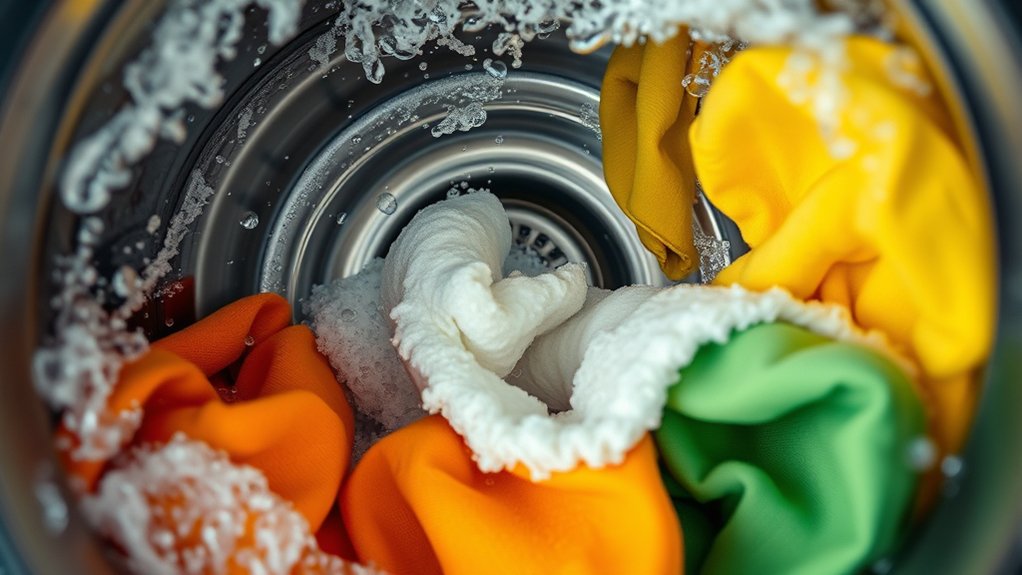
Although it may seem simple, washing machines clean clothes through a precise interaction of water, detergent, and mechanical action. The washing machine fills with water at the start of cycles to loosen soil and stains from fabrics.
Detergent, dispensed automatically based on load size and soil level, contains surfactants that break down oils and soils, enabling effective soil removal.
Mechanical actions, either agitation or tumbling, help detergent penetrate fabrics and physically dislodge dirt.
Hot water cycles improve cleaning by dissolving grease and killing germs. Cold water cycles protect colors and treat specific stains.
This combination of water temperature, detergent chemistry, and motion ensures thorough cleaning and efficiently removes residues from clothes. Understanding this synergy helps you appreciate how washing machines optimize cleaning performance each cycle.
How a Wash Cycle Works Step-by-Step
You’ll notice the wash cycle follows specific stages, starting with precise water intake. Sensors check the load size to make sure the drum fills with just the right amount of water at the temperature you’ve chosen.
Then, the machine gets to work—it agitates, rinses, and spins your clothes in a methodical way. This process helps clean your clothes thoroughly and gets them ready for drying.
Cycle Stages Overview
When you start a wash cycle, the machine precisely controls water temperature and level to match your selected settings and the load size. It fills the drum accordingly, ensuring ideal conditions for cleaning.
Next, the agitator or drum tumbles your clothes, mixing detergent and water to dislodge dirt efficiently.
Once the wash phase completes, the machine activates the drain pump to expel soapy water from the drum.
Fresh water then refills the drum for the rinse stage, removing residual detergent and soil.
Finally, the spin cycle accelerates the drum at high speed, extracting excess water from the load.
Each stage is calibrated to maximize cleaning performance while protecting your fabrics. So, the entire wash cycle is a precise sequence of water temperature control, mechanical action, rinsing, draining, and spinning.
It all works together to get your clothes clean and fresh every time.
Load Sensing Process
Because washing machines rely on accurate load sensing to optimize each wash cycle, they use sensors to detect the size and weight of your laundry. These sensors measure load weight or water displacement to determine the appropriate water level, ensuring precise cycle adjustment. During this process, the machine may redistribute clothes evenly to secure accurate measurements.
Based on load sensing data, the washer automatically adjusts parameters such as water temperature, agitation intensity, and spin speed. This automatic calibration optimizes water use and energy consumption while maintaining cleaning efficiency.
It also protects your fabrics by preventing excessive agitation or water exposure.
How Agitators, Impellers, and Tumbling Clean Clothes
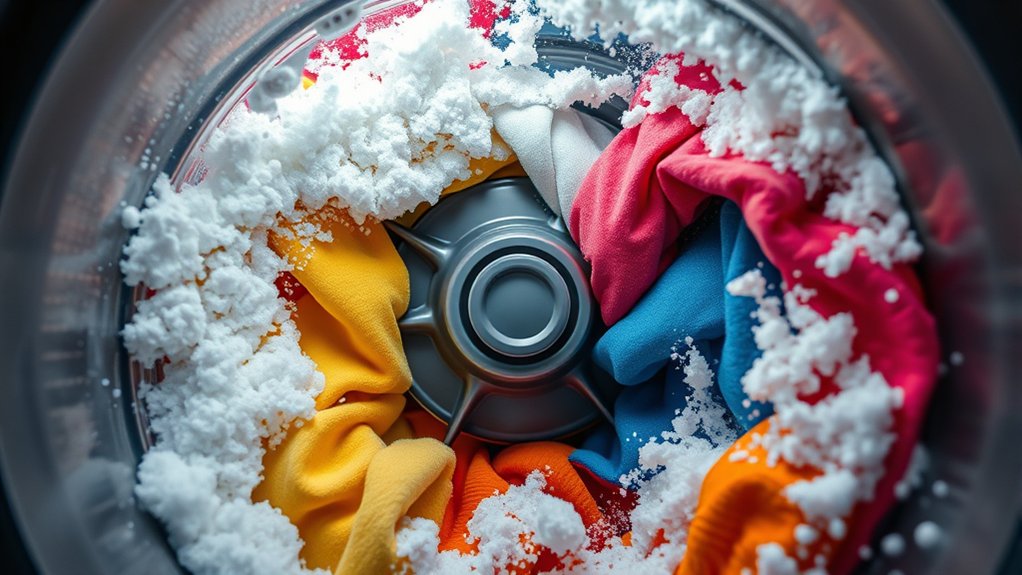
You know those agitators in top-load washers? They rotate back and forth, rubbing your clothes against each other to help loosen dirt mechanically. It’s like a little workout for your laundry.
Then there are impellers, which work a bit differently. They spin a low-profile disc that creates water currents, causing gentle fabric-to-fabric friction. This means your clothes get cleaned effectively without all the rough agitation.
And front-load washers? They use tumbling action. Basically, they lift and drop your clothes, using gravity and friction to shake loose the dirt during the wash cycle. It’s a clever way to get your clothes clean without being too harsh on the fabrics.
Agitator Cleaning Mechanism
Although washing machines use different designs, agitators, impellers, and tumbling mechanisms all rely on controlled mechanical motion to clean clothes effectively.
The agitator, central to many top-loading washers, rotates back and forth during the wash cycle, creating vigorous mechanical action. This movement generates friction between the agitator and laundry, effectively loosening soil embedded in fabric fibers.
As the agitator rubs clothes against each other and the tub, it enhances dirt removal by dislodging particles, allowing detergent to penetrate more efficiently.
This cleaning mechanism guarantees thorough agitation, maximizing contact and scrubbing while minimizing fabric damage.
Impeller And Tumbling
How do impeller and tumbling mechanisms clean clothes without the bulky central agitator? The impeller uses a low-profile rotating disc that creates gentle water currents. These currents move clothes against each other, which creates friction that helps lift dirt from fabric fibers.
Tumbling, common in front-load washers, lifts and drops clothes repeatedly. It uses gravity and mechanical movement to boost dirt removal. Both methods depend a lot on cycle duration and water temperature to get the best cleaning results.
| Mechanism | Action |
|---|---|
| Impeller | Rotates disc, creates water currents |
| Tumbling | Lifts and drops clothes repeatedly |
| Agitator | Twists back and forth, rubs clothes |
| Outcome | Friction removes soil from fabric fibers |
This precise mechanical movement makes sure your clothes get cleaned well without needing bulky agitators.
What Makes Top-Load and Front-Load Washers Different?
When comparing top-load and front-load washers, the key differences lie in their mechanical actions and efficiency. Top-load washers use an agitator or impeller to move clothes vertically, creating a wash action that relies on friction.
In contrast, front-load washers employ tumbling action, rotating clothes horizontally to clean with less friction.
This fundamental difference impacts water efficiency and cycle time. Front-load washers typically consume less water and energy but require longer cycle times.
Top-load washers generally complete shorter cycles but use more water.
Furthermore, top-load washers allow lid access during the wash cycle, while front-load washers lock once started.
These distinctions reflect advances in laundry technology, where front-load washers prioritize water efficiency and gentle cleaning.
Top-load washers, on the other hand, focus on faster wash cycles with a more aggressive mechanical wash action.
How Washing Machines Sense Load to Save Water and Detergent
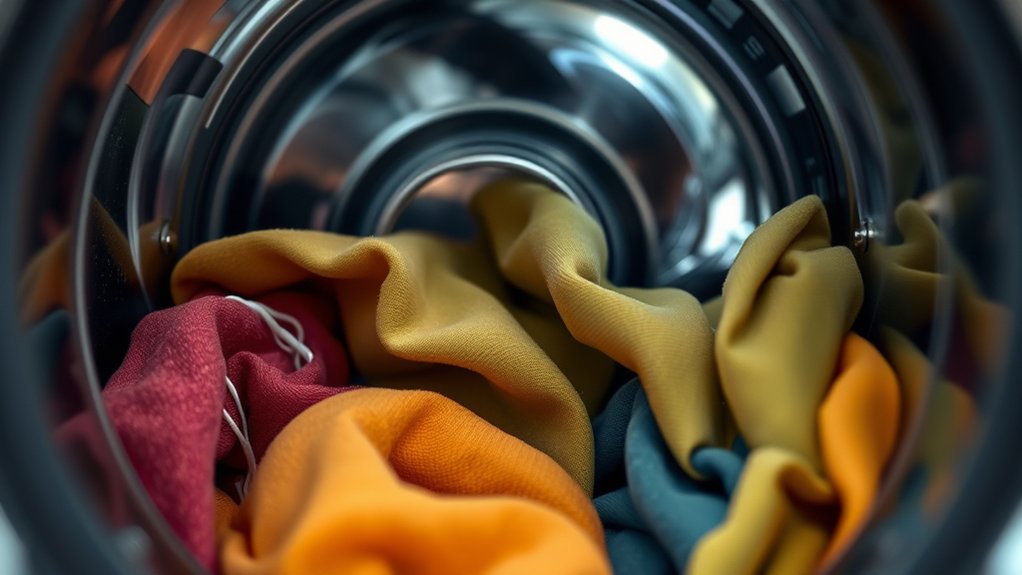
You’ll find that washing machines use advanced load sensing technology to measure the weight and size of your laundry before the cycle starts. This means the machine gets a good idea of how much stuff you’ve thrown in.
With this info, it can precisely adjust water levels and figure out just the right amount of detergent to use. So, instead of guessing, it tailors everything perfectly.
Load Sensing Technology
Because washing machines need to balance cleaning power with resource efficiency, they rely on load sensing technology to measure the size and weight of your laundry before starting a cycle. Load sensing uses advanced sensors to detect load weight, water level, and fabric type. This data is critical for adjusting the cycle.
Based on this input, the machine optimizes detergent usage and adjusts wash action intensity and cycle duration to match the specific load. This precise control helps minimize water and detergent waste while still making sure your clothes get thoroughly cleaned.
Some systems even monitor fabric movement to fine-tune agitation patterns, which further improves wash performance. By using these sensor-driven adjustments, load sensing technology guarantees effective cleaning with less resource use every time you run a wash.
Water Level Adjustment
How exactly do washing machines determine the right amount of water to use for each load? They rely on load sensors, like pressure sensors in top-loaders or weight measurement sensors in front-loaders, that detect the laundry volume inside the drum.
These sensors send load detection data to the control system, which then adjusts the water precisely.
Water level sensors monitor the current water volume to make sure it matches the load’s needs. This dynamic adjustment helps prevent overfilling or underfilling, which boosts water efficiency and cleaning effectiveness.
By calibrating the water level based on accurate weight measurement or pressure feedback, the machine hits the sweet spot for cleaning performance while saving water and detergent.
This mix of load sensors and water level sensors shows how smart control systems are designed for resource-efficient and effective washing cycles.
Detergent Dosage Calculation
Adjusting water levels based on load size lays the groundwork for precise detergent dosing in washing machines. Using advanced sensor technology, the machine performs load sensing by measuring load weight through pressure sensors or motor torque. It also detects soil level to fine-tune the detergent dosage.
This data enables the control system to calculate the most suitable detergent amount for each wash cycle, preventing overuse and minimizing residue. Detergent dispensers release this calculated quantity in sync with the adjusted water level, ensuring efficient cleaning.
By integrating load weight, soil level, and water level inputs, the machine optimizes detergent dosage dynamically. This precise control conserves water and detergent, enhances cleaning performance, and reduces environmental impact.
How Water Temperature Affects Cleaning and Stain Removal
When you select the water temperature for your laundry, you directly influence how effectively stains break down and how thoroughly soils dissolve. Hot water (120–140°F) optimizes stain removal by enhancing soil solubility and effectively breaking down grease and oils. It also boosts detergent efficiency during washing machine cycles.
Choosing the right water temperature enhances stain removal and boosts detergent effectiveness during laundry cycles.
However, hot water can set protein-based stains like blood if not treated promptly.
Cold water (60–80°F) preserves fabric care by minimizing color bleeding and fading, which is ideal for delicate textiles.
Warm water (90–110°F) offers a balanced approach. It efficiently removes common stains while safeguarding most fabrics.
Adjusting water temperature impacts both soil removal and detergent performance, so selecting the right temperature based on fabric type and soil level helps maximize cleaning results in your washing machine cycles.
How Rinse and Spin Cycles Remove Dirt and Excess Water
Selecting the right water temperature sets the stage for effective stain removal. But thoroughly rinsing and extracting excess water from your clothes is what really completes the cleaning process.
During the rinse cycle, the drum fills with clean water. The agitator or tumbling action then dislodges any remaining detergent and residual dirt, making sure your clothes get a thorough clean.
Following this, the spin cycle kicks in with high-speed rotation. This forces excess water out of the fabric fibers using centrifugal force.
After that, the drain pump removes the expelled water, which helps prevent buildup inside the machine.
By combining multiple rinse and spin cycles, you maximize dirt removal and improve water extraction. This reduces the moisture content effectively.
This precise coordination between rinse and spin cycles guarantees your clothes come out clean and considerably drier. So, they’re ready for drying without extra hassle.
What Makes High-Efficiency Washing Machines More Effective
Although high-efficiency washing machines use less water than traditional models, they achieve superior cleaning through specialized tumbling or impeller actions that enhance soil removal. You’ll notice these machines operate with low water levels, creating a concentrated environment that boosts detergent effectiveness.
The tumbling or impeller mechanisms provide gentle yet powerful agitation, loosening dirt without damaging fabrics. Longer cycle times allow thorough agitation, maximizing soil removal and stain reduction.
High-efficiency detergents designed for low-suds prevent oversudsing and optimize cleaning performance.
Advanced sensors regulate water and cycle length, ensuring effective cleaning while minimizing resource consumption. By combining precise agitation, optimized detergent use, and controlled water levels, high-efficiency washers deliver superior results and promote resource conservation.
They really are a smarter, more effective choice for laundry care.
How Sanitizing Cycles and Disinfectants Keep Laundry Germ-Free
Beyond optimizing cleaning through water levels and agitation, modern washing machines also focus on eliminating germs and bacteria to keep your laundry hygienic. Sanitizing cycles use the hottest water to kill bacteria and viruses effectively. Disinfectants such as liquid chlorine bleach or quaternary compounds are added during wash or rinse cycles, ensuring thorough disinfecting when used as per manufacturer instructions.
Some machines include specific germ-free cycles that extend hot water exposure to maximize microbial kill rates. Combining these high-temperature cycles with appropriate disinfectants markedly reduces pathogens, leaving your laundry truly germ-free.
| Cycle Type | Water Temperature | Disinfectant Used |
|---|---|---|
| Regular | Warm | None |
| Sanitizing | Hot (≥60°C) | Optional bleach/quaternary |
| Germ-Free | Hot (≥70°C) | Required disinfectants |
| Rinse + Disinfect | Warm/Hot | Quaternary disinfectants |
| Quick Sanitize | Hot | Bleach |
Choosing the Right Cycle and Detergent for Your Clothes
How do you guarantee your clothes get the best care during washing? Start by selecting the appropriate cycle based on fabric type and soil level. Use Delicates for fragile fabrics and Heavy Duty for heavily soiled items.
Match the detergent type to your machine. For instance, use HE detergent in high-efficiency washers to avoid excess suds and optimize cleaning performance.
Adjust water temperature accordingly. Hot water works well for whites and tough stains, while cold water is better for dark colors and delicate fabrics.
Pre-treating stains really helps with removal, especially when combined with the right cycle and water temperature.
Finally, fine-tune cycle settings to balance agitation and spin speed. This prevents damage and color fading.
Getting this right—the cycle, detergent, and water temperature—means your clothes get cleaned thoroughly and last longer.
Frequently Asked Questions
How Often Should I Clean My Washing Machine?
You should clean your washing machine at least once a month to prevent detergent buildup, mold, and odors.
If you run about 30 cycles between cleanings, use a specialized cleaner or hot water with vinegar to maintain hygiene.
Increase cleaning frequency if you notice musty smells, visible mold, or heavy usage by multiple people.
Regular maintenance preserves performance, prevents foul odors, and stops dirt transfer to your laundry.
Keeping up with this simple routine really helps your machine run smoothly and keeps your clothes fresh!
Can Washing Machines Damage Delicate Fabrics?
Absolutely, washing machines can utterly annihilate delicate fabrics if you’re not careful. The intense agitation and high spin speeds in regular cycles can stretch, tear, or fray fragile fibers.
To protect your delicate garments, you need to use gentle or hand-wash cycles with cold water and low spin settings. This precise control minimizes mechanical stress, prevents color fading, and preserves fabric integrity.
That way, your delicate items stay looking pristine longer. It’s definitely worth taking a little extra care!
Why Does My Washing Machine Smell Bad Sometimes?
Your washing machine smells bad because mold, mildew, and bacteria build up in damp areas like the drum, seals, and detergent dispensers.
Residual detergent, fabric softeners, and dirt accumulate over time, creating odors.
If you don’t run cleaning cycles regularly or leave the door closed after washing, moisture gets trapped, making the smell worse.
Using too much detergent or doing low-temperature washes also leaves residues that cause odors.
So, keeping up with proper maintenance is really important to avoid those bad smells.
It’s all about letting your machine dry out and cleaning it regularly.
How Do I Prevent Clothes From Fading in the Wash?
To prevent clothes from fading, wash them in cold water to avoid heat damage to dyes. Turn garments inside out to reduce surface friction. Use gentle or delicate cycles to limit agitation, and avoid overloading the machine to minimize fabric rubbing.
Choose detergents specially formulated for color protection, which help maintain vibrancy. These combined practices considerably reduce color loss, preserving your clothes’ appearance through multiple washes.
It’s pretty easy to keep your clothes looking fresh when you follow these simple steps.
What Should I Do if My Washing Machine Leaks?
If your washing machine leaks, know that 20% of household leaks originate from faulty door seals. Start by inspecting the door gasket for tears or mold.
Then, check that the drain hose isn’t kinked or blocked, and verify inlet hoses for cracks or looseness. Tighten or replace as needed.
Also, make sure your machine is perfectly level to prevent water from spilling.
Finally, examine the detergent dispenser for clogs that might be causing overflow. These simple checks can save you a lot of hassle!
Conclusion
Now that you understand how washing machines work, from water and detergent mixing to agitators and sensors, you can tackle laundry like a pro. Each cycle is a finely tuned process designed to remove dirt and germs efficiently while saving resources.
Choosing the right settings and detergents guarantees your clothes come out fresh and clean, as if they’ve been given a new lease on life. With this knowledge, laundry becomes a precise science, not just a chore.