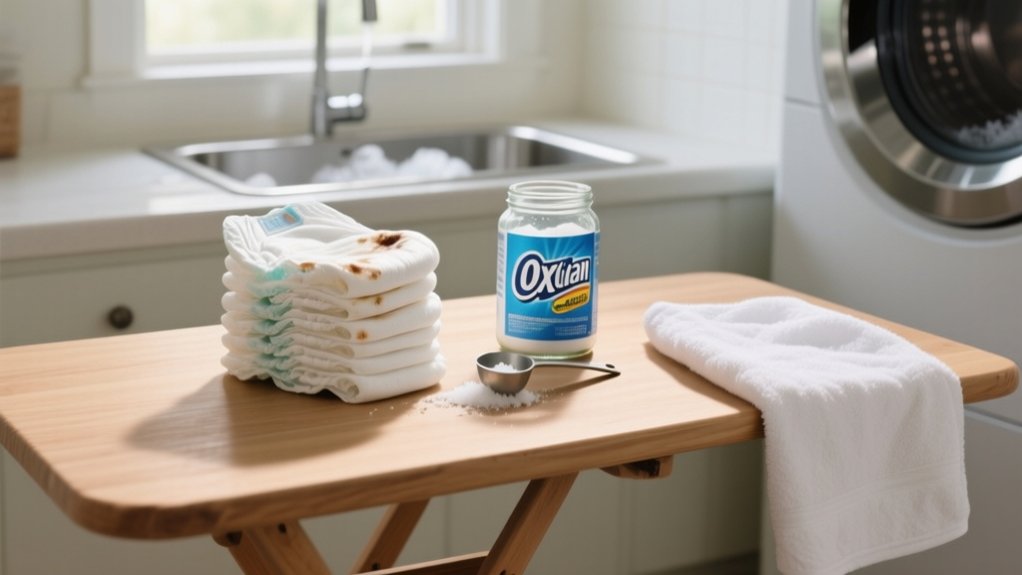
Can You Use Oxiclean On Cloth Diapers – Find Out
Yes, you can use OxiClean on cloth diapers, but choose a fragrance-free formula without fabric softeners and check that it suits your diaper materials. Test a small area first, follow the product and diaper care instructions, and use OxiClean sparingly to limit wear.
Dissolve it in hot water before adding it to the wash, then run extra rinses until the water is clear and no residue remains. You’ll also find fabric-specific tips and gentler stain-fading options below.
Can You Use OxiClean on Cloth Diapers?

Yes, you can use OxiClean on cloth diapers, but rinse them thoroughly afterward to remove residue that could irritate your baby’s skin.
You can add OxiClean to your diaper laundry when you need extra cleaning, but take care to protect the fabric.
Add OxiClean for extra cleaning when needed, while taking care to protect your diaper fabric.
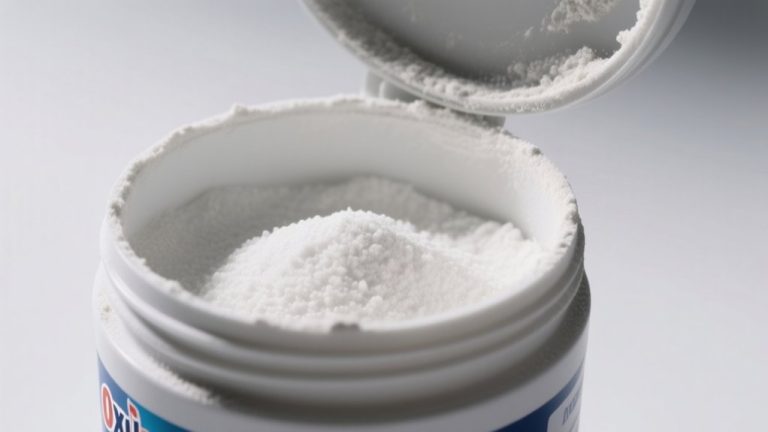
Dissolve the powder completely in hot water before adding it to the wash; undissolved granules may not clean effectively.
After washing, rinse the diapers twice to help clear away leftover product.
Check each cloth diaper for signs of wear, and stop using OxiClean if you notice damage.
Some families use regular OxiClean without problems, but your results may vary depending on your diapers and wash routine.
For guidance tailored to cloth diaper care, consult reliable resources such as Fluff Love University and follow the product directions.
Which OxiClean Formula Is Suitable for Diapers?
If you’re looking to use OxiClean on diapers, it’s best to pick a fragrance-free formula. This helps lower the chances of irritating your baby’s sensitive skin.
Also, try to avoid any products that have added fabric softeners because they can leave unwanted residue on the diapers.
Just make sure to check the label carefully to confirm that the formula is safe for the type of diaper materials you have.
Choose Fragrance-Free Formulas
For cloth diapers, choose a fragrance-free OxiClean formula to reduce the risk of irritating sensitive skin.
The OxiClean Baby Stain Remover, often recognized by its pink lid, is designed for baby-related stains and can be a suitable option for your diapers. Check the label to confirm that the formula is fragrance-free and doesn’t contain optical brighteners, which may leave unwanted residues on the fabric.
Before treating a full load, test the product on a small, inconspicuous area of one diaper. This patch test helps you check how the fabric responds.
After washing, rinse your diapers twice to remove OxiClean residue. Thorough rinsing can help prevent buildup that might affect absorbency.
If you’re unsure whether a formula suits your diapers, consult the product label and your diaper manufacturer’s care instructions before use.
Avoid Added Fabric Softeners
If you use OxiClean on cloth diapers, avoid formulas with added fabric softeners. These can leave residue and reduce absorbency.
Check the product label before washing since a fabric softener coating can interfere with how well your diapers take in moisture.
OxiClean’s baby-stain formula, often recognized by its pink lid, is generally considered a more suitable choice because it uses gentler ingredients.
Still, use it carefully and follow the package directions.
After washing, rinse your diapers thoroughly to remove cleaning agents that could irritate your baby’s skin.
Add an extra rinse cycle if needed to help clear any remaining residue.
For product-specific guidance and wash recommendations, consult a cloth-diaper resource such as Fluff Love University.
These steps help you clean diapers without compromising absorbency or comfort.
How to Treat Cloth Diaper Stains With OxiClean
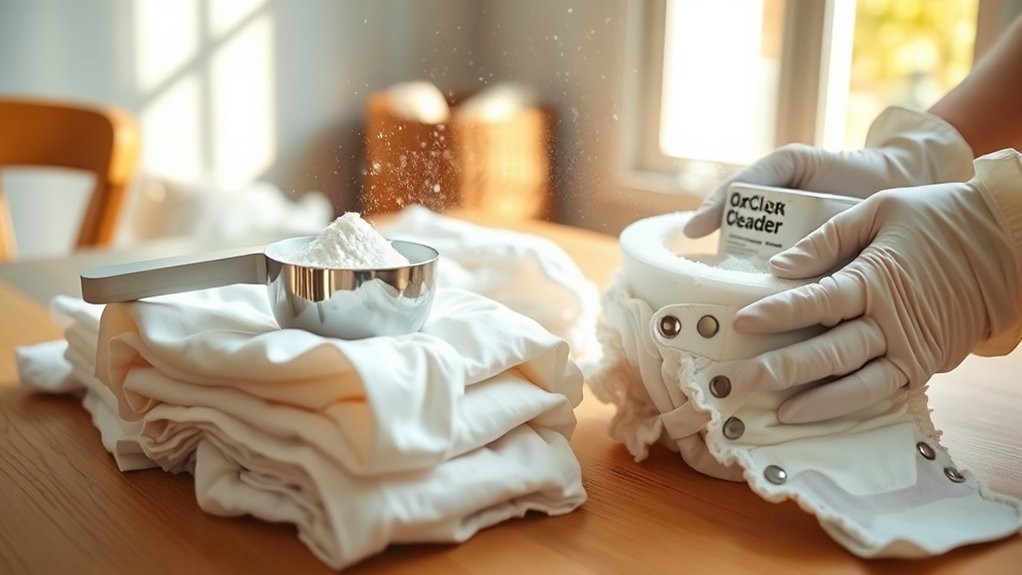
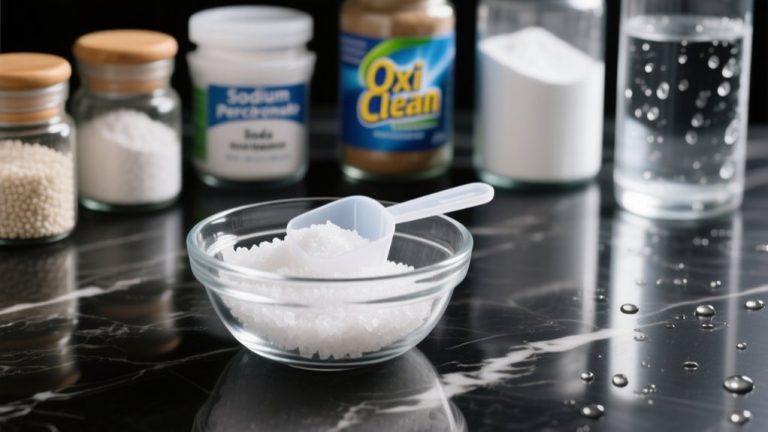
If you’re dealing with stubborn stains, start by dissolving baby-safe OxiClean completely in hot water before adding your diapers.
Once you’ve done that, rinse the diapers thoroughly.
It’s a good idea to run an extra rinse cycle afterward to make sure there’s no residue left behind that could irritate your baby’s skin or affect how well the diapers absorb.
Apply OxiClean Safely
Treat cloth diaper stains with OxiClean carefully: choose a formula made for baby stains, dissolve it completely in hot water, and use it sparingly. The baby-stain version often comes in a pink-lid container. Add the fully dissolved solution to your wash rather than sprinkling powder directly onto diapers.
A hot wash can support your regular cleaning routine, but follow your diaper manufacturer’s care instructions.
| Step | What you do | Why it matters |
|---|---|---|
| Choose | Select baby-stain formula | Suits diaper use |
| Dissolve | Mix in hot water | Prevents undissolved powder |
| Measure | Use a small amount | Limits fabric wear |
| Wash | Follow care instructions | Protects diaper quality |
Bamboo and other delicate fabrics can break down with excess OxiClean. Plan an extra rinse after treatment to clear possible residue.
Rinse and Remove Residue
After washing, run an extra rinse to remove OxiClean residue that could irritate your baby’s skin or build up in the fabric. This extra rinse makes sure your diapers are free of leftover product and can help protect the fabric over time.
Check the rinse water; if it looks cloudy or feels soapy, rinse the diapers again. You don’t need to add more detergent during this step.
OxiClean can lift stubborn stains, but any remaining powder or solution may bother sensitive skin, so thorough rinsing matters. If residue persists, review your washer’s settings and the product’s dosage instructions before the next wash.
Avoid using more OxiClean than directed, since excess product may be harder to rinse away and could affect diaper materials.
Let the diapers dry fully before use.
How to Rinse OxiClean From Diapers
Rinse diapers thoroughly with hot water right after using OxiClean to help dissolve and remove residue.
Run at least two rinse cycles immediately after treatment to keep leftover product from building up in the fabric.
After the first rinse, check the water for suds or bubbles. If you see any, keep rinsing until the water runs clear and no bubbles remain.
Once you’ve completed your regular wash routine, add an extra rinse to help remove any remaining OxiClean and detergent.
Don’t assume the diapers are clear of residue just because they look clean.
After washing, watch for signs of irritation or lingering odor. Either may indicate that residue remains, so rinse the diapers again before using them.
Thorough rinsing helps leave them clean and ready for your next diaper change.
Which Cloth Diaper Fabrics Need Extra Care?
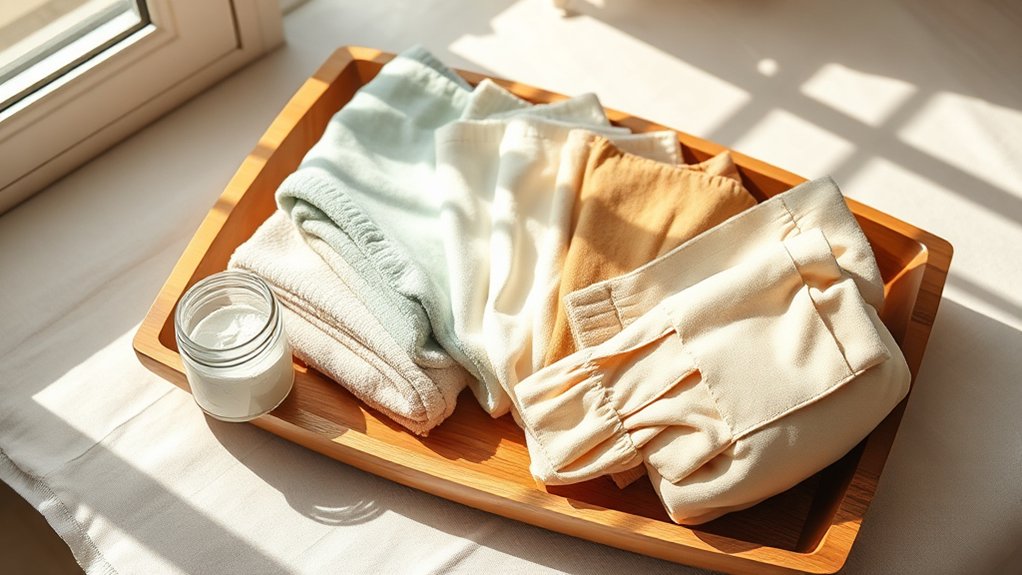
Although most cloth diapers can handle regular washing, some fabrics need extra care to protect their absorbency, softness, or water resistance. Check each diaper’s care instructions before you wash it, since materials respond differently to detergents and handling.
Cotton is durable, but repeated washes may affect absorbency, so keep an eye on how well your diapers perform.
Bamboo feels soft yet has delicate fibers, so skip harsh detergents and bleach to help prevent breakdown. Rinse microfiber inserts thoroughly to remove detergent residue, which can build up and reduce absorbency.
Wool covers need hand washing with wool-specific products. Regular detergents can strip lanolin, the natural coating that keeps them water-resistant.
PUL covers tolerate regular use, but choose a gentle cycle and avoid fabric softeners because they can compromise the waterproof layer. Following these fabric-specific steps will help your diapers last longer.
When to Add OxiClean to a Regular Wash
When stubborn food or organic stains remain, add OxiClean to your regular cloth diaper wash to boost stain removal. Use the baby-stain formula with the pink lid, which is designed to help minimize potential fabric damage.
Follow the product directions and your usual wash routine, rather than adding more than recommended. A hot wash can help break down stubborn stains more effectively.
After washing, run an extra rinse to remove OxiClean residue; leftover product may irritate your baby’s sensitive skin. Check the diapers before drying to make sure they feel thoroughly rinsed, and repeat the rinse if needed.
For guidance tailored to cloth diapers, consult resources such as Fluff Love University. Its recommendations can help you use OxiClean safely and effectively alongside your regular detergent and washing steps.
Can Sunlight or Lemon Juice Fade Diaper Stains?
Sunlight can fade cloth diaper stains naturally: after washing, hang diapers outdoors so UV rays break down stain compounds and help reduce odors and discoloration.
Regular exposure can also help your diapers stay whiter and fresher over time. You don’t need harsh chemicals for this simple, eco-friendly approach, and it’s suitable for baby items.
For a stubborn mark, try lemon juice as a gentle spot treatment. Apply a small amount directly to the affected area, let it work briefly, then rinse the fabric well.
Its natural acidity can help lift stains, while its bleaching properties may lighten them. Use lemon juice sparingly, and check your diaper care instructions before treating fabric.
Both options can help you manage discoloration naturally, but results vary depending on the stain and material. Always rinse thoroughly before putting the diaper back into use.
How to Fix OxiClean Residue, Odors, or Stains
If OxiClean leaves residue, odors, or stains on your cloth diapers, run an extra rinse after washing to remove leftover cleaner. This helps prevent irritation to your baby’s skin or any unpleasant smells.
Use these steps to tackle remaining problems:
- For lingering odors, soak diapers in a vinegar-and-water solution. This can help neutralize smells and lower pH levels.
- For stubborn stains, apply diluted OxiClean directly to the affected area before washing. Rinse thoroughly afterward to avoid residue buildup and protect the fabric.
- If food stains remain, wash again and add an extra rinse to make sure you remove all cleaner.
Check your washing machine regularly, too. Clean it to prevent OxiClean or other residues from transferring back onto freshly washed diapers.
Follow product directions and rinse diapers thoroughly before putting them on your baby.
Frequently Asked Questions
Can Oxiclean Damage Cloth Diaper Elastics or Waterproof PUL Covers?
Yes, OxiClean can damage cloth diaper elastics and waterproof PUL covers, especially with frequent use or prolonged exposure.
Its strong cleaning agents and high pH may weaken elastic fibers, loosen the fit, and degrade the waterproof barrier.
If you choose to use it, use it sparingly and follow the product directions.
Add extra rinse cycles to remove residue, which can harm fabric integrity and absorbency.
For PUL covers, it’s best to avoid OxiClean to reduce risk.
Is Oxiclean Safe for Cloth Diapers in Septic Systems?
You can use OxiClean with cloth diapers on a septic system, but tread carefully.
Your septic tank’s bacteria are the engine that keeps things running. Oxygen-based cleaners may disrupt that balance, and repeated use can add chemical load over time.
Dissolve OxiClean fully in hot water, then run extra rinses to remove residue that could irritate your baby’s skin.
Check your septic system’s care guidelines or ask a professional before regular use.
Can Oxiclean Affect Cloth Diapers’ Absorbency Over Time?
Yes, OxiClean can reduce your cloth diapers’ absorbency over time if you use it too often or don’t rinse thoroughly.
Residue may build up and interfere with moisture wicking, while its high pH and repeated use can weaken natural fibers.
You might notice leaks or discomfort for your baby.
To protect performance, reserve OxiClean for occasional stripping rather than routine washing, and add an extra rinse to help remove lingering residue.
Should I Use Oxiclean on Wool Diaper Covers?
No, OxiClean can be a wolf in sheep’s clothing for wool diaper covers. Its oxygen bleach may damage delicate fibers and strip away lanolin, which weakens the cover’s water resistance.
Instead, hand-wash your cover in cool water with a mild, wool-specific detergent that’s free of harsh additives. Rinse gently, then lanolize regularly to help maintain moisture protection.
With careful washing, you’ll keep your wool cover soft, functional, and ready for everyday use.
Can Oxiclean Cause Skin Irritation if Traces Remain on Diapers?
Yes, OxiClean residue can irritate your baby’s skin, especially if your baby has sensitive skin or eczema.
Its high pH and cleaning ingredients may leave traces that cause redness, rashes, or discomfort.
After using it, run an extra rinse cycle to remove residue.
Consider switching to a fragrance-free, baby-safe cleaner, and watch for reactions after washing.
If irritation continues, stop using OxiClean and ask your pediatrician for guidance.
Conclusion
You can use OxiClean on many cloth diapers, but choose a suitable formula, follow the label, and rinse thoroughly. Treat stains gently, take extra care with delicate fabrics, and don’t let additives replace a sound wash routine.
If residue or odor lingers, adjust your rinse and wash process rather than piling on more cleaner. Think of each wash as a fresh start. Steady care keeps stains from stealing the show and helps your diapers come clean, soft, and ready for the next little adventure.