What Is Oxiclean Made Of – Ingredients Breakdown
If you’ve ever stared at a stubborn stain and wondered what actually makes a cleaner work, you’re not alone. Many people want something powerful enough to tackle messes, but still simple, safe, and easy to understand. That’s exactly why it helps to know what OxiClean is made of and how its ingredients do the heavy lifting.
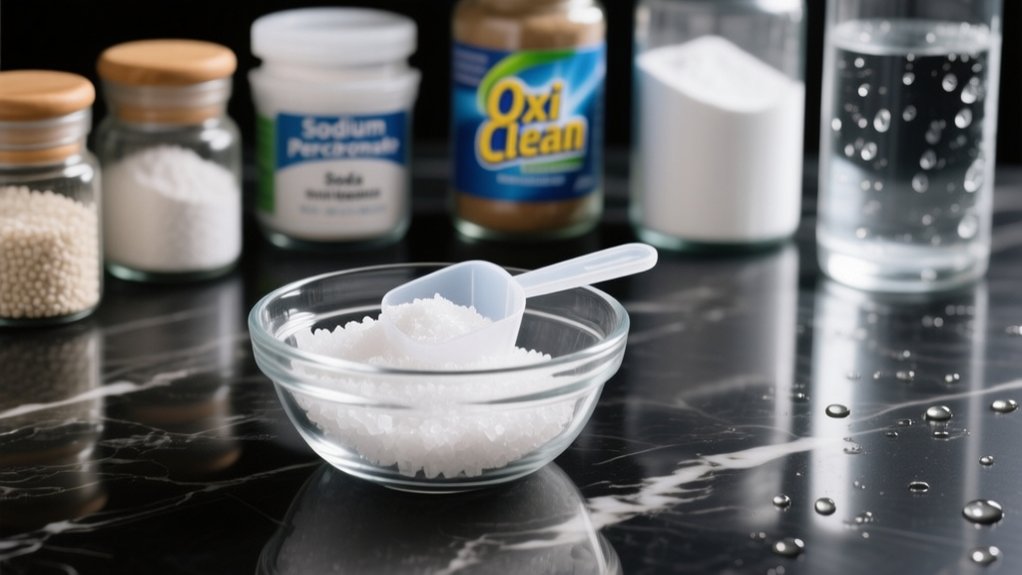
OxiClean’s formula centers on sodium percarbonate and washing soda. When mixed with water, sodium percarbonate releases hydrogen peroxide and oxygen bubbles, efficiently breaking down stains while protecting fabric colors. Washing soda raises water pH, softens hard water, and boosts cleansing power by targeting grease and mineral buildup. Additional components like phenoxyethyl isobutyrate and hexamethylindanopyran provide fragrance and stability without compromising safety. If you want to understand how these ingredients balance performance, safety, and eco-friendliness, keep exploring the details.
What Is Oxiclean and Why Its Ingredients Matter
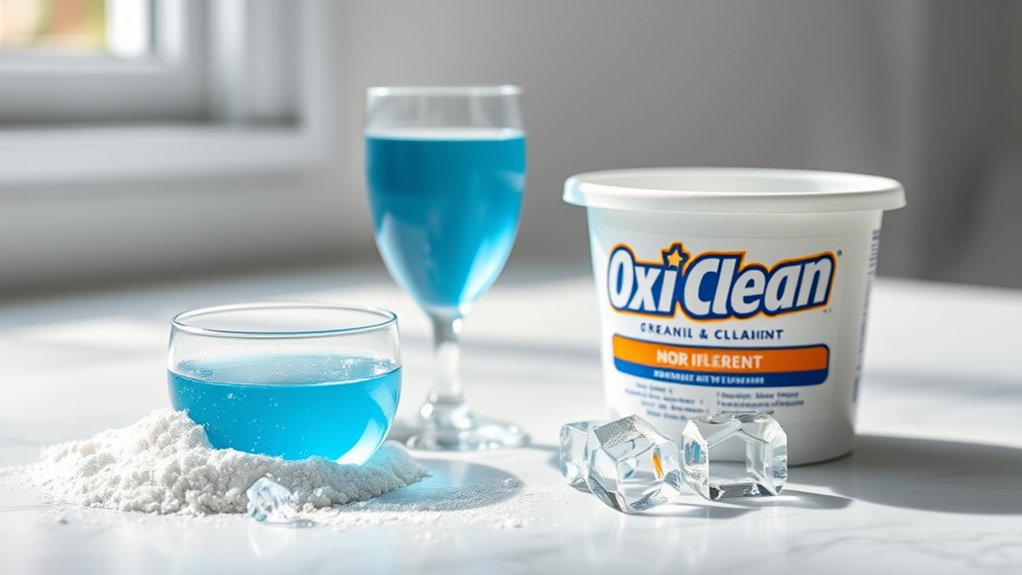
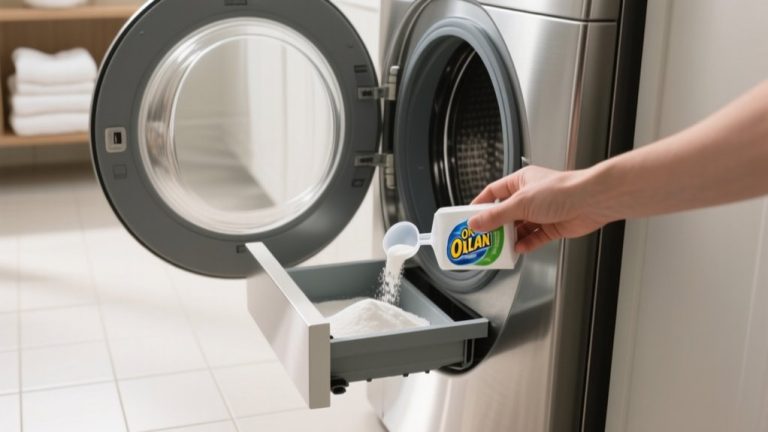
Understanding what OxiClean is made of is essential because its effectiveness hinges on its specific chemical composition. When you use OxiClean, its primary component, sodium percarbonate, interacts with water to release hydrogen peroxide, a potent agent that removes stains and brightens fabrics.
You’ll also find washing soda in the formula, which softens water and breaks down grease, boosting cleaning efficiency.
Additional ingredients like phenoxyethyl isobutyrate and hexamethylindanopyran provide fragrance and stability, meeting safety standards.
You can rely on OxiClean’s transparency about these components, helping you assess its suitability for your laundry needs.
Importantly, it’s safe for colored fabrics, so you won’t risk damage as you tackle tough stains without the harshness of chlorine bleach.
Key Ingredients in Oxiclean and Their Roles
The effectiveness of OxiClean stems from its carefully selected ingredients, each serving a specific purpose in stain removal and fabric care.
Sodium percarbonate acts as a source of hydrogen peroxide, delivering potent oxidation for stain breakdown and fabric brightening. Washing soda (sodium carbonate) serves to soften water, boosting detergent performance by preventing mineral interference.
Sodium percarbonate releases hydrogen peroxide for stain removal, while washing soda softens water to enhance cleaning power.
Phenoxyethyl isobutyrate, marked as a California Toxic Air Contaminant, contributes to product safety by meeting stringent regulatory standards. Additionally, hexamethylindanopyran, recognized as an EU fragrance allergen, provides the product’s characteristic scent while ensuring compliance with allergen labeling requirements.
This precise formulation balances cleaning efficacy with fabric safety, allowing you to confidently use OxiClean on colored fabrics without risking damage or discoloration.
Sodium Percarbonate’s Role in Oxiclean Stain Removal
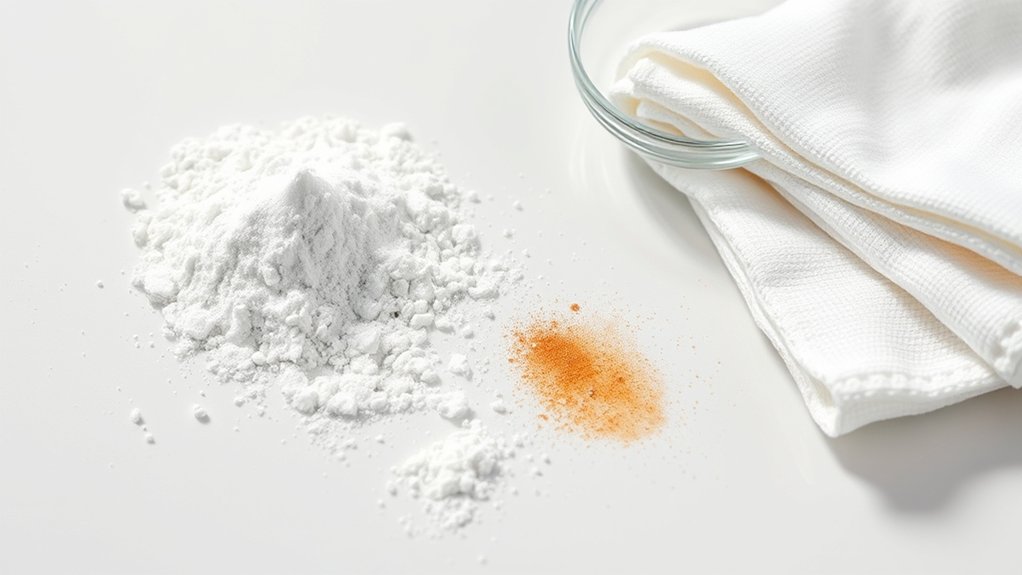
That oxygen release works best when the product is dissolved fully in warm water.
Chemical Composition Explained
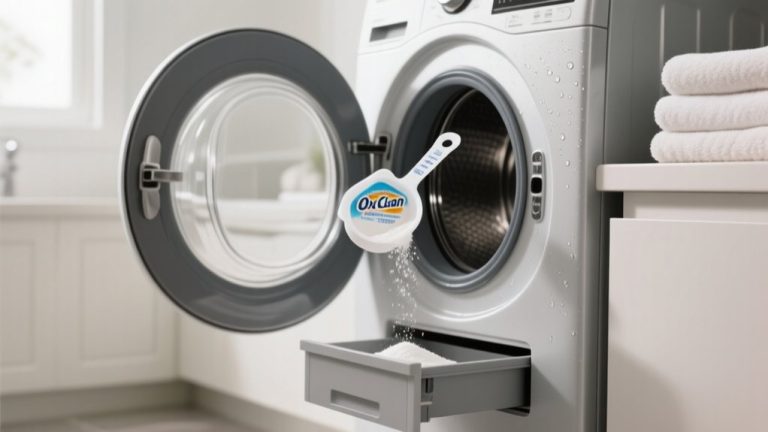
Although it might seem simple, sodium percarbonate plays a critical role in OxiClean’s stain removal power by releasing hydrogen peroxide when dissolved in water. This reaction generates oxygen bubbles that actively break down stains and lift dirt without harming fabric colors.
Its composition guarantees safety for septic systems and compatibility with all water temperatures, enhancing versatility.
Here’s a breakdown of its attributes:
| Property | Description | Benefit |
|---|---|---|
| Chemical Reaction | Releases H₂O₂ and oxygen bubbles | Effective stain breakdown |
| Fabric Safety | Color-safe, unlike chlorine bleach | Maintains fabric integrity |
| Environmental Impact | Safe for septic systems | Eco-friendly laundry option |
You’ll find sodium percarbonate’s chemical nature central to OxiClean’s cleaning efficiency and fabric care.
Stain Removal Mechanism
Harnessing the power of sodium percarbonate, OxiClean initiates a chemical reaction upon contact with water that releases hydrogen peroxide and oxygen. This reaction breaks down sodium percarbonate, generating an oxygen-rich environment that actively lifts stains by oxidizing and breaking down organic compounds embedded in fabric fibers.
The effervescence created by oxygen release enhances penetration into set-in stains, increasing cleaning efficiency without damaging the material. You benefit from a color-safe formula, as sodium percarbonate avoids bleaching effects common with chlorine bleach, protecting both whites and colors.
Additionally, its biodegradable and non-toxic nature guarantees effective stain removal while minimizing environmental and health risks, making OxiClean a technically advanced yet safer alternative in household stain treatment.
Washing Soda’s Function in Oxiclean’s Formula
Washing soda, scientifically known as sodium carbonate, plays a critical role in OxiClean’s formula by acting as a strong alkaline agent that breaks down grease and stains on fabrics.
It raises the pH of wash water, boosting the effectiveness of other agents like hydrogen peroxide and enhancing stain removal.
Washing soda also softens hard water, which helps detergents function more efficiently and prevents mineral buildup on fibers.
In combination with sodium percarbonate, it amplifies cleaning power while preserving color brightness and fabric integrity.
By using washing soda in OxiClean, you benefit from:
- More effective grease and stain breakdown
- Enhanced detergent performance in hard water
- Prevention of mineral deposits on clothes
- Maintenance of vibrant colors and bright whites
Hydrogen Peroxide’s Role in Brightening Clothes
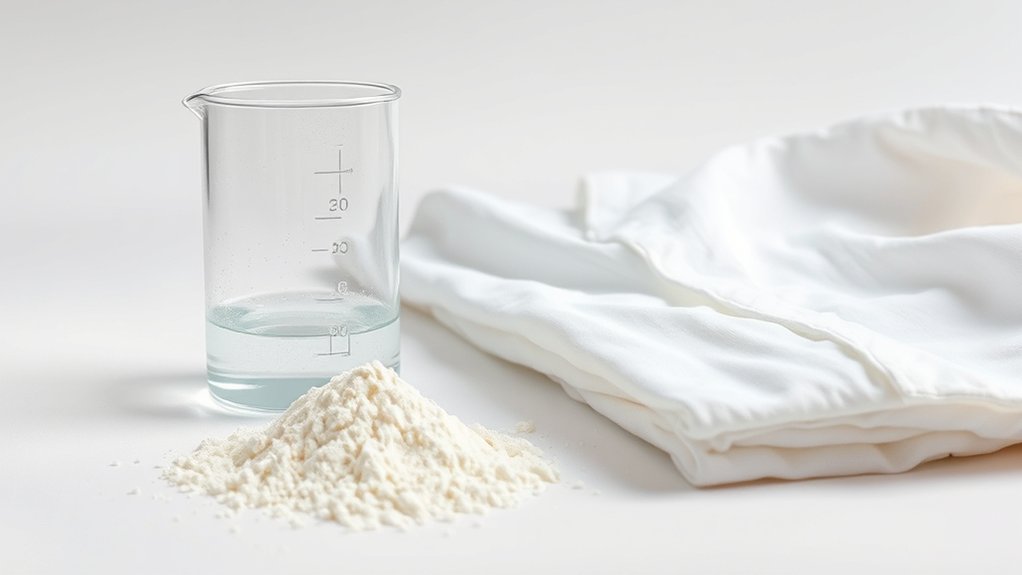
Because hydrogen peroxide releases oxygen during the wash cycle, it actively breaks down stains and lifts dirt from fabric fibers, making your clothes visibly brighter.
Hydrogen peroxide releases oxygen to break down stains and lift dirt, brightening your clothes effectively.
As a potent oxidizing agent, hydrogen peroxide disrupts the chemical bonds of chromophores in stains, effectively neutralizing discoloration. Its oxygen release mechanism guarantees grime detaches from fabrics, enhancing cleanliness without mechanical abrasion.
You’ll find hydrogen peroxide in Oxiclean at concentrations typically between 3% and 10%, balancing efficacy with safety for home use.
Unlike chlorine bleach, it doesn’t degrade fabric dyes, so it’s safe on colored textiles and more gentle on delicate fibers.
This non-chlorine bleaching action preserves fabric integrity while delivering brightening power, making hydrogen peroxide a critical component in Oxiclean’s stain removal and whitening performance.
What You Should Know About Oxiclean’s Safety and Environmental Impact
Its stain-fighting chemistry also affects how it performs on different fabric types.
Safety Profile Overview
Although many stain removers rely on harsh chemicals, OxiClean’s safety profile stands out due to its use of sodium percarbonate, which decomposes into hydrogen peroxide and washing soda.
These agents are effective at stain removal yet gentler on fabrics than chlorine bleach. You can trust OxiClean to preserve fabric integrity while lifting tough stains.
It’s color-safe, preventing fading when used correctly. Its compatibility with septic systems and absence of phosphates reduce risks to aquatic environments.
Transparency about ingredients further supports your informed choice.
- Feel confident using a product that protects your clothes and septic system.
- Appreciate a formula that avoids harsh phosphates harmful to water ecosystems.
- Trust in clear ingredient disclosure promoting safety.
- Experience effective stain removal with less fabric damage.
Environmental Considerations
Building on OxiClean’s fabric-safe formulation, its environmental footprint also demands attention. OxiClean primarily uses sodium percarbonate, which decomposes into hydrogen peroxide and soda ash, both environmentally benign compared to chlorine bleach.
These ingredients are biodegradable, minimizing ecological impact when entering wastewater systems.
Additionally, OxiClean is phosphate-free, avoiding nutrient pollution and algal blooms in aquatic ecosystems. Its compatibility with septic systems guarantees it doesn’t disrupt beneficial bacterial activity critical for waste breakdown.
OxiClean’s transparency about its ingredient safety aligns with current environmental standards, empowering you to make informed choices.
Oxiclean Ingredients vs. Homemade Laundry Boosters
When comparing OxiClean’s formulation to homemade laundry boosters, it’s clear that both rely on the stain-fighting power of hydrogen peroxide, with OxiClean using sodium percarbonate as its primary active ingredient. This compound releases hydrogen peroxide upon dissolving, effectively lifting stains and brightening fabrics.
Homemade boosters typically combine washing soda and hydrogen peroxide to replicate this reaction, emphasizing simplicity and customization.
Unlike OxiClean, which includes stabilizers and fragrances, homemade versions avoid additives, appealing to those seeking eco-friendliness and cost savings. You can tailor ratios in homemade mixes, optimizing stain removal for your specific laundry needs, whereas OxiClean provides a fixed formula.
- Feel empowered by customizing your cleaning power
- Appreciate the balance between efficacy and environmental impact
- Enjoy savings without sacrificing stain removal
- Embrace transparency in ingredient simplicity
Frequently Asked Questions
Can Oxiclean Be Used on Delicate Fabrics Like Silk or Wool?
No, you shouldn’t use OxiClean on delicate fabrics like silk or wool without caution. Its active ingredients can damage fibers, so dilute it and do a patch test first. For safer cleaning, use gentler detergents.
Does Oxiclean Contain Any Synthetic Dyes or Artificial Colors?
No. OxiClean is described as containing no synthetic dyes or artificial colors.
Its formulation relies on natural ingredients and avoids unnecessary additives, which may matter if you are trying to limit potential allergy triggers or environmental concerns.
How Long Does Oxiclean Remain Effective Once Opened?
Six months to one year. After opening, store OxiClean in a cool, dry place, because moisture exposure can weaken its oxygen bleach potency and lower cleaning performance.
Is Oxiclean Safe for Use in Septic Systems?
Yes, you can use OxiClean in septic systems since it breaks down into non-toxic compounds and helps preserve beneficial bacteria. Avoid overusing it and dilute it properly so you maintain septic health and cleaning efficiency.
Can Oxiclean Be Mixed With Other Household Cleaners Safely?
No. You shouldn’t mix OxiClean with chlorine bleach, which can produce toxic gases. Instead, use it with detergents to boost stain removal, and avoid vinegar. Always patch test first to reduce the risk of fabric damage or unwanted reactions.
Conclusion
Now that you know Oxiclean’s key ingredients, sodium percarbonate, washing soda, and hydrogen peroxide, can you see why it’s so effective at stain removal and brightening? Each component plays a specific, measurable role in breaking down stains and boosting cleaning power.
Understanding this breakdown not only helps you use Oxiclean more efficiently but also lets you compare it to homemade alternatives with a clear, analytical eye. Isn’t informed cleaning just smarter cleaning?