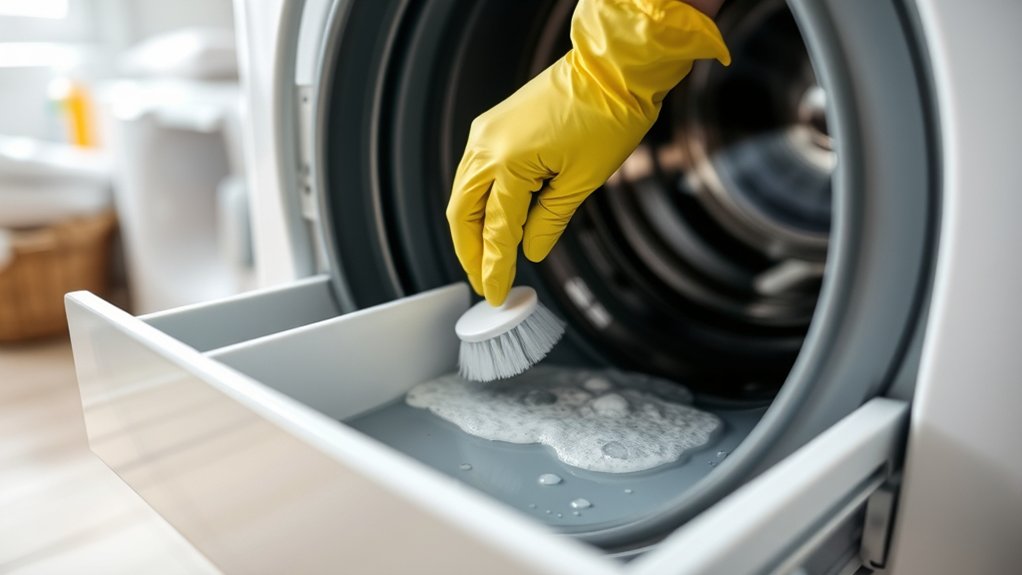
How To Clean Washing Machine Drawer – Easy Cleaning Guide
You should remove your washing machine drawer by pulling it out gently. Then soak it in warm, soapy water to loosen detergent buildup. Use a soft brush to scrub crevices, rinse thoroughly, and dry completely before reinserting to prevent mold and odors.
Make sure to clean the dispenser housing with mild soap and a cloth. After that, let everything air dry fully. This helps keep things fresh and working well.
Try to clean your drawer regularly, about every 2 to 4 weeks. Doing this keeps your machine running efficiently. For more detailed steps and maintenance tips, keep exploring this guide.
Why Clean Your Washing Machine Detergent Drawer
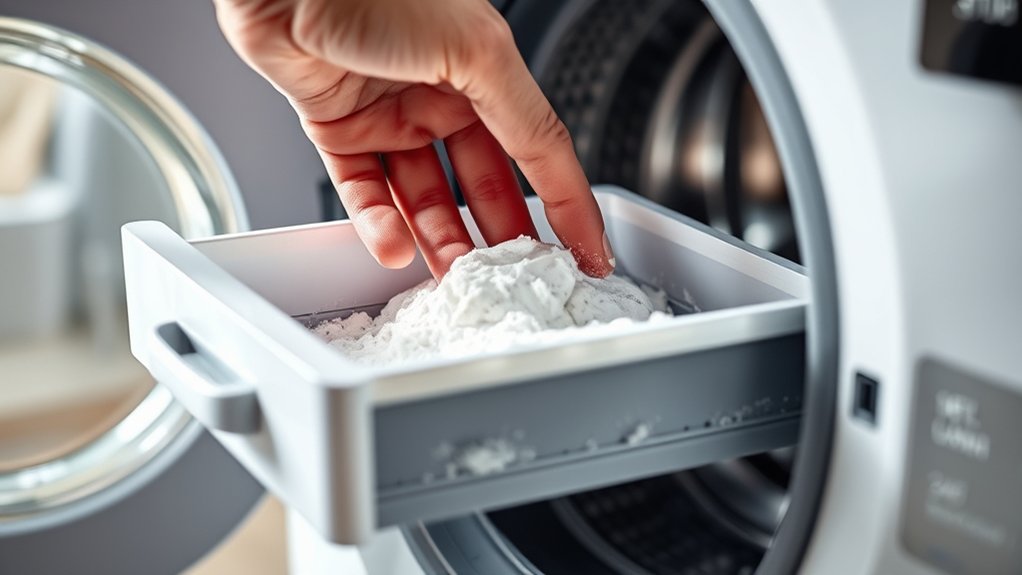
Although it may seem minor, regularly cleaning your washing machine detergent drawer is crucial to prevent detergent and fabric softener buildup. This buildup can clog the compartment and reduce washing efficiency.
You need to clean inside the drawer thoroughly to remove residue that fosters bacteria and mildew growth, which cause unpleasant odors. This buildup not only blocks detergent flow but also compromises your machine’s performance, leading to less effective wash cycles.
By maintaining a clean inside drawer, you guarantee peak detergent dispensing and enhance overall washing efficiency. Regular cleaning also helps avoid mineral deposits common in hard water areas.
Establishing this routine preserves your machine’s lifespan and minimizes repair costs. It keeps your laundry fresh and your washing machine functioning at maximum capacity.
How Often to Clean Your Washing Machine Detergent Drawer
You should clean your washing machine detergent drawer every 2 to 4 weeks to keep residue from building up.
If you start to see visible residue or if you live in an area with hard water, it’s a good idea to clean it more often.
Just pay attention to how often you use your machine and the conditions around you, and adjust your cleaning routine to keep everything running smoothly.
Recommended Cleaning Frequency
Since detergent and fabric softener residues can quickly build up, cleaning your washing machine drawer every 2 to 4 weeks is essential to keep it working at its best. How often you clean really depends on your water type, washing habits, and whether you can see any residue.
If you live in a hard water area, you’ll want to clean more often to stop mineral deposits from forming. Also, rinsing the drawer after each cycle helps reduce buildup and makes cleaning easier.
| Condition | Cleaning Frequency |
|---|---|
| Normal use | Every 2 to 4 weeks |
| Hard water areas | Every 1 to 2 weeks |
| Visible residue present | Immediately |
| Frequent washing cycles | Adjust to weekly cleaning |
Try to set up a regular cleaning routine. It’ll help minimize buildup and keep your washing machine running smoothly.
Signs To Clean
Three clear signs indicate when it’s time to clean your washing machine detergent drawer: visible residue buildup, discoloration, and unpleasant odors. These signs to clean signal detergent residue accumulation, mold, or mildew growth, which can compromise your machine’s performance.
Make sure to inspect the drawer regularly, especially if you notice detergent residue stuck to the corners or discoloration of the plastic components. Unpleasant odors often point to trapped moisture fostering microbial growth.
It’s best to address these signs immediately to prevent deeper contamination. Regularly removing and rinsing the drawer can eliminate detergent residue and prevent buildup.
Also, keep an eye out for spills or leaks within the drawer to minimize mold development.
Observing these signs to clean guarantees peak washing efficiency and prolongs the life of your machine’s detergent compartment. Taking a little time to check and clean the drawer now and then really pays off in the long run.
Factors Affecting Frequency
Although cleaning intervals can vary, several factors determine how often you should clean your washing machine detergent drawer. Regular cleaning every 2 to 4 weeks is recommended for peak performance, especially if you use the machine frequently.
If you live in a hard water area, increase the frequency to prevent mineral buildup that can block detergent flow. Always address visible residue or discoloration immediately to keep things hygienic and avoid odors.
Your usage patterns also influence how often you clean. So, establish a routine that responds to buildup or unpleasant smells.
Consistent maintenance through regular cleaning not only preserves detergent efficiency but also extends your washing machine’s lifespan considerably. Adjust your cleaning schedule based on these factors to guarantee peak appliance function and cleanliness.
Signs Your Washing Machine Drawer Needs Cleaning
When you notice visible residue or discoloration on your washing machine drawer, it’s a clear sign that detergent or fabric softener has built up and needs cleaning.
Visible residue or discoloration on your washing machine drawer signals detergent buildup that needs cleaning.
Check for unpleasant odors coming from the detergent drawer, too. This often means mold or mildew is growing and needs immediate attention.
If the drawer feels sticky or is hard to pull out, it’s probably clogged with hardened detergent residue.
Also, if you use hard water a lot, mineral deposits can build up, so you’ll need to clean more regularly.
Finally, pay attention to how well your washing is working. If detergent isn’t spreading evenly or your clothes aren’t coming out clean, the detergent drawer is likely blocked.
Taking care of these signs quickly helps keep your machine running smoothly and prevents damage.
Tools and Supplies Needed for Cleaning the Drawer
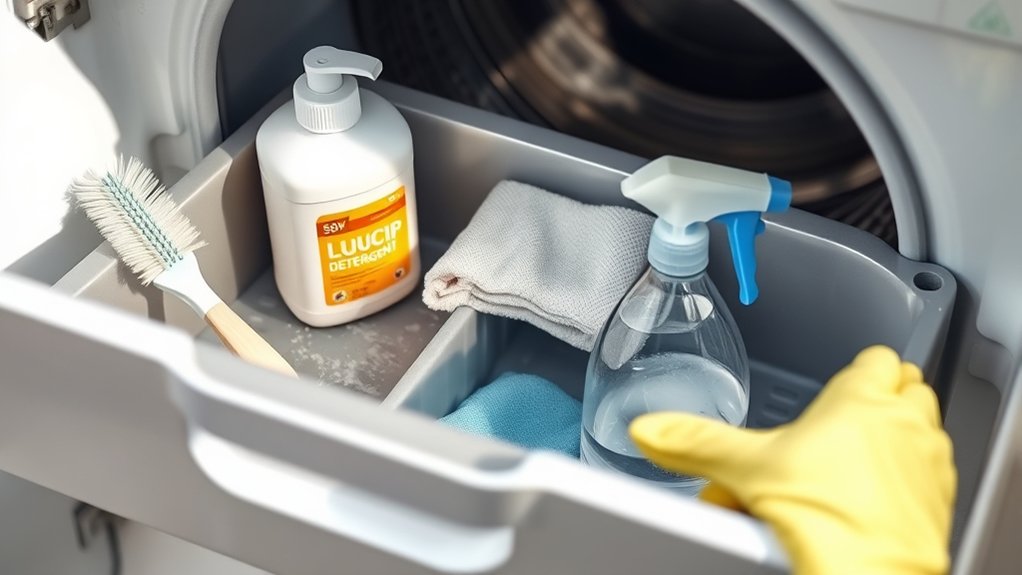
Before you start cleaning your washing machine drawer, gather the necessary tools and supplies to guarantee an efficient process. The essential tools and supplies needed for cleaning the drawer include an E-Cloth for wiping, mild dish soap to break down detergent residue, and a soft brush or toothbrush to reach crevices without damaging surfaces.
Use warm running water to rinse away loosened grime thoroughly. Have a towel or paper towels ready to dry the drawer completely before reinserting it, preventing mold growth.
For stubborn buildup, try using a Scrub Daddy for gentle yet effective scrubbing. HG mould and mildew foam spray is great for targeting and eliminating persistent mold and mildew, which helps keep everything extra clean.
Avoid harsh chemicals or abrasive tools that could impair drawer functionality. Collecting these items ensures a precise, damage-free cleaning process.
With the right supplies on hand, your cleaning will be much easier and more effective.
Step 1: Removing the Washing Machine Drawer Safely
Gathering the right tools and supplies sets the stage for safely removing your washing machine drawer without causing damage.
Begin by unplugging the machine to eliminate any electrical hazards. Open the detergent drawer fully and pull it out gently; if it resists, wiggle it slightly to free any blockages.
Inspect the drawer and surrounding area for obstructions or damage that could interfere with removal. If your drawer contains inserts, locate and activate the release mechanism to detach them before extracting the entire drawer.
Throughout the process, handle the drawer delicately to avoid breaking components.
Following these precise steps guarantees smooth, safe removal of the washing machine drawer, preventing damage and preparing it for thorough cleaning.
It’s pretty straightforward once you know what to look for. Just take your time, and you’ll have it out in no time.
Step 2: Rinsing, Soaking, and Scrubbing the Drawer
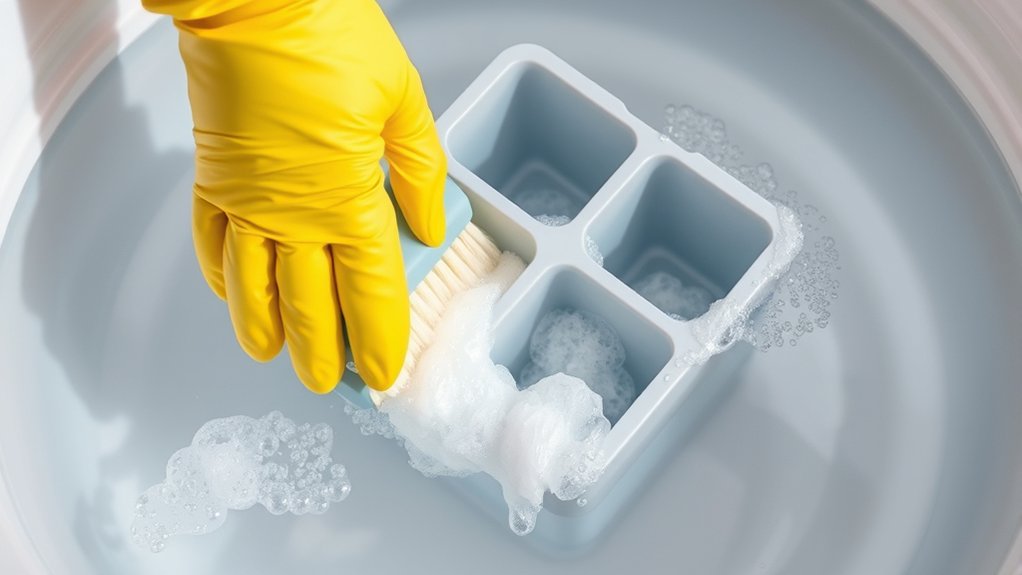
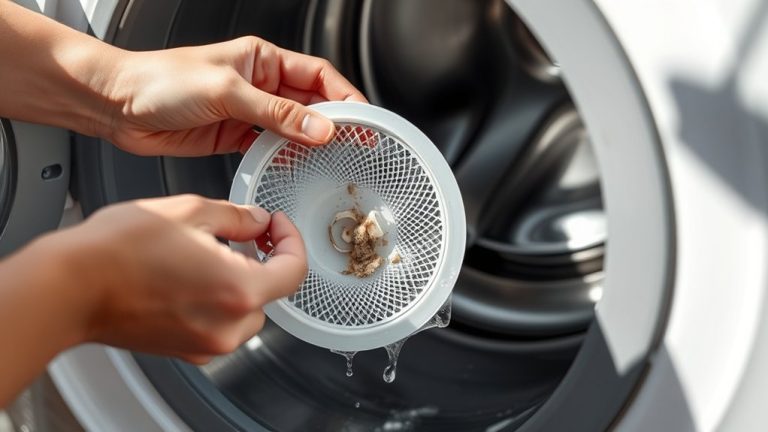
Although the drawer may look clean at first glance, you’ll need to rinse it under warm running water to loosen detergent residue effectively. Start by holding the drawer under the stream, making sure all visible deposits soften.
If you find stubborn buildup, go ahead and submerge the drawer in warm soapy water. Let it soak for 10 to 15 minutes. This soaking step softens hardened deposits, making scrubbing easier.
After soaking, grab a toothbrush or a soft cleaning brush and scrub all the crevices thoroughly. Focus on grooves where detergent tends to accumulate.
Once you’re done scrubbing, rinse the drawer again under warm water to wash away all soap and loosened residue.
Finally, dry the drawer completely with a towel or paper towels to prevent moisture buildup and mold growth.
Step 3: Cleaning the Dispenser Housing and Hard-to-Reach Areas
Use a mild soap and water solution with a soft cloth to thoroughly clean the dispenser housing, removing all detergent residues.
When you come across tight spaces, grab a small soft brush to reach in and get rid of any trapped dirt.
Doing this regularly helps prevent buildup that can cause odors and keeps your machine running smoothly.
Cleaning Methods
Step three involves thoroughly cleaning the dispenser housing and those hard-to-reach areas where detergent and fabric softener residues accumulate.
Start by using a soft cloth or sponge dipped in mild soap and warm water to wipe all visible surfaces, ensuring you clean your washing machine drawer effectively.
For tighter spots, employ a small soft brush to dislodge any stubborn buildup or debris.
After scrubbing, rinse the housing thoroughly with warm water to eliminate soap residue that could interfere with future washes.
Inspect the housing monthly or as needed to prevent excessive buildup.
Avoid abrasive tools or harsh cleaners that might scratch or damage the housing surfaces, preserving both function and appearance.
Following these precise cleaning methods maintains ideal performance and prolongs the life of your washing machine drawer.
It’s a simple step that really pays off in the long run!
Hard-To-Reach Areas
When cleaning the dispenser housing, you’ll want to focus on those hard-to-reach areas where detergent and fabric softener residues tend to accumulate. Use a mild soap solution and a soft cloth to wipe down all accessible surfaces.
For hard-to-reach areas like crevices and corners, employ a small soft brush to dislodge trapped residue effectively. This prevents buildup that can harbor bacteria and mildew due to moisture retention.
After cleaning, thoroughly dry every part of the dispenser housing to eliminate any environment conducive to mold growth. It’s a good idea to incorporate this cleaning routine every 2 to 4 weeks.
Doing this helps maintain peak washing machine efficiency and prolongs its lifespan by keeping these hard-to-reach areas free from debris and microbial growth.
Step 4: Drying and Reassembling the Drawer Properly
Before reassembling, make certain the detergent drawer is completely dry to prevent mold and mildew growth. Use a clean towel or paper towels to thoroughly wipe down all surfaces of the drawer and its housing.
If needed, allow the drawer to air dry for at least 30 minutes in a well-ventilated area to guarantee all moisture evaporates.
When reinserting, gently slide the drawer back into the dispenser housing, making sure it aligns properly and fits securely without forcing it. Proper drying and careful reassembly are critical to maintaining hygiene and peak washing machine performance. This step prevents moisture buildup that can cause odors or damage.
Following these precise drying and reassembly procedures will keep your washing machine drawer functioning efficiently. It’s a simple step that really makes a difference over time.
Just take your time and you’ll be all set!
Maintenance Tips to Keep Your Washing Machine Drawer Fresh
You should wipe the detergent drawer dry after each wash to prevent mold growth and keep it fresh.
Leaving the drawer slightly open between cycles helps air circulate and cuts down on dampness.
Also, try to do a deep clean once a month using warm water, mild soap, and a soft brush.
This will get rid of any leftover residue and keep your machine running smoothly.
Daily Drying Routine
Two essential steps keep your washing machine drawer fresh: drying it thoroughly after each use and allowing proper airflow.
Your daily drying routine should start by removing the detergent drawer immediately after the cycle ends. Wipe all surfaces with a clean towel to eliminate residual moisture, which prevents mold and mildew buildup.
Next, leave the drawer slightly open to promote air circulation, ensuring it dries completely between uses.
Incorporate a quick inspection into your daily drying routine. Check the drawer slot for spills or leaks and clean them promptly to avoid residue accumulation.
Regularly monitor for any discoloration or buildup, addressing issues early to reduce the need for deep cleaning.
Doing this consistently will keep your drawer fresh and improve your washing machine’s overall hygiene. It’s a simple habit that really pays off!
Preventing Mold Growth
Although regular use can cause moisture buildup, preventing mold growth in your washing machine drawer is totally manageable with consistent maintenance.
After each wash, make sure to wipe the drawer thoroughly to get rid of excess moisture that encourages mold and mildew.
Always leave the drawer open when the machine is idle. This helps airflow and reduces humidity, which keeps mold at bay.
Try to do a monthly cleaning using hot water and mild detergent. This helps remove any residue or early mold formation before it becomes a problem.
At the first sign of mold or mildew, apply a vinegar or bleach solution right away to stop it from spreading.
Also, regularly check the drawer and housing for clogs or buildup since these hold moisture and make cleaning less effective.
Following these simple steps guarantees a fresh, mold-free drawer and keeps your machine running at its best.
Monthly Deep Cleaning
Preventing mold growth sets the foundation for maintaining a clean washing machine drawer, but monthly deep cleaning guarantees thorough removal of detergent buildup and hidden residues.
Begin by removing the drawer and soaking it in hot water mixed with a mild detergent. Use a soft brush or toothbrush to scrub all crevices, focusing on areas prone to detergent accumulation.
After scrubbing, rinse the drawer and components thoroughly to eliminate any soapy residue that could cause odors or mold. If you detect mold or mildew, apply a vinegar or diluted bleach solution cautiously to affected spots.
Make it a habit to do this monthly deep cleaning. It helps prevent excessive buildup, keeps your washing machine running at its best, and ensures the drawer stays fresh and hygienic over time.
Mistakes to Avoid When Cleaning Your Washing Machine Drawer
When cleaning your washing machine drawer, you must avoid using harsh chemicals or abrasive tools that can damage its components. Also, never forget to unplug the machine before starting to guarantee safety.
Avoid washing removable parts in the dishwasher; hand wash them gently to preserve their integrity. Regular cleaning every 2 to 4 weeks prevents detergent residue buildup, a mistake many overlook.
Finally, always dry the drawer completely before reinserting it to avoid mold and mildew growth. It’s these little steps that really help keep your machine running smoothly.
| Mistake | Consequence | How to Avoid |
|---|---|---|
| Using harsh chemicals | Component damage | Use mild soap and water |
| Ignoring safety | Electrical hazards | Unplug machine before cleaning |
| Dishwasher cleaning | Part deformation | Hand wash removable parts |
| Not drying drawer | Mold and mildew formation | Dry thoroughly before reinsertion |
Frequently Asked Questions
Can I Use Bleach to Clean My Washing Machine Drawer?
Yes, you can use bleach to clean your washing machine drawer, but use it sparingly and always dilute it with water (1:10 ratio).
Wear gloves and make sure the area is well-ventilated. Avoid mixing bleach with other cleaners because that can create toxic fumes.
If you’d rather skip bleach, white vinegar or baking soda are great alternatives. They clean and deodorize without the harsh chemicals.
Just remember to rinse thoroughly to get rid of any residue before putting the drawer back in.
Will Cleaning the Drawer Improve My Washing Machine’s Lifespan?
Yes, cleaning the drawer regularly improves your washing machine’s lifespan. It prevents detergent buildup and clogs, which helps ensure smooth water flow and ideal detergent distribution.
Following maintenance tips like removing residue and wiping the drawer also reduces bacterial growth and mechanical strain. This kind of proactive care minimizes wear and tear on internal components.
That means your machine runs more efficiently and you’ll likely need fewer repairs.
How Do I Prevent Mold From Returning in the Detergent Drawer?
Mold prevention is your best shield against recurring mold in the detergent drawer. Wipe the drawer dry after each wash to cut moisture, then leave it open to air out.
Clean it monthly with a vinegar solution to kill spores. Rinse thoroughly to remove detergent residue.
And if humidity is high, use a dehumidifier in your laundry area.
These steps keep mold from creeping back into your washing machine. It’s all about staying on top of moisture and letting the drawer breathe.
Can I Clean the Drawer Without Removing It From the Machine?
Yes, you can clean the washing machine drawer without removing it by using cleaning alternatives like a soft cloth or sponge soaked in warm, soapy water.
Use a small brush to reach tight spots, and flush detergent slots with warm water to clear residue. These methods effectively reduce buildup and odors without disassembly.
That said, if you want a really thorough clean or if there’s heavy buildup, removing the drawer is still your best bet. It lets you get into all those hard-to-reach areas much better.
But for regular maintenance, the no-removal method works just fine.
Are There Specific Detergents That Cause More Buildup in the Drawer?
Detergent residue can be a sneaky culprit, quietly piling up like dust in forgotten corners.
You’ll find that high-efficiency (HE) detergents, especially concentrated ones, often leave more buildup in the drawer. Liquid fabric softeners add a sticky layer, while powders may not dissolve fully in cold or hard water, increasing residue.
Low-quality detergents with fillers just make things worse.
To combat buildup, choose quality detergents and regularly use a washing machine cleaner. It really helps keep everything fresh and running smoothly.
Conclusion
Think of your washing machine drawer like a coffee filter. Neglect it, and residue builds up, affecting performance. Regular cleaning prevents mold and detergent clogs that can reduce efficiency by up to 30%.
By following these precise steps, you’ll guarantee your drawer functions smoothly and prolong your machine’s life. Keep this routine, and your laundry will come out fresh every time, just like a perfect brew, free from stale buildup or blockages.