How To Deep Clean Towels In Washing Machine – Easy Method
To deep clean your towels in the washing machine, soak them in the hottest safe water with 1 cup of white vinegar first to break down residues. Rinse, then run a second cycle adding 1/2 cup baking soda to neutralize odors and enhance absorbency.
Avoid fabric softeners and dryer sheets to prevent residue buildup. Make sure towels are fully dry before washing to avoid mildew.
Following this method restores softness and freshness. Plus, there are extra tips you can use to keep your towels feeling great for longer.
Why You Should Deep Clean Your Towels
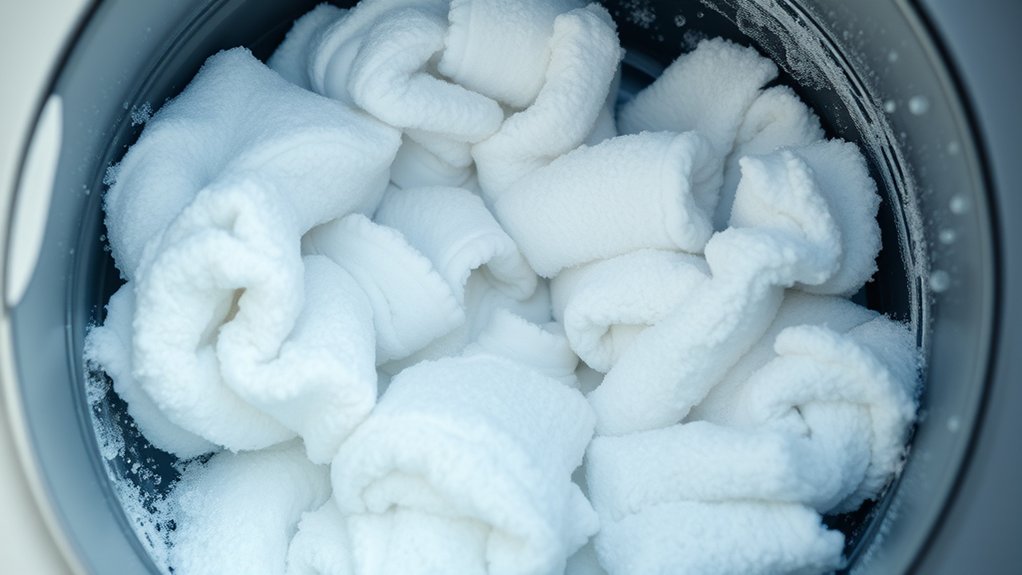
Although regular washing removes surface dirt, it often fails to eliminate the buildup of detergent, fabric softener, body oils, and minerals embedded deep within towel fibers. This accumulated detergent and residue cause towels to smell musty and reduce their absorbency.
To restore your towels’ freshness and efficiency, you need to deep clean towels through a thorough laundry stripping process. This method penetrates fibers, breaking down layers of grime and residues that typical washing cycles leave behind.
Over time, this buildup compromises towel softness and longevity. By stripping towels every 3-6 months, you effectively remove embedded contaminants, enhancing their plush texture and extending their lifespan.
Deep cleaning is essential to maintain towels’ hygiene and performance, ensuring they remain fresh, absorbent, and odor-free. It’s a simple step that makes a big difference!
What You’ll Need to Strip Towels in Your Washer
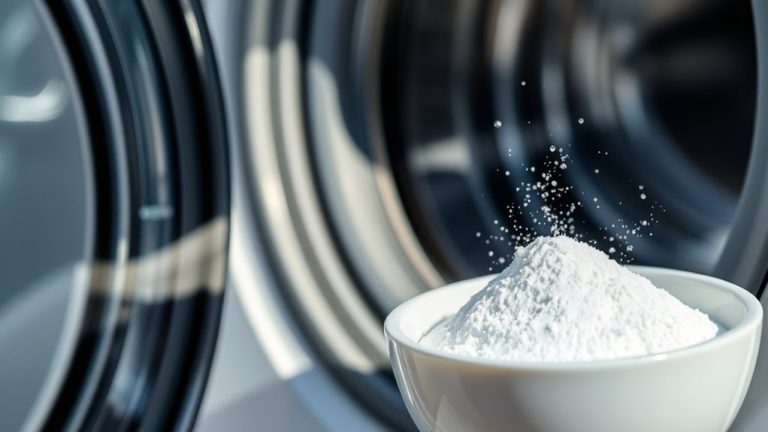
To strip towels effectively, you’ll need 1 cup of white vinegar and 1/2 cup of baking soda.
If you want to add a nice scent, you can also use about 1/4 cup of Glamorous Diva Wash.
Before you start, make sure your towels are clean and dry—that really helps the stripping process work better.
Then, set your washer to the hottest water setting you can find. This will maximize residue removal and get your towels extra clean.
Essential Laundry Ingredients
When stripping towels in your washer, you’ll need specific laundry ingredients to break down residue effectively: 1/2 cup each of Borax, washing soda, and powdered laundry detergent.
These components work together to loosen buildup from fabric fibers during the stripping process. Use hot water to fully dissolve these agents, maximizing their cleaning power and ensuring deep residue removal.
Avoid powdered detergents containing bleach because bleach can degrade towel fibers and reduce their absorbency.
Start with clean, dry towels to prevent adding dirt or oils that compromise how well stripping works.
If you can, use a large-capacity washing machine to give towels plenty of space for thorough agitation and soaking.
This exact combination and method will bring back your towels’ softness and absorbency by getting rid of embedded residues effectively.
Washer Preparation Tips
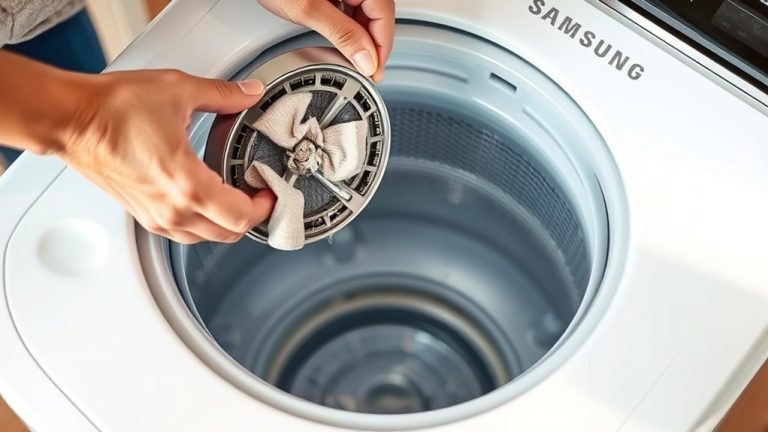
Now that you’ve gathered the right laundry ingredients, preparing your washer correctly guarantees the stripping process works efficiently.
Start by selecting clean items. Only freshly laundered towels should undergo stripping to avoid embedding new dirt.
Adjust your washer to the hottest water setting safe for your towels. Hot water is essential to dissolve residues effectively.
Add 1 cup of white vinegar during the first cycle. Then introduce 1/2 cup of baking soda (plus 1/4 cup of Glamorous Diva Wash if desired) in the second cycle. These steps maximize cleaning power.
Incorporate these washer preparation tips into your laundry routine to guarantee thorough residue removal.
Finally, always dry towels completely before storing to prevent mildew and maintain freshness. This completes a precise, efficient deep-cleaning process.
Step-by-Step Laundry Stripping Process
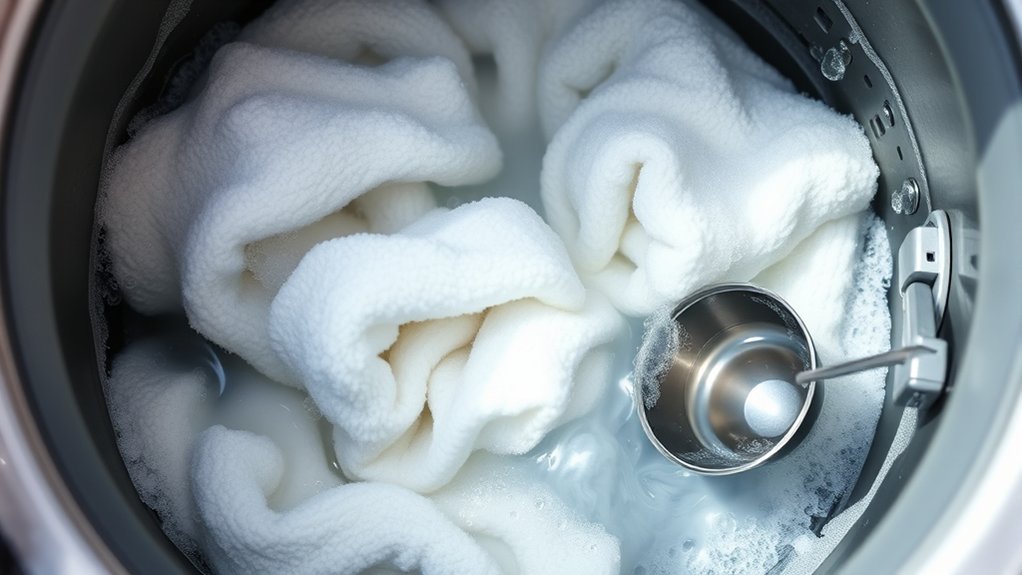
Start by filling your washing machine with hot water.
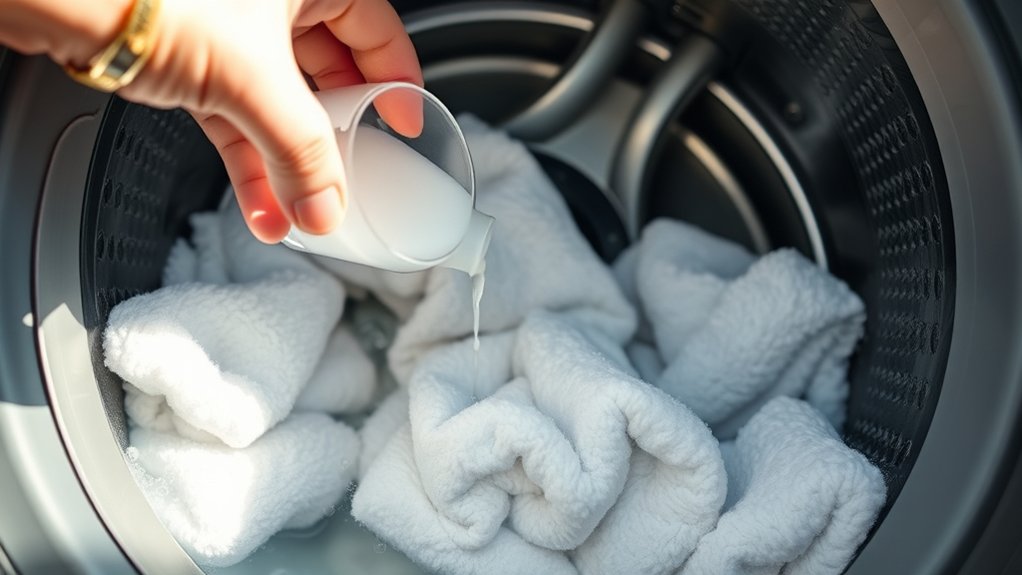
Then, add one cup of white vinegar to create a potent cleaning solution that breaks down detergent buildup.
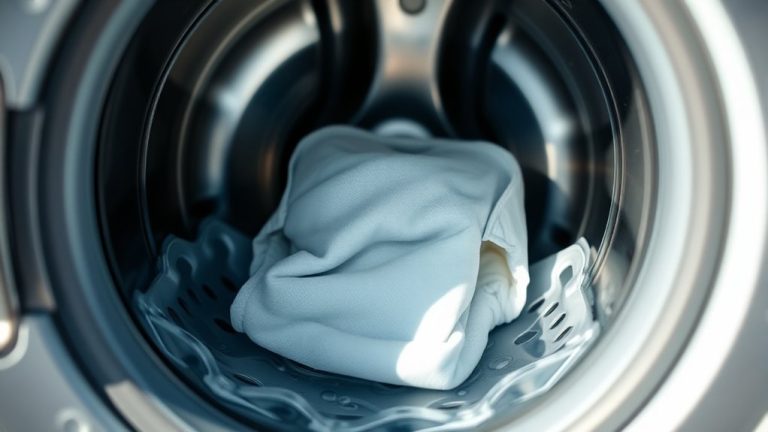
Next, soak the towels thoroughly in this mixture so the solution can really penetrate the fibers.
After that, go ahead and rinse everything to remove the loosened residues before moving on to the next cleaning cycle.
Preparing The Cleaning Solution
To prepare the cleaning solution for laundry stripping, fill your washing machine with hot water set to a large load capacity. This helps maximize cleaning efficiency.
Add 1/2 cup each of Borax, washing soda, and powdered laundry detergent to the water.
Stir thoroughly to fully dissolve all ingredients. Make sure there’s no residue left that could affect your towels or the washing machine. This precise mixture creates a potent cleaning solution designed to break down detergent buildup, oils, and minerals embedded in your towels.
Before submerging, mix the solution well to keep the cleaning agents evenly distributed.
Once the solution is uniform, place your clean, dry towels into the washing machine. Proper preparation of this cleaning solution is key to rejuvenating your towels effectively during the laundry stripping process.
Soaking And Rinsing Towels
Once your towels are submerged in the prepared cleaning solution, fill the washing machine again with hot water and add 1 cup of white vinegar. This soaking step initiates the deep cleaning method, breaking down residues. After soaking, run a rinse cycle to remove loosened dirt and vinegar smell.
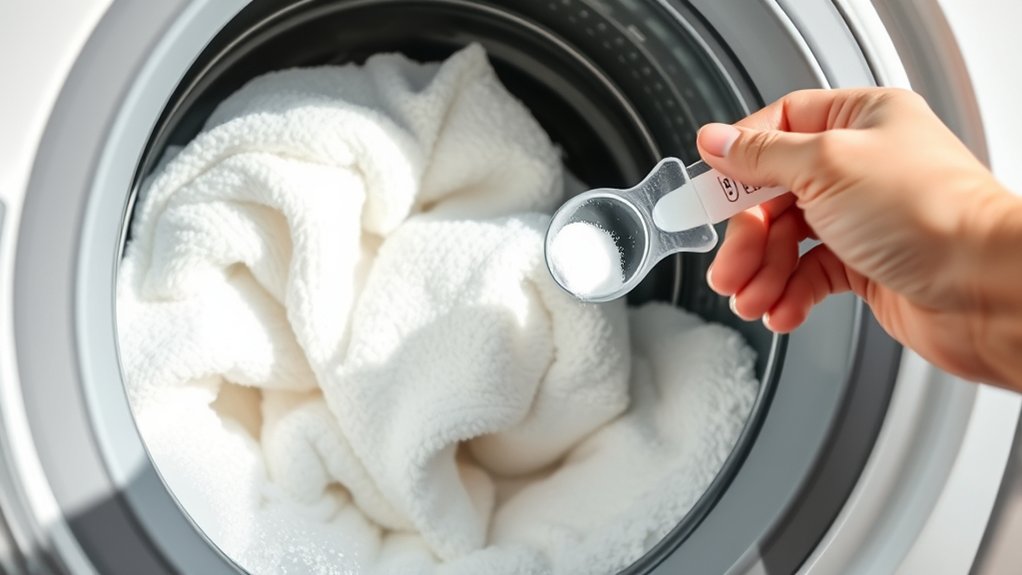
For enhanced freshness, run a second cycle adding 1/2 cup baking soda and 1/4 cup Glamorous Diva Wash. Sprinkle baking soda directly into the wash for best effect. Finally, make sure towels undergo a thorough rinse cycle to eliminate all residues before drying.
| Step | Action | Purpose |
|---|---|---|
| 1 | Soak towels with vinegar | Breaks down residues |
| 2 | Rinse cycle | Removes loosened dirt |
| 3 | Second wash with baking soda | Enhances freshness |
| 4 | Final rinse | Guarantees complete cleaning |
How Vinegar and Baking Soda Deep Clean Towels
When you wash your towels with vinegar and baking soda, you release a potent cleaning mechanism that targets stubborn residues and odors embedded deep within the fibers.
Vinegar serves as a natural disinfectant and deodorizer, breaking down detergent buildup and musty odors that regular washing misses. Baking soda adjusts the pH balance, enhancing stain and residue removal.
Vinegar disinfects and deodorizes, while baking soda balances pH to boost stain and residue removal.
To deep clean towels effectively, start with a hot water wash adding 1 cup of vinegar.
Follow this with a second cycle using 1/2 cup of baking soda, optionally combined with a mild fragrance booster. This chemical synergy lifts dirt and grime, restoring freshness and softness.
Always make sure towels are completely dry before storage to prevent mildew and odor buildup.
This helps preserve the benefits of your deep cleaning routine. It’s a simple trick that really makes a difference!
Common Mistakes to Avoid When Deep Cleaning Towels
Although deep cleaning towels seems straightforward, several common mistakes can undermine your efforts and reduce their effectiveness.
First, avoid using fabric softeners because they deposit a coating on towel fibers that traps residue and diminishes absorbency. Always wash towels in hot water since it’s essential for breaking down oils, dirt, and detergent buildup thoroughly.
Make sure towels are completely dry before washing to prevent mildew development.
Overloading the washing machine is another frequent error. It limits proper agitation and rinsing, leaving residue behind.
Also, skip dryer sheets because they leave a film that reduces towels’ water absorption capabilities.
How to Dry Towels for Maximum Softness and Longevity
To maximize your towels’ softness and lifespan, you need to dry them completely at an ideal temperature of at least 130°F (54°C). This helps eliminate moisture effectively and prevents mildew growth.
Before drying, give your towels a good shake to separate the fibers and promote even airflow.
Give your towels a good shake before drying to fluff fibers and ensure even airflow.
Use wool dryer balls instead of dryer sheets because those sheets can leave residues that reduce absorbency and softness. Tumble dry on a low heat setting to protect the fibers and keep your towels nice and soft.
Avoid fabric softeners; instead, add white vinegar during the rinse cycle for an extra boost of softness.
Proper drying is key—it removes deep water trapped within the fibers, so your towels stay fluffy and durable over time.
This careful drying approach not only extends their longevity but also preserves their absorbency and luxurious feel. Easy, right?
How Often Should You Deep Clean Your Towels?
Regularly deep cleaning your towels every three to six months guarantees the removal of accumulated detergent residues, fabric softeners, and body oils that standard washing cycles often miss.
This process restores absorbency and prevents a musty odor.
Think about how often you use your towels to decide when to deep clean. For example, families or workout enthusiasts might need to clean their towels more often because of higher body oils and sweat buildup.
Here are some things to consider for your deep cleaning schedule:
- Usage intensity: Families or workout enthusiasts require more frequent deep cleaning due to higher body oils and sweat buildup.
- Towel stiffness: If towels feel rough or lose softness, deep cleaning is essential.
- Musty smell: Persistent odors mean there’s trapped moisture and buildup—you’ll want to deep clean right away.
- Absorbency loss: When towels don’t dry effectively anymore, deep cleaning helps revitalize the fibers and restore their performance.
Following this routine helps your towels last longer and keeps them fresh and hygienic.
Signs Your Towels Need Laundry Stripping
When your towels start feeling stiff or rough despite routine deep cleaning, it signals a buildup of detergent, fabric softeners, and body oils that ordinary washes can’t remove. This accumulation forms a residue layer that stops fibers from absorbing water properly.
Another clear sign is a persistent musty smell. That smell means trapped odors and bacteria are living inside the towel’s fabric.
If your towels no longer soak up water well or release dark, murky water during washing, it’s a sure sign of significant residue buildup.
Using fabric softeners often leaves a sticky film that messes with towel softness and absorbency.
When you notice these problems, laundry stripping becomes essential. It helps remove those residues, restores the towels’ texture, and brings back their moisture-absorbing properties. This way, your towels stay clean and work like they should.
Maintaining Towel Freshness Between Washes
Although towels get washed regularly, improper storage and handling between washes can quickly degrade their freshness and absorbency. To keep your towels feeling fresh and avoid that musty smell, there are a few simple steps you can follow.
First, store towels in a dry, well-ventilated area. This helps stop microbes from growing and keeps odors at bay.
Also, try to avoid using fabric softeners because their residue can block the fibers. That makes towels less absorbent and can even make them stiff.
Before you hang or store your towels, give them a good shake. This promotes air circulation and helps prevent moisture from sticking around.
Another great tip is to add white vinegar during the rinse cycle when you wash your towels regularly. Vinegar neutralizes odors and helps keep towels fresh longer.
Tips for Keeping Towels Soft and Absorbent Longer
Five key practices can greatly extend the softness and absorbency of your towels.
First, avoid fabric softeners. They coat fabric fibers and reduce absorbency.
Avoid fabric softeners since they coat fibers and decrease your towels’ absorbency.
Second, wash towels regularly in hot water to break down oils and prevent detergent and mineral buildup. This buildup can stiffen the fabric and make towels less comfy.
Third, add a cup of vinegar during the rinse cycle. This natural trick removes residue, enhances softness, and eliminates odors without leaving any film.
Fourth, use wool dryer balls to fluff towel fibers and shorten drying time. This helps preserve softness and gets your towels ready faster.
Finally, store towels in a dry, well-ventilated space. This keeps musty smells away and maintains freshness.
Frequently Asked Questions
Can I Deep Clean Towels With Essential Oils for Fragrance?
Yes, you can use essential oils for deep cleaning towels to enhance towel freshness.
To get the benefits of essential oils without residue buildup, add a few drops during the rinse cycle. Mix them with a carrier like vinegar or detergent. This helps make sure the oils spread evenly and avoids staining.
You might want to try natural fragrance options like lavender or tea tree oil as DIY scent boosters.
Just be sure to test first to prevent any discoloration. Following towel freshness tips will help you get the best results.
Is It Safe to Deep Clean Towels With Bleach?
Yes, you can safely deep clean towels with bleach, but only white or bleach-safe towels to avoid towel discoloration.
Use a proper dilution and follow fabric care instructions carefully. Avoid bleach on colored towels and consider bleach alternatives like oxygen-based cleaners for gentler results.
Set washing temperatures to hot for effective bacteria removal, but make sure the fabric can handle heat.
Always rinse thoroughly to prevent fiber damage and prolong towel lifespan.
This way, your towels stay fresh and last longer!
Can Deep Cleaning Damage Towel Fibers Over Time?
Yes, deep cleaning can damage towel fibers over time and shorten your towel’s lifespan. Aggressive washing techniques and harsh chemicals weaken the fabric’s structure, which causes fraying and thinning.
To protect your towels, try to limit deep cleans to every 3 to 6 months. Use gentle detergents and avoid excessive heat when drying.
Following specific washing instructions really helps maintain absorbency and softness. It also minimizes fiber degradation, so your towels stay durable and perform well longer.
How Do I Deep Clean Microfiber Towels Differently?
Think of microfiber towels as delicate instruments needing special care. For effective microfiber care, separate them from regular fabrics to avoid lint.
Use gentle, high-efficiency detergents without fabric softeners to maintain fibers’ absorbency. Use warm water up to 140°F for stain removal, breaking down oils precisely.
Avoid bleach and dryer sheets. Choose low-heat tumble drying or air drying to preserve softness and performance.
Your washing techniques and drying methods keep microfiber towels lasting longer. Taking these extra steps really makes a difference in how well they clean and how long they last.
Can I Use Commercial Laundry Boosters Instead of Vinegar and Baking Soda?
Yes, you can use commercial laundry boosters instead of vinegar and baking soda. They often enhance cleaning efficiency by targeting mineral buildup and stains more aggressively.
Just keep in mind that some boosters contain chemicals and fragrances that might leave residues on your fabrics.
If you’re worried about fabric safety, it’s a good idea to check the ingredients first.
And if being eco-friendly is important to you, vinegar and baking soda are still the better choice.
Always follow the manufacturer’s dosage and compatibility guidelines. This helps prevent any damage to your towels or washing machine.
Conclusion
Now that you know how to deep clean your towels effectively, why settle for less than fresh, absorbent fabric? Regularly stripping your towels with vinegar and baking soda removes buildup that standard washes miss. This restores softness and hygiene.
Avoid common pitfalls like overloading your washer or skipping rinses to get the best results. By following these precise steps, you’ll extend your towels’ lifespan and maintain their quality wash after wash. It’s easier than you think!