Does Laundry Sanitizer Work – Fact Check
Yes, laundry sanitizers work by killing 99.9% of bacteria and viruses, including SARS-CoV-2, delivering a proven boost to your regular detergent’s cleaning power. They use active ingredients like quaternary ammonium compounds to enhance germ elimination, especially in high-risk settings.
While effective, you should check fabric compatibility to avoid damage. Laundry sanitizers aren’t needed for everyday loads but help when extra hygiene is essential. Keep exploring to understand how to use them best and when they truly make a difference.
Key Takeaways
- Laundry sanitizers eliminate bacteria and viruses more effectively than regular detergents alone, achieving at least a 4 log reduction in pathogens.
- Active ingredients like quaternary ammonium compounds and hypochlorous acid enhance germ-killing during the wash cycle.
- They provide extra protection in healthcare and high-risk environments by reducing contamination risks on fabrics.
- Proper use involves following dosage guidelines and checking fabric compatibility to avoid damage to delicate materials.
- Laundry sanitizers help reduce allergens and skin irritations, improving hygiene and comfort, especially for sensitive skin.
What Is Laundry Sanitizer and How Does It Work?
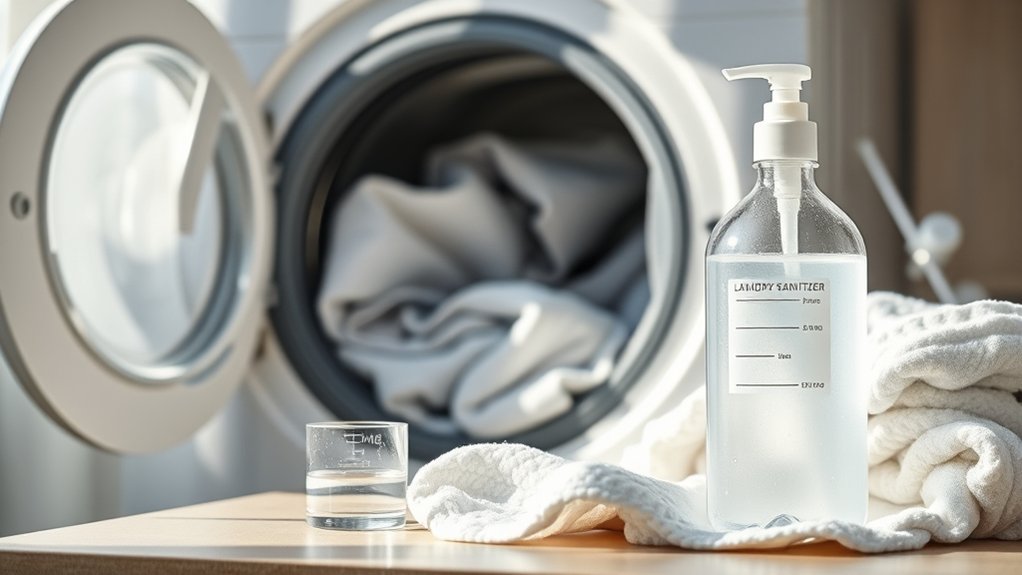
Laundry sanitizer is a specialized antimicrobial product designed to eliminate bacteria and germs from your fabrics.
Laundry sanitizer is a targeted antimicrobial solution that effectively removes bacteria and germs from your laundry.
Laundry sanitizer products use active ingredients like hypochlorous acid, lactic acid, and quaternary ammonium compounds to target microbes effectively.
They work alongside surfactants or enzymes in your detergent, enhancing penetration and cleaning power during the wash cycle.
Although standard detergents clean well, adding laundry sanitizers provides an extra layer of protection, especially in healthcare or high-risk environments.
Manufacturers carefully balance chemical concentrations to guarantee safety for both humans and the environment.
However, you should check fabric compatibility before use, as some potent sanitizers might harm delicate materials like silk or rayon.
Understanding how these products function helps you make informed decisions about maintaining hygiene in your laundry.
Does Laundry Sanitizer Really Kill Germs and Viruses?
You might wonder if adding a sanitizer to your wash really makes a difference against germs and viruses. Laundry sanitizers have proven their effectiveness by achieving a ≥4 log reduction of viruses like SARS-CoV-2 and HCoV 229E in liquid suspension within 15 minutes.
On hard surfaces, they inactivate viruses including influenza with the same reduction in just 5 minutes. Ingredients such as p-chloro-m-xylenol (PCMX) and quaternary ammonium compounds (QAC) play a key role in this virucidal action.
Since SARS-CoV-2 can survive on fabrics for varying times, using laundry sanitizers helps reduce contamination risks during laundering.
While regular detergents do inactivate viruses to some extent, laundry sanitizers greatly enhance the overall killing of harmful microorganisms, offering you added protection and peace of mind.
How Does Laundry Sanitizer Add to Regular Detergent?
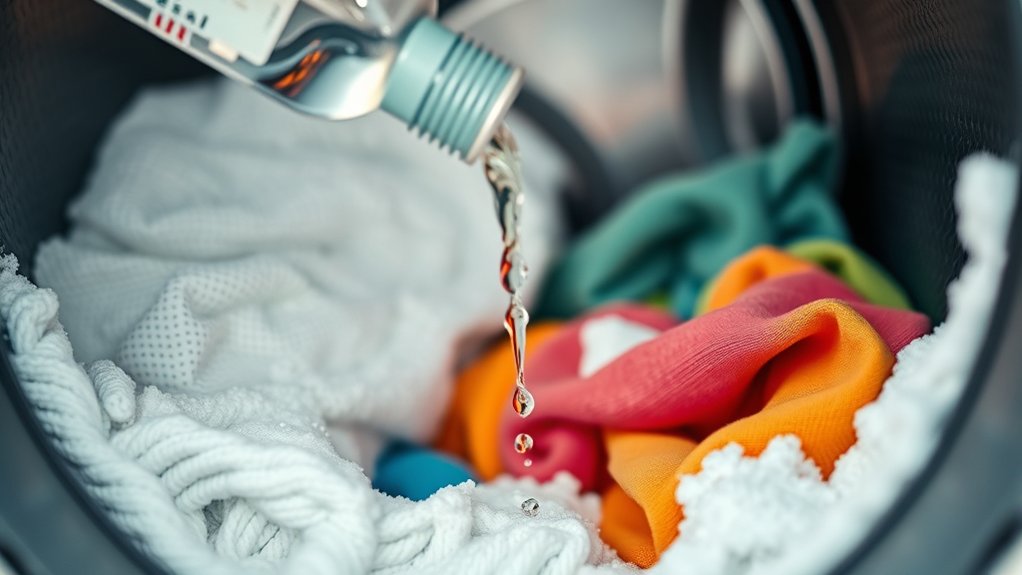
Although regular detergent effectively removes dirt and grime, it doesn’t always eliminate all bacteria, fungi, and viruses on your laundry. That’s where laundry sanitizer adds value.
Containing active ingredients like quaternary ammonium compounds and hypochlorous acid, laundry sanitizers target germs beyond what detergent can achieve.
Laundry sanitizers use quaternary ammonium compounds and hypochlorous acid to eliminate germs that detergents miss.
Studies confirm they can fully inactivate viruses such as SARS-CoV-2 within 15 minutes, something detergents alone may not do. When combined with detergent, laundry sanitizer improves odor removal, especially in athletic clothing and mildew-prone fabrics.
This synergy provides an extra layer of protection, making it particularly useful in high-risk environments like healthcare settings.
Can Laundry Sanitizer Damage Your Clothes?
Since laundry sanitizers contain potent disinfectants, they can sometimes harm delicate fabrics like silk and rayon if you’re not careful. You should always check product labels for fabric compatibility before use.
Because chemical concentrations vary by manufacturer, selecting a laundry sanitizer suited to your fabric type is essential to avoid damage. To be safe, test the sanitizer on a small, hidden area first.
Watch for signs like discoloration or texture changes, which indicate potential harm.
Regular use of laundry sanitizer isn’t necessary for everyday laundry, as high-quality eco-friendly detergents clean effectively without harsh chemicals.
When Should You Use Laundry Sanitizer?
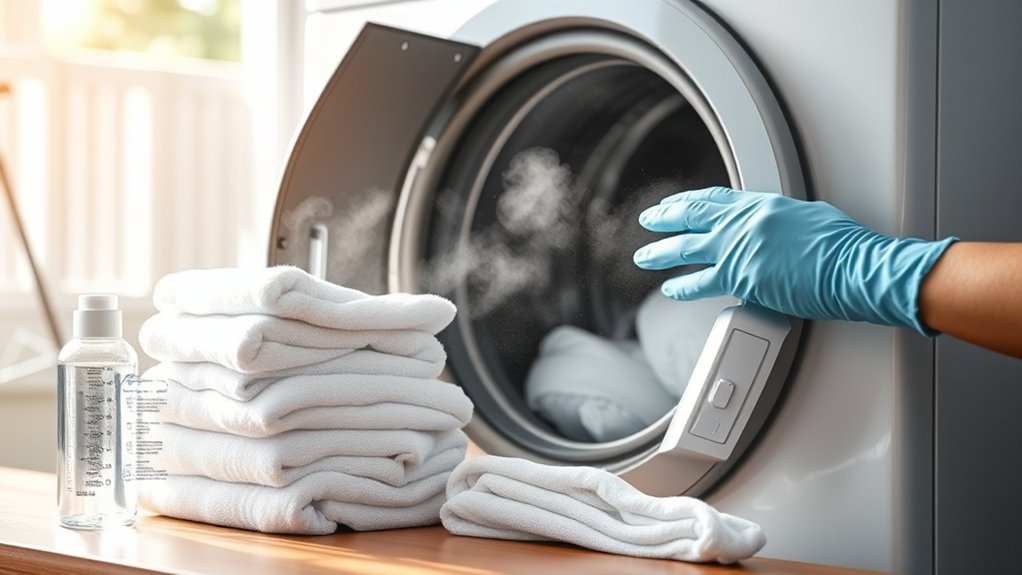
Understanding when to use laundry sanitizer can help you maximize its benefits while protecting your fabrics.
Laundry sanitizer is especially valuable in high-risk settings like hospitals. Disinfecting clothes and linens prevents infection spread.
In high-risk environments such as hospitals, using laundry sanitizer on clothes and linens helps prevent infection transmission.
You’ll find it effective against bacteria, fungi, and certain viruses, including SARS-CoV-2, which it inactivates within 15 minutes.
So, when should you use laundry sanitizer? Consider it during illness outbreaks, on athletic wear, face masks, or children’s garments. It eliminates odors and guarantees thorough cleanliness.
It also helps if you’re concerned about mold or mildew spores on clothing.
For everyday laundry, detergent alone usually suffices. That makes laundry sanitizer an optional but smart addition for specific situations requiring extra disinfection.
How to Use Laundry Sanitizer for Best Results
You should always follow the proper dosage guidelines on the label to make sure your laundry sanitizer works effectively without damaging your fabrics.
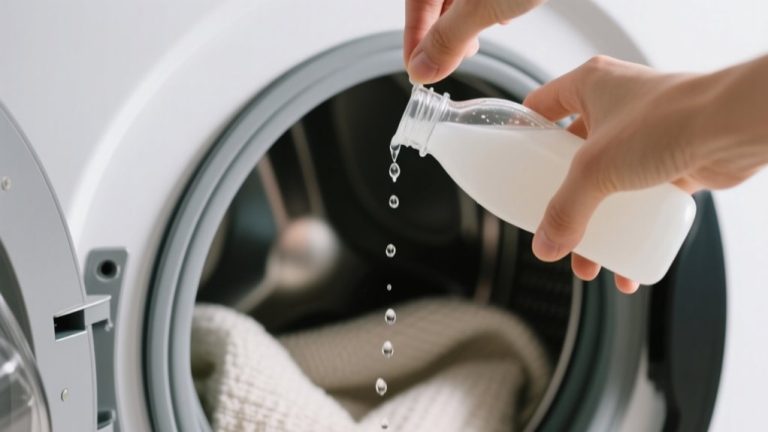
Just add the sanitizer during the washing cycle along with your detergent to boost germ elimination.
Proper Dosage Guidelines
When aiming for the best results with laundry sanitizer, always follow the manufacturer’s dosage instructions carefully. Proper dosage guidelines are essential to maximize germ-killing efficacy while protecting your fabrics.
Typically, you’ll add the sanitizer along with your regular detergent during the wash cycle. Measure the sanitizer based on the load size to avoid fabric damage or residue buildup. Most sanitizers work well in cold water, but warm or hot water can enhance their effectiveness.
Also, check fabric compatibility; delicate items might need dilution or special care. For heavily soiled garments, pre-soaking in a diluted solution for about 15 minutes can boost cleaning power.
Washing Cycle Integration
Although many people add sanitizer at the start of the wash, the most effective approach is to introduce it during the rinse cycle. This timing allows the active ingredients in your laundry sanitizer to directly target bacteria and viruses on fabrics without interference from detergent chemicals.
Always follow the manufacturer’s instructions for the correct amount to use, as sanitizer concentrations vary and impact both efficacy and fabric safety. Use laundry sanitizer alongside your regular detergent, especially on heavily soiled items, to boost overall disinfection.
Pay attention to water temperature requirements since some sanitizers work best in cooler water, while others need warmth.
For extra germ elimination, consider pre-soaking heavily contaminated items like athletic wear in a water-sanitizer solution before washing. This integration guarantees maximum sanitizing power during your laundry routine.
Who Benefits Most From Using Laundry Sanitizer?
If you work in healthcare or handle medical linens, using a laundry sanitizer can really help cut down on harmful bacteria and viruses on your uniforms.
It’s especially useful because these germs can stick around even after a regular wash.
You’ll also find it helpful if you have sensitive skin.
Laundry sanitizers do a great job removing allergens and irritants from your clothes, which means less chance of skin irritation or flare-ups.
Healthcare And Medical Settings
Because healthcare professionals regularly handle contaminated fabrics, you benefit greatly from using laundry sanitizers that effectively kill bacteria, fungi, and viruses.
In healthcare and medical settings, laundry sanitizer plays a critical role in preventing infection spread among patients and staff.
Research shows some laundry sanitizers achieve a ≥ 4 log reduction of viruses such as SARS-CoV-2 and influenza A within minutes, ensuring high-level hygiene.
Since infectious viruses can persist on fabrics for extended periods, relying solely on manual washing can increase contamination risks.
Incorporating a laundry sanitizer adds an essential layer of protection during laundering processes, notably reducing cross-contamination.
Sensitive Skin Conditions
Beyond healthcare environments, laundry sanitizers offer significant benefits for individuals managing sensitive skin conditions like eczema. By effectively killing 99.9% of bacteria and reducing allergens, laundry sanitizer helps minimize triggers that cause irritation and flare-ups.
You can improve skin comfort and reduce redness by using it regularly in your washing routine. The antimicrobial agents in laundry sanitizers target residual irritants that regular detergents may leave behind, providing extra protection for sensitive skin.
Consider these key advantages of laundry sanitizer for sensitive skin:
- Eliminates bacteria and allergens that provoke skin reactions
- Reduces irritation and improves skin comfort
- Contains antimicrobial compounds to target residual irritants
- Offers peace of mind by ensuring clothes are hygienically clean
Using laundry sanitizer can be an essential step in managing your sensitive skin condition effectively.
Choosing the Right Laundry Sanitizer for Your Needs
When selecting a laundry sanitizer, you should focus on the active ingredients, such as quaternary ammonium compounds or hypochlorous acid. These determine its effectiveness against bacteria and viruses.
Always check the product label to guarantee compatibility with your fabrics, especially delicate ones like silk or rayon, to avoid damage.
Choose brands backed by independent studies demonstrating at least a 4 log reduction of viruses, including SARS-CoV-2, within 15 minutes for proven efficacy.
If you sanitize often, consider buying larger, cost-effective bottles from retailers like Costco.
Finally, test different scents and formulations to find a laundry sanitizer that suits your personal preferences and laundry routine. This approach guarantees you select a product that’s both safe and effective for your needs.
Frequently Asked Questions
Are Laundry Sanitizers Safe for Septic Systems?
Yes, laundry sanitizers can be safe for septic systems if you choose ones labeled as septic-safe or eco-friendly.
These products usually contain biodegradable ingredients that break down without harming beneficial bacteria.
However, you should avoid overusing harsh chemical sanitizers, as they might disrupt your system’s balance.
Always check product labels, use sanitizers in moderation, and maintain your septic system regularly to guarantee it stays healthy while keeping your laundry sanitized effectively.
Can Laundry Sanitizer Cause Allergic Reactions?
Think of laundry sanitizer as a double-edged sword. It can cleanse but also irritate.
Yes, laundry sanitizers can cause allergic reactions, especially if you have sensitive skin or conditions like eczema.
Ingredients like quaternary ammonium compounds may trigger irritation or discolor fabrics. To stay safe, always read labels and do a patch test on fabric first.
If you’re sensitive, opt for hypoallergenic detergents instead. They’re gentler and reduce allergy risks.
How Environmentally Friendly Are Laundry Sanitizers?
Laundry sanitizers can be environmentally friendly, especially if you choose products with active ingredients like hydrogen peroxide or lactic acid.
These break down more easily than bleach. Look for brands that use biodegradable surfactants and enzymes, as these reduce ecological impact.
Using sanitizers effective at low temperatures also saves energy and cuts your carbon footprint.
However, always check labels carefully because some formulations still contain harsh chemicals that may harm both health and the environment.
Do Laundry Sanitizers Have a Strong Odor?
Funny enough, you’ll often notice laundry sanitizers do have a noticeable scent. That’s because many contain fragrances to mask chemical odors, which can linger during and after washing.
Ingredients like quaternary ammonium compounds often contribute to this stronger smell. However, the scent’s intensity varies by brand.
If you’re sensitive, you can choose unscented versions or test different products to find one that works without overwhelming your senses.
Can Laundry Sanitizer Be Used on Delicate Fabrics?
You can use laundry sanitizer on delicate fabrics, but you need to be cautious.
Some sanitizers contain strong disinfectants that might discolor or damage silk, rayon, or other sensitive materials.
Always read product labels carefully and test a small, hidden area first to check for any adverse effects.
Opt for milder, fabric-safe sanitizers to protect your delicate clothes while still killing germs effectively.
Conclusion
You’ve seen how laundry sanitizer works alongside detergent to kill germs and viruses, adding a modern twist to your cleaning routine, like a trusty steam engine powering through dirt. It doesn’t harm your clothes when used correctly and is especially helpful during flu season or for those with weakened immune systems.
By choosing the right product and following instructions, you can confidently boost hygiene and keep your laundry truly clean, backed by science, not just hype.