How To Teach Laundry Skills To Adults – Pro Tips
You can teach adults laundry skills by breaking tasks into simple steps like sorting, washing, drying, folding, and putting away. Use clear visuals, labeled baskets, and checklists to guide each stage while demonstrating and encouraging hands-on practice.
Focus on stain treatment and fabric care to protect clothes and build independence. Reinforce progress with positive feedback and consistent routines to boost confidence and organization.
Keep exploring to discover more tips on mastering these essential skills.
Key Takeaways
- Break laundry into simple steps like sorting, washing, drying, folding, and putting away to avoid overwhelming learners.
- Use visual aids, color-coded baskets, and checklists to clarify tasks and promote independent learning.
- Demonstrate each laundry step clearly and encourage hands-on practice for skill retention.
- Teach stain identification and matching washer/dryer settings to fabric types for effective garment care.
- Provide folding guides, interactive sessions, and positive feedback to build confidence and routine mastery.
Why Laundry Skills Matter for Adults

Although laundry might seem like a simple chore, mastering these skills can make a big difference in your daily life. Developing strong laundry skills builds your self-sufficiency, allowing you to confidently handle clothing care without relying on costly services.
Taking charge of your laundry promotes personal responsibility, an essential life skill that supports independence in adult living. When you understand sorting, stain treatment, and washing techniques, you not only protect your clothes but also save money.
Mastering laundry skills fosters personal responsibility and independence while protecting your clothes and saving money.
Plus, managing laundry efficiently sharpens your time management, helping you balance daily tasks with ease. These practical skills boost your confidence and hygiene, vital for social and professional settings.
Embracing laundry as a core life skill empowers you to navigate adulthood with greater ease and control.
Breaking Laundry Tasks Into Easy Steps
You can make laundry less overwhelming by breaking it into simple steps like sorting, washing, and folding.
It’s much easier when you take it one step at a time. Plus, using visual guides really helps because you can see exactly what to do at each stage.
When you focus on just one task at a time, the whole process feels way clearer and more manageable.
Simplify Laundry Task Sequence
When you break laundry into simple steps like sorting, washing, drying, folding, and putting away, it becomes much easier to manage. Start by helping the learner sort clothes using a laundry checklist that highlights categories like colors and fabrics. This task analysis clarifies each action, reducing overwhelm.
Visual reminders placed near machines or folding areas reinforce the sequence and support executive function by guiding focus. Encourage using timers to build a routine, helping them complete each phase on time.
Demonstrate each step clearly, from how to sort clothes properly to folding techniques, so they’ve a concrete example to follow.
Repetition of these simplified steps boosts confidence and independence, making laundry less intimidating and more manageable over time.
Use Visual Step Guides
Breaking down laundry tasks into clear, visual steps can make the process more approachable and easier to remember. Visual step guides help you master skill areas like sorting, washing, drying, folding, and putting away clothes.
Use color-coded charts and checklists to simplify sorting and machine settings. Free resources, like printable picture sequences or flowcharts, provide helpful reminders and build confidence. Encourage creating personalized guides to make learning relatable and reinforce habits.
Here’s a simple example to get started:
| Step | Task | Visual Cue |
|---|---|---|
| 1 | Sort clothes | Color-coded bins |
| 2 | Check pockets | Pocket icon checklist |
| 3 | Load washer | Washing machine image |
| 4 | Select cycle | Dial with settings |
| 5 | Start cycle | Start button illustration |
Segment Tasks For Focus
Although laundry can feel overwhelming at times, dividing the process into small, manageable tasks helps you stay focused and confident.
Segmenting laundry tasks improves your task management skills and makes each step clear and achievable.
Visual aids like checklists or picture sequences can guide you through sorting, washing, drying, and folding efficiently.
Try these three steps to boost your focus:
- Sort clothes by color and fabric before washing to prevent damage and confusion.
- Use timers to pace each task, creating a predictable routine.
- Break laundry loads into daily or weekly segments to avoid backlog and keep tasks manageable.
Using Visual Aids and Checklists to Teach Laundry
A well-designed set of visual aids and checklists can make teaching laundry skills much easier and more effective for adults. Visual aids, like labeled sorting baskets and color-coded guides, help clarify each step and reduce confusion.
Checklists break down tasks, such as sorting, washing, drying, and folding, into manageable actions so learners don’t miss anything and build confidence. Printable resources, like step-by-step pictorial guides or daily laundry schedules, give your learners tangible tools they can refer to independently.
Using these tools encourages consistency and helps develop good laundry habits. By combining visual aids with practical checklists, you create a supportive learning environment that simplifies complex processes, making laundry less intimidating and more manageable for adults.
Teaching Laundry Sorting and Stain Treatment Tips
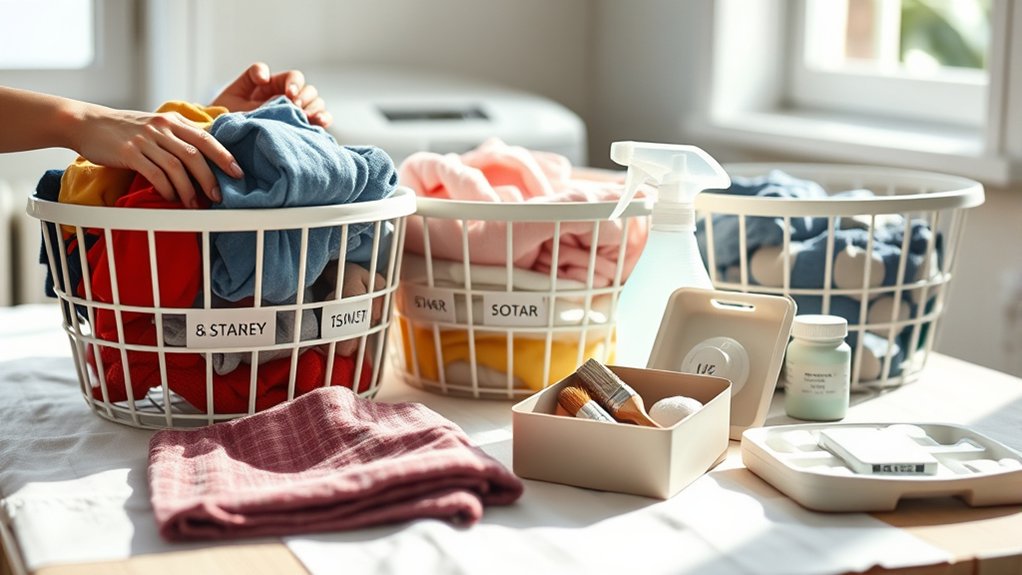
Now that you’ve seen how visual aids and checklists can simplify laundry tasks, let’s focus on sorting clothes and treating stains properly. Developing cognitive skills around sorting clothes helps prevent damage and keeps garments looking their best.
Use visual labels or color-coded baskets to make sorting intuitive and quick.
When it comes to stain treatment, acting fast is key. Here are three tips to guide you:
- Sort clothes into whites, colors, and delicates using clear visual labels to avoid color bleeding.
- Identify the stain type to choose the right pre-treatment techniques; for example, enzyme-based removers work well on protein stains.
- Apply stain remover immediately, blotting gently, then let it sit 5-10 minutes before washing for better results.
These steps build confidence and skill in managing laundry independently.
Teaching Washing and Dryer Settings for Laundry
How do you choose the right washer and dryer settings for different types of laundry? Start by teaching learners to match washer settings to fabric type: use Normal/Cotton for everyday clothes, Delicates/Gentle for fragile items, and Heavy Duty for heavily soiled laundry.
Show them how the Quick Wash Cycle saves time on lightly soiled pieces.
When it comes to dryer settings, explain using Normal/Automatic for cottons, Delicate/Low Heat for heat-sensitive fabrics, and Permanent Press to reduce wrinkles.
Emphasize checking care labels before washing and drying to protect fabric integrity.
Don’t forget to teach the importance of emptying the lint trap regularly. This keeps the dryer efficient and safe.
Mastering these laundry skills helps prevent damage and extends the life of garments.
Teaching Folding and Putting Away Clothes
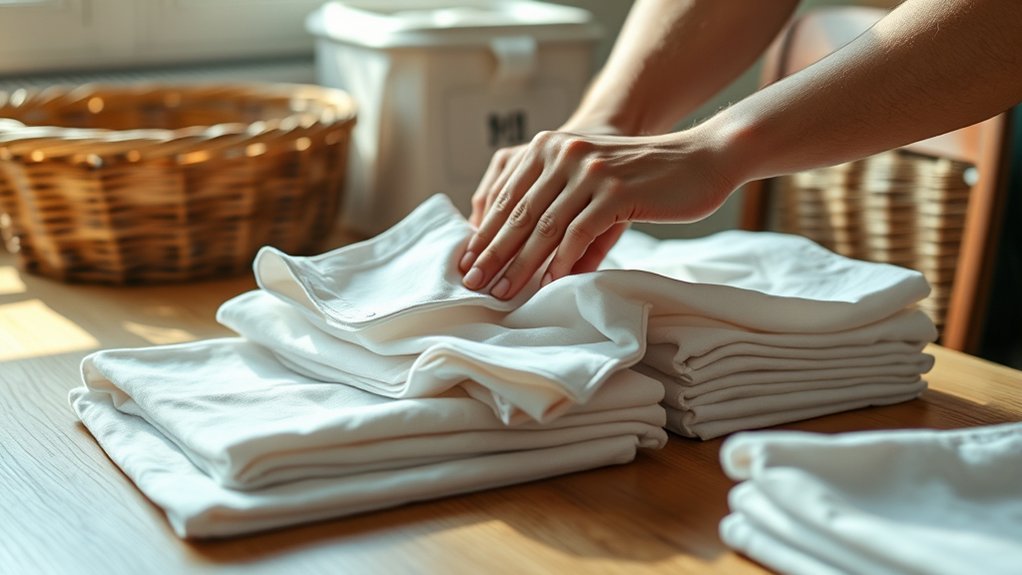
Now that you’ve got washing and drying down, let’s move on to folding and putting away clothes in a way that’s easy and efficient.
Using simple folding techniques, especially with some visual guides, can really take the stress out of it.
And don’t forget, setting up organized spaces for sorting and storing your clothes will make everything neat and super easy to find.
It just makes the whole process smoother, trust me!
Folding Techniques Simplified
Mastering just a few folding techniques can make putting away clothes quicker and less frustrating.
Using folding boards helps you achieve uniform sizes, which simplifies organizing clothes and improves your perceptual skills.
Here are three practical steps:
- Try the “half and half” method for shirts. Fold lengthwise, tuck in sleeves, then fold again.
- Fold pants by laying them flat, folding lengthwise, then folding from the bottom up. This helps avoid wrinkles.
- Use the “file folding” technique to arrange clothes in drawers for easy access and visibility.
Label bins or drawers to keep everything in place.
For extra help, download a free printable folding guide to practice these folding techniques consistently and confidently.
Using Visual Guides
Although folding clothes can feel overwhelming at first, using visual guides makes the process much easier to follow and remember. Start by introducing visual aids like diagrams or picture instructions that clearly show folding techniques for different items.
Use folding boards to help standardize shapes, so learners see what neatness looks like. Provide step-by-step checklists outlining each method for shirts, pants, and towels, giving learners a handy reference.
During interactive demonstrations, model the folding process while explaining each step aloud, connecting actions with visuals.
Then, organize practice sessions where learners fold and put away clothes using these guides, reinforcing skills through repetition.
This hands-on approach builds confidence and helps you teach folding and putting away clothes effectively.
Organizing and Sorting
When you help learners organize and sort laundry, using labeled baskets can make the process clear and manageable by separating clothes by color, fabric, or washing instructions. This structure helps them sort the laundry confidently and reduces overwhelm.
To teach folding and putting away clothes effectively, try these tips:
- Demonstrate folding techniques for different items using folding boards or video models for visual schedules.
- Encourage practicing putting away clothes by sorting into bins or drawers before folding to build comfort.
- Provide consistent feedback and positive reinforcement to boost motivation and skill retention.
Building Confidence and Independence With Practice
Confidence grows through consistent practice, and laundry skills are no exception. As you practice sorting, washing, and folding clothes, you’ll build confidence by successfully completing each step. This growing confidence strengthens your independence, letting you handle your clothing care without relying on others.
Using visual aids like checklists or labeled baskets can make remembering each step easier, reducing overwhelm as you learn. Establishing a laundry routine also helps by promoting organization and time management, turning laundry from a chore into a manageable task.
The more you practice, the more natural these skills become, improving both your motor abilities and overall life skills. Stick with it, and you’ll notice how much more capable and self-sufficient you feel managing your laundry.
Finding Free Laundry Teaching Resources
As you build confidence through practice, having the right tools can make teaching laundry skills easier and more effective.
Finding free resources can help you problem solve common challenges and support learners better.
Here are three valuable options to explore:
- Teachers Pay Teachers offers free downloadable materials, including sensory-friendly tools and social stories that simplify laundry tasks.
- Use printable checklists to break down the laundry process into clear, manageable steps, helping learners stay organized and independent.
- Join online educator communities where members share free teaching aids and practical advice tailored to adult learners.
Frequently Asked Questions
How Can I Motivate Adults Who Dislike Doing Laundry?
You can motivate adults who dislike laundry by breaking the task into small, manageable steps so it doesn’t feel overwhelming.
Encourage them to set reminders or use apps to stay organized, making laundry part of their routine.
Celebrate each completed load with a small reward, like a favorite snack or break.
Visual checklists help keep things clear, and reminding them of the independence laundry skills bring can boost their confidence and motivation.
What Are Common Laundry Mistakes Adults Make?
Imagine you toss a red shirt in with your whites and suddenly your favorite white tee turns pink. That’s a common mistake.
You also might overload your washer, which stops clothes from getting clean.
Skipping care labels can shrink or fade fabrics, and using too much detergent leaves residue.
Don’t forget to check pockets, or you risk pens leaking.
These simple errors can ruin clothes, so tackling them helps keep laundry stress-free.
How Do I Teach Eco-Friendly Laundry Habits?
You can teach eco-friendly laundry habits by encouraging cold water washes to save energy.
Show how full loads maximize efficiency and cut waste.
Recommend biodegradable, chemical-free detergents for less environmental harm.
Suggest air drying clothes to reduce dryer use and prolong garment life.
Explain fabric care, highlighting natural fibers to prevent microplastic pollution.
Be patient and practical, helping adults see small changes add up to big environmental benefits.
Can Technology Help Adults Learn Laundry Skills?
Technology can be your laundry superhero, making the process almost foolproof! You’ll find interactive apps guiding you step-by-step, while smart appliances send alerts to keep you on track.
Online tutorials let you watch and rewatch tricky parts, and VR even offers practice without risking your clothes.
Plus, community forums give you real-world advice and support.
Using these tools, you’ll build confidence and master laundry skills faster than you’d imagined.
How Do I Handle Adults With Sensory Sensitivities During Laundry?
You’ll want to create a calm, sensory-friendly laundry space by dimming lights and lowering noise.
Choose unscented detergents to avoid overwhelming smells. Use clear visual guides so they can follow steps without confusion.
Introduce tasks gradually, starting simple before progressing.
Stay close to offer hands-on help, modeling each step patiently.
This approach respects their sensitivities and builds confidence, making laundry less stressful and more manageable for them.
Conclusion
Teaching laundry skills is like planting seeds. You nurture small steps, and soon confidence blooms. Remember, even simple tasks like sorting colors or choosing dryer settings build independence.
One learner shared how mastering laundry felt like releasing a new level of adulting, making life smoother. By breaking tasks down and using checklists, you’re not just teaching chores. You’re empowering someone to take charge of their daily routine with ease and pride.
Keep practicing, and watch skills grow!