What Laundry Detergent Gets Stains Out The Best? – Guide
To get the best stain removal, choose enzyme-based detergents combined with oxygen bleach. These work effectively to break down protein, fat, and carbohydrate stains.
Powder detergents work well on dirt and grease, especially in cold water. Meanwhile, liquid detergents excel at penetrating fibers and pre-treating oily spots. Pods offer convenience but give you less control over dosage.
Make sure your detergent suits the fabric and stain type. Pretreat stains for the best results. Keep exploring to discover expert techniques and product recommendations.
Key Takeaways
- Choose enzyme-based detergents for effective removal of protein, fat, and carbohydrate stains.
- Opt for detergents labeled as stain removers or with pre-treatment functions for tougher stains.
- Use powders for dirt and grease in cold water, liquids for grease and pre-treating, and pods for convenience.
- Prefer detergents with oxygen bleach or combined formulas for whitening and enhanced stain lifting.
- Always apply detergent directly on stains promptly and use warm water to maximize enzymatic activity.
How to Choose the Best Laundry Detergent for Stain Removal
How do you choose the best laundry detergent for stain removal? Start by selecting a detergent with enzymes, as enzyme detergent formulas break down tough stains like blood and sweat more effectively than standard options.
Look for products labeled as stain removers or designed for greasy marks; for example, Tide Ultra Oxi Boost excels in lifting oil-based stains.
Consider detergents offering pre-treatment functions, such as Tide Plus Ultra Stain Release, which can simplify your routine.
Temperature compatibility also matters. Some detergents like OxiClean Max Force perform better in warm water, enhancing effective stain removal.
If you’re dealing with delicate fabrics, choose gentle detergents like Restoration. These use mild cleaning agents and require longer soak time to protect fibers while still removing stains efficiently.
Understanding Enzymes and Oxygen Bleach in Laundry Detergents
While selecting a detergent, understanding the roles of enzymes and oxygen bleach can greatly improve your stain removal results.
Enzymes target organic stains by breaking down proteins, fats, and carbohydrates, making them an effective stain remover for food, blood, and sweat.
Oxygen bleach, commonly sodium percarbonate, releases hydrogen peroxide in water, lifting stains and whitening fabrics gently. It’s suitable for color-safe fabrics.
Many laundry detergents combine both agents, enhancing stain removal across a broad spectrum without harsh chemicals.
Enzymatic activity peaks at warm temperatures, boosting efficiency, especially on greasy or protein-based stains.
Choosing a detergent with enzymes and oxygen bleach guarantees you tackle various stains effectively while preserving fabric color and integrity.
It offers a balanced, powerful solution for your laundry needs.
Comparing Powder, Liquid, and Pod Detergents for Stain Removal
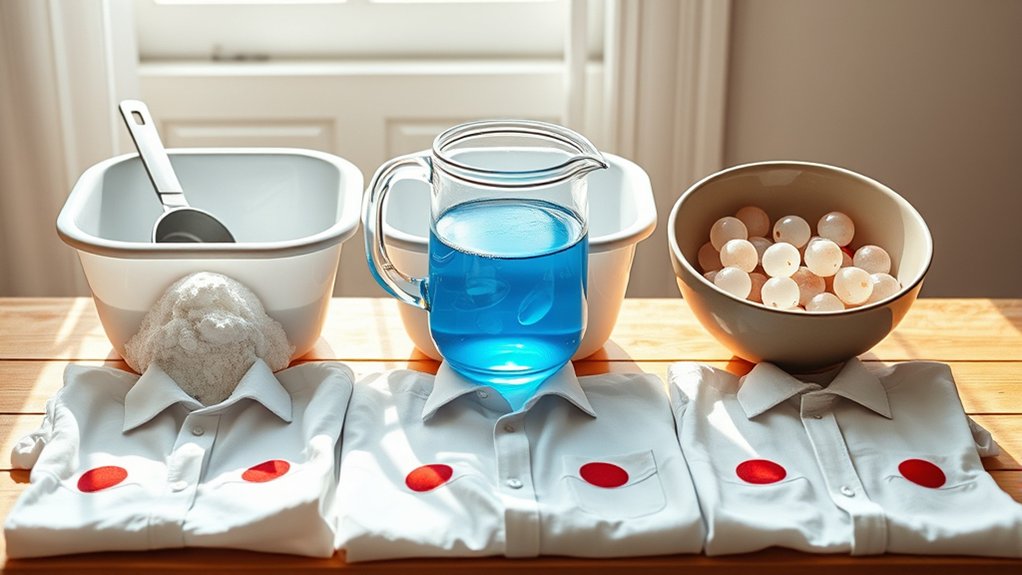
Although all detergent types aim to remove stains effectively, powder, liquid, and pod detergents each offer distinct advantages and limitations depending on the stain type and washing conditions.
Powder detergents excel in stain removal for tough stains like dirt and grease, thanks to higher concentrations of stain-fighting enzymes and strong formulations, especially in cold water.
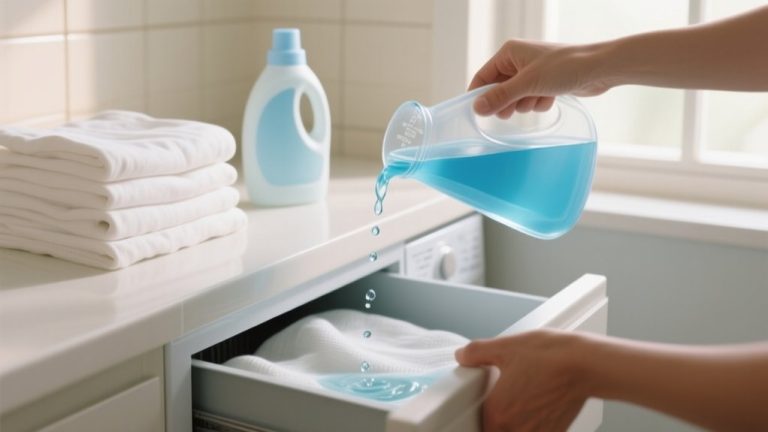
Liquid detergents penetrate fabric fibers better, making them ideal for grease stains and convenient for pre-treating directly on spots.
Pods offer mess-free use but limit dosage flexibility, which can reduce detergent effectiveness on heavily soiled laundry.
For energy-efficient washing, powder detergents often outperform liquids, while liquids provide quick dissolution and ease of use.
Incorporating these laundry tips helps you choose the best detergent type for your stain challenges.
Best Laundry Detergents for Protein-Based Stains Like Blood and Sweat
When tackling protein-based stains like blood and sweat, selecting the right detergent makes a significant difference in removal effectiveness. Among the best laundry detergents, Tide Ultra Oxi Powder stands out with stain-busting enzymes and sodium percarbonate to effectively remove stains from machine-washable fabrics.
For tougher, dried-in protein stains, OxiClean MaxForce offers targeted stain treatment, ensuring deep cleaning.
If you prefer a gentler option, Frey Detergent uses a biodegradable formula that’s kind to fabrics while still removing sweat and blood.
Shout Advanced Stain Remover balances powerful cleaning action with fabric care, ideal for set-in stains.
For immediate, on-the-go needs, Miss Mouths’ Emergency Stain Rescue quickly tackles protein-based stains.
Each detergent varies in strength and fabric gentleness, so choose based on your specific stain challenges.
Top Detergents for Grease and Oil Stains
If you want to remove grease and oil stains effectively, choosing a detergent with strong grease-fighting ingredients is essential. Tide Ultra Oxi Boost excels when grease stains are pretreated or soaked, outperforming many competitors across fabric types.
For effective grease and oil stain removal, select detergents with powerful grease-fighting ingredients like Tide Ultra Oxi Boost.
OxiClean MaxForce handles tough, set-in stains well and offers versatility for various laundry care needs.
For targeted treatment, Carbona Laundry Stain Scrubber’s built-in applicator enhances precision on localized grease spots.
Shout Advanced Stain Remover balances power and gentleness, tackling challenging stains without harming fabrics.
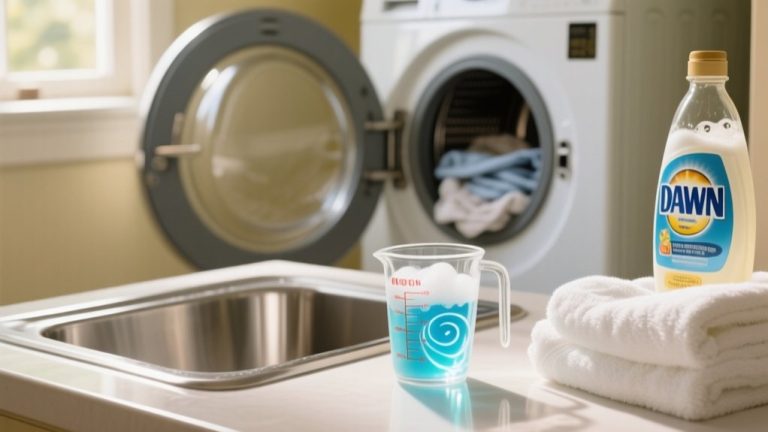
Moreover, dish soap remains a practical household option, applying directly to stains before washing for excellent results.
Comparing these options helps you select the best solution based on stain severity, fabric type, and your laundry routine, ensuring effective grease and oil stain removal every time.
Pretreating Stains With Detergents: Techniques for Maximum Effectiveness
To get the best results when removing stains, start by applying liquid detergent right onto the spot. Then, gently rub the fabric to help activate the enzymes in the detergent. It’s a simple step that really makes a difference.
Next, let it sit for about 5 to 10 minutes. You can adjust the time depending on how tough the stain is.
Also, think about the water temperature—warm or cold—based on the type of stain you’re dealing with.
By making sure you apply the detergent evenly and thoroughly, and by following the manufacturer’s guidelines, you’ll be setting yourself up for the most effective cleaning results.
It’s all about those little details!
Detergent Application Tips
Although selecting the right detergent is important, how you apply it can greatly influence stain removal effectiveness. Start by applying liquid laundry detergent directly to the stain, gently rubbing the fabric to activate enzymes that break down stubborn stains.
For greasy stains, presoak the garment in warm water mixed with detergent for at least 30 minutes to enhance removal. Always use the appropriate amount of detergent, adjusting based on load size and stain severity, as specified on the label.
Guarantee even application on the stained area to maximize cleaning power during washing. Don’t forget to check the garment care label to choose the correct wash temperature and cycle, which complements the detergent’s effectiveness.
These detergent application tips help you remove stains more efficiently and protect your clothes.
Enhancing Stain Removal
Building on proper detergent application, pretreating stains with detergents substantially boosts removal success.
To remove protein-based stains effectively, apply detergent directly to the stain and rub the fabric to activate enzymatic action.
For greasy stains, use a soaking solution of warm water mixed with concentrated liquid detergent or dish soap to penetrate oils.
Timing matters: let the detergent sit on the stain for 5-10 minutes before washing.
Temperature considerations are vital; washing in the hottest water safe for your fabric activates enzymes, enhancing stain breakdown.
Always apply detergent specifically to the stained area rather than the whole load, ensuring targeted application.
This focused approach maximizes stain removal, combining enzymatic action, soaking, and temperature control to tackle various stains efficiently.
Expert Tips to Remove Stains Faster Using Laundry Detergent
When you act quickly and choose the right detergent, you can substantially cut down the time it takes to remove stains. Start by applying stain removers immediately after spills to prevent setting.
Enzymatic detergents like Tide Plus Ultra Stain Release excel at breaking down complex stains when you pre-treat directly on fabric.
For greasy stains, presoak in warm water with dish detergent or laundry detergent to boost effectiveness. Tailor the water temperature based on manufacturer’s instructions. Warmer water usually enhances stain removal, but always check garment labels first.
After washing, always check garments to confirm stains are fully removed before drying. If stains remain, re-treat and wash again, as heat can permanently set them.
These steps optimize your laundry detergent’s performance and accelerate stain removal.
Frequently Asked Questions
Can Laundry Detergent Remove Mold or Mildew Stains?
Yes, laundry detergent can remove mold or mildew stains, especially if it contains enzymes that break down these stains.
Detergents like Tide Plus Ultra Stain Release work well with hot water to target mold.
Adding white vinegar boosts cleaning power because of its antibacterial properties.
For tougher stains, pre-treat with a concentrated detergent or use OxiClean MaxForce, which is made for stubborn mold.
Always check fabric labels before using hot water or bleach alternatives.
Are Natural or Eco-Friendly Detergents Effective on Tough Stains?
Yes, natural or eco-friendly detergents can be effective on tough stains, especially grease and protein-based ones.
However, you might find they don’t always match the power of conventional detergents like Tide Ultra Oxi, particularly with dye-based stains.
To boost their effectiveness, you can pre-treat stains using an eco-friendly remover.
While gentler on fabrics and skin, these detergents sometimes need longer soak times or additional treatments for stubborn stains.
How Does Water Temperature Affect Detergent Stain Removal?
Water temperature directly affects how well your detergent removes stains.
Hot water boosts cleaning by dissolving oils and activating enzymes, making it ideal for greasy or protein-based stains.
Cold water saves energy and prevents setting blood or sweat stains but may limit enzyme activity in some detergents.
Warm water strikes a balance, activating most detergents effectively without harming fabrics.
You’ll want to choose water temperature based on stain type and fabric sensitivity.
Can Detergent Residue Cause Fabric Damage Over Time?
Yes, detergent residue can cause fabric damage over time.
When you use too much detergent, it leaves a buildup that traps dirt and oils, weakening fibers and reducing breathability, especially in synthetic fabrics.
This residue can make your clothes stiff, dull, and prone to premature wear.
To avoid damage, you should follow dosage instructions carefully and occasionally run a vinegar rinse cycle to dissolve any buildup in your washing machine.
Is It Safe to Mix Different Stain Removal Detergents?
Sure, mixing stain removers sounds like a brilliant idea, like combining fireworks and gasoline for a safer party.
In reality, it’s not safe. You risk harmful fumes or reduced cleaning power because some chemicals, like bleach and ammonia, react dangerously.
Instead, stick to one detergent designed for your stain or apply different products one after another with thorough rinsing.
This way, you get effective stain removal without risking damage or toxicity.
Conclusion
When it comes to tackling stains, remember: “A stitch in time saves nine.” Choosing the right detergent, whether enzyme-packed liquids for protein stains or oxygen bleach powders for grease, makes all the difference. Pods offer convenience but might lack targeted power.
Pretreating stubborn spots boosts results considerably. By understanding detergent types and stain chemistry, you’ll remove stains more effectively and save your clothes from damage, ensuring they look fresh wash after wash.