How Much Laundry Detergent To Use – Quick Facts
You should adjust laundry detergent based on load size, soil level, and detergent type for the best clean. Use less detergent in high-efficiency (HE) washers with HE detergent to avoid over-sudsing.
Hard water means you’ll need about 25% more detergent. Liquids require careful measuring, while pods and sheets offer pre-measured convenience.
Watch for residue or odors indicating incorrect use. Using the right amount prevents buildup and protects your washer. More tips help you master ideal detergent use.
Key Takeaways
- Adjust detergent amount based on load size, soil level, and water hardness; larger or dirtier loads need more detergent.
- Use HE detergent in high-efficiency washers and reduce detergent quantity to prevent over-sudsing.
- One laundry pod or sheet is generally sufficient for a standard load; use more for bigger or heavily soiled loads.
- Overusing detergent causes residue buildup and machine issues; underusing leads to poor cleaning results.
- Automatic dispensers optimize detergent dosing, saving detergent and improving washing performance by adjusting for load and soil level.
How Load Size and Soil Level Affect Laundry Detergent Dosage
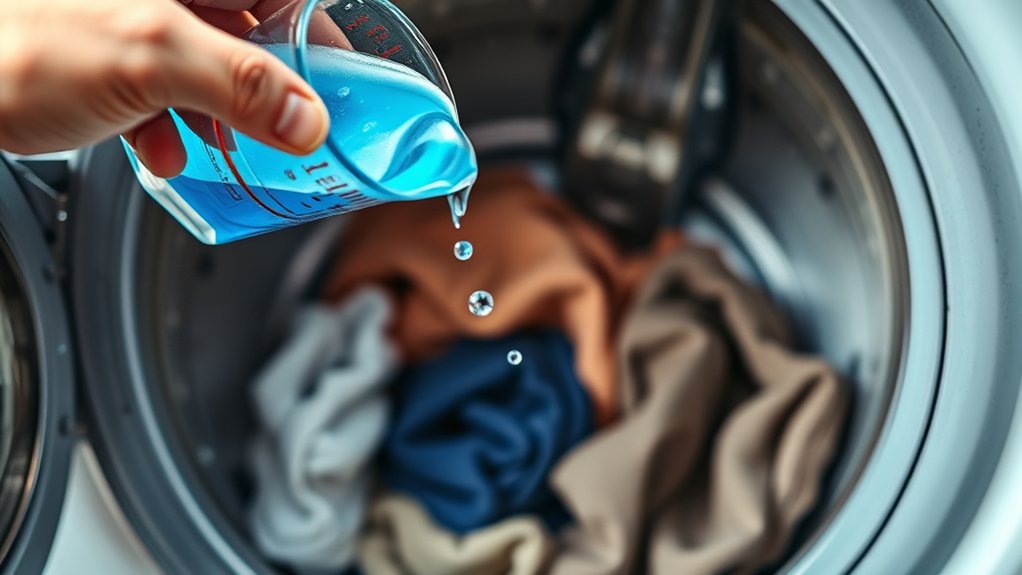
When you adjust detergent amounts based on the size of your laundry load and how dirty your clothes are, you improve cleaning results and prevent buildup in your washer and fabrics.
Larger load sizes require more laundry detergent to deliver adequate cleaning power across all fabrics.
Similarly, heavily soiled items need a higher detergent dosage to effectively remove dirt and stains compared to lightly soiled clothes.
If you use a high efficiency (HE) washer, remember it uses less water, so you’ll need less detergent per load to avoid detergent buildup and over-sudsing.
Always follow the detergent’s dosage instructions, which consider both load size and soil level, to guarantee ideal washing outcomes.
Adjusting detergent dosage this way protects your washer and enhances fabric cleanliness.
How to Determine the Right Detergent Amount for Your Laundry
How do you figure out the right amount of detergent for your laundry? Start by considering load size and soil levels. Larger or heavily soiled loads need more laundry detergent for effective cleaning.
Determine the right detergent amount by assessing your load size and how dirty your clothes are.
If you use high-efficiency (HE) washing machines, always opt for HE detergent and follow the dosing guidelines carefully to prevent over-sudsing since these machines use less water.
Water hardness also plays a role. Soft water requires less detergent, while hard water demands more to maintain cleaning power.
Check your detergent packaging for precise dosing instructions tailored to your load size, soil level, and machine type.
If you’re using a concentrated formula, adjust the amount accordingly to avoid waste or buildup.
Following these steps guarantees ideal detergent use and cleaner clothes every time.
How Different Detergent Types Change How Much You Should Use
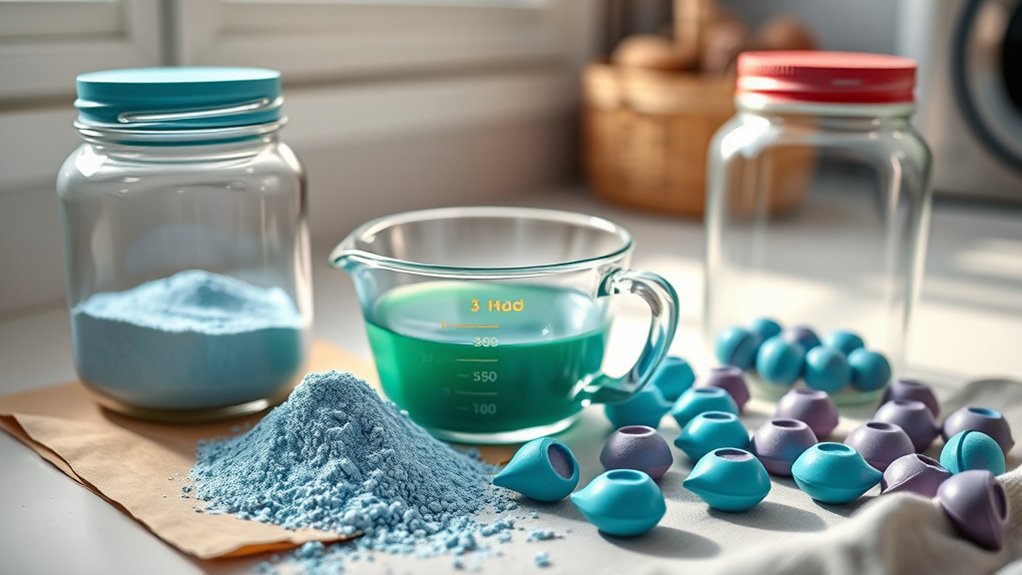
The type of detergent you choose really changes how much you should use. Liquids, powders, pods, and sheets all come with their own dosing needs.
Plus, concentration matters a lot—more concentrated formulas mean you don’t need as much detergent per load.
When you get the hang of these differences, it helps you avoid wasting detergent and makes sure your laundry gets cleaned just right.
Detergent Form Impacts Dosage
Although all laundry detergents aim to clean effectively, the amount you use depends heavily on the detergent’s form.
With liquid detergents, you’ll use the provided measuring cup to make dosage adjustments based on load size and soil level.
Powder detergents also require careful measuring with their scoop, adjusting amounts similarly to guarantee effective cleaning.
Laundry pods simplify this by offering single-use doses, so one pod usually suffices for an average load, eliminating measuring.
Laundry sheets typically recommend one sheet per load, but check packaging for specifics.
The detergent form directly impacts how you measure and adjust dosage, assuring you neither waste product nor compromise cleanliness.
Understanding these differences helps you optimize laundry detergent use for every wash.
Concentration Affects Amount Needed
Since detergent concentration varies widely among types, you’ll need to adjust how much you use accordingly.
Liquid detergent often requires careful measuring based on load size and soil level, so using the provided measuring scoop or cup guarantees peak cleaning.
Powder detergent also includes a measuring scoop, and your amount should reflect both soil level and load size as indicated on the detergent label.
HE detergents, designed for high-efficiency machines, have higher concentration and produce fewer suds. That means you need less detergent to avoid over-sudsing.
Laundry pods and detergent sheets offer pre-measured convenience, usually one pod or sheet per average load, but always check packaging instructions.
Paying attention to concentration and detergent type helps you use the right amount, saving detergent and protecting your clothes and machine.
How HE Detergent Improves High-Efficiency Washer Performance
When you choose high-efficiency (HE) detergent, you guarantee your washer performs at its best by producing fewer suds that dissolve properly in lower water volumes.
HE detergents are concentrated and designed specifically for high-efficiency washing machines that use less water. This ensures superior cleaning performance with smaller detergent amounts.
HE detergents are specially formulated for high-efficiency washers, providing excellent cleaning with less water and detergent.
This effective cleaning helps prevent residue buildup inside your washing machine and on your clothes, which can prolong fabric life and maintain machine health.
By using HE detergents, you also boost your laundry routine’s energy efficiency, as your washer operates with less water and energy per cycle.
Incorporating HE detergents into your laundry routine aligns perfectly with your high-efficiency washer’s design. It delivers cleaner clothes while saving resources.
How Hard Water Affects How Much Laundry Detergent You Need
If you have hard water, you’ll probably notice your detergent doesn’t work as well.
That’s because minerals like calcium and magnesium get in the way of cleaning.
So, to get better results, you’ll want to use about 25% more detergent than usual.
This little adjustment helps stop buildup and keeps your clothes feeling fresh every time you do laundry.
Hard Water Challenges
Although hard water contains minerals like calcium and magnesium that interfere with detergent effectiveness, you can adjust your laundry routine to maintain cleanliness.
Hard water challenges often reduce cleaning performance by causing scale buildup and soap scum on clothes and washers.
To achieve peak cleaning, you need proper measurement of detergent dosage tailored to your water hardness level.
Increasing detergent usage slightly can counteract mineral interference. Many detergents formulated for hard water include additional agents that prevent scale buildup and enhance laundry results.
Regularly testing your water hardness helps you determine the right detergent dosage, ensuring you avoid under- or overuse.
Detergent Dosage Adjustments
Adjusting detergent dosage plays a key role in overcoming hard water’s impact on laundry cleaning. Hard water’s minerals reduce detergent effectiveness, so you need to increase laundry detergent amounts by 1–2 tablespoons per load for ideal cleaning.
Using specific detergents with water-softening agents helps combat detergent buildup and maintain fabric quality. Testing water hardness regularly guides precise dosage adjustments based on soil level and water hardness, ensuring effective cleaning without waste.
| Water Hardness Level | Recommended Detergent Dosage | Notes |
|---|---|---|
| Soft | Standard amount | Minimal detergent buildup |
| Moderate | +1 tablespoon | Better soil removal |
| Hard | +2 tablespoons | Use specific detergents |
| Very Hard | +2 tablespoons | Monitor detergent buildup |
| Variable | Adjust per soil level | Test water hardness regularly |
How to Measure Liquid, Powder, Pods, and Detergent Sheets Correctly
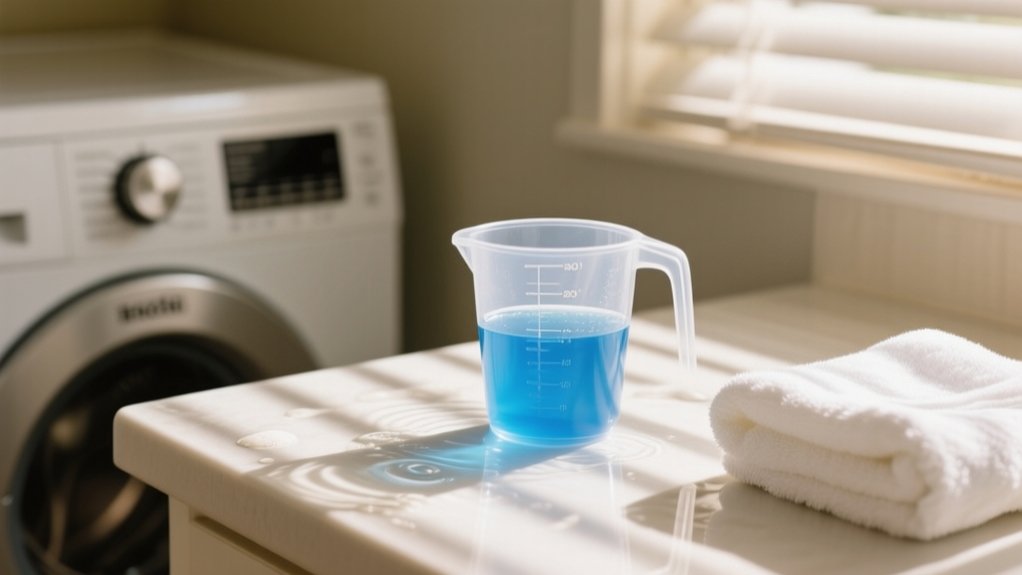
Measuring detergent correctly can make a big difference in your laundry results. For liquid laundry detergent, use the measuring cup provided, following packaging instructions and adjusting for load size and soil level.
When using powder detergent, measure with the included scoop, increasing or decreasing the amount based on how soiled your clothes are and the load size.
Laundry pods usually suffice for a standard load, but larger or heavily soiled loads may require more pods as per product guidelines.
Detergent sheets are typically one per load, yet it’s crucial to check the packaging instructions for specifics.
Always consult your washing machine’s manual for model-specific advice to guarantee peak cleaning performance. Knowing how much laundry detergent to use prevents waste and enhances results.
How to Recognize If You’re Using Too Much or Too Little Laundry Detergent
How can you tell if you’re using too much or too little laundry detergent? Watch for signs like a slimy washer drum or musty smells. These often mean too much detergent is causing residue buildup and poor rinse away.
On the other hand, if your clothes look dirty or stained, especially with heavy soil, you’re likely using too little detergent. High-efficiency washers need less detergent. Overuse reduces cleaning efficiency and creates over-sudsing issues.
| Sign | Too Much Detergent | Too Little Detergent |
|---|---|---|
| Washer Drum | Slimy buildup, musty smells | No residue, but poor cleaning |
| Clothing Residue | White detergent residue visible | Stains and dirt remain |
| Cleaning Efficiency | Reduced by over-sudsing | Ineffective on heavy soil |
How Automatic Dispensers Simplify Laundry Detergent Dosing
If you’ve ever struggled with finding the right amount of laundry detergent, automatic dispensers can take that guesswork off your hands.
These dispensers use detergent dosing technology that adjusts based on load size and soil level, ensuring your clothes get maximum cleaning every time.
They also account for hard water conditions, which often require more detergent for effective washing.
By customizing dispensing to your preferences, you avoid overuse or underuse, preventing buildup and residue that can harm washer performance.
Automatic dispensers help maintain your washing machine by reducing detergent-related issues like musty odors and slimy buildup.
With this precise dosing, you save detergent, protect your washer, and achieve cleaner laundry without the hassle of manual measuring.
Frequently Asked Questions
Can Detergent Type Affect Fabric Color Fading?
Yes, detergent type can affect fabric color fading.
You’ll want to avoid powders with high pH levels or detergents containing bleach and brighteners, as they can strip colors over time.
Liquid detergents labeled “color-safe” usually protect fabrics better, but using too much still risks residue buildup and fading.
High-efficiency detergents are designed to clean gently, so follow dosing instructions carefully to keep your colors vibrant longer.
Does Detergent Dosage Impact Washing Machine Energy Use?
Yes, detergent dosage directly impacts your washing machine’s energy use.
Using too much detergent causes excess suds, forcing longer rinse cycles that consume more energy.
If you use too little, you might need extra washes, wasting power.
High-efficiency machines especially require correct detergent amounts to run efficiently.
How Often Should I Clean My Washing Machine?
You should clean your washing machine every 1 to 3 months.
Think of it like tuning a vintage clock to keep it running smoothly. Use the “Clean Washer” cycle if your machine has one, or run a cleaning product like affresh® to remove buildup and odors.
Stick to the manufacturer’s cleaning guidelines to prevent musty smells and extend your machine’s lifespan.
Regular maintenance keeps your washer efficient and fresh.
Can Using Detergent Pods Cause Allergic Reactions?
Yes, using detergent pods can cause allergic reactions, especially if you have sensitive skin or respiratory issues.
The concentrated surfactants and enzymes in pods might trigger rashes, itching, or breathing problems.
If you’re prone to allergies, check the ingredient list carefully and consider hypoallergenic options.
Always consult your healthcare provider before switching to pods to guarantee they’re safe for you.
Keep pods out of children’s reach to avoid accidental ingestion.
Is It Safe to Mix Different Detergent Brands?
Don’t mix different detergent brands unless you want a chemical cocktail that could wreck your wash!
It’s not just risky; it can seriously cut cleaning power and leave residue in your machine.
Each brand has unique ingredients that might clash, causing poor stain removal and odors.
Stick to one trusted detergent, follow its guidelines, and you’ll avoid surprises.
Keeping it simple guarantees your laundry stays fresh without damaging your washer.
Conclusion
Getting the right amount of laundry detergent is like finding the secret to a spotless wardrobe. Too much leaves residue, and too little means dull clothes.
By adjusting for load size, soil level, and water hardness, you’ll avoid detergent disasters. Whether you use liquid, powder, pods, or sheets, measuring accurately guarantees peak cleaning power.
Trust automatic dispensers to make life easier, and soon you’ll master detergent dosing like a laundry pro. No guesswork, just fresh, clean clothes every time.