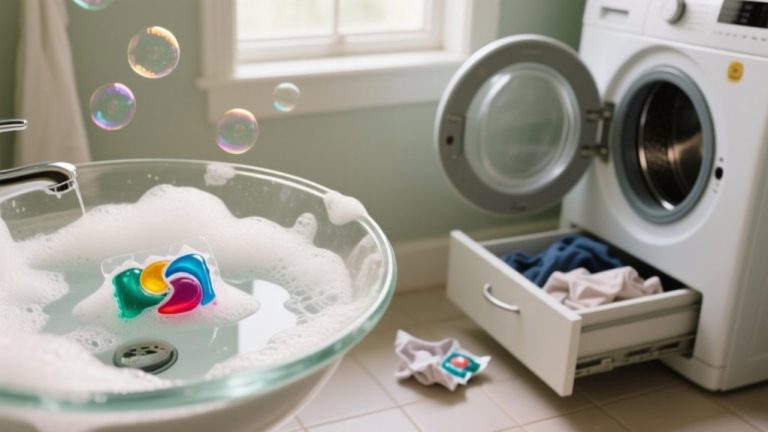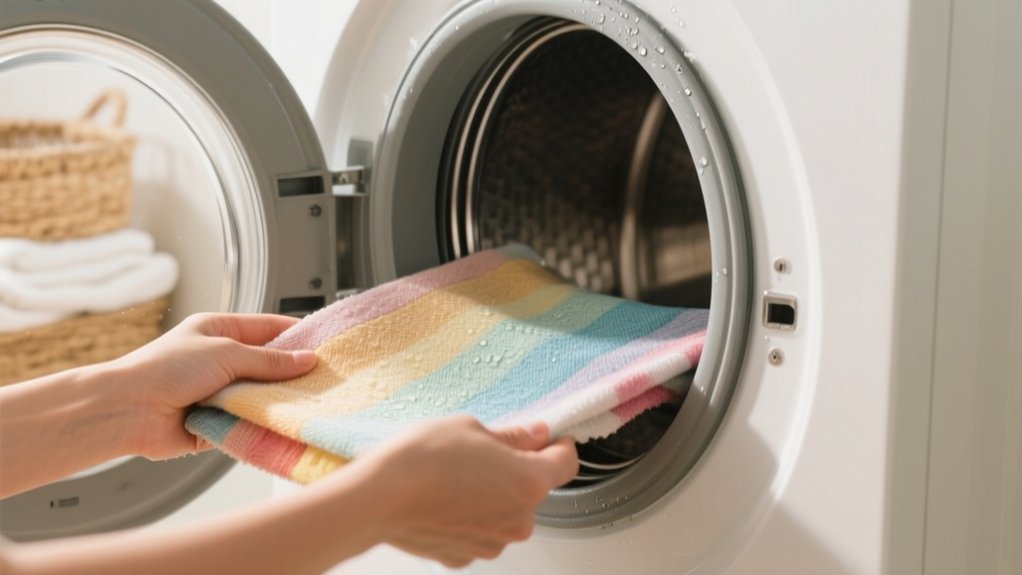
How To Use Laundry Sheets – Smart Tips
To get the most from laundry sheets, sort your clothes by color and fabric type. Then load them loosely, leaving space for water and movement.
Place the sheet in the empty drum’s back or bottom before adding laundry. Use one sheet per regular load, but adjust for size or soil level if needed.
Pick the right wash cycle based on fabric care labels. You can consider fabric softener if you want extra softness.
Follow these tips closely, and you’ll uncover even smarter ways to optimize your laundry routine.
Key Takeaways
- Place laundry sheets in the empty washer drum before adding clothes for optimal dissolution and cleaning.
- Use one full sheet for regular loads, two for large or heavily soiled loads, and half a sheet for small or delicate loads.
- Sort laundry by color and fabric type, and select appropriate water temperature and wash cycle based on garment care labels.
- Dissolve sheets in warm water for handwashing, soak clothes 10-15 minutes, then rinse thoroughly without wringing.
- Store sheets in a cool, dry place away from sunlight and humidity, keeping them sealed and out of reach of children.
Preparing Your Laundry for Laundry Sheets

Before you start using laundry sheets, it’s vital to prepare your laundry properly to maximize their effectiveness. First, sort your laundry into distinct categories: whites, darks/colors, and delicates. This prevents color bleeding and guarantees each fabric receives appropriate care.
Properly sorting laundry into whites, darks, and delicates ensures effective cleaning and fabric care with laundry sheets.
Use hot or warm water for whites to enhance cleaning, while cold water is ideal for darks and colors to preserve fabric quality. Always check pockets for tissues, coins, or other items that could damage your clothes or washing machine.
Properly distributing clothes in the drum helps maintain balance during the spin cycle, which is essential for effective cleaning with laundry sheets.
Following these practical steps will set a strong foundation for your laundry sheets to work efficiently and keep your clothes fresh.
How to Load Clothes for Best Results With Laundry Sheets
You’ll want to layer your clothes loosely in the drum, leaving about 4 to 6 inches of space at the top. This space helps with proper movement and water flow.
Make sure to distribute the garments evenly so they don’t clump together. Clumping can limit how well the laundry sheet works.
Layer Clothes Loosely
When loading your washing machine, layer clothes loosely to promote ideal water flow and detergent effectiveness. This is essential when using laundry detergent sheets, as proper distribution guarantees they dissolve and work efficiently.
Follow these expert tips:
- Leave 4-6 inches of space at the drum top to avoid overstuffing.
- Distribute clothes evenly to maintain drum balance during the spin cycle.
- Place heavier items like towels alongside lighter fabrics to prevent uneven loads.
- Avoid cramming tightly packed clothes, which restricts water circulation and increase wrinkles.
Space At Drum Top
Leaving 4 to 6 inches of space at the top of your washing machine drum guarantees ideal water circulation and allows the laundry sheet to dissolve effectively.
When you load your clothes, avoid over-stuffing the drum, as this restricts detergent flow and reduces cleaning power.
To maximize results, add the sheet at the back or bottom of the drum before putting in your laundry. This placement makes certain it contacts water and fabrics evenly as the cycle runs.
Be mindful not to pack heavier items like towels on top of lighter garments, which can block detergent distribution.
Maintaining proper space at the drum top and thoughtful loading will help your laundry sheet perform at its best, leaving your clothes fresh and spotless after every wash.
Even Clothes Distribution
Ensuring an even distribution of clothes inside your washing machine drum is essential for maximizing the effectiveness of laundry sheets. When loading your laundry, follow these steps to distribute items properly:
Load clothes loosely, leaving 4-6 inches of space at the drum top. This helps promote water and detergent circulation.
Distribute garments evenly around the drum to maintain balance and reduce vibration during the cycle.
Mix heavy and light fabrics to avoid unbalanced loads that can disrupt the wash and spin cycles.
Place the laundry sheet at the back or bottom of the drum before adding clothes. This ensures it dissolves and distributes cleaning agents optimally.
Adding Laundry Detergent Sheets the Right Way
Proper placement of laundry detergent sheets is essential for achieving the best cleaning results. Always place the laundry detergent sheet directly in the empty washer drum before you add the laundry. This guarantees the sheet dissolves evenly and cleans effectively.
For smaller loads, tear the sheet at the perforation to use half, while regular loads need one full sheet. Large or heavily soiled loads may require two sheets. To improve dissolution for delicate fabrics or smaller loads, you can tear sheets into smaller pieces.
Avoid handling sheets with wet hands to maintain their effectiveness, and wash your hands afterward to prevent residue transfer.
Also, follow garment care labels and avoid overstuffing the machine, so the detergent distributes properly and cleans thoroughly every time you use laundry detergent sheets.
Dosage Guidelines for Laundry Detergent Sheets
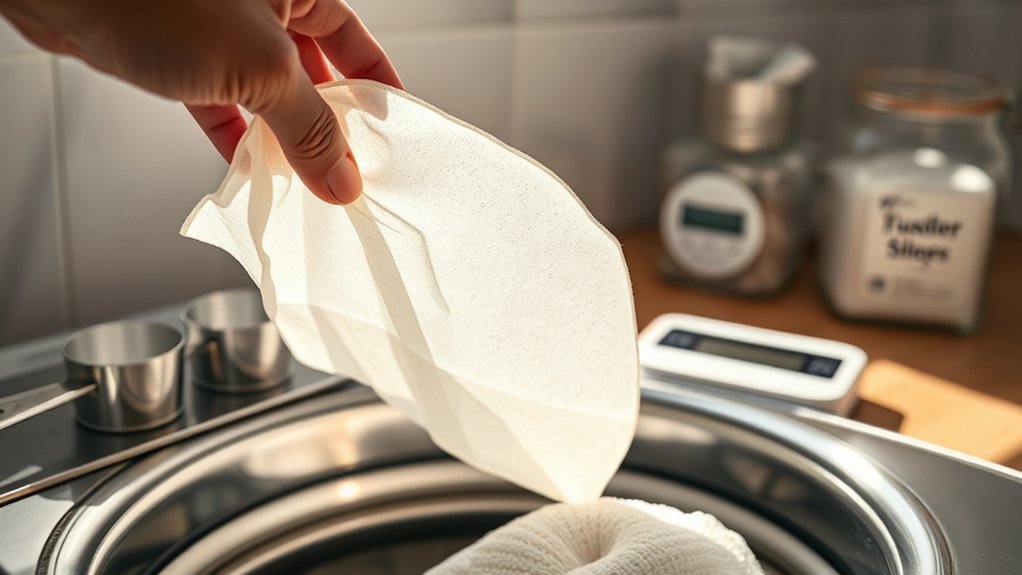
When you’re using laundry detergent sheets, it’s good to adjust the amount depending on your load size. For small to medium loads, half a sheet usually does the trick.
But if you’ve got a larger load or something that’s really dirty, you might want to use up to two sheets.
You can easily tear the sheets along the perforation to get just the right amount.
And don’t forget to check the packaging instructions—they can help you fine-tune how much detergent you need.
That way, you avoid using too much, which can cause extra suds and actually make your washing less effective.
Load Size Recommendations
Using the right amount of laundry detergent sheets is essential for effective cleaning and fabric care. To optimize your wash, follow these load size recommendations for the amount of detergent sheets:
For small to medium loads, use half a sheet by tearing along the perforation. This helps avoid waste while guaranteeing cleanliness.
Regular-sized loads require one full sheet to distribute detergent evenly.
Large or heavily soiled loads benefit from two sheets. This boosts stain removal and freshness.
Always consult the packaging instructions, as variations in sheet concentration may affect dosage.
Adhering to these guidelines guarantees your laundry receives the correct detergent amount, improving fabric longevity and cleaning performance every time.
Sheet Portioning Tips
Three key dosage tips can help you get the most out of your laundry detergent sheets. For small to medium loads, use half a sheet by tearing along the perforation. This guarantees you don’t waste product or risk overdosing.
For large loads, one full sheet provides ideal cleaning power. If you’re dealing with heavily soiled or extra-large loads, consider using two sheets to effectively tackle tough stains.
Always start with the recommended amount on the packaging and adjust based on your wash results to avoid excess suds.
Dosage Adjustment Factors
Getting the right dosage of laundry detergent sheets depends on several factors beyond just load size. Proper dosage adjustment guarantees effective cleaning without residue buildup.
Start with these guidelines:
Use half a sheet for small to medium loads to avoid excess detergent. For regular loads, one full sheet usually suffices. Increase to two sheets for large or heavily soiled items to tackle tough grime.
Always tear sheets at the perforation for precise dosing and refer to packaging instructions for best results.
Adjust the number of sheets based on soil level and load size, beginning with one sheet and modifying as you gauge cleaning effectiveness.
This approach prevents overuse, protects your fabrics, and optimizes detergent performance every wash.
Choosing the Best Wash Cycle for Laundry Sheets
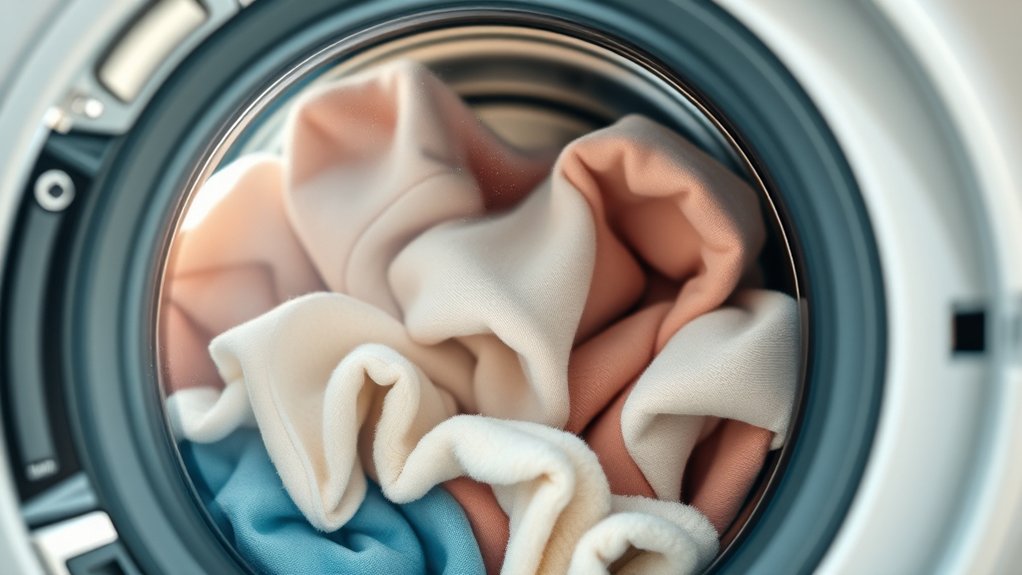
How do you choose the best wash cycle to maximize the effectiveness of your laundry sheets? First, always check your garment care labels to select the appropriate wash cycle.
For delicate fabrics, opt for a cold water cycle to protect fibers and preserve color.
Use a warm wash cycle for everyday clothes, balancing thorough cleaning with fabric care.
When tackling whites or heavily soiled items, a hot water cycle helps remove stains and bacteria effectively.
Keep in mind that different laundry sheets may perform best at specific temperatures, so adjust your wash cycle accordingly.
Can You Use Laundry Sheets in Any Washing Machine?
Selecting the right wash cycle guarantees your laundry sheets work effectively, but you might wonder if these sheets fit all types of washing machines. The good news is you can use laundry sheets in any washing machine, whether it’s top load, front load, or HE.
To get the best results:
- Place the sheet directly in the drum or detergent dispenser.
- Tear sheets into smaller pieces for quicker dissolution, especially with delicate or small loads.
- Verify the sheet dissolves fully during the wash to avoid residue.
- Choose an appropriate wash cycle to maximize cleaning power.
Using laundry sheets simplifies your routine, reduces plastic waste, and maintains your washing machine’s performance without compromise.
Using Laundry Detergent Sheets With Fabric Softener
Although many laundry detergent sheets include mild softening agents, you can still use fabric softener alongside them to boost softness and scent according to your preferences.
When combining detergent sheets with fabric softener, place the softener in its designated dispenser to prevent residue buildup on your clothes. This guarantees a smooth wash and maximum softness.
Keep in mind that many detergent sheets already provide some softening, so you might want to adjust the amount of fabric softener you use.
Alternatively, white vinegar is an excellent natural fabric softener you can add during the rinse cycle, leaving no residue.
Using both detergent sheets and fabric softener is compatible, allowing you to tailor your laundry routine for enhanced softness and fragrance without compromising cleaning performance.
How to Handwash Clothes Using Laundry Detergent Sheets
First, you’ll want to dissolve a laundry detergent sheet in some warm water to make a great cleaning solution.
Then, give your clothes a good agitation to make sure the detergent spreads evenly and tackles any stains.
After that, rinse everything thoroughly to get rid of any leftover detergent and keep your fabrics soft before you dry them.
Preparing Detergent Solution
When you want to handwash clothes using laundry detergent sheets, begin by dissolving a portion of the sheet in warm water to create an effective cleaning solution.
Preparing detergent solution correctly guarantees your garments get the finest care. Follow these steps:
- Tear off about one-quarter of a laundry sheet for light loads, adjusting for larger or dirtier batches.
- Fill a basin with warm water. This temperature helps dissolve the sheet quickly and activates cleaning agents.
- Swirl the water gently until the detergent sheet fully dissolves and disperses evenly.
- Once dissolved, immerse your clothes and allow the solution to penetrate fibers for top-notch cleaning.
Using warm water to prepare detergent solution maximizes efficiency while safeguarding fabric integrity during handwashing.
Washing Techniques Explained
After preparing your detergent solution, you’ll want to focus on effective washing techniques to get the best results from laundry detergent sheets.
For handwashing, dissolve a full sheet or smaller pieces for delicates in warm water, mimicking the gentle agitation of a top load machine.
Soak your clothes for 10-15 minutes to let the detergent break down dirt and stains thoroughly. Use your hands to gently agitate the fabrics, guaranteeing the detergent solution distributes evenly without causing damage.
This method helps maintain fabric integrity while promoting extra softness.
Avoid excessive scrubbing to prevent wear. Proper agitation combined with soaking maximizes cleaning power, making laundry detergent sheets ideal for handwashing.
This technique guarantees your clothes come out clean, soft, and well cared for every time.
Rinsing And Drying
Make certain you rinse your handwashed clothes thoroughly in clean water to remove all detergent residue. This keeps fabrics soft and prevents buildup.
After washing with laundry detergent sheets, proper rinsing and drying are essential for maintaining fabric quality.
Follow these steps:
- Rinse clothes in fresh water multiple times until no suds remain to guarantee complete detergent removal.
- Gently press out excess water without wringing to avoid stretching or damaging fibers.
- Lay garments flat or hang them in a well-ventilated, dry place to dry evenly and preserve shape.
- For delicate items, use smaller detergent portions and avoid direct sunlight during drying to prevent fading.
How to Store Laundry Detergent Sheets Properly
Although laundry detergent sheets are convenient and compact, you’ll need to store them properly to maintain their cleaning power and prevent clumping. To store laundry detergent sheets effectively, keep them in a cool, dry place away from direct sunlight and humidity.
Avoid bathrooms or other damp areas, as moisture can degrade the sheets and reduce their effectiveness. Always keep the sheets sealed in their original packaging or transfer them to a resealable container to protect against air and moisture exposure. This helps maintain their effectiveness over time.
Furthermore, choose a storage spot out of reach of children and pets to guarantee safety.
Regularly check the storage conditions, so you’re confident the sheets remain fresh and ready to deliver the best cleaning results every time.
Mistakes to Avoid With Laundry Detergent Sheets
When you use laundry detergent sheets, avoiding common mistakes guarantees your clothes come out clean and your washing machine stays in good condition.
To get the best results with laundry sheets, keep these points in mind:
- Don’t overload your washer. It prevents proper detergent distribution and reduces cleaning effectiveness.
- Always place laundry sheets directly in the drum, not the detergent dispenser. This helps them dissolve properly.
- Use only the recommended number of sheets. Too many create excess suds, causing residue buildup on clothes and in the machine.
- Check all pockets before washing to avoid damage from tissues or coins.
Frequently Asked Questions
Are Laundry Sheets Environmentally Friendly Compared to Liquid Detergent?
Yes, laundry sheets are more environmentally friendly than liquid detergents. You’ll reduce plastic waste since sheets come in plastic-free packaging.
They use plant-based ingredients without harsh chemicals, making them safer for your skin and the planet.
Their lightweight design lowers transportation emissions, and many sheets biodegrade faster in landfills.
Can Laundry Sheets Remove Tough Stains Like Grease or Wine?
Yes, laundry sheets can remove tough stains like grease or wine, but you’ll get better results by pre-treating heavily soiled areas first.
Use two sheets for heavily stained clothes, especially in cold water.
Place the sheet directly in the drum before adding clothes to guarantee it dissolves evenly.
For stubborn stains, extend the wash cycle or use warm water. Persistent marks might still need spot treatments for complete removal.
Do Laundry Sheets Have a Strong Fragrance That Lasts on Clothes?
Laundry sheets don’t usually leave a strong fragrance on your clothes. They offer a mild, subtle scent that varies by brand and fabric type.
You’ll notice a gentle aroma, like Fresh Lavender, but it won’t be overwhelming.
The scent tends to fade after a few washes, especially on heavier fabrics.
If you prefer little to no fragrance, you can choose “Free and Clear” versions that clean effectively without leaving much scent behind.
Are Laundry Sheets Safe for Sensitive Skin and Baby Clothes?
Yes, laundry sheets are safe for sensitive skin and baby clothes. You’ll find plant-based ingredients free from dyes and synthetic fragrances, designed to prevent irritation.
They dissolve fully in water, leaving no residue that could bother delicate skin. You can trust dermatologist-tested options to protect your family’s comfort and health.
Plus, choosing eco-friendly sheets means you’re reducing harsh chemicals, promoting gentle care for both skin and the environment.
How Long Do Laundry Sheets Last Once Opened?
Once opened, your laundry sheets last up to 12 months if you store them properly.
Keep them in a cool, dry place away from moisture and direct sunlight to maintain their effectiveness.
Always reseal the packaging tightly or use an airtight container to prevent clumping.
Check for discoloration, loss of scent, or moisture before use, as these signs mean the sheets have degraded and it’s time to replace them for the best results.
Conclusion
To get the most from your laundry sheets, prepare your clothes thoroughly, load them evenly, and add sheets correctly. Follow dosage guidelines, select the right cycle, and combine with fabric softener wisely.
Whether machine washing or handwashing, handle sheets with care and store them properly. Avoid common mistakes to keep your laundry fresh and effective.
By mastering these steps, you’ll enjoy cleaner clothes, simpler routines, and smarter laundry days every time.