Will Laundry Detergent Freeze – Here’s the Answer
Yes, your laundry detergent can freeze, especially liquid forms with high water content, usually around 32°F. Freezing thickens liquids, disrupts ingredient balance, and lowers cleaning power by deactivating enzymes.
Pods resist freezing longer due to their concentration but aren’t immune. Frozen detergent may not fully recover after thawing. Improper storage, like unheated garages, increases risks.
Understanding these effects and handling tips can help you maintain detergent effectiveness and explore safer, eco-friendly alternatives.
Key Takeaways
- Liquid laundry detergent can freeze around 32°F (0°C) due to its high water content, causing thickening or chunkiness.
- Laundry pods freeze less easily because of their concentrated, low-water formula.
- Freezing deactivates enzymes and causes ingredient separation, reducing cleaning effectiveness.
- Detergent sheets may degrade in extreme cold, impacting performance.
- Store detergents indoors at stable temperatures between 10-25°C to prevent freezing and maintain cleaning power.
Can Laundry Detergent Freeze in Cold Temperatures?
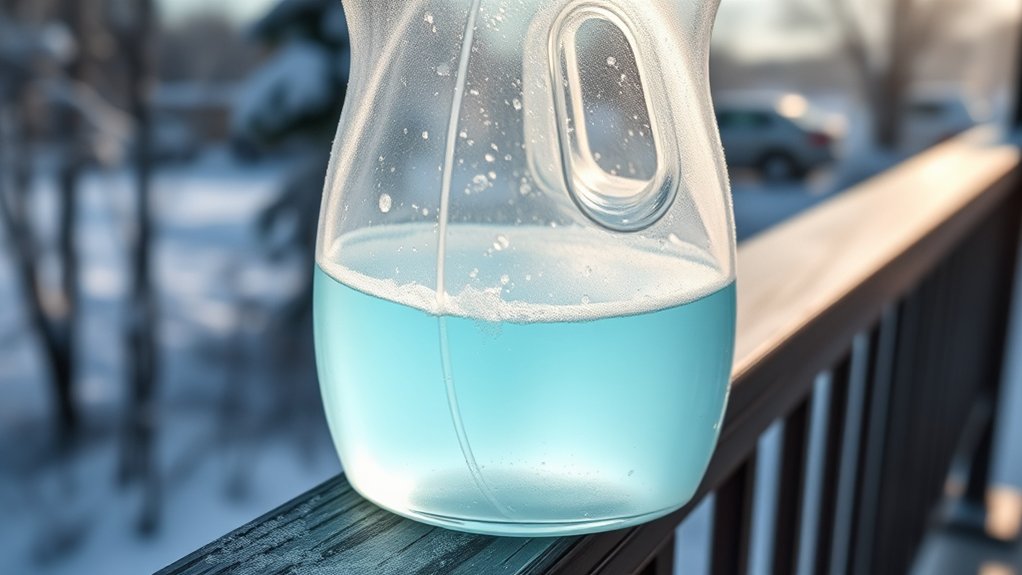
Have you ever wondered if your laundry detergent can freeze during cold weather? Yes, it can, especially liquid laundry detergent, which contains a high water content that freezes around 32°F (0°C).
When temperatures drop below this point, you may notice your detergent becoming thick, chunky, or even solid. This freezing compromises its flow and effectiveness, making laundry tasks more difficult.
While liquid detergents freeze at relatively mild temperatures, laundry pods resist freezing longer due to their concentrated formula.
However, storing your detergent in unheated areas like garages during winter often leads to freezing issues.
To prevent this, maintain storage temperatures between 10-25°C. Doing so guarantees your laundry detergent stays usable and performs at its best, even when cold weather approaches.
How Freezing Affects Liquids, Pods, and Sheets
Understanding how freezing impacts different detergent forms reveals why storage conditions matter beyond just preventing solidification.
Liquid laundry detergent, with its high water content, freezes around 32°F, causing it to thicken or become chunky, which complicates dosing.
Laundry pods, being more concentrated and containing less water, freeze at lower temperatures. This can potentially hinder their solubility and proper dissolution during washing.
Detergent sheets, though less liquid, can still degrade under extreme cold, reducing their effectiveness once thawed.
Furthermore, freezing deactivates enzymes essential for stain removal in both liquid and pod formulations.
To maintain peak performance, you need to store all detergent types within stable temperature ranges of 10-25°C, ensuring they retain their intended consistency and cleaning properties without risking physical or chemical degradation.
How Freezing Reduces Detergent Cleaning Power
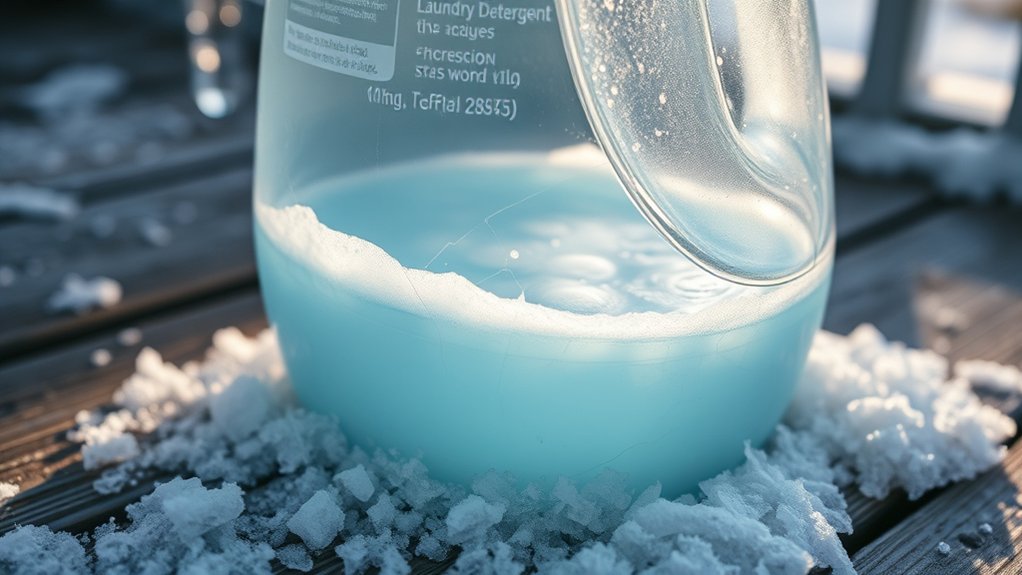
When detergent freezes, the enzymes that break down stains basically stop working, which really cuts down its cleaning power.
Plus, you might see the ingredients start to separate, so the important parts don’t mix like they should. This messes with how well the detergent works overall.
Because of that separation, the detergent doesn’t dissolve properly during your wash cycle, which means it won’t clean as effectively.
Enzyme Inactivation by Freezing
Although freezing might seem like a simple way to preserve your laundry detergent, it actually deactivates the enzymes that break down stains and boost cleaning power. Enzyme inactivation by freezing happens because low temperatures alter the enzyme’s structure, reducing their catalytic activity.
This effect is especially noticeable in liquid laundry detergents, where enzymes are more vulnerable to freezing damage. Once frozen, thawing does not fully restore enzyme functionality, which means less effective stain removal.
| Aspect | Effect of Freezing | Impact on Detergent |
|---|---|---|
| Enzyme Structure | Altered (denatured) | Reduced catalytic activity |
| Temperature Sensitivity | High in liquid detergents | Loss of cleaning power |
| Post-Thaw Recovery | Incomplete | Lower stain removal |
Avoid freezing to keep your detergent working at its best.
Ingredient Separation Effects
Since freezing causes the ingredients in liquid laundry detergents to separate, you end up with a compromised mixture that cleans less effectively. Freezing detergent leads to ingredient separation, disrupting the homogenous blend essential for ideal stain removal.
This separation affects surfactants, enzymes, and builders unevenly, weakening the detergent’s overall performance.
When you thaw frozen detergent, these components may not fully recombine, resulting in a goopy or chunky texture that hinders proper dispersion during washing.
Concentrated formulas, such as laundry pods, are especially vulnerable, as freezing can cause clumping, further reducing solubility and cleaning power.
Understanding these ingredient separation effects highlights why freezing detergent diminishes its effectiveness, emphasizing the importance of proper storage to maintain consistent cleaning results.
Reduced Detergent Solubility
Ingredient separation in frozen laundry detergent doesn’t just affect texture. It directly impacts how well the detergent dissolves in water. When detergent freezes, its solubility decreases because of component separation and enzyme inactivation.
This leads to clumping and uneven distribution during washing, which reduces cleaning power. Highly concentrated detergents, like pods, freeze at lower temperatures. That makes solubility issues even worse.
Thawed detergent may fail to dissolve properly. This means less effective stain removal and grime breakdown.
| Factor | Impact on Detergent Solubility |
|---|---|
| Freezing Temperature | Lowers solubility, causes clumps |
| Component Separation | Reduces uniform dissolution |
| Enzyme Activity | Decreases, impairing stain removal |
| Detergent Concentration | Higher concentration freezes harder |
| Thawing Process | Incomplete dissolution possible |
Understanding these effects helps you maintain detergent effectiveness despite freezing conditions.
How to Tell If Your Frozen Detergent Is Still Safe to Use

How can you determine if your frozen laundry detergent is still safe to use? First, examine the frozen detergent’s texture. Look for chunkiness or a goopy consistency, which signals compromise.
Thaw the detergent slowly at room temperature, then gently shake it to redistribute any separated ingredients. If it returns to a uniform liquid state, it’s generally safe, though cleaning effectiveness might vary.
Next, test usability by mixing a small amount with water; it should dissolve properly and maintain its cleaning power.
Always consult the manufacturer’s guidelines for freezing and thawing instructions to guarantee safety.
This simple laundry hack prevents waste and assures your detergent performs effectively, even after freezing incidents.
Storage Mistakes That Can Freeze Your Detergent
After confirming whether your frozen detergent remains usable, it’s important to think about what causes it to freeze in the first place.
A common storage mistake is leaving laundry detergent in unheated spaces like garages or car trunks during winter.
When temperatures drop below 32°F, liquid detergents, with their high water content, freeze easily, becoming thick or chunky.
Even laundry pods can freeze solid, reducing their effectiveness after thawing.
Detergent sheets aren’t immune either; cold conditions degrade their solubility and cleaning power.
To avoid these issues, always store laundry detergent indoors in a stable environment between 10-25°C (50-77°F).
Properly managing where you store laundry products guarantees they maintain their intended consistency and cleaning performance throughout the colder months.
What Is the Frozen Detergent Pod Hack?
You can make your own laundry pods at home by freezing liquid detergent in silicone trays. It’s a handy way to get pre-measured doses that help cut down on spills and reduce plastic waste.
Plus, you can customize your pods by adding things like scent boosters if you want.
That said, freezing the detergent might actually make it less effective because it can deactivate some of the key enzymes that do the cleaning.
Also, keep in mind that major detergent brands usually don’t recommend this hack since it could impact how well your clothes get cleaned and might even create a mess.
DIY Laundry Pod Method
Although it might seem unconventional, the DIY laundry pod method involves pouring liquid detergent into silicone ice cube trays and freezing them to create homemade detergent pods. This approach targets frozen laundry as a way to reduce plastic waste and cut costs compared to commercial pods.
You can customize pods by adding scent boosters, fabric softeners, or baking soda to improve the detergent’s cleaning and fragrance. However, freezing can deactivate enzymes essential for stain removal, potentially reducing cleaning effectiveness.
Major detergent brands don’t support this method, stressing that products perform best when used as designed.
While DIY pods offer eco-friendly appeal, you should weigh how freezing impacts detergent’s cleaning power before adopting this hack for your laundry routine.
Benefits And Drawbacks
While the frozen detergent pod hack offers an innovative way to reduce plastic waste and cut costs by freezing liquid detergent in silicone trays, it comes with significant drawbacks.
You might appreciate the convenience of highly concentrated, frozen pods, but freezing can destabilize active ingredients, reducing cleaning power.
Thawing may be incomplete, leaving residue on clothes and inside machines. Experts and major brands advise caution, as risks often outweigh benefits.
Consider these points before trying the frozen detergent pod hack:
- Frozen pods can lose effectiveness due to ingredient destabilization
- Thawing issues may cause incomplete dissolution and residue
- Cost savings come with potential cleaning performance trade-offs
- Brands recommend traditional or dry DIY pods for reliable results
Weigh these factors carefully to avoid compromising laundry quality.
Why Experts Warn Against the Frozen Detergent Hack
Since freezing laundry detergent alters its chemical stability, experts strongly advise against using this hack. When laundry sheets or pods freeze, their active ingredients become unstable, reducing cleaning effectiveness.
Freezing causes clumping and separation, leading to uneven detergent distribution and potentially requiring more product to clean properly. This increases costs and risks fabric damage, color fading, and residue buildup in your washing machine.
| Issue | Consequence |
|---|---|
| Chemical instability | Decreased cleaning performance |
| Clumping and separation | Uneven detergent distribution |
| Residue buildup | Machine damage and maintenance |
Avoid experimenting with frozen detergent to maintain ideal laundry results and protect your fabrics and appliances.
Better Eco-Friendly Alternatives to Freezing Detergent Pods
If you want to reduce environmental impact without compromising cleaning power, consider eco-friendly alternatives to freezing detergent pods. Laundry sheets stand out as a sustainable option, cutting plastic waste and simplifying use.
You can also make DIY dry pods from washing soda, borax, and grated Castile soap, offering a stable, non-liquid alternative. Refillable pump dispensers help you control detergent amounts precisely, preventing excess waste.
Concentrated detergents require smaller doses, maintaining efficiency without freezing risks. Opt for biodegradable ingredients to support environmental sustainability while ensuring effective cleaning.
- Laundry sheets reduce plastic and enhance convenience
- DIY dry pods use natural, stable components
- Refillable dispensers minimize overuse and waste
- Concentrated formulas balance power with sustainability
These eco-friendly alternatives offer practical, effective solutions beyond freezing detergent pods.
Frequently Asked Questions
Can Freezing Laundry Detergent Damage My Washing Machine?
Yes, freezing laundry detergent can damage your washing machine.
When detergent freezes, it often clumps or separates, resulting in poor dissolution during the wash cycle. This can leave residue that clogs hoses and filters, impairing your machine’s function.
Furthermore, concentrated detergent can cause excessive sudsing, stressing the machine’s components.
To protect your washer, always thaw and thoroughly mix frozen detergent before use to guarantee proper performance and avoid potential harm.
Does Freezing Affect Detergent Fragrance or Scent?
Yes, freezing can affect your detergent’s fragrance. Extreme cold breaks down fragrance compounds, making the scent less potent once thawed.
Enzymes and active ingredients that help maintain the aroma may become inactive, reducing fragrance longevity.
Even if your detergent remains usable, the overall scent experience can diminish.
To keep your detergent’s fragrance effective, it’s best you avoid freezing it and store it in stable, moderate temperatures instead.
Will Powdered Detergent Freeze Like Liquid Detergent?
Think of powdered detergent as granules of sand, solid and steadfast, unlike liquid water that freezes and expands. You won’t see powdered detergent freeze because it lacks moisture, so it won’t turn into a solid block like liquid detergent does.
However, if you let humidity sneak in, those granules might clump. To keep it effective, store it in a cool, dry spot.
Freezing is simply not a concern for powder.
How Long Does It Take for Detergent to Thaw Completely?
It typically takes several hours for detergent to thaw completely at room temperature, depending on its formulation.
Thicker or chunkier detergents might need more time.
To speed things up, place it in a warm spot but avoid direct heat to prevent damage.
After thawing, gently shake the container to mix separated ingredients and test its effectiveness by diluting some detergent in water before use.
Can Freezing Detergent Cause Skin Irritation or Allergies?
Yes, freezing detergent can cause skin irritation or allergies. Studies show nearly 30% of sensitive skin users report increased reactions after using frozen-thawed detergents.
Freezing alters enzyme activity and destabilizes fragrance compounds, which may increase allergen concentration. You should carefully check product labels and avoid using frozen detergent if you have sensitive skin.
Thawing doesn’t always restore original formula stability, so it’s best to prevent freezing to reduce irritation risks.
Conclusion
Imagine reaching for your laundry detergent on a freezing morning, only to find it solid and ineffective. Freezing can alter the texture and reduce the cleaning power of liquids and pods, making your laundry less fresh.
While some suggest freezing pods as a hack, experts warn it risks damage and poor results. Instead, store your detergent properly and consider eco-friendly alternatives to keep your clothes clean without compromising quality.