What Happens If You Use Too Much Laundry Detergent – Guide
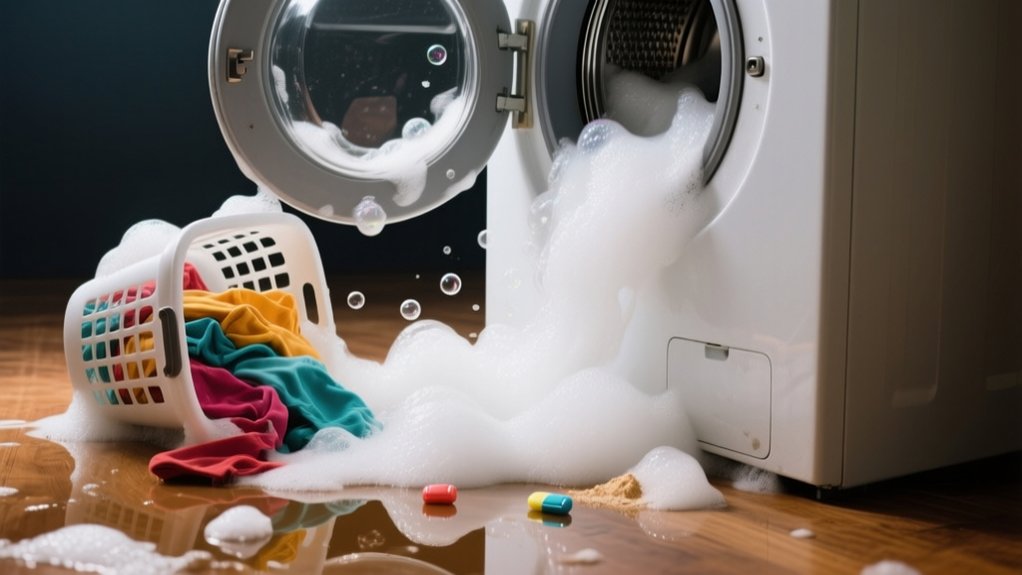
If you use too much laundry detergent, you’ll create excessive suds that trap dirt and hinder cleaning. This leaves your clothes dull, sticky, and prone to odors. Residue buildup can irritate your skin and promote bacterial growth, while also damaging fabric fibers.
Over time, this residue clogs your washer’s hoses and valves. This leads to drainage issues, mold growth, and reduces the machine’s lifespan. Use precise detergent amounts for the best results and explore how to fix and prevent these problems effectively.
Key Takeaways
- Excess detergent causes clothes to feel stiff, sticky, and may trap dirt, leading to dull appearance and bad odors.
- Too much detergent creates excessive suds that reduce cleaning effectiveness by blocking dirt removal.
- Residue buildup on fabrics can irritate skin, causing itching and rashes, and promote bacterial growth.
- Overuse leads to washing machine blockages, mold growth, and increased wear, shortening appliance lifespan.
- Proper dosing with calibrated tools and monthly maintenance prevents buildup and maintains washing efficiency.
How To Know When You’re Using Too Much Detergent?
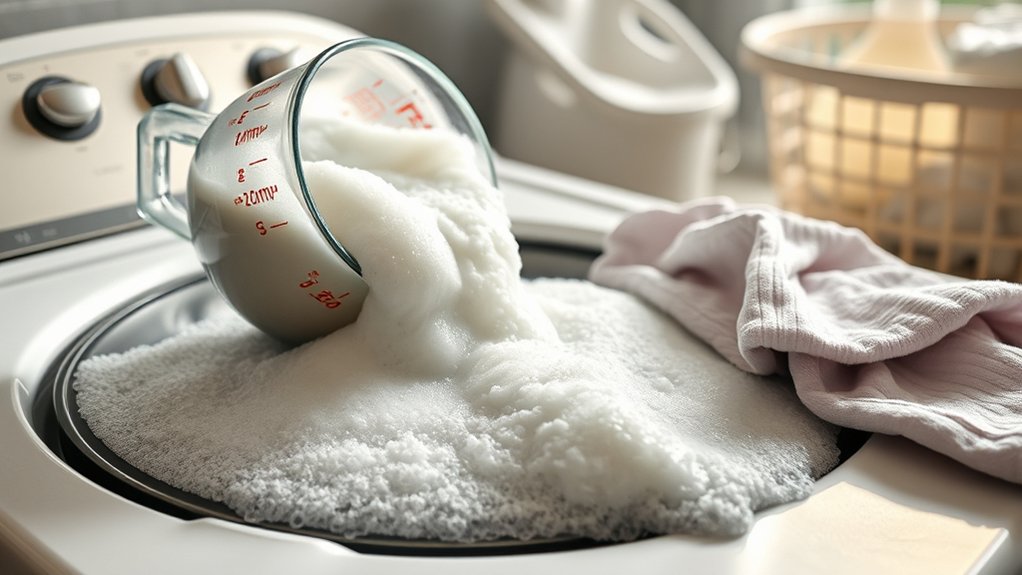
How can you tell if you’re using too much laundry detergent? When you use too much, wet clothes often feel stiff or slimy because of excess detergent residue that doesn’t rinse out properly. This residue traps dirt and minerals, making clothes look dull instead of fresh.
Also, bad odors can develop from soap film and bacterial buildup, especially in high-efficiency washers where soap accumulates more easily. If your clothes don’t come out fresh even after adding more detergent, that’s a clear sign you’re using too much.
The extra detergent not only stops proper rinsing but also changes the fabric’s texture, making wet clothes feel sticky or hardened.
Why Using Extra Detergent Doesn’t Clean Clothes Better
Although it might seem logical to add more detergent for a deeper clean, using extra detergent actually reduces washing effectiveness by creating excessive suds.
These suds interfere with the mechanical action needed to dislodge dirt from fabrics.
When you’re using too much laundry detergent, these excess suds form a barrier, preventing cleaning agents from properly penetrating fibers.
Plus, excess detergent leads to residue buildup, trapping dirt and minerals on clothes, which leaves them dingy rather than clean.
High-efficiency washers are especially sensitive to overdosing.
Their low-water design requires proper dosing of detergent to avoid sticky residues that compromise performance.
Overusing detergent often means you need extra rinse cycles, which further reduces washing efficiency and cancels out any benefits of using more cleaning agents.
How Too Much Detergent Harms Clothes And Skin
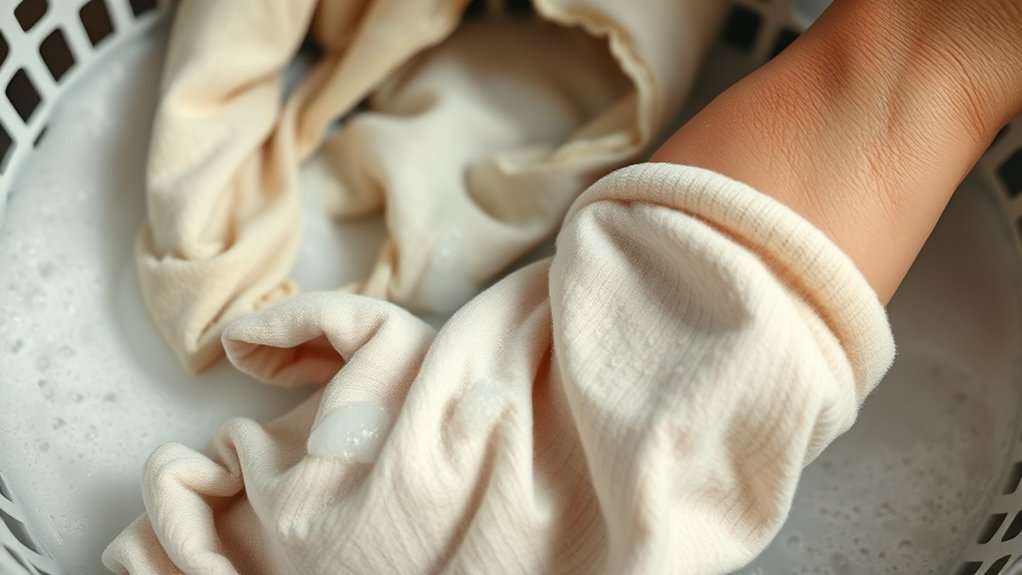
When you use too much detergent, it leaves residue on the fabric fibers. This residue traps dirt and minerals, which can make your clothes look dull and feel stiff.
On top of that, this buildup can irritate your skin. You might notice itching, rashes, or even contact dermatitis if you’re exposed to it for a long time.
Plus, when detergent accumulates, it makes your fabric less soft and can encourage bacteria to grow.
That means your clothes might feel less comfortable and not be as hygienic as they should be.
Detergent Residue Effects
If you use too much laundry detergent, a stubborn film can build up on your clothes, trapping dirt and hard water minerals that reduce their cleanliness and cause dinginess.
This detergent residue effect not only dulls fabric appearance but also compromises softness and breathability, leaving fabrics stiff and uncomfortable.
Excess laundry detergent creates an environment where bacteria thrive, leading to unpleasant odors.
Detergent manufacturers design formulas to optimize cleaning with the detergent needed per load; exceeding this disrupts the chemical balance, hindering soil removal.
Furthermore, residue buildup increases the risk of skin irritation, especially for sensitive skin, by leaving soap deposits that provoke contact dermatitis.
Proper dosing is essential to maintain fabric integrity, maximize cleanliness, and minimize adverse skin reactions linked to detergent residue effects.
Skin Irritation Risks
Using excessive laundry detergent leaves a residue on your clothes that can directly irritate your skin. This detergent residue often causes skin irritation, especially for sensitive individuals, and may trigger contact dermatitis, resulting in itching and rashes.
Detergent buildup stiffens fabric, increasing discomfort and friction against your skin. Overdosing also leads to a slimy or sticky texture in wet clothes, which signals leftover detergent that worsens health concerns.
To minimize these risks, focus on proper dosing. Remember:
- Detergent residue traps dirt and minerals, worsening skin irritation
- Contact dermatitis can develop from prolonged exposure
- Stiff fabric caused by detergent buildup irritates skin physically
- Sticky textures indicate leftover detergent that harms skin health
- Proper dosing balances cleaning efficiency and reduces health concerns
Following dosing guidelines prevents detergent buildup and protects your skin.
Fabric Build-Up Issues
Although detergent aims to clean, applying too much creates a persistent film on fabrics that traps dirt and hard water minerals. This leads to dinginess and a grimy appearance. Overdosing on detergent results in detergent residue, which causes fabric build-up, stiffening clothes and reducing comfort.
This residue also promotes skin irritation, including rashes and itching. Excess laundry detergent generates surplus suds that impede rinsing, causing dirty clothes to retain harmful deposits. Below is a breakdown of fabric build-up impacts:
| Issue | Cause | Result |
|---|---|---|
| Fabric Stiffness | Detergent residue | Uncomfortable texture |
| Dinginess | Dirt trapped in film | Grimy appearance |
| Skin Irritation | Residual chemicals | Contact dermatitis |
Avoid overdosing on detergent to maintain fabric integrity and skin health.
What Overusing Detergent Does To Your Washer
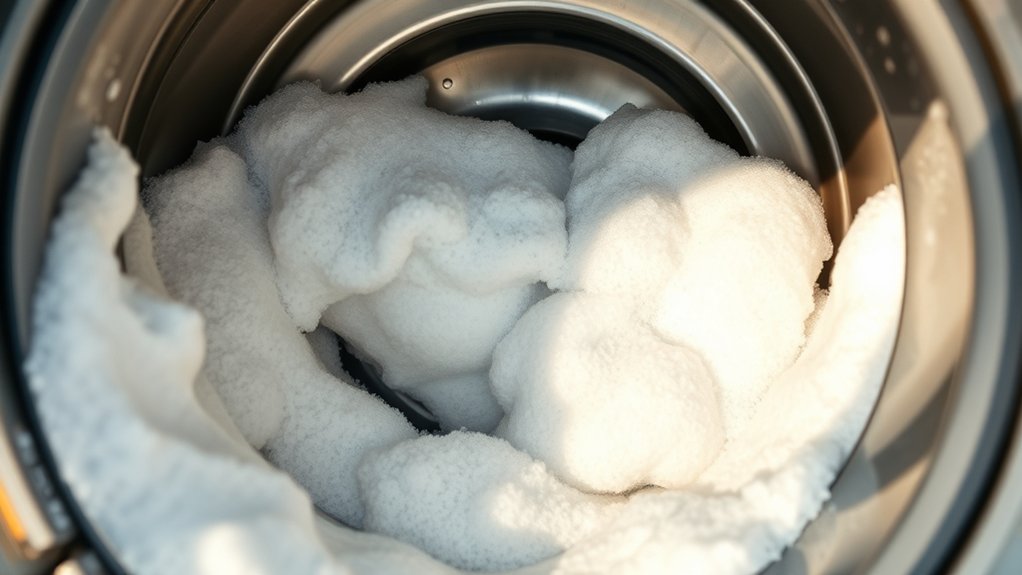
When you pour too much laundry detergent into your washer, it causes residue to build up inside hoses and valves. This can obstruct water flow and trigger drainage problems.
Overusing laundry detergent leads to detergent build-up that affects washing machines by accumulating residue that impairs cleaning efficiency. It also creates high suds levels, which risk mechanical malfunctions.
Plus, it promotes mold and mildew growth on rubber gaskets and internal surfaces. This can cause unpleasant odors due to trapped moisture and residue.
On top of that, it increases wear on components, shortening your appliance’s lifespan. This detergent build-up not only compromises washer performance but also raises maintenance needs.
Managing detergent quantity is essential to prevent these issues. It helps ensure washing machines operate effectively without premature damage.
Fixing Laundry Detergent Buildup In Clothes And Washers
If detergent residue accumulates on your clothes or inside your washer, it can degrade fabric quality and reduce machine efficiency.
To fix detergent buildup on garments, rewash them using the hottest water safe for the fabric without adding detergent.
Try adding an acidic rinse, like vinegar, during the rinse cycle. This helps break down any remaining detergent residue and neutralizes odors.
For the washing machine, monthly maintenance with specialized cleaners like affresh® prevents buildup that can impair performance.
Before drying clothes, make sure excess detergent is removed to improve fabric texture and prevent stiffness.
Addressing detergent buildup promptly helps maintain both your fabrics’ integrity and your washing machine’s efficiency, minimizing long-term damage caused by too much detergent.
How To Measure Laundry Detergent Correctly
You’ll want to use precise measuring tools, like tablespoons or the detergent caps that come with your detergent, to make sure you’re getting the amount just right.
It’s important to follow the specific guidelines depending on your load size and the type of washing machine you have.
Also, don’t forget to adjust the amount if you’re using a high-efficiency washer or if your water is particularly hard.
Measuring properly helps prevent detergent buildup and ensures your clothes get cleaned as effectively as possible.
Measuring Tools Accuracy
Although measuring tools vary in accuracy, relying on a standard American tablespoon, which equals 15 ml, helps guarantee precise dosing of laundry detergent.
To measure the correct amount, consider these technical points:
Detergent caps often include measuring lines, but their ambiguity can cause overdosing. Use measuring tools calibrated to 15 ml for consistent and accurate detergent volume.
Premeasured packs eliminate guesswork, ensuring correct dosing without manual measurement.
High-efficiency machines require less detergent, only about 2 teaspoons, so precise measurement is necessary.
Overdosing compromises cleaning efficiency and can damage fabrics or machines.
Detergent Amount Guidelines
Accurately measuring laundry detergent guarantees peak cleaning performance and prevents fabric or machine damage. For regular detergents, use about 1 tablespoon per average 8-pound load, increasing to 2 tablespoons for loads over 12 pounds.
With liquid detergents, calibrate based on the amount of water your machine uses. Too much detergent can cause residue buildup. High-efficiency machines require smaller quantities, typically 2 teaspoons of HE detergent per load, because of their concentrated formulas.
Water hardness plays a critical role. In hard water areas, you may need slightly more detergent per load to maintain cleaning efficacy. However, avoid overuse by following precise measurements.
When using pods, one per load suffices regardless of load size.
In general, it’s best to use less detergent than excess, optimizing cleaning while protecting fabrics and machinery.
Dosage Adjustments Needed
When measuring laundry detergent correctly, consider load size, detergent type, and water hardness to optimize cleaning and prevent residue buildup.
Using too much laundry detergent can leave residues and waste resources, so you need to use precise amounts tailored to your washing conditions.
Keep these dosage adjustments in mind:
- For large loads (12+ lbs), use up to 2 tablespoons of liquid detergent; average loads require 1 tablespoon.
- High-efficiency (HE) washers need smaller amounts, typically 2 teaspoons of HE detergent.
- Use one premeasured pod per cycle regardless of load size.
- Powder detergent: ¼ cup for regular loads, ½ cup for heavily soiled items.
- In hard water areas, slightly increase detergent to overcome mineral interference.
Using less water with the correct detergent amounts guarantees clean clothes without excess residue.
Best Detergents And Dosages For Cleaner Laundry
Choosing the right detergent and dosage plays a critical role in achieving cleaner laundry while protecting your fabrics and washing machine. The best detergents, like Tide Free & Gentle (liquid) and Tide Ultra Oxi (powder), excel in different scenarios, such as sensitive skin and tough stains respectively.
Avoid using too much detergent because excess suds reduce cleaning efficiency and cause buildup. For dosages for cleaner laundry, adjust based on load size and washer type, especially when washing heavily soiled or large loads.
| Load Type | Detergent Type |
|---|---|
| Average (8 lbs) | 1 tablespoon |
| Large (12+ lbs) | 2 tablespoons |
| HE Washer | 2 teaspoons |
| Heavily Soiled | Use max dosage |
| Sensitive Skin | Tide Free & Gentle |
Frequently Asked Questions
Can Too Much Detergent Affect the Environment?
Yes, using too much detergent negatively affects the environment. You increase water consumption because you need extra rinsing to remove residue, leading to water waste.
Excess detergent can cause chemical runoff, harming aquatic ecosystems.
Moreover, the production and transportation of heavy liquid detergents raise fossil fuel use and carbon emissions.
The packaging often contributes to landfill waste, so by overusing detergent, you amplify environmental pollution and resource depletion.
Is Using Too Much Detergent Expensive in the Long Run?
Yes, using too much detergent is expensive in the long run. You’ll consume detergent faster, which means you have to buy it more often.
Excess residue from detergent forces extra rinse cycles. This raises your water and energy bills. Over time, the buildup can damage your washing machine, leading to costly repairs or replacement.
Also, dull clothes may push you to buy fabric softeners or stain removers more often.
Can Excess Detergent Cause Color Fading in Clothes?
Yes, excess detergent can cause color fading in clothes. When you use too much, detergent residue builds up on fabric, trapping dirt and minerals that dull colors.
The surplus suds interfere with proper rinsing, leaving chemicals that react with dyes, especially in dark or bright garments.
To maintain vibrant colors, you need to measure detergent carefully, ensuring it fully rinses out and doesn’t leave harmful films that accelerate fading.
Does Hard Water Influence How Much Detergent to Use?
Yes, hard water influences how much detergent you should use. The minerals in hard water bind with detergents, reducing their cleaning power. You’ll need about 25% more detergent to achieve effective cleaning.
However, avoid overusing detergent, as excess can cause soap scum buildup, stiff fabrics, and dingy clothes.
Using a water softener or high-efficiency detergent designed for hard water can optimize your washing results without wasting detergent.
Are Natural or Homemade Detergents Safer to Use in Large Amounts?
Think of natural detergents as a gentle breeze rather than a storm. They’re safer but not invincible. You won’t face harsh chemical burns, yet overusing them can still cause residue buildup on fabrics and machines.
Their milder formula demands precise dosing. Too much can reduce effectiveness and leave deposits.
Test your homemade mix on small loads to see how it performs. This helps you balance cleaning power with fabric and water interactions to avoid unintended problems.
Conclusion
When you overload your washer with detergent, imagine a thick, sticky residue clinging to your clothes and inner drum. This buildup dulls fabric fibers and can invite skin irritation. Using just the right amount creates a balanced chemical reaction that efficiently breaks down dirt without causing harm.
Measuring detergent precisely protects your garments, your skin, and your machine’s lifespan. By mastering this simple step, you guarantee every wash delivers crisp, clean results like a finely tuned instrument playing its perfect note.