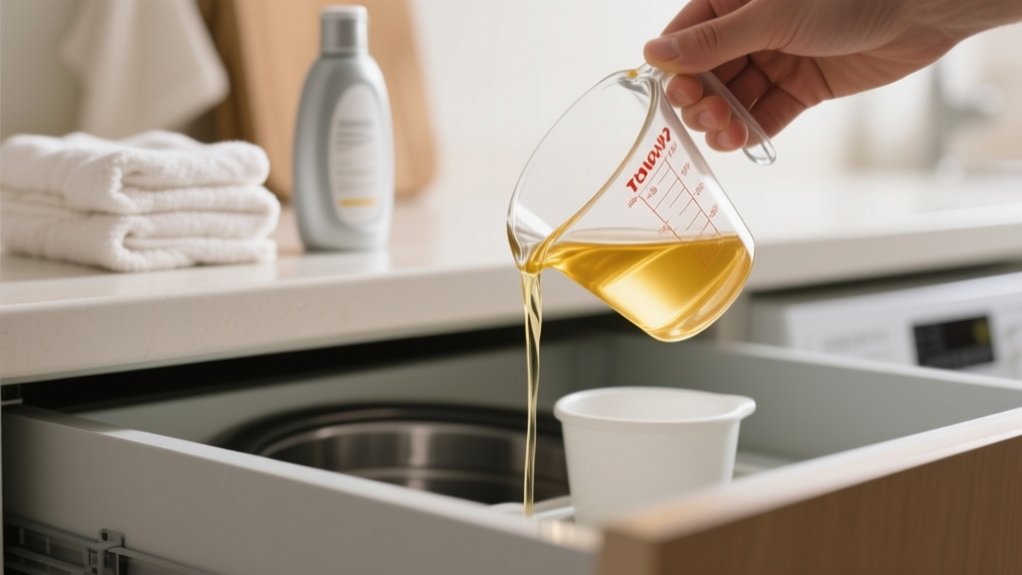
How Much Liquid Laundry Detergent To Use – Numbers to Know
Use 20-25ml of liquid detergent for small loads, 30-40ml for medium, and 45-55ml for large loads. If your washer is high-efficiency, limit detergent to 15-30ml because it uses less water.
Increase doses by 15-20% for heavily soiled items or in hard water areas to prevent residue buildup and guarantee cleaning efficiency. Measure detergent accurately using calibrated tools to avoid fabric damage.
Understanding these factors helps optimize washing results and protect your clothes and machine. Further details clarify precise adjustments and best practices.
Key Takeaways
- Use 20-25ml for small loads, 30-40ml for medium, and 45-55ml for large loads with standard washers.
- High-efficiency washers require only 15-30ml of detergent due to reduced water use.
- Increase detergent by 15-20% for heavily soiled items to ensure effective cleaning.
- Avoid overdosing to prevent residue buildup, fabric stiffness, and dull colors.
- Measure detergent accurately using calibrated cups or marked caps for consistent dosing.
How Much Liquid Laundry Detergent to Use Per Load
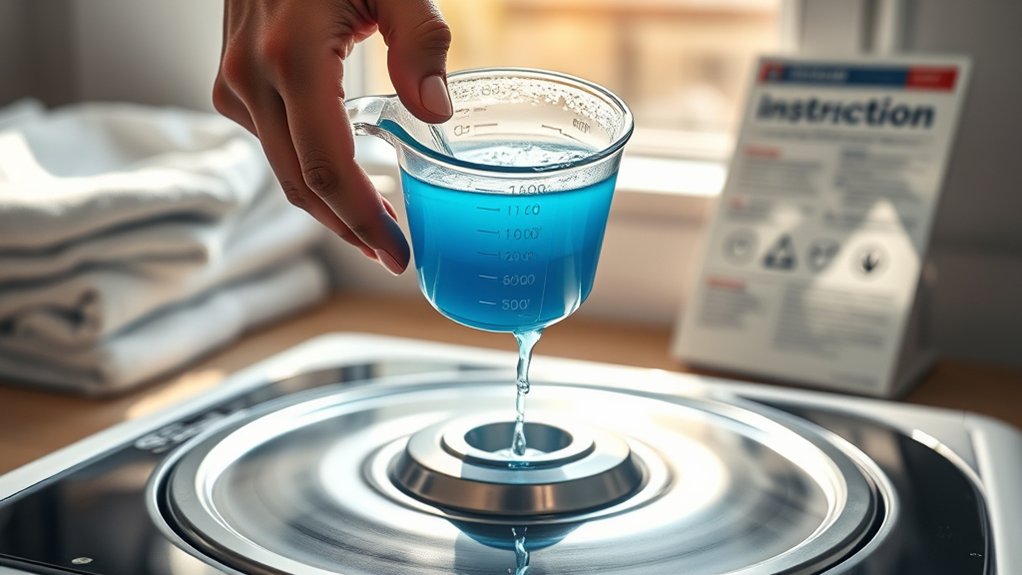
How much liquid laundry detergent should you use per load? The amount of laundry detergent depends primarily on load size and washer type.
The right amount of liquid detergent varies by load size and type of washing machine.
For a small load (under half full), use 20-25ml of liquid laundry detergent to avoid under-cleaning.
Medium loads (half to three-quarters full) require 30-40ml, while large loads (nearly full) need 45-55ml for effective cleaning.
High-efficiency washers demand more precise dosing, typically 15-30ml, because they use less water. Using too much detergent in these machines can cause excess suds and residue buildup.
Overusing detergent not only wastes product but also leads to residue buildup on fabrics and inside the washer.
This reduces cleaning efficiency and can potentially damage clothing.
How Load Size and Soil Level Affect Liquid Detergent Amount
Adjusting the amount of liquid laundry detergent isn’t just about load size; soil level also plays a significant role in determining the right dosage.
For small loads under half full, use 20-25ml of detergent, increasing to 30-40ml for medium loads and 45-55ml for large loads.
When soil level is heavy, boost the standard dose by 15-20% to guarantee effective dirt removal.
In areas with hard water, you may need to increase liquid detergent further to maintain peak cleaning, as minerals reduce detergent efficiency.
Properly balancing detergent volume with load size and soil level prevents residue buildup, which can impair fabric quality and washing machine performance.
Why Too Much Detergent Hurts Your Clothes and Washer
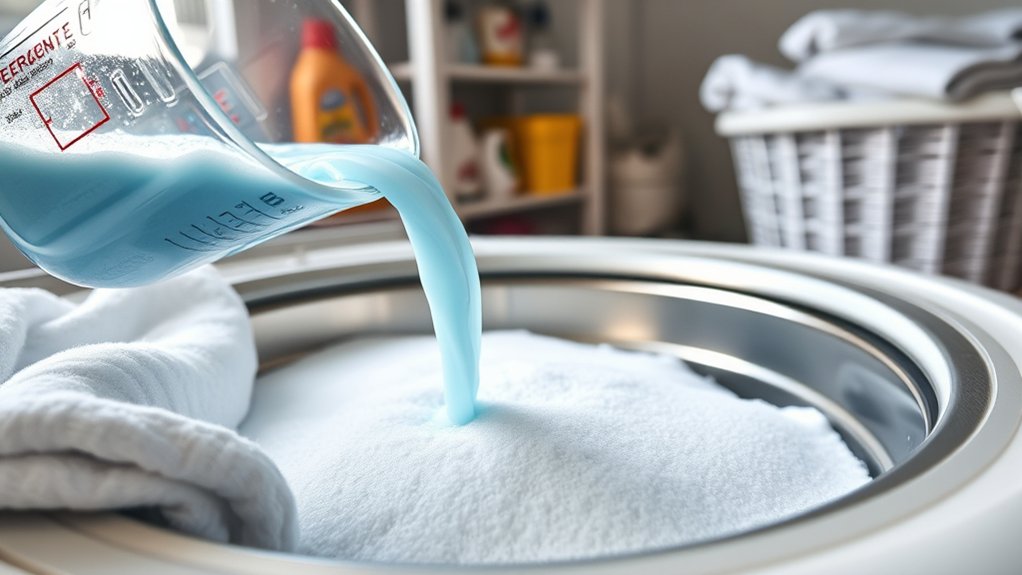
Although it might seem that using more detergent will yield cleaner clothes, overusing liquid laundry detergent actually harms both your fabrics and washing machine. Excess suds from overdosing trap dirt in clothes, causing stiffness and odors.
Detergent residue reduces fabric absorbency and alters fiber properties, impairing moisture-wicking. High-efficiency washers struggle to rinse excess suds, risking mechanical damage. Over time, detergent buildup in your washer’s drawer signals dosing issues that degrade laundry performance and machine longevity.
| Issue | Impact on Laundry & Washer |
|---|---|
| Excess suds | Traps dirt, causes stiffness and odor |
| Residue on fabrics | Reduces absorbency, chalky finish |
| Fiber alteration | Lowers moisture-wicking capability |
| Machine stress | Rinsing difficulty, potential damage |
Avoid overdosing to preserve both clothes and washer efficiency.
How to Measure Liquid Detergent Accurately
You’ll want to pick a measuring tool that has clear, easy-to-read markings to make sure you get the amount just right.
It’s a good idea to compare different tools, like the detergent cap versus a dedicated measuring cup, to see which one helps you measure more consistently.
Also, be sure to adjust your measurement based on the size of your load and the type of washing machine you have—this way, you avoid using too little or too much detergent.
Measuring Tools Comparison
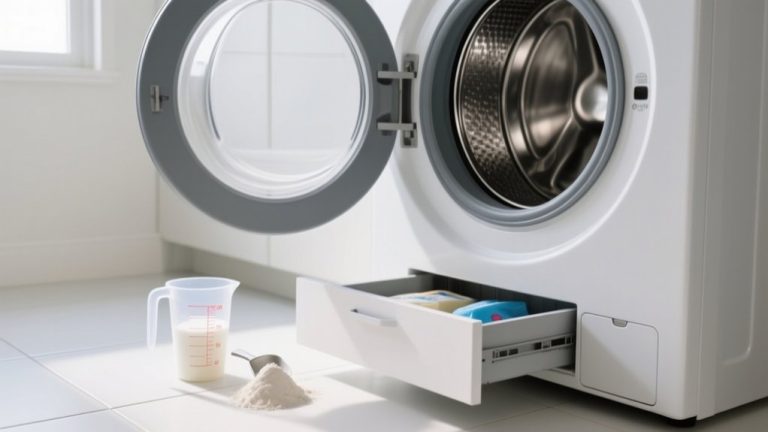
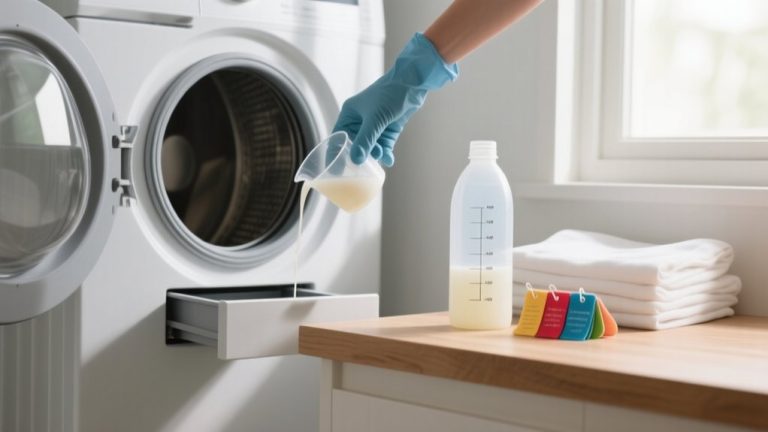
Accurate dosing hinges on the measuring tool you use for liquid laundry detergent. While many detergent caps include measurement lines, their visibility often lacks precision, risking overuse.
A dedicated measuring cup offers standardized volume markings, allowing you to tailor detergent amounts precisely according to load size. Use 20-25ml for small loads, 30ml for medium, and 45-55ml for large loads.
This precision becomes critical when accounting for variables like water hardness or heavily soiled items, which may require a 15-20% increase in detergent.
High-efficiency washers, with reduced water usage, demand even more exact measurements to prevent excess suds.
Employing a calibrated measuring cup eliminates guesswork, guarantees consistent dosing, and optimizes wash performance, fabric care, and detergent economy.
It outperforms the often unreliable detergent cap as a metering tool.
Dosage Accuracy Tips
Selecting the right measuring tool, like a calibrated cup or spoon, sets the foundation for precise detergent dosing. Avoid using the detergent cap, as it often leads to excess use and waste.
To determine how much detergent you need, adjust based on load size: 20-25ml for small, 30-40ml for medium, and 45-55ml for large loads. Consider soil level and water hardness. Add 15-20% more detergent for heavily soiled items.
Your machine type also impacts dosage. High-efficiency washers require considerably less detergent, typically 15-30ml per load, due to reduced water usage. Use a dedicated measuring cup to guarantee accuracy.
Also, regularly inspect the detergent drawer for residue buildup, which can degrade laundry results and impair machine performance.
How to Adjust Detergent for Hard Water and Your Washer
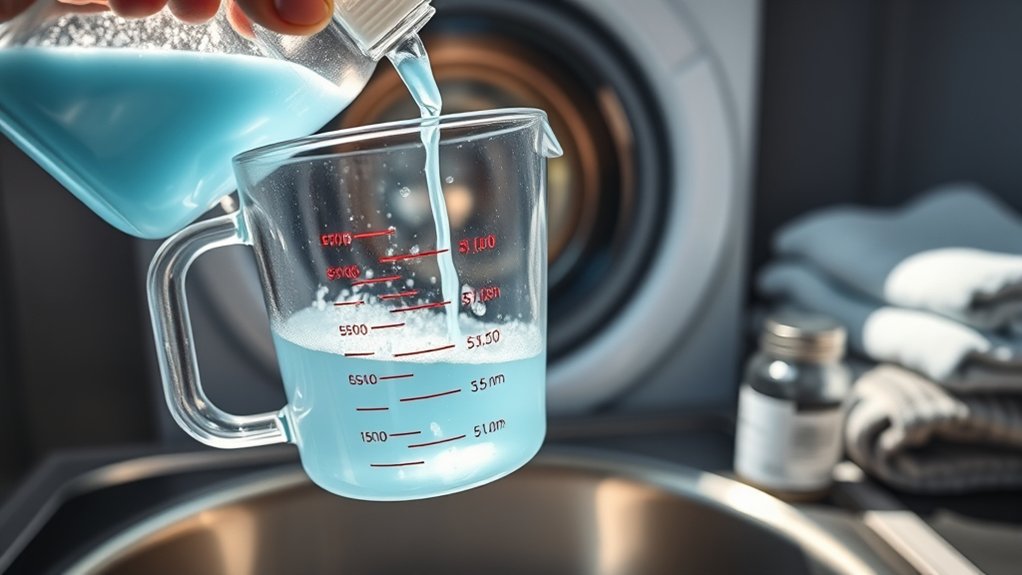
Because hard water contains minerals that interfere with detergent performance, you’ll need to adjust the amount of detergent accordingly to maintain cleaning efficiency.
Test your water hardness with strips; if hardness measures 7-12 grains per gallon, classified as hard water, increase your detergent dosage by about 25% for ideal cleaning.
For high-efficiency washers, use HE-specific detergents to prevent residue buildup, as these machines use less water.
Consider installing a water softener to reduce mineral interference, enhancing detergent performance and potentially lowering detergent needs.
Always adhere to manufacturer recommendations for detergent dosage, factoring in both load size and water hardness.
This precise calibration guarantees efficient cleaning without wastage or residue complications.
How to Stretch Your Detergent Without Losing Cleanliness
You can stretch your detergent by simply adjusting the amount you use based on the size of your load. For small loads, try using about 20-25ml and then increase the amount as the load gets bigger.
Another handy tip is to dilute your detergent in water before adding it to the wash. This helps spread the cleaning agents more evenly throughout the load, which means less waste.
By using these easy techniques, you’ll keep your clothes clean without leaving behind extra residue or making your fabrics stiff.
It’s a smart way to save detergent and still get great results!
Effective Detergent Dilution
Although it may seem counterintuitive, starting with the minimum effective detergent dose, typically 20-25ml for small loads, allows you to stretch your liquid detergent without compromising cleanliness.
Effective detergent dilution hinges on consistent measurement. Use a dedicated measuring cup rather than the detergent cap to guarantee precision.
High-efficiency washers, due to reduced water use, require a little more sophisticated dosing, usually 15-30ml, to prevent excess suds and residue.
When handling a large load or heavily soiled items, increase detergent by no more than 15-20%. Focus instead on pre-treatment or a soak with a teaspoon of detergent to loosen dirt.
Load Size Adjustments
Mastering detergent dilution sets the stage for fine-tuning your detergent use according to load size. Using the right amount of detergent per load is critical to maintaining cleanliness while avoiding waste.
You can make precise load size adjustments by following these guidelines:
- For small loads (under half full), use 20-25ml of detergent to guarantee effective cleaning without excess.
- Medium loads (half to three-quarters full) require 30-40ml, balancing cleanliness and economy.
- Large loads (nearly full) demand 45-55ml to manage increased soil and fabric volume efficiently.
Make further adjustments of 15-20% only for heavily soiled items.
Signs You’re Using the Right Detergent Amount and How to Fix Mistakes
How can you tell if you’re using the right amount of liquid laundry detergent? Signs you’re using the right amount include soft, absorbent towels and clothes free of detergent residue.
Using too little detergent, below the recommended 20-25ml for a small load, can leave dirt and oils trapped in fabrics.
Overdosing beyond 45-55ml for large loads causes detergent residue buildup, which results in stiff towels, dulled colors, and trapped odors.
If residue appears in the detergent drawer, it means you’re consistently using too much detergent.
To fix under-cleaning, don’t just add more detergent; instead, try adjusting the water temperature or soaking garments.
Keep a close eye on load size and match the detergent amount to it.
Being precise with dosing prevents residue buildup and ensures the best cleaning performance without wasting chemicals or damaging your fabrics.
Frequently Asked Questions
Can I Mix Different Brands of Liquid Laundry Detergent?
You shouldn’t mix different brands of liquid laundry detergent because their unique chemical formulations can interact negatively.
These interactions may reduce cleaning effectiveness, cause excess suds, and leave residue on your fabrics and washer.
If you decide to experiment, test with a small load first to monitor results.
Always follow each brand’s usage guidelines to guarantee peak performance and avoid damaging your clothes or machine.
Is Liquid Detergent Safe for All Types of Washing Machines?
Yes, liquid detergent is safe for all types of washing machines if you follow the manufacturer’s dosage instructions.
High-efficiency (HE) washers require lower amounts, typically 15-30ml, to prevent excessive suds that can impair performance.
Traditional machines tolerate standard doses.
Always check the detergent label for HE compatibility and recommended amounts.
Using the right quantity guarantees ideal cleaning and protects your machine from malfunction caused by over-sudsing or residue buildup.
How Long Does Liquid Laundry Detergent Last Once Opened?
Once opened, your liquid laundry detergent lasts about 6 to 12 months if stored correctly.
Keep it in a cool, dry place away from sunlight to avoid degradation. Temperature shifts and moisture can reduce its effectiveness.
Always seal the container tightly after use.
Check for changes in color, consistency, or odor, as these indicate it’s no longer potent.
For accuracy, consult the expiration date printed on your detergent bottle.
Can Liquid Detergent Remove Tough Stains Without Pre-Treatment?
Yes, liquid detergent can remove tough stains without pre-treatment, but its effectiveness depends on factors like fabric type, soil level, and detergent amount.
You’ll need to use the correct dosage, typically higher for heavily soiled items, to guarantee proper surfactant action during the wash cycle.
However, skipping pre-treatment may reduce stain removal efficiency, especially for set-in stains, because direct application targets stains more aggressively before washing begins.
Are There Eco-Friendly Liquid Detergents That Clean Effectively?
Yes, you’ll find eco-friendly liquid detergents that clean effectively. Brands like Seventh Generation and Ecover use plant-based surfactants and biodegradable ingredients formulated to work well in cold water.
These detergents meet rigorous environmental certifications and reduce synthetic additives, ensuring safety for sensitive skin and minimal pollution.
When you use the correct dosage, these products match conventional detergents in stain and odor removal, offering a sustainable yet powerful cleaning option.
Conclusion
If you overload your washer with detergent, you might as well be flooding your clothes with soap suds that could outlast a small tsunami. Using too much detergent not only wastes your product but risks damaging your fabrics and machine.
By measuring carefully and adjusting for load size, soil level, and water hardness, you’ll optimize cleaning power and protect your laundry system. Precision isn’t optional; it’s the secret to spotless, long-lasting results.