How To Use Baking Soda In Laundry – Easy Steps
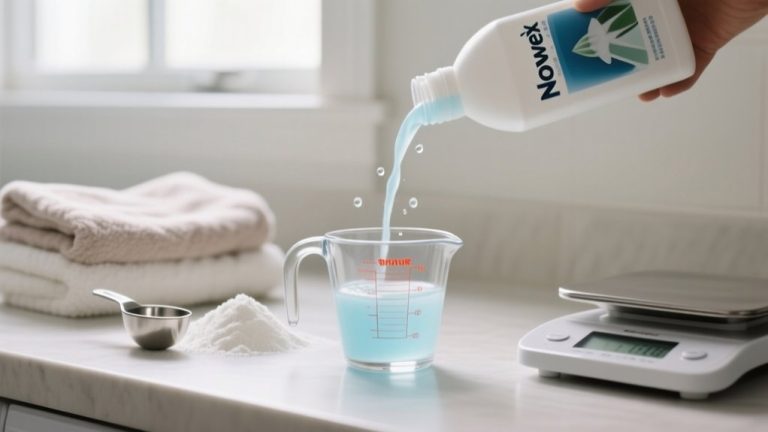
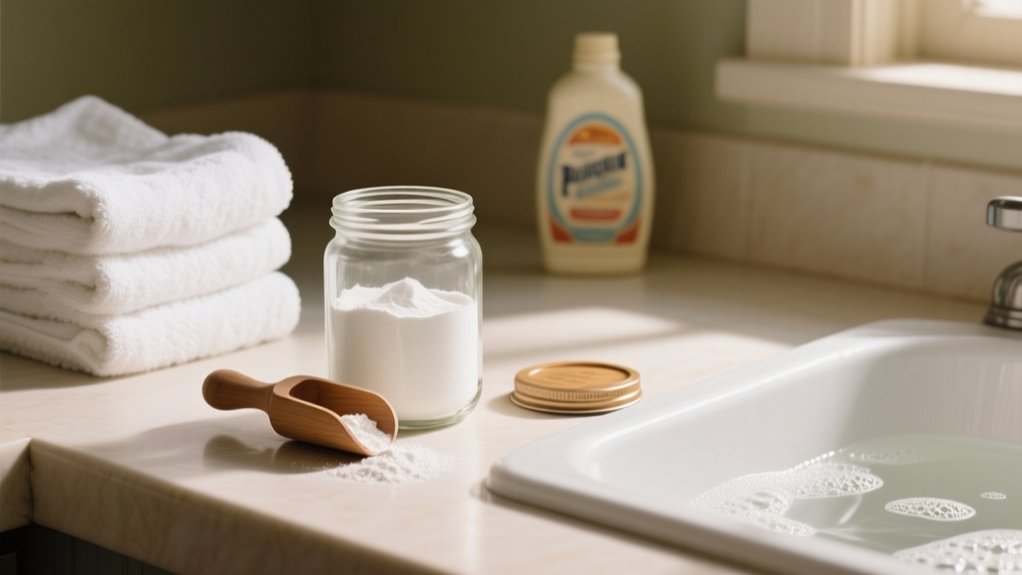
To use baking soda in your laundry, just add ½ cup directly into the washing machine drum before loading clothes. Combine it with your regular detergent to boost cleaning, soften water, and eliminate odors.
For extra freshness, toss in another ½ cup during the rinse cycle. Avoid using baking soda on delicate fabrics like silk or wool to prevent damage.
Keep these simple steps in mind, and you’ll discover even more ways to enhance your laundry routine.
Key Takeaways
- Add ½ cup of baking soda directly into the washing machine drum before clothes to boost cleaning and deodorize.
- Combine baking soda with your regular detergent to enhance stain removal and soften water for better washing results.
- Use ½ cup more during the rinse cycle to neutralize odors and soften fabrics without harsh chemicals.
- Create a paste of baking soda and water for stain pretreatment by applying it for 30 minutes before washing.
- Avoid using baking soda on delicate fabrics like wool, silk, and cashmere to prevent damage and color fading.
Benefits of Baking Soda for Cleaner Laundry
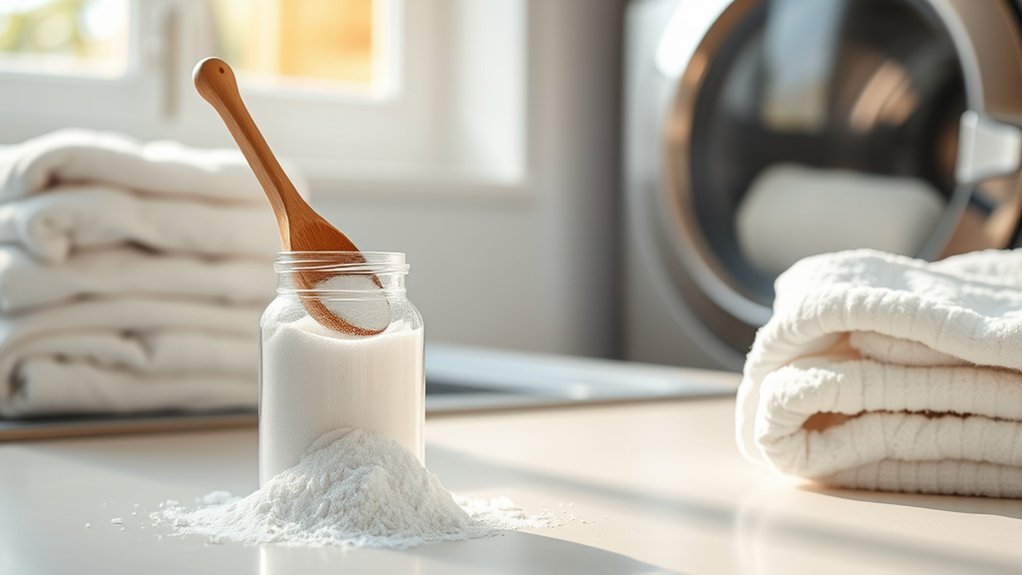
Although you might rely on your regular detergent, adding baking soda to your laundry can greatly boost cleaning power by balancing pH levels. This helps remove stains and eliminate odors more effectively.
Baking soda softens wash water, allowing your detergent to work better and reducing the need for harsh chemicals like bleach. By adding just ½ cup, you’ll notice fresher clothing and enhanced stain removal without damaging fabrics.
Baking soda also neutralizes odors, making it perfect for gym clothes and towels that tend to hold smells.
Plus, its gentle abrasive quality aids in spot cleaning.
As an eco-friendly option, baking soda supports cleaner laundry while being safe for the environment. Using it means you get soft, fresh clothing every time.
How to Add Baking Soda to Your Washing Machine
To get the most out of baking soda in your laundry, pour ½ cup directly into the washing machine drum before adding your clothes. This method helps enhance cleaning and deodorizing effectively.
Combine baking soda with your regular detergent to boost its power. During the rinse cycle, add another ½ cup to neutralize odors and soften fabrics further.
Avoid putting baking soda in the detergent dispenser, as it works best in the drum. Always check your washing machine’s manual for compatibility to prevent any issues.
- Add ½ cup baking soda to the drum before clothes
- Use with regular detergent for better cleaning
- Add ½ cup more during the rinse cycle
- Avoid the detergent dispenser for baking soda
- Verify washing machine compatibility first
How Much Baking Soda to Use for Different Laundry Loads
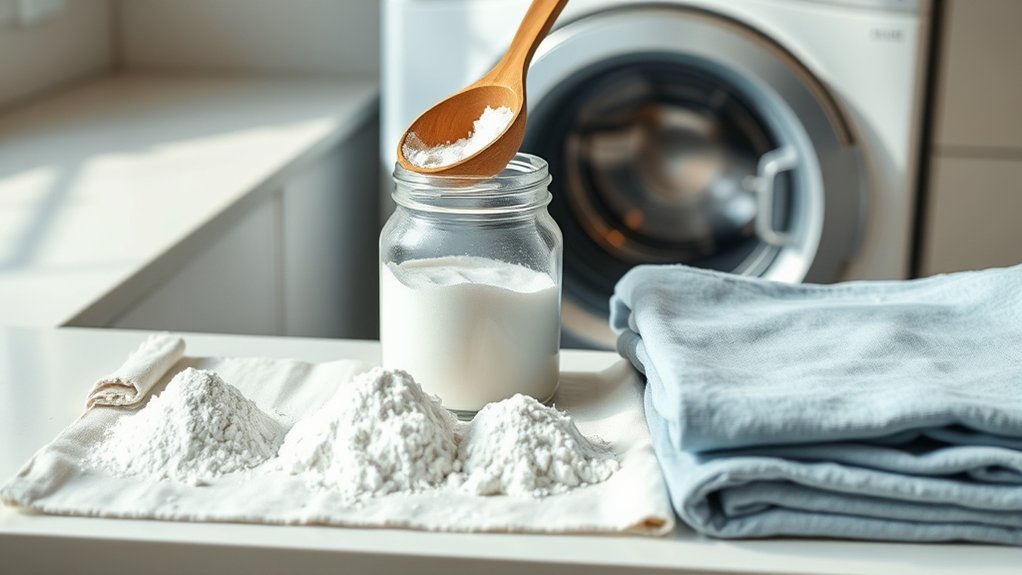
Using the right amount of baking soda for your laundry load can make a big difference in cleaning power and odor control. For a standard laundry load, add ½ cup of baking soda to enhance detergent effectiveness and deodorize fabrics effectively.
If you’re handling larger loads, especially in high-capacity machines, increase the amount to ¾ or even 1 cup for ideal results.
On the other hand, smaller loads require just ¼ cup to avoid overuse while still benefiting from baking soda’s cleaning properties.
When washing particularly odorous items, consider adding an extra ½ cup to help neutralize strong smells.
Always check your washing machine’s manual for any specific baking soda recommendations to maintain its performance and get the best laundry results.
How Baking Soda Softens Laundry Fabrics and Water
You can soften both your laundry fabrics and the wash water by adding baking soda to your load.
It actually raises the water’s pH, which helps reduce mineral buildup and gives your detergent a boost.
This simple step makes your clothes feel fresher and more comfortable—without needing any extra fabric softeners.
Pretty neat, right?
Water pH Balancing
Although detergent plays an essential role in cleaning clothes, adding baking soda can greatly boost its effectiveness by balancing the water’s pH level.
Baking soda raises the pH levels of your wash water, creating an environment where laundry detergent works more effectively.
This pH balancing helps soften hard water, reducing mineral buildup that can make fabrics stiff. It also neutralizes acidic stains, allowing detergents to lift grime more easily.
By balancing pH levels, baking soda promotes a gentler wash cycle that protects fabric fibers while keeping clothes fresh and clean.
- Baking soda increases alkaline pH levels in wash water
- Softens hard water to prevent fabric stiffness
- Enhances laundry detergent’s cleaning power
- Neutralizes acidic stains for better grime removal
- Supports gentler washing that preserves fabric quality
Fabric Softening Effects
Balancing the pH of your wash water sets the stage for baking soda to soften fabrics effectively. By raising the water’s pH to a mildly alkaline level, baking soda enhances detergent cleaning performance and reduces mineral buildup from hard water. This prevents stiffness and leaves your laundry feeling noticeably softer.
Incorporating half a cup of baking soda into your laundry routine not only boosts fabric softening but also deodorizes clothes naturally, eliminating odors without harsh chemicals.
Its gentle action breaks down residues and grime, ensuring soft fabrics that are comfortable against your skin.
Using baking soda is a simple, practical way to improve both cleaning and fabric softening in every wash, making your clothes fresher and softer each time.
How Baking Soda Helps Neutralize Laundry Odors
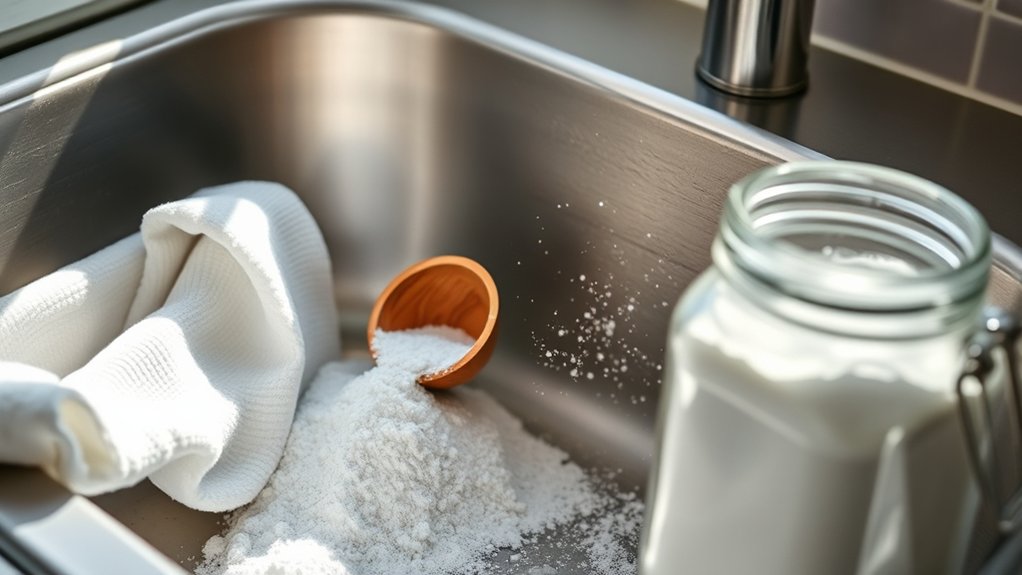
You can use baking soda to neutralize laundry odors by balancing the pH levels in your wash.
This actually stops smells right at their source. Just add about half a cup to your load, and it helps absorb and eliminate odors like sweat and pet smells.
It’s a simple step that boosts your detergent’s power and leaves your clothes smelling fresher.
Odor Neutralization Mechanism
When you add baking soda to your laundry, it actively neutralizes odors by balancing the pH levels in the wash water. This makes it especially effective against acidic smells like sweat and mildew.
Baking soda doesn’t just mask odors; it chemically interacts with odor molecules, neutralizing them for a genuine deodorizing effect.
It also boosts the power of laundry detergents, helping your fabrics come out fresher with less detergent. Plus, baking soda softens the wash water, which allows detergents to better remove odor-causing residues.
Using it regularly keeps your washing machine smelling fresh too.
- Neutralizes acidic odors such as sweat and mildew
- Absorbs and eliminates pet and other unpleasant smells
- Boosts deodorizing effect of laundry detergents
- Softens wash water for improved cleaning
- Prevents odor buildup in washing machines
Baking Soda pH Balance
A mild alkaline compound, baking soda plays a key role in neutralizing acidic odors in your laundry by adjusting the pH levels of the wash water. This balancing act helps baking soda’s natural properties neutralize odors like sweat, smoke, and mildew, making your fabrics smell fresher.
When the pH levels are optimized, your detergent works as a stronger cleaner, penetrating fabrics more effectively. Furthermore, baking soda softens the wash water, preventing odor buildup in your machine over time.
| Aspect | Benefit |
|---|---|
| pH Levels | Balances acidity to neutralize odors |
| Detergent | Enhances cleaning power |
| Fabrics & Washer | Softens water, improves odor removal |
Using baking soda keeps your laundry cleaner and fresher with every wash.
Application Tips For Odors
Building on baking soda’s ability to balance pH levels and soften water, it also excels at neutralizing stubborn odors in your laundry. You can enhance your detergent’s cleaning power by adding half a cup of baking soda to each wash cycle.
For strong odors, soaking smelly fabrics overnight in hot water mixed with baking soda helps refresh them thoroughly. Using baking soda reduces the need for extra odor-fighting products, making your laundry routine more eco-friendly.
- Add baking soda directly to the wash to neutralize odors from sweat and pets
- Combine with detergent to boost cleaning power and soften water
- Soak heavily soiled clothes overnight for deep odor removal
- Use baking soda as a natural deodorizer instead of harsh chemicals
- Enjoy fresher, cleaner laundry with an eco-friendly solution
Pretreating Stains With Baking Soda Paste
If you want to tackle stubborn stains effectively, making a baking soda paste is a simple and powerful method. Mix equal parts baking soda and water until thick.
Pretreating stains starts by applying the paste directly to the stain, making sure it thoroughly covers the area. Let the paste sit for about 30 minutes to break down the stain.
Before applying, check for discoloration on a hidden fabric spot to avoid damage. Finally, wash the garment following the care label instructions for the best results.
| Step | Action | Tips |
|---|---|---|
| Make Paste | Mix baking soda + water | Thick consistency needed |
| Apply Paste | Cover stain thoroughly | Check hidden spot first |
| Wait & Wash | Allow to sit 30 minutes | Follow care label instructions |
Combining Baking Soda With Bleach for Whitening Clothes
When you combine half a cup of baking soda with half a cup of bleach, you boost whitening power while reducing the harsh bleach smell. This makes it gentler on your clothes.
The mix tackles tough stains effectively without damaging fabric. Use it alongside your regular washing routine for brighter whites.
Always mix in a well-ventilated space and test on a hidden fabric spot first to avoid any damage.
- Enhances whitening without strong bleach odor
- Gentle on fabric, preserving garment integrity
- Removes tough stains more efficiently
- Fits seamlessly into your washing routine
- Requires testing on a small area before full use
When Not to Use Baking Soda on Delicate Clothes
You probably want to avoid using baking soda on delicate fabrics like wool, silk, or cashmere. That’s because its high pH can weaken those protein fibers.
Plus, if your clothes have pH-sensitive dyes, baking soda might cause the colors to fade.
Fabric Types To Avoid
Although baking soda works well for many laundry tasks, you should steer clear of using it on delicate fabrics like wool, silk, and cashmere. These protein-based fibers can suffer damage due to baking soda’s high pH.
You also want to avoid delicate fabrics such as rayon and linen, which may weaken or fade over time.
Synthetic fabrics aren’t always safe either, as baking soda might cause discoloration or fiber breakage, especially in hard water. Always check care labels before using baking soda to protect your clothes properly.
Here are fabric types to avoid using baking soda on:
- Wool, silk, and cashmere (protein-based fibers)
- Rayon and linen (delicate fabrics)
- Soft, delicate items prone to texture changes
- Certain synthetic fabrics vulnerable to alkaline damage
- Any fabric flagged by care labels as sensitive
Effects On Protein Fibers
Since baking soda has a high pH, it can weaken and damage protein-based fibers like wool, silk, and cashmere.
These delicate fabrics are sensitive to alkaline substances, so using baking soda may cause discoloration and fading, especially with pH-sensitive dyes.
You might also notice a rough texture because baking soda residue can remain, compromising fabric softness.
To protect your delicate fabrics and maintain fabric integrity, always check care labels before using baking soda.
Many manufacturers specifically advise against alkaline substances for these materials.
When caring for protein-based fibers, it’s best to avoid baking soda or use it sparingly to prevent weakening and breakage.
Prioritize gentle, appropriate detergents designed for delicate fabrics to keep your clothes looking their best.
Color Fading Risks
When you use baking soda on delicate clothes, you risk fading their colors, especially with fabrics like silk and cashmere that react strongly to alkaline substances.
Baking soda’s high pH can cause color fading and fiber damage in pH-sensitive materials.
Avoid applying it directly to brightly colored items or richly dyed garments, as it may dull or alter their hues.
Before using baking soda on any delicate fabrics, always perform a patch test on a hidden area to check for adverse reactions.
Remember, protecting your clothes’ vibrancy means knowing when not to use baking soda.
Silk, cashmere: highly pH-sensitive, prone to fading
Brightly colored items: risk dullness over time
Dark or richly dyed garments: can appear washed out
Wool and linen: vulnerable to fiber damage
Always patch test before full use on delicate fabrics
Key Tips for Effective Baking Soda Laundry Use
If you want to get the most out of baking soda in your laundry, adding ½ cup during the wash cycle will boost your detergent’s cleaning power and deodorize your clothes.
For extra fabric softness and odor neutralization, sprinkle another ½ cup during the rinse cycle.
When pre-treating stains, make a paste with equal parts baking soda and water, apply it to the stain, and let it soak for about 30 minutes.
Always check fabric care labels before use, as baking soda’s high pH can damage delicate fabrics like silk and wool.
If you live in hard water areas, baking soda helps reduce mineral buildup, improving wash quality and protecting your clothes.
Use these tips to maximize baking soda’s benefits in your laundry routine.
Why You Shouldn’t Mix Baking Soda and Vinegar in Laundry
Although baking soda and vinegar each have cleaning benefits, you shouldn’t mix them together in your laundry. Their opposite pH levels, baking soda’s high pH and vinegar’s low pH, neutralize each other, cancelling out their cleaning properties.
This reaction reduces their effectiveness in laundry tasks and stain removal. Instead of boosting cleaning power, mixing them creates carbon dioxide, causing unnecessary suds without improving results.
Using both separately guarantees you get the most from each.
- Neutralization reduces cleaning effectiveness
- Ineffective stain removal compared to separate use
- Carbon dioxide bubbles create unwanted suds
- Possible damage to fabrics and washing machines
- Maximizes individual benefits when used apart
Stick to using baking soda and vinegar separately to keep your laundry fresh and clean.
Frequently Asked Questions
Can Baking Soda Replace Laundry Detergent Entirely?
No, you can’t replace laundry detergent entirely with baking soda. While baking soda helps neutralize odors and soften fabrics, it doesn’t have the enzymes needed to break down tough stains.
You’ll get better results by using it alongside your detergent. This boosts cleaning power and reduces the amount of detergent you need.
Relying on baking soda alone won’t effectively clean heavily soiled clothes or remove stubborn stains, so it’s best as a helpful supplement, not a substitute.
Is Baking Soda Safe for All Washing Machine Types?
Yes, baking soda is safe for both regular and high-efficiency (HE) washing machines. You can use it without worrying about damage, but always check your machine’s manual to confirm the recommended amount.
While it works well for most fabrics, avoid it on delicate materials like silk or cashmere.
Using baking soda can help you reduce detergent use, making your laundry routine more eco-friendly and cost-effective.
Does Baking Soda Damage Washing Machine Components?
You might think baking soda would harm your washing machine, but it generally won’t damage the components if you use it properly.
However, using too much can cause residue buildup in filters and hoses, which might affect performance over time.
To keep your machine safe, avoid adding baking soda during the rinse cycle and don’t overdo it.
Always check your machine’s manual to make sure you’re using it the right way.
How Does Baking Soda Affect Fabric Colors?
Baking soda can brighten whites but might fade or discolor darker and vivid fabrics if you use too much. Its high pH can weaken delicate fibers like silk and wool, affecting their color over time.
To avoid surprises, test it on a hidden spot first.
Using about half a cup per load keeps cleaning effective while minimizing color damage, so you can safely freshen your laundry without ruining your favorite clothes.
Can Baking Soda Be Used in Cold Water Washes?
Think of baking soda as a clever diplomat in your laundry kingdom, negotiating harmony between water and detergent. Yes, you can use baking soda in cold water washes.
It softens the water, boosts detergent’s power, and neutralizes odors effectively.
Add about half a cup to your cold load, and you’ll enjoy cleaner, fresher clothes without hiking your energy bills.
Just double-check fabric labels to keep delicate items safe.
Conclusion
You might not have realized it, but baking soda is your laundry’s secret weapon for cleaner, fresher clothes. By adding just the right amount, you soften fabrics, neutralize odors, and even brighten whites without harsh chemicals.
Just remember to avoid delicate fabrics and never mix it with vinegar. Give baking soda a try; you’ll be surprised how this simple pantry staple transforms your laundry routine with ease and efficiency.