Can You Mix Bleach And Laundry Detergent – What to Know
You can mix bleach and laundry detergent safely if you dilute the bleach properly and avoid detergents with ammonia or vinegar, which produce harmful fumes. Always check fabric labels to verify bleach compatibility and use bleach-safe fabrics like white cotton or polyester.
Add bleach to diluted water before clothes and detergent early in the cycle for best results. If you want to optimize cleaning while protecting fabrics, there are key considerations and alternatives worth exploring.
Key Takeaways
- Mixing bleach with detergent is safe for bleach-compatible fabrics if bleach is properly diluted and no harmful ingredients like ammonia or vinegar are present.
- Always dilute bleach before use to prevent fabric damage and reduce toxic fumes, following recommended ratios like ¼ cup bleach to ¾ cup water.
- Use bleach only on white cotton or polyester, test colored fabrics for colorfastness, and add bleach to wash water before loading clothes.
- Avoid mixing bleach with detergents containing ammonia or vinegar to prevent dangerous toxic fumes and chemical reactions.
- If accidental mixing occurs, ventilate the area, dilute with water, run an empty washer cycle, and maintain washer cleanliness regularly.
Is It Safe to Mix Bleach and Laundry Detergent?
When can you safely mix bleach and laundry detergent? You can do so when working with bleach-safe fabrics, as mixing bleach with laundry detergent boosts cleaning and stain removal.
However, you must avoid detergents containing ammonia or vinegar, since combining these with bleach produces harmful fumes.
To guarantee safety, always follow the manufacturer’s instructions and add bleach in a diluted form. For best results, add bleach to the wash water as it fills, before placing clothes inside, rather than mixing it directly with detergent.
Moreover, check fabric care labels carefully to confirm the materials are bleach-safe and to prevent discoloration.
Why You Should Always Dilute Bleach Before Mixing
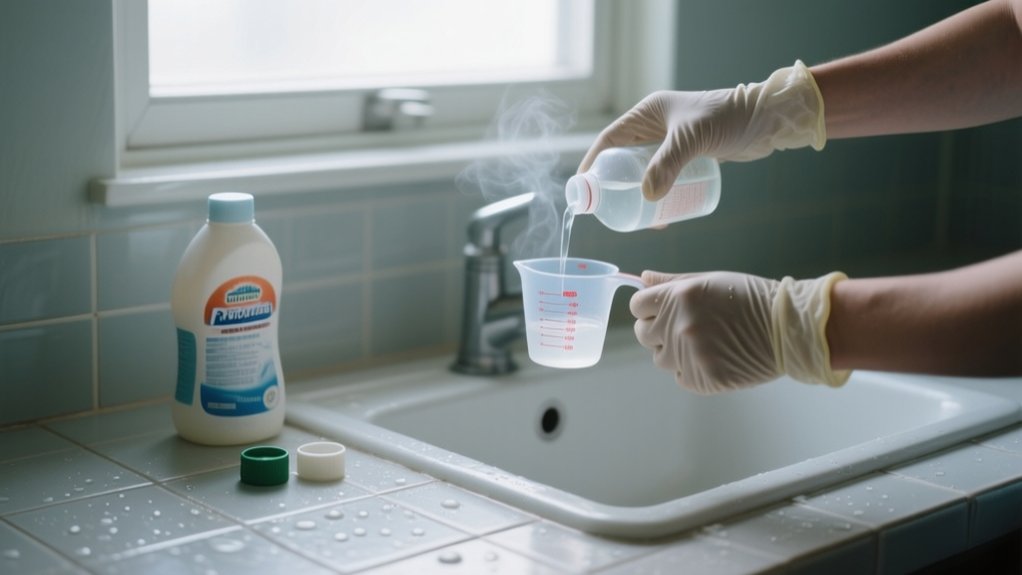
Because concentrated bleach can damage fabrics and produce harmful fumes, you should always dilute it before mixing with other cleaning agents or applying it to clothes.
Diluting bleach prevents fabric damage by guaranteeing a gentler, more even application.
Diluting bleach ensures a gentler, more uniform application that protects your fabrics from damage.
For stain pretreatment, a common dilution ratio is ¼ cup bleach to ¾ cup water, which balances cleaning power and safety.
Proper dilution also minimizes the risk of hazardous chemical reactions and reduces fumes, protecting both you and your washing machine.
Following manufacturer guidelines for diluting bleach is essential to maintain its effectiveness while avoiding damage.
Which Fabrics Can Safely Use Bleach and Detergent
Which fabrics can handle bleach without harm? White cotton and polyester are your safest bets for using bleach with water, as these fibers withstand the chemical and benefit from enhanced stain removal and whitening.
Before applying bleach with detergent, always check the care label to confirm fiber content. Avoid bleach on delicate materials like wool, silk, mohair, leather, spandex, and any non-colorfast fabrics, since bleach can cause irreversible damage or discoloration.
If you want to use bleach on colored items, test a small, hidden area first to verify colorfastness. Proper dilution of bleach with water remains critical to minimize fabric stress and prevent weakening.
When Should You Avoid Mixing Bleach and Detergent?
You should steer clear of mixing bleach with detergents that contain ammonia or vinegar, as these combinations produce hazardous fumes and gases. Ammonia reacts with bleach to form chloramine vapors, while vinegar leads to toxic chlorine gas. Both pose serious respiratory risks.
Avoid mixing bleach with ammonia or vinegar to prevent dangerous fumes and serious respiratory hazards.
You must also avoid mixing bleach with detergents if you’re unsure about their chemical composition, since different brands may contain ingredients that interact negatively.
Although mixing bleach with non-chlorine, color-safe detergents is generally safe, always check manufacturer guidelines.
In addition, avoid mixing bleach with detergents when laundering delicate fabrics like wool or silk, as bleach can damage these materials regardless of detergent type.
Prioritizing these precautions guarantees safety and fabric care while using bleach in your laundry routine.
How to Add Bleach and Detergent Correctly in Your Washer
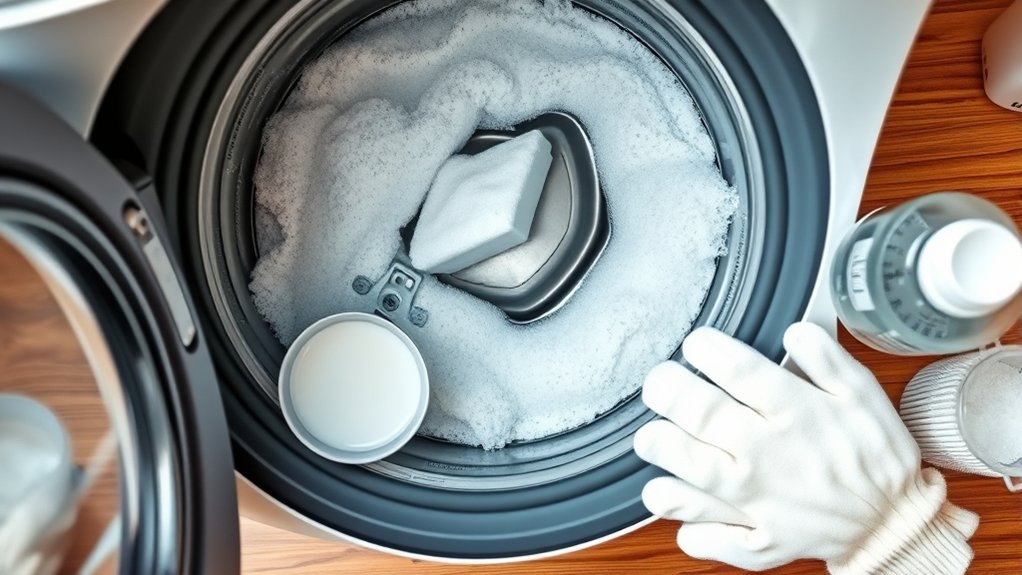
You should always add bleach to properly diluted wash water before putting in your clothes. This helps keep things safe and makes sure the bleach works effectively.
If your washer has a bleach dispenser, go ahead and use it. It controls the timing and dosage just right, so you don’t have to worry about measuring or when to add it.
But if there’s no dispenser, just wait until the drum is partly full before you pour in the bleach.
Getting the timing right when adding both detergent and bleach is important. It not only prevents damage to your fabrics but also helps maximize the cleaning power of your wash.
Proper Bleach Addition
Although adding bleach might seem straightforward, proper timing and dilution are essential to maximize its effectiveness and protect your fabrics.
For proper bleach addition, always add bleach as the wash water fills and before loading clothes. This confirms thorough dilution and prevents fabric damage.
If your washer has a bleach dispenser, pour liquid bleach directly into it, adhering to the fill line—typically about ¼ cup for sanitizing.
Without a dispenser, fill the drum halfway with water before adding bleach to confirm even distribution.
Never apply full-strength bleach directly onto fabrics; dilute it properly, especially when pretreating stains.
Following these steps assures that bleach works efficiently without compromising your laundry’s integrity.
Detergent And Bleach Timing
When adding bleach and detergent in your washer, timing plays a crucial role in guaranteeing both cleaning efficiency and fabric safety. Proper detergent and bleach timing prevents harmful chemical reactions and maximizes sanitization.
Start by adding detergent at the beginning of the cycle. If your washer has a bleach dispenser, pour bleach into it before starting.
Otherwise, wait until the tub fills halfway, about five minutes into the cycle, to add bleach. This delay guarantees bleach dilutes properly and avoids direct contact with detergent, which can create dangerous fumes.
Always check fabric care labels to confirm bleach compatibility to prevent damage.
Following these detergent and bleach timing guidelines guarantees effective cleaning while protecting your clothes and health.
What Types of Bleach Work Best With Detergent
You’ll want to pick the right bleach depending on your fabrics and detergent.
Chlorine bleach is great for whites but can be harsh on colors.
On the other hand, non-chlorine bleach is gentler and safer to use on both colors and whites.
Just make sure to always check your garment’s care label before mixing bleach with detergent to avoid any damage.
Chlorine Bleach Compatibility
Since chlorine bleach boosts cleaning power, you can safely mix it with regular laundry detergent in bleach-safe loads to improve stain removal and whiten fabrics.
Chlorine bleach is highly effective for whites and heavily soiled items but requires careful use to avoid fabric damage. Always check care labels to confirm bleach compatibility, as chlorine bleach can cause discoloration or weaken fibers in some materials.
For best results, add chlorine bleach to the wash water as it fills, either through a dispenser or diluted in water, before adding clothes.
Avoid combining chlorine bleach with other cleaning agents like ammonia or vinegar, which can produce dangerous fumes.
When used properly, chlorine bleach enhances detergent performance without compromising fabric integrity or washing safety.
Non-Chlorine Bleach Use
A versatile option for enhancing your laundry routine is non-chlorine bleach, often called color-safe bleach. It works well with both colored and white fabrics. This bleach contains hydrogen peroxide or sodium percarbonate, providing effective stain removal without the harshness of chlorine bleach.
You can safely mix non-chlorine bleach with your regular laundry detergent to boost cleaning power while preserving fabric colors. To get the best results and avoid damage, always follow the manufacturer’s dilution and application guidelines.
Also, check the care labels on your garments to confirm they’re compatible with non-chlorine bleach. Using it properly guarantees thorough stain removal and fabric longevity.
That’s why non-chlorine bleach is an ideal choice for routine laundry when combined with detergent.
Fabric Safety Considerations
While non-chlorine bleach offers flexibility for various fabrics, choosing the right type of bleach for your laundry detergent depends heavily on fabric safety.
Fabric safety considerations require you to always check care labels before using bleach, especially on white clothes or colored items.
Chlorine bleach works best for bleach-safe fabrics and white clothes but can damage wool, silk, and non-fast colors.
Non-chlorine bleach suits mixed loads and delicate fabrics, offering versatility.
When using bleach, dilute the amount of bleach, typically ¼ cup bleach to ¾ cup water, to pretreat stains.
Add it to the wash water in your standard washer before adding clothes.
Washing in cold water can help preserve fabric integrity.
Following these steps guarantees you get the best results without compromising fabric safety in your new account of laundry routines.
What to Do If You Accidentally Mix Bleach and Detergent
If you accidentally mix bleach and laundry detergent, you should immediately ventilate the area to disperse any harmful fumes that may form.
Next, dilute the mixture with water if possible, reducing the concentration of harmful chemicals.
Avoid using the washer until you thoroughly rinse it by running an empty cycle with water. This eliminates residual chemicals and prevents reactions in future loads.
Make sure no lingering mixture remains before resuming normal use.
Consult safety guidelines and your washer’s manufacturer instructions to handle the situation properly.
Taking these steps guarantees you minimize exposure to potentially dangerous fumes and chemical residues when you mix bleach with detergent unintentionally, preserving both your health and appliance safety.
Does Mixing Bleach and Detergent Improve Cleaning?
You’ll find that adding bleach to your laundry routine can really boost cleaning power, especially when dealing with stubborn stains like red wine or berries.
Bleach teams up with detergent to help remove stains and whiten your clothes, plus it sanitizes the fabrics too.
But here’s the thing — it’s best to add bleach separately during the wash cycle.
Doing this not only maximizes its effectiveness but also helps protect your clothes from damage.
Cleaning Power Enhancement
Because mixing bleach with laundry detergent combines their cleaning strengths, you get enhanced stain removal, whitening, and disinfection that detergent alone can’t achieve. Using a bleach dispenser guarantees proper timing and even distribution, maximizing cleaning power without fabric damage.
Add bleach to the wash water before clothes for best results. This combo kills 99.9% of germs, outclassing detergent alone.
| Cleaning Aspect | Effect of Mixing Bleach and Detergent |
|---|---|
| Stain Removal | Tackles tough stains like berries, juice |
| Whitening | Brightens whites beyond detergent’s reach |
| Disinfection | Superior sanitization, kills most germs |
Check fabric care labels to avoid damage. Proper use enhances your laundry’s cleanliness and hygiene efficiently.
Stain Removal Effectiveness
Stain removal effectiveness prominently improves when you combine bleach with laundry detergent, especially on stubborn spots like berries, juice, and red wine.
Detergent alone often struggles with these tough stains, but adding bleach boosts your cleaning power considerably.
For best results, add bleach to the wash water as it fills, avoiding direct mixing with detergent to prevent chemical reactions that could reduce effectiveness.
Bleach not only enhances stain removal effectiveness but also kills 99.9% of germs, making your laundry both cleaner and more hygienic.
However, always check fabric care labels before using bleach, as it can damage certain materials or non-fast colors.
When used properly, this combination delivers superior stain removal and sanitization, especially on whites and heavily soiled fabrics.
Safe Alternatives to Bleach and Detergent for Laundry
Although bleach and conventional detergents are common choices for laundry, safer alternatives exist that protect both your fabrics and health.
Oxygen bleach stands out as an effective option; it brightens whites and removes stains without the risks linked to chlorine bleach, making it suitable for colored and white fabrics.
Oxygen bleach safely brightens and removes stains on both colored and white fabrics without harsh chemicals.
You can also use vinegar to eliminate odors and soften fabrics gently, avoiding damage.
Baking soda enhances cleaning power by tackling tough stains and neutralizing odors without harsh chemicals.
Castile soap provides a biodegradable, non-toxic solution for gentle yet effective cleaning.
Furthermore, commercial non-toxic laundry detergents offer stain removal while being safer for sensitive skin and the environment.
These alternatives help you maintain clean laundry without compromising safety or fabric integrity.
How to Keep Your Washer Clean After Using Bleach and Detergent
When you use bleach and detergent in your laundry, maintaining your washer’s cleanliness becomes essential to prevent residue buildup and odors.
Bleach naturally breaks down during the wash cycle into harmless salt and water, so rinsing the washer afterward isn’t necessary.
However, running an empty hot water wash cycle with a cup of vinegar or baking soda can help eliminate any lingering odors or residues.
Regularly wipe down the drum and gasket with a diluted bleach solution to prevent mold and mildew buildup.
Always use the bleach dispenser if your washer has one, as it’s designed for safe bleach handling.
Finally, keep the washer door open between uses to promote air circulation and prevent moisture buildup, ensuring a fresher machine interior.
Frequently Asked Questions
Can Mixing Bleach and Detergent Harm the Environment?
Yes, mixing bleach and detergent can harm the environment. When combined improperly, they create harmful fumes and produce compounds that don’t break down easily, leading to water pollution.
You should avoid mixing them directly to minimize this risk. Using bleach correctly, like in cold water and following instructions, helps reduce environmental impact.
Always handle these chemicals responsibly to protect ecosystems and guarantee safer wastewater discharge.
Does Water Temperature Affect Bleach and Detergent Effectiveness?
You’ll find that water temperature gently guides how bleach and detergent perform.
Warm water often enhances their cleaning dance, activating detergents better and boosting bleach’s stain-fighting charm.
Cold water still gets the job done, especially with modern bleach formulas, saving energy without sacrificing cleanliness.
Hot water shines on stubborn stains but may risk delicate fabrics.
How Long Should Bleach and Detergent Be Left on Clothes?
You should leave bleach and detergent on clothes only for the duration of the wash cycle, usually 30-45 minutes.
Avoid letting bleach sit longer because it can damage fabrics.
If you’re pre-treating stains with a bleach solution, apply it for no more than 5-10 minutes before rinsing.
Always follow manufacturer instructions carefully.
Make sure to rinse thoroughly to remove any chemical residues.
This helps prevent discoloration and fabric weakening.
Can Bleach and Detergent Mix Cause Allergic Reactions?
Mixing bleach and detergent can cause allergic reactions, much like a sudden gust stirring up dust.
If you have sensitive skin or lungs, the combination might release irritant fumes or trigger skin allergies.
Some detergents contain fragrances or surfactants that react with bleach, intensifying these effects.
To protect yourself, test on a small fabric patch first and guarantee proper ventilation when washing to minimize exposure to harmful chemicals.
Is It Safe to Mix Bleach and Detergent in a Septic System?
No, you shouldn’t mix bleach and detergent in a septic system.
Doing so can kill the beneficial bacteria essential for breaking down waste, which risks system failure.
Bleach’s chlorine content is especially harmful, so use it sparingly.
Instead, opt for non-chlorine, color-safe bleaches that are gentler on your system.
Always check with a septic professional to confirm you’re using products that maintain your system’s health effectively.
Conclusion
Mixing bleach and laundry detergent might seem like a quick fix, but it’s not a magic potion for spotless clothes. Always dilute bleach first and add both separately to avoid harmful reactions or fabric damage.
Remember, some fabrics just can’t handle bleach. If you accidentally mix them, ventilate immediately and rinse thoroughly.
For safer, effective cleaning, consider alternatives. Proper use protects your clothes and your washer, preventing a cleaning disaster of epic proportions.