Can You Mix Baking Soda And Bleach In Laundry – Is It Safe?
You shouldn’t mix baking soda and bleach in your laundry because their reaction releases toxic chlorine gas. This poses serious respiratory and skin hazards.
This chemical interaction neutralizes both agents, reducing their cleaning effectiveness and risking fabric damage. Bleach’s oxidizing power diminishes when combined with baking soda’s alkalinity, making stains harder to remove.
To keep your laundry safe and effective, use these cleaners separately and handle bleach with proper dilution and ventilation. Understanding the right usage enhances both safety and cleaning results.
Key Takeaways
- Mixing baking soda and bleach releases toxic chlorine gas, posing serious respiratory and health risks.
- The chemical reaction neutralizes both agents, reducing their cleaning effectiveness in laundry.
- Experts advise using bleach only diluted with water, never combined directly with baking soda.
- Adding baking soda separately enhances stain removal and fabric softening without hazardous effects.
- Keeping bleach and baking soda apart prevents chlorine gas formation and ensures laundry safety.
Why Mixing Bleach and Baking Soda in Laundry Is Dangerous
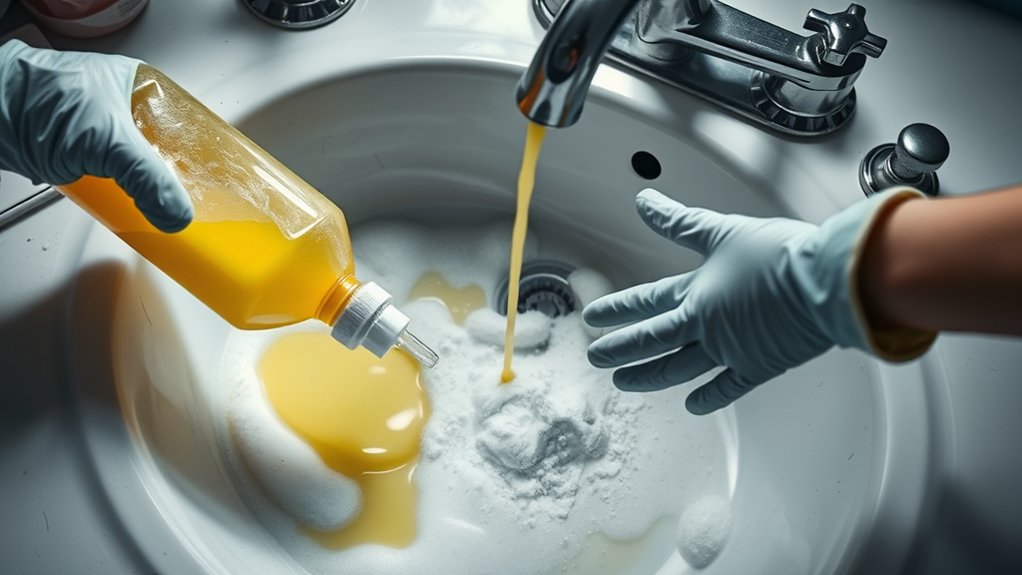
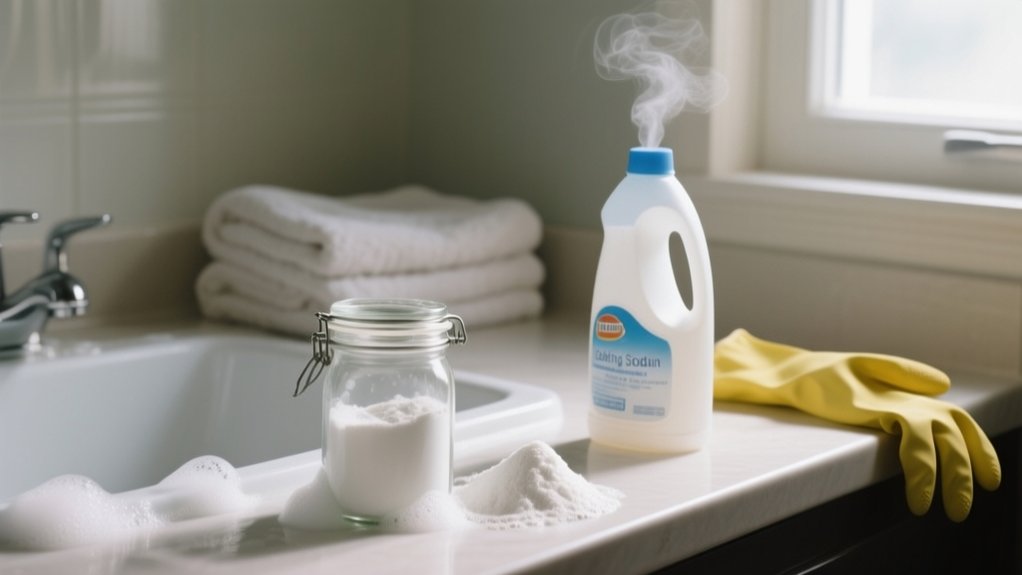
Although bleach and baking soda are common laundry additives, mixing them can release toxic chlorine gas, which poses serious health hazards. When combined, this hazardous reaction compromises your safety by producing a harmful gas that can cause respiratory issues.
Mixing bleach and baking soda releases toxic chlorine gas, posing serious respiratory health risks.
Moreover, the mixture neutralizes the cleaning effectiveness of both bleach and baking soda, rendering your laundry efforts ineffective. Experts recommend using bleach strictly with water to prevent this dangerous interaction.
To maintain peak cleaning performance and guarantee safety, you should use bleach and baking soda separately. By keeping these substances apart, you avoid hazardous chemical reactions and preserve their individual cleaning properties.
Prioritizing this separation is crucial for effective and safe laundry practices, eliminating risks associated with toxic chlorine gas.
What Happens Chemically When Bleach and Baking Soda Mix
Understanding the chemical processes triggered when bleach and baking soda combine reveals why this mixture is hazardous and ineffective. Bleach is a strong oxidizing agent that reacts with alkaline substances like baking soda, initiating a chemical reaction that compromises safety and cleaning efficacy.
Here’s what happens:
- The alkaline nature of baking soda alters bleach’s pH, destabilizing its active compounds.
- This triggers the release of toxic chlorine gas, posing immediate health risks.
- The reaction neutralizes both agents, rendering the mixture ineffective for cleaning.
- Mixing these chemicals increases hazardous potential without any cleaning benefit.
For safety, you should never mix bleach with baking soda. Always dilute bleach with water to maintain its cleaning power and avoid toxic, hazardous outcomes.
Why Chlorine Gas From This Mix Is Harmful
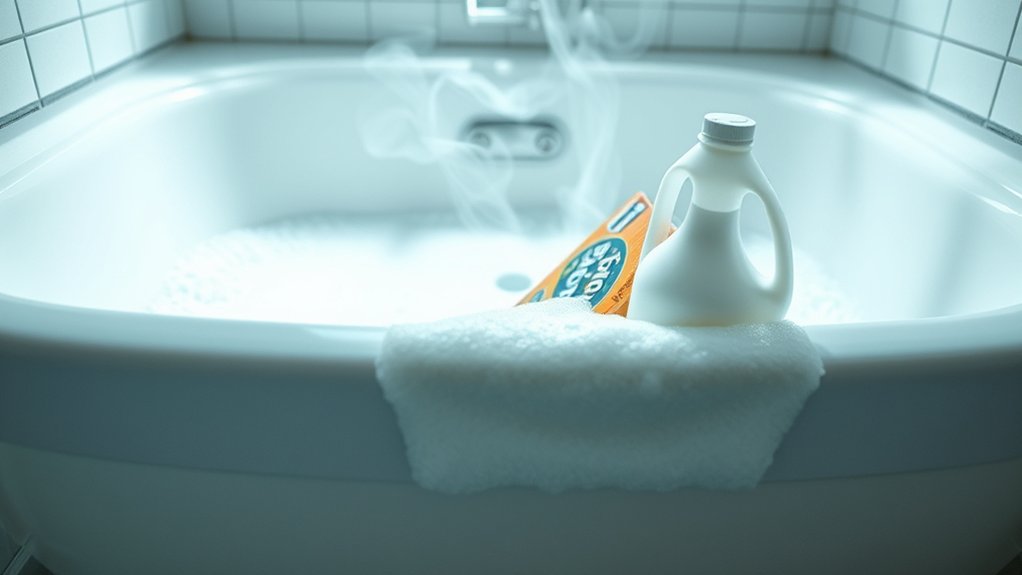
When you mix baking soda with bleach, the resulting chemical reaction releases chlorine gas, a highly toxic substance that poses serious health hazards.
Chlorine gas acts as a potent irritant to mucous membranes, causing immediate respiratory distress including coughing, throat irritation, and difficulty breathing.
Upon exposure, it can damage the eyes and skin, potentially leading to chemical burns. Even minimal inhalation triggers acute health issues such as nausea, dizziness, and vomiting.
Prolonged or high-level exposure, especially in poorly ventilated spaces, risks long-term pulmonary damage.
Given chlorine gas’s toxicity and rapid onset of symptoms, maintaining safety means avoiding mixing bleach with alkaline agents like baking soda entirely.
Proper ventilation and using bleach only as directed, diluted with water, are critical to prevent hazardous chlorine gas exposure and its severe consequences.
How Mixing Bleach and Baking Soda Reduces Cleaning Power
If you combine bleach and baking soda in your laundry, you’ll reduce their individual cleaning effectiveness due to a chemical neutralization reaction. This reaction diminishes the cleaning properties of both agents, leading to ineffective cleaning during laundry tasks.
Furthermore, the mixture can release toxic gas, specifically chlorine gas, which presents significant safety hazards.
Consider these critical points:
- The chemical reaction neutralizes bleach’s oxidizing power and baking soda’s alkalinity.
- Reduced efficacy means stains and odors persist despite treatment.
- Toxic gas formation increases health risks without enhancing cleaning.
- Using bleach and baking soda separately maximizes their cleaning benefits safely.
Understanding this interaction prevents ineffective cleaning and avoids exposing yourself to unnecessary safety hazards in laundry practices.
Expert Tips for Using Bleach and Baking Soda Safely in Laundry
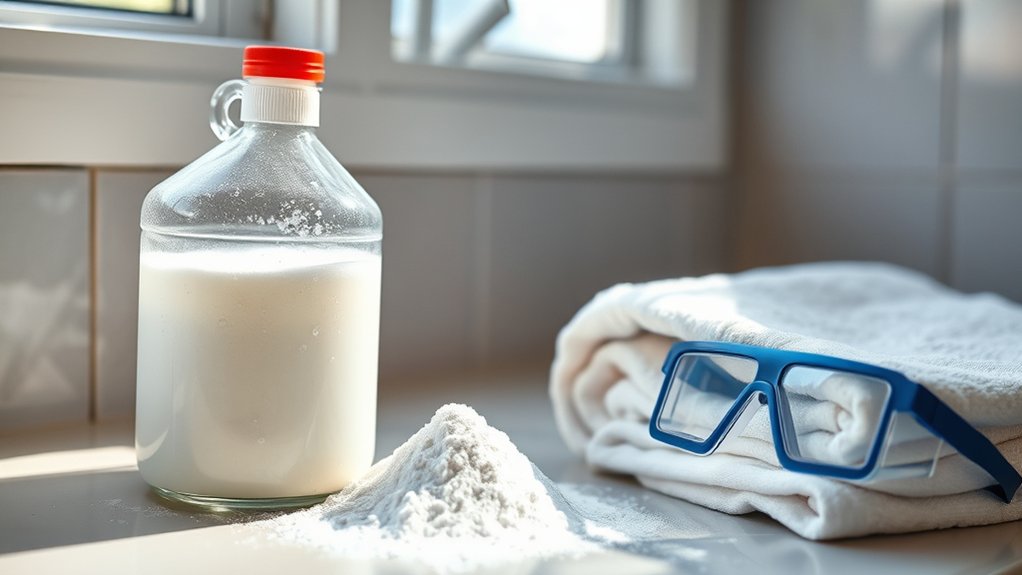
Avoid combining bleach and baking soda in your laundry to prevent releasing toxic chlorine gas and diminishing their cleaning effectiveness.
Experts emphasize using bleach solely diluted in water to maintain safety and enhance its disinfecting power.
Experts advise diluting bleach in water to ensure safe use and maximize its disinfecting effectiveness.
Baking soda excels independently in deodorizing and improving detergent cleaning, so apply it separately to avoid neutralization.
For best laundry results, add bleach during the wash cycle, then incorporate baking soda either before or after, never simultaneously.
Adhering to these protocols preserves each agent’s chemical integrity and guarantees safe cleaning.
Experts also recommend considering alternative cleaning agents like hydrogen peroxide or oxygen-based products to achieve effective stain removal and deodorizing without risking hazardous reactions.
Prioritize safety by respecting the distinct roles and proper usage of bleach and baking soda in laundry routines.
Safe Laundry Alternatives to Mixing Bleach and Baking Soda
Although mixing baking soda and bleach poses safety risks due to toxic chlorine gas release, you can still achieve effective laundry results by selecting safer alternatives.
For stain removal without hazardous reactions, avoid combining these chemicals and opt for proven substitutes.
Consider these safe alternatives:
- Use hydrogen peroxide as a potent oxidizer for stain removal, compatible with baking soda.
- Apply oxygen-based cleaners like OxiClean to boost cleaning power without toxic fumes.
- Incorporate Lysol Power Foam for disinfecting laundry areas, ensuring safety and efficacy.
- Choose eco-friendly options such as Method Spray for thorough cleaning with minimal environmental impact.
These alternatives provide effective disinfecting and stain removal while safeguarding your health and the environment, eliminating risks associated with mixing bleach and baking soda.
How to Use Baking Soda Effectively on Its Own
You can easily boost your detergent’s performance and neutralize odors by adding half a cup of baking soda directly into the washer tub. It’s a simple trick that makes a noticeable difference.
When it comes to tackling stains, try making a paste with equal parts baking soda and water. Apply it to the stained area and let it sit for about 30 minutes before washing. This gives the baking soda time to work its magic.
Using baking soda regularly also helps soften your fabrics. It does this by balancing the water’s alkalinity, and best of all, you don’t have to worry about the risks that come with mixing baking soda and bleach.
Baking Soda Benefits
Baking soda acts as a mild alkaline agent that enhances laundry performance by neutralizing odors and brightening fabrics without harsh chemicals. You can maximize its benefits by integrating it properly into your routine.
- Add half a cup of baking soda directly to the washer tub to neutralize odors and soften fabrics by balancing pH levels.
- Combine baking soda with your detergent to boost cleaning power, allowing you to reduce detergent use.
- Use baking soda as a gentle abrasive in a water paste for spot cleaning, avoiding harsh scrubbing on stains.
- Never mix baking soda with bleach directly; their interactions can reduce effectiveness and cause unwanted reactions.
Using baking soda alone optimizes cleaning and deodorizing while keeping fabrics whiter without relying on bleach.
Stain Removal Tips
Combining baking soda with other laundry agents like bleach can interfere with its stain-fighting properties, so using it on its own offers a more controlled approach.
To target stains effectively, mix equal parts baking soda and water to create a paste, then apply it directly to the affected fabric for about 30 minutes before laundering.
Baking soda’s mild abrasive nature excels at breaking down grease and food residues without damaging fabrics. Always test the paste on a hidden area first to avoid discoloration.
For overall laundry cleaning, add half a cup of baking soda alongside your detergent to enhance stain removal and neutralize odors, especially on gym clothes or pet bedding.
Avoid mixing baking soda with bleach to maintain its best stain removal performance.
Laundry Softening Effects
Although many laundry additives promise softness, using baking soda alone offers a straightforward method to achieve fabric softening. Baking soda regulates pH levels in laundry water, enhancing detergent performance and softening fabrics without bleach.
To use baking soda effectively:
- Add half a cup directly into the washing machine tub at the wash cycle start.
- Utilize its deodorizing power to neutralize odors from sweat and pets.
- Reduce mineral buildup in hard water, improving fabric texture and washing efficiency.
- For stain removal, create a paste with water, apply, wait 30 minutes, then wash.
Baking soda’s mild alkalinity balances pH levels, ensuring soft laundry without chemical risks associated with bleach mixing.
How to Use Bleach Correctly Without Risk
When you use bleach in laundry, diluting it properly is essential to prevent fabric damage and secure effective cleaning. Always dilute bleach by mixing ¼ cup in a gallon of water for pre-soaking.
Properly dilute bleach with ¼ cup per gallon of water to protect fabrics and ensure effective cleaning.
Add bleach only to the washing machine’s designated dispenser to avoid hazardous chemical reactions. Consult fabric care labels before applying bleach, as some materials can’t tolerate it and may degrade.
After washing, rinse clothes thoroughly to eliminate any residual bleach, reducing the risk of skin irritation and fabric weakening.
Ascertain safe cleaning by using bleach in a well-ventilated area to minimize inhalation hazards.
Following these precise steps helps you utilize bleach effectively while maintaining fabric integrity and protecting your health.
Simple Tips to Keep Your Laundry Routine Safe and Effective
To maintain safety and maximize effectiveness in your laundry routine, you must keep bleach and baking soda separate to prevent hazardous chlorine gas formation.
Follow these technical tips for safe, effective results:
- Add about ½ cup of baking soda directly to the washer tub per load for deodorizing and fabric softening. Just be sure not to mix it with bleach.
- Dilute bleach properly, using ¼ cup per gallon of water, to whiten clothes safely and protect fabric integrity.
- Use baking soda paste for targeted stain treatment. Mix it with water, apply to stains, then wash according to fabric care instructions.
- Regularly clean your washing machine to remove buildup. This helps cleaning agents and detergents perform at their best.
Frequently Asked Questions
Can Baking Soda Neutralize Bleach Spills on Skin or Surfaces?
Yes, you can use baking soda to neutralize bleach spills on skin or surfaces.
When bleach contacts your skin, apply a paste made from baking soda and water to counteract its acidity, then rinse thoroughly.
For surfaces, sprinkle baking soda directly on the spill. It absorbs and neutralizes the bleach, making cleanup safer.
Always guarantee proper ventilation during this process to minimize inhalation risks and avoid mixing baking soda directly with bleach.
Does Mixing Baking Soda and Bleach Affect Fabric Colors Differently?
Yes, mixing baking soda and bleach affects fabric colors differently.
Bleach alone lightens colors by breaking down pigments, but adding baking soda changes the pH. This leads to unpredictable chemical reactions that can cause uneven fading or discoloration.
You shouldn’t expect consistent color results because the mixture can damage fibers and compromise fabric integrity.
For precise color care, it’s best to avoid combining them and use each product separately.
Are There Any Laundry Detergents That Contain Both Bleach and Baking Soda?
Picture a detergent bottle’s label, listing ingredients clearly: you rarely see bleach and baking soda combined.
They usually appear separately because mixing them can cause chemical neutralization, reducing cleaning power.
Most manufacturers avoid blending these two in one formula to maintain stability and safety.
How Should I Store Baking Soda and Bleach to Prevent Accidental Mixing?
You should store baking soda and bleach in separate, clearly labeled containers to avoid accidental mixing.
Keep them in a cool, dry, well-ventilated area away from direct sunlight.
Use childproof locks or place them on high shelves, out of reach of children and pets.
Always tighten lids securely after use and regularly inspect containers for leaks or damage.
This prevents hazardous reactions and maintains chemical stability.
Can Using Baking Soda After Bleach Washing Improve Fabric Softness?
Yes, using baking soda after bleach washing can improve fabric softness. It neutralizes residual bleach and balances pH levels, preventing fabric stiffness.
Adding about half a cup during the rinse cycle helps remove detergent residues and bleach odors, enhancing softness.
Make sure to rinse thoroughly after bleaching before adding baking soda to avoid chemical reactions.
This method leverages baking soda’s mild abrasive and neutralizing properties to optimize fabric texture safely.
Conclusion
Mixing bleach and baking soda in your laundry is like combining oil and water. Though they coexist, their union sparks unseen reactions, releasing harmful chlorine gas and dulling their cleaning power.
Just as a skilled chemist respects each element’s nature, you should use bleach and baking soda separately. This way, you harness their strengths without risking harm.
By understanding their distinct roles, you’ll keep your laundry routine both safe and scientifically sound.