What Does Vinegar Do For Laundry – Simple Breakdown
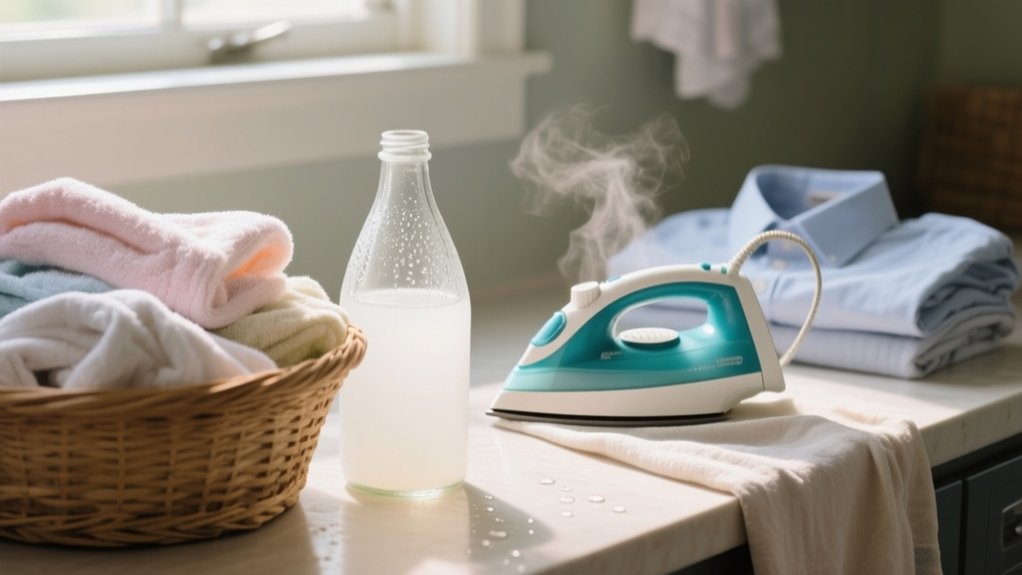
When you add vinegar to your laundry, it naturally softens fabrics, reduces static cling, and cuts stubborn odors like mustiness. It also brightens whites and preserves color vibrancy while preventing soap residue buildup that dulls clothes.
Vinegar works best during the rinse cycle and helps maintain your washing machine by removing mineral deposits. Just use it in moderation to avoid fabric damage. Keep exploring to discover how vinegar enhances every part of your laundry routine.
Key Takeaways
- Vinegar naturally softens fabrics, reduces static cling, and eliminates stubborn odors like mildew and mustiness.
- It breaks down detergent residues and prevents soap scum buildup during the rinse cycle.
- Vinegar brightens whites, restores color vibrancy, and removes yellowing and tough stains effectively.
- Regular use maintains washing machine efficiency by removing buildup and preventing mineral deposits.
- Use vinegar in moderation to avoid fabric weakening, fading, or interference with detergent cleaning power.
What Vinegar Does in Laundry: An Overview
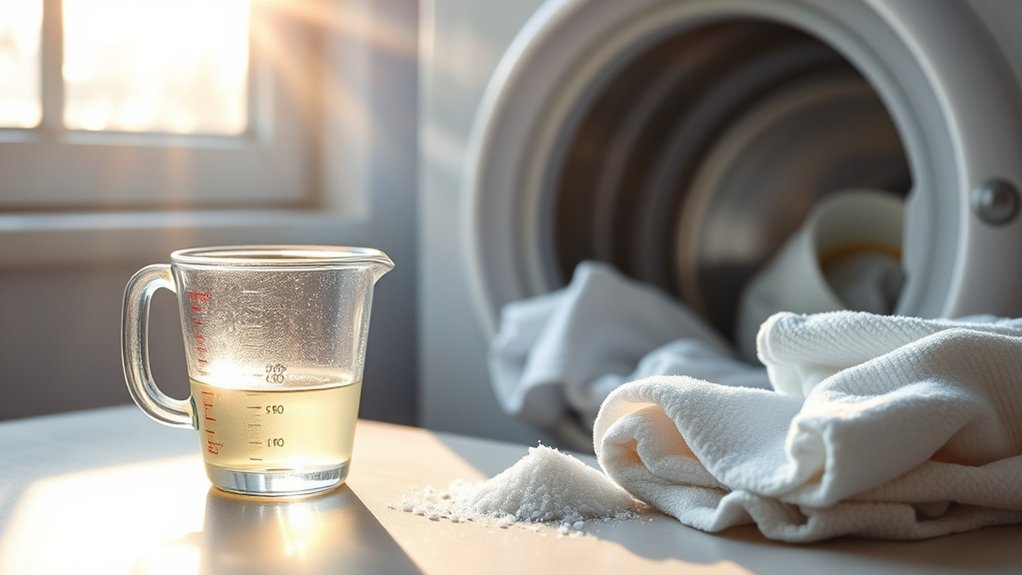
Vinegar transforms your laundry routine by naturally softening fabrics, cutting down static cling, and eliminating stubborn odors like mustiness from towels.
When you add vinegar during the rinse cycle, it breaks down lingering smells and neutralizes leftover detergent, making your clothes feel softer without harsh chemicals. This makes vinegar a smart and eco-friendly alternative among common cleaning solutions.
Adding vinegar in the rinse cycle softens clothes naturally and neutralizes detergent without harsh chemicals.
You’ll also notice your whites and colors look brighter, as vinegar removes yellowing and revitalizes vibrancy.
Plus, using vinegar regularly helps keep your washing machine clean by preventing soap scum and mineral buildup.
How Vinegar Interacts With Detergent in Laundry
Although detergents work hard to remove dirt and stains, they often leave residues behind that can make fabrics feel stiff or cause buildup over time.
When you add vinegar during the rinse cycle of your washing machine, it helps break down these detergent residues, especially from liquid laundry detergent, allowing your clothes to rinse cleaner.
Vinegar neutralizes leftover soap, preventing soap buildup common when too much detergent is used. This process enhances the overall wash effectiveness by ensuring excess detergent is thoroughly rinsed out.
Using vinegar alongside the right amount of liquid laundry detergent maximizes cleaning, helping your fabrics feel fresher.
Just remember, vinegar works best as a rinse aid, complementing detergents rather than replacing them in your laundry routine.
How Vinegar Softens Fabrics and Reduces Static
You’ll notice your clothes feel softer when you add vinegar during the rinse cycle. That’s because it neutralizes detergent residue, which can make fabrics stiff.
Plus, vinegar helps reduce static cling, especially in synthetic materials, by balancing pH levels. This natural method keeps your laundry comfortable without relying on harsh chemicals.
Neutralizes Detergent Residue
One simple addition to your rinse cycle can make a big difference in how your clothes feel. Adding vinegar neutralizes detergent residue that often lingers on fabrics after washing. This leftover buildup can make clothes stiff or scratchy, but vinegar breaks it down, restoring softness and comfort.
Plus, it helps reduce static cling by ensuring excess detergent is fully rinsed away.
Here’s what happens when you add vinegar to your laundry:
- Neutralizes detergent residue, preventing stiffness
- Reduces static cling for smoother fabrics
- Enhances overall cleanliness, preserving fabric texture
Natural Fabric Softening
Beyond just neutralizing detergent residue, vinegar serves as a natural fabric softener that makes your clothes feel noticeably softer and more comfortable.
The acetic acid in vinegar penetrates fabric fibers, breaking down soap buildup that commercial fabric softeners often mask rather than remove.
By using vinegar in your rinse cycle, you’ll reduce stiffness, especially in cotton towels and sheets, enhancing their texture without harsh chemicals.
Vinegar helps maintain fabric softness over time, so your laundry stays cozy and fresh.
Unlike traditional fabric softeners, vinegar won’t leave residue or buildup, making it a practical and eco-friendly choice.
Incorporate vinegar into your laundry routine, and you’ll experience softer, more manageable clothes, all while avoiding the downsides of commercial fabric softeners.
Static Cling Reduction
Although static cling can be frustrating, vinegar offers a simple and effective way to reduce it naturally. When you add vinegar during the rinse cycle, it neutralizes detergent residues that cause static cling and softens your fabrics.
The acetic acid in vinegar lowers friction between fibers, which helps prevent static buildup, especially in synthetic materials.
Here’s how vinegar tackles static cling:
- Acts as a natural fabric softener without harsh chemicals
- Reduces friction between fibers, minimizing static electricity
- Works best when used regularly, enhancing softness and reducing cling
Can Vinegar Really Deodorize Laundry?
You might be wondering if vinegar can really get rid of those stubborn odors in your laundry.
Well, vinegar works best when you soak your clothes in a strong solution mixed with hot water.
But if you just add it directly to the wash cycle, it often gets diluted and doesn’t work as well.
Vinegar’s Deodorizing Limitations
While vinegar can help neutralize some odors in your laundry, it doesn’t work well as a standalone deodorizer when added directly to the washing machine. Its potency gets diluted, limiting deodorizing effectiveness.
You’ll find better results using vinegar as a pre-treatment or soaking agent rather than relying solely on it.
Keep in mind:
- Vinegar works best to target specific odors like underarm smells or mildew.
- Using vinegar alone won’t replace proper detergent for thorough cleaning.
- Soaking clothes in hot water with vinegar enhances odor removal more than just adding it to the wash cycle.
Incorporate vinegar wisely to complement your laundry routine, but don’t expect it to fully deodorize clothes on its own.
Effective Soaking Methods
Since vinegar contains acetic acid that breaks down odor-causing compounds, soaking your clothes in a mixture of hot water and half a cup of vinegar can effectively neutralize stubborn smells.
This method works better than adding vinegar directly to the washing machine, as soaking allows the acid to penetrate fabrics deeply.
For effective cleaning and deodorizing, let your clothes soak for at least 30 minutes.
Vinegar targets musty and persistent odors, making it ideal for gym clothes, towels, or any fabric prone to odor buildup.
Regularly soaking laundry in vinegar not only freshens fabrics but also prevents odors from setting in, especially in damp conditions.
Incorporating this simple soaking technique into your laundry routine boosts cleaning power and keeps your clothes smelling fresh.
Vinegar Concentration Importance
Although vinegar’s acetic acid has deodorizing properties, it won’t work effectively unless used at the right concentration. Simply adding vinegar to your washing machine won’t cut it. You need to control the vinegar concentration for real results.
Soaking clothes in hot water with about half a cup of vinegar lets the acetic acid neutralize odors more thoroughly.
Keep these tips in mind:
Use proper dilution: too little vinegar won’t deodorize, and too much can damage fabrics.
Let vinegar sit on fabrics during soaking for better odor removal.
Add vinegar during the rinse cycle to break down detergent residues and freshen clothes.
How Vinegar Brightens Colors and Whites
When you add white distilled vinegar to your laundry, its acetic acid works to brighten whites and make colors pop.
Vinegar brightens white clothes by removing yellowing and stains, restoring their original brightness. It also lifts food stains like ketchup and BBQ sauce, improving your garments’ overall appearance.
Vinegar removes yellowing and tough stains, restoring whites to their bright, fresh look.
For colored fabrics, vinegar helps maintain and renew vibrancy, preventing fading over time.
Moreover, it filters off lint and pet hair from dark clothes, making them look cleaner and fresher.
Using vinegar regularly in your laundry routine is a simple, natural way to keep your clothes looking crisp and colorful without harsh chemicals.
This practical method guarantees your whites stay dazzling and your colors stay vivid wash after wash.
Using Vinegar to Remove Mildew and Musty Odors
Beyond brightening colors and whites, vinegar also tackles stubborn mildew and musty odors that can cling to your laundry. When you add ½ cup of vinegar to your wash, it breaks down mildew and neutralizes those unpleasant smells, especially on damp items like towels.
Vinegar’s acetic acid guarantees fresh-smelling fabrics by preventing mildew from setting in after accidental dampness.
Here’s how vinegar helps with mildew and odors:
- Restores fluffiness and freshness to towels and damp fabrics
- Neutralizes musty odors so they don’t linger
- Prevents mildew from developing on clothes and linens
Using vinegar regularly in your laundry routine keeps your fabrics fresh and mildew-free without harsh chemicals.
Vinegar’s Role in Washing Machine Maintenance
If you want your washing machine to run efficiently and last longer, incorporating vinegar into its maintenance routine is a smart move.
Vinegar effectively removes soap scum and chemical buildup that can clog your washing machine’s components, improving its overall performance.
Vinegar clears soap scum and buildup, keeping your washing machine running smoothly and efficiently.
Every three months, run an empty cycle with two cups of vinegar to clean fabric detergent dispensers and prevent mineral deposits from hard water.
This simple step helps maintain clean water flow during washes, boosting the freshness of your laundry.
Regular vinegar maintenance also protects your washing machine’s interior from corrosion and buildup, extending its lifespan.
Risks of Using Too Much Vinegar on Fabrics
While vinegar offers many benefits for washing machine upkeep, using too much of it directly on your fabrics can cause problems.
Adding excessive vinegar to a load of laundry may weaken delicate fibers like cotton and linen, leading to wear and tear over time.
It can also affect the colors of pH-sensitive dyes, causing fading or discoloration in your favorite clothes.
Plus, too much vinegar can interfere with your detergent’s cleaning power, reducing overall effectiveness.
Be mindful of these risks when using vinegar in laundry:
- Fiber damage from acidic buildup
- Color fading or alteration
- Reduced detergent performance
Using vinegar wisely guarantees your fabrics stay soft, vibrant, and clean without compromising their quality or your washing machine’s function.
Tips for Getting the Best Results With Vinegar in Laundry
To get the best results with vinegar in your laundry, you should tailor its use to your specific fabrics and load sizes.
Start by soaking clothes in hot water with half a cup of vinegar to boost deodorizing effects before washing.
Add vinegar during the rinse cycle to neutralize leftover laundry soap and soften fabrics, preventing buildup.
Use only the recommended amount of detergent, about two tablespoons per load, as too much soap reduces vinegar’s effectiveness and can stiffen fabrics.
Every three months, run an empty wash cycle with two cups of vinegar to clean your machine and remove soap scum.
You can also experiment by combining vinegar and baking soda for an extra cleaning boost.
Adjust vinegar amounts depending on your load and fabric type for ideal freshness and softness.
Frequently Asked Questions
Can Vinegar Be Used on All Fabric Types Safely?
You can’t use vinegar safely on all fabric types. While it works great as a natural softener and deodorizer for cotton, polyester, and blends, it can damage delicate fibers like wool, silk, and cashmere because of its acidity.
You should always check the care labels and test vinegar on a hidden spot first.
Avoid using it on pH-sensitive dyes or protein-based fabrics to prevent color fading and fiber weakening.
Does Vinegar Affect Synthetic Fabrics Differently Than Natural Ones?
You might think vinegar is a miracle cleaner that treats all fabrics the same, but it actually behaves quite differently with synthetics versus natural fibers.
With synthetic fabrics like polyester, vinegar can cause fading and color changes if you’re not careful.
Natural fibers, on the other hand, absorb vinegar better, which can brighten and soften them.
How Does Vinegar Compare to Commercial Fabric Softeners?
Vinegar softens your clothes by breaking down detergent residue without coating fabrics like commercial softeners do. You’ll avoid chemical buildup and synthetic fragrances, which makes vinegar gentler on sensitive skin.
It’s also eco-friendly and cheaper.
Plus, vinegar helps keep your washing machine cleaner by preventing mineral buildup, unlike many commercial softeners that can leave residue over time.
Can Vinegar Help Remove Pet Stains or Odors Specifically?
Did you know vinegar’s acetic acid can neutralize the ammonia in pet urine, effectively removing odors?
Yes, vinegar helps you tackle pet stains and smells by breaking them down and lifting them from fabrics.
Soak the area in equal parts water and vinegar for 30 minutes, then blot.
Adding half a cup to your laundry deodorizes and cleans pet-stained clothes, keeping your fabrics fresh and odor-free without harsh chemicals.
Is Vinegar Safe to Use in Cold Water Laundry Cycles?
Yes, you can safely use vinegar in cold water laundry cycles. It helps remove odors and detergent residues, softens fabrics, and prevents static cling even when the water’s cold.
For best results, add diluted vinegar during the rinse cycle. This approach also helps maintain color brightness and prevents fading.
Just remember, vinegar’s deodorizing power is milder in cold water, but it still offers plenty of laundry benefits without any risks.
Conclusion
Vinegar is a powerhouse in your laundry routine, softening fabrics, reducing static, and brightening colors, all without harsh chemicals. Did you know just half a cup can tackle odors and mildew? It makes your clothes fresher and your washer cleaner.
But don’t overdo it; too much vinegar can weaken fibers. Use it wisely, and you’ll save money while keeping your laundry fresh and vibrant with a simple, natural boost.