How To Use Vinegar In Laundry – The Right Way
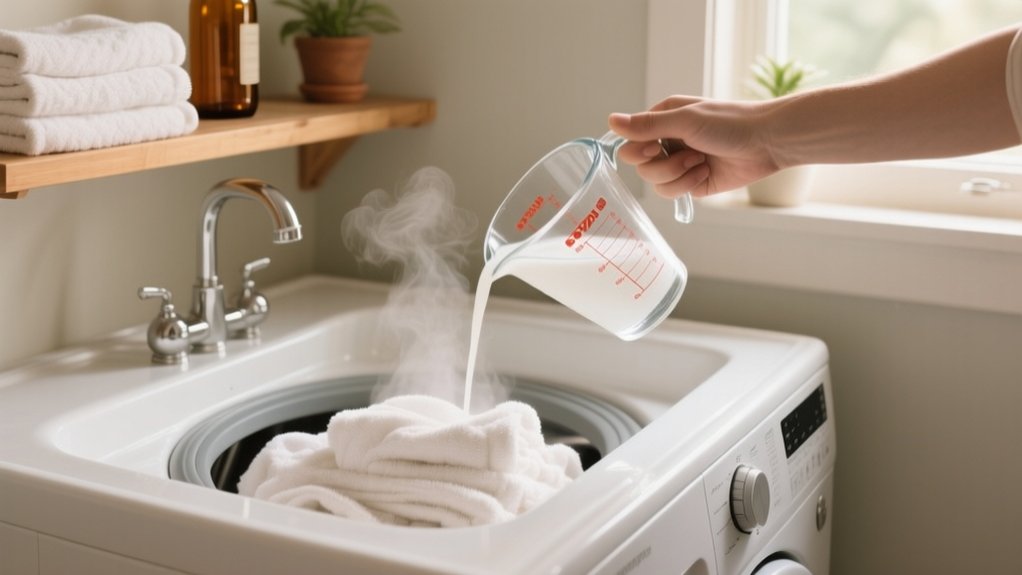
You can use white vinegar in your laundry to break down stains, remove odors, and soften fabrics. Add ½ cup of vinegar during the rinse cycle to neutralize detergent residue and deodorize clothes.
Pretreat stains by soaking them in an equal vinegar-water mix for 30 minutes, but always test on a hidden spot first to avoid damage. Be cautious using vinegar on delicate or synthetic fabrics.
Keep following for tips on fabric safety and ideal vinegar use to protect your clothes.
Key Takeaways
- Use ½ cup of white vinegar in the rinse cycle to remove detergent residue and soften clothes without fabric softeners.
- Pretreat stains by soaking in equal parts vinegar and water for 30 minutes, then rinse thoroughly before washing.
- Avoid vinegar on delicate fabrics like wool, silk, cotton, linen, and synthetics to prevent fiber damage and discoloration.
- Soak moldy or mildewed fabric in a hot vinegar solution for one hour after brushing off spores to eliminate odors and stains.
- Always test vinegar solutions on a hidden fabric area for colorfastness and fiber strength before full application.
How Does Vinegar Clean Your Laundry?
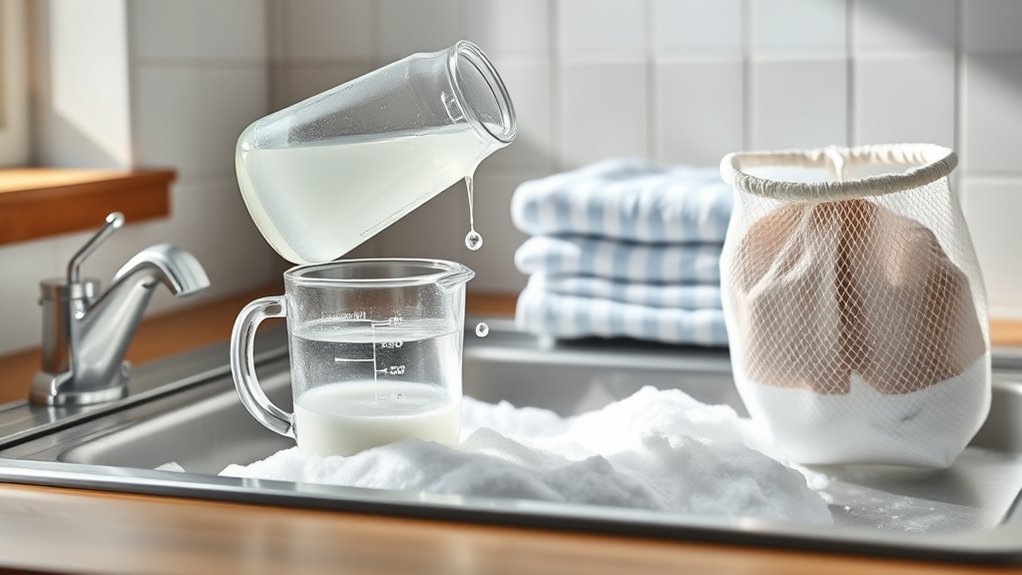
Vinegar cleans your laundry in several effective ways thanks to its mild acidity. When you use vinegar and water, it helps break down stains and odors, especially those caused by sweat or coffee.
Adding vinegar during the rinse cycle neutralizes leftover detergent, which can make your clothes feel softer. For better stain removal and deodorizing, soak your clothes in a vinegar-water solution before washing.
This allows the acetic acid to penetrate deeply, tackling mold and mildew on moisture-exposed fabrics.
Just be careful not to overuse vinegar, as its acidity can weaken cotton or linen fibers if applied too often or in high amounts.
Using vinegar thoughtfully guarantees your laundry comes out cleaner and fresher without damage.
Which Stains Does Vinegar Work Best On?
Anyone dealing with stubborn stains like oil, grass, coffee, blood, or sweat will find vinegar especially useful when mixed with water in equal parts. This solution works best on low-pH stains and helps break them down effectively.
Vinegar tackles these common stains by loosening their hold on fabric fibers, making them easier to wash out.
Here are some stains where vinegar excels:
- Oil and grease stains
- Grass marks from outdoor activities
- Coffee spills on clothes
- Sweat and deodorant residue
Before using vinegar on your laundry, test it on a hidden spot to avoid discoloration.
Vinegar’s natural acidity gently lifts stains without harsh chemicals, making it a safe and practical choice for your stain-fighting toolkit.
How to Pretreat Stains With Vinegar
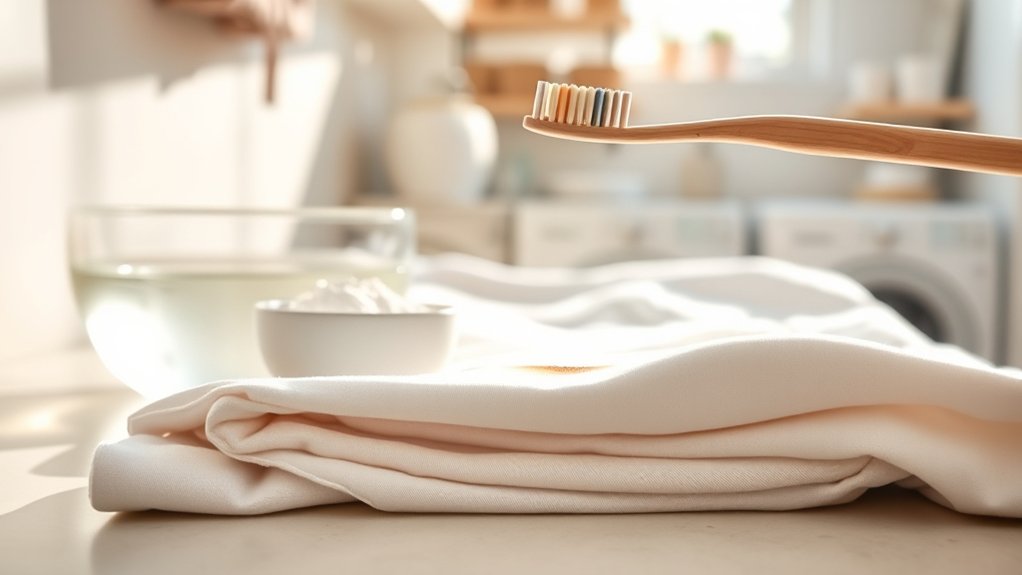
To pretreat stains with vinegar, start by mixing equal parts white vinegar and water to create your solution. This makes it gentle enough to use on most fabrics without causing damage.
Now, focus on low-pH stains like oil, grass, or blood. You’ll want to soak the affected area for about 30 minutes before washing. This gives the vinegar time to break down the stain.
Just a quick tip—always test the solution on a hidden spot first to make sure it won’t discolor your fabric.
And don’t forget to follow proper soaking and rinsing methods for the best results.
Preparing Vinegar Solution
Start by mixing equal parts of white vinegar and water to create a simple yet effective solution for pretreating stains. This vinegar solution works best on low-pH stains like oil, grass, and coffee.
Here’s how to prepare and use it:
Soak the stained fabric in the vinegar-water mix for at least 30 minutes to break down the stain. For tougher spots, apply a baking soda paste after soaking; vinegar and baking soda together boost cleaning solutions.
When tackling mold or mildew, brush off spores first, then soak the item in vinegar mixed with hot water for an hour.
Always rinse thoroughly after pretreatment to remove vinegar residue before washing as usual.
This method guarantees your vinegar solution is both safe and powerful for stain removal.
Targeting Low-pH Stains
When you deal with low-pH stains like oil, grass, or coffee, vinegar can be an effective pretreatment solution.
Mix equal parts white vinegar and water to create your stain-fighting solution. Before treating the entire stain, always test this mixture on a hidden fabric area to verify color fastness.
Soak the stained fabric in the vinegar solution for at least 30 minutes to help break down the stain effectively.
After soaking, rinse thoroughly with water to remove any vinegar residue.
Avoid combining vinegar and bleach, as this can produce harmful fumes.
Finally, wash the fabric with a high-performance detergent to fully eliminate the low pH stain.
This method offers a safe, practical way to tackle tough stains before your regular laundry cycle.
Soaking And Rinsing Methods
How exactly can you use vinegar to pretreat stains effectively? Start by mixing equal parts white vinegar and water. Then soak the stained fabric for about 30 minutes before washing.
For mold or mildew, brush off spores first. After that, soak the fabric in vinegar and hot water for one hour.
During rinsing, add ½ cup of vinegar to neutralize detergent residue and soften fabric. Remember, avoid the fabric softener dispenser to protect your washer.
- Soak stains in a vinegar-water mix for 30 minutes
- Brush and soak moldy fabric for one hour in hot vinegar solution
- Add vinegar during the rinse cycle for softness and residue removal
- Always test on a hidden spot to check colorfastness
These soaking and rinsing methods guarantee effective stain pretreatment and fabric care.
How to Soak Clothes With Vinegar for Deodorizing
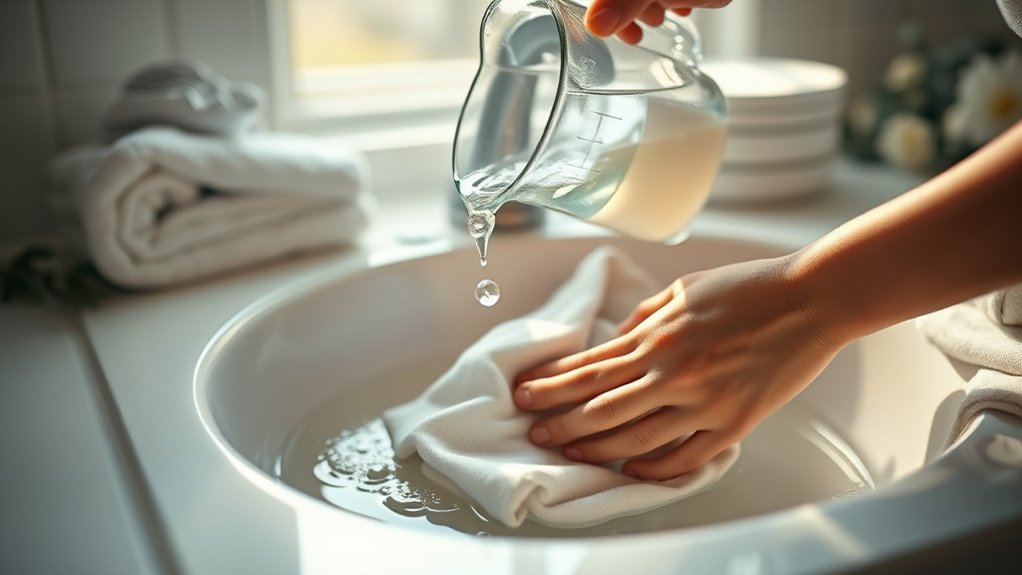
Why settle for lingering odors when you can easily soak your clothes in a vinegar solution to refresh them? Fill a basin or sink with hot water and add half a cup of white vinegar. Submerge your clothes fully and let them soak for at least 30 minutes.
This simple step helps neutralize stubborn odors by allowing the acetic acid in vinegar to break down the smell-causing compounds. For tougher odors, feel free to extend the soaking time.
Acetic acid in vinegar effectively breaks down stubborn odors, and longer soaking can tackle tougher smells.
Be certain to dilute the vinegar properly to protect your fabric. Before soaking, test the solution on a small, hidden area to verify it won’t affect color or material.
After soaking, rinse your clothes thoroughly to remove any vinegar residue and avoid a lingering scent. This method keeps your laundry fresh and odor-free.
Adding Vinegar in the Rinse Cycle: When and How
Although adding vinegar during the rinse cycle might seem unconventional, it’s a simple way to neutralize leftover detergent and boost fabric softness. When adding vinegar in the rinse cycle, use about 1/2 cup of white vinegar to get the best results.
Here’s what you should keep in mind:
- Vinegar helps remove detergent residue, reducing stiffness and static cling.
- It deodorizes clothes effectively, especially when used with hot water.
- Always add vinegar during the rinse cycle, not in the fabric softener dispenser, to avoid machine damage.
- Monitor detergent amounts; too much detergent can counteract vinegar’s benefits.
Avoid Adding Vinegar to Fabric Softener Dispensers
You shouldn’t add vinegar to fabric softener dispensers because its acidity can corrode seals and hoses, which might cause leaks and damage.
Instead, try adding vinegar directly during the rinse cycle. This way, you’ll protect your machine and still get the best results.
Plus, adding it this way avoids mixing vinegar with other products that could reduce how well it works.
Corrosive Effects On Dispensers
Since vinegar is acidic, adding it to your fabric softener dispenser can cause corrosion over time. This can weaken important parts and affect your washing machine’s performance.
Here’s what happens when vinegar interacts with your dispenser:
It corrodes dispenser components, shortening their lifespan.
Seals and hoses may weaken, increasing leak risks.
Corrosion can lead to improper dispensing of fabric softener.
Damage might result in costly repairs or replacements.
To protect your washer, avoid putting vinegar directly into the fabric softener dispenser.
Instead, use other methods to add vinegar safely during your laundry routine.
This way, you’ll keep your dispenser intact and maintain your machine’s efficiency without risking damage from vinegar’s corrosive effects.
Alternative Vinegar Usage Methods
When you want to use vinegar in your laundry without risking damage to your washing machine, add it directly to the rinse cycle instead of the fabric softener dispenser.
Pour 1/2 cup of white vinegar during the rinse to soften fabrics gently and boost cleaning performance without harsh chemicals.
Avoid the fabric softener compartment because vinegar can corrode components and reduce detergent effectiveness.
For stain treatment, dilute vinegar with equal parts water before soaking, protecting your fabrics from damage.
Always test vinegar on a hidden area first to check for color fastness.
These alternative usage methods guarantee you get the benefits of vinegar in laundry safely, improving cleaning performance without compromising your machine or clothes.
How to Test Fabrics for Vinegar Safety
How can you guarantee vinegar won’t harm your clothes before using it in laundry? Testing fabrics for vinegar safety is key to proper fabric care. Here’s how you can do it effectively:
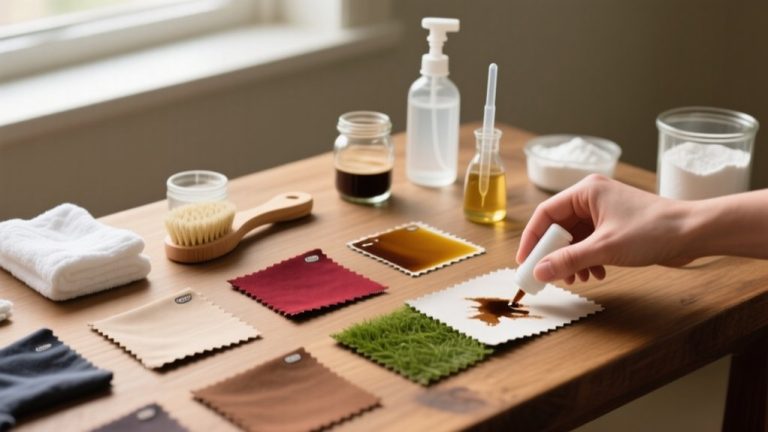
Mix equal parts vinegar and water, then apply to a hidden fabric spot. Check for color changes after 10 minutes.
For cellulose fibers like cotton or linen, soak a small section in vinegar. Avoid vinegar if the fabric weakens or fades.
Always read garment care labels for warnings against acidic substances like vinegar.
If the fabric is protein-based (wool, silk), skip vinegar because its acidity can damage fibers.
What Fabrics Should You Avoid Using Vinegar On?
You should avoid using vinegar on fabrics that are sensitive to acidity, like cotton and linen, because it can weaken their fibers over time.
When it comes to protein-based materials such as wool and silk, vinegar’s high acidity might cause fading or even damage.
Also, be careful with synthetic fabrics like nylon and elastane.
Vinegar can lead to fiber breakage, especially if you use it repeatedly.
Fabrics Sensitive To Acidity
Although vinegar works well for many laundry needs, you should avoid using it on fabrics sensitive to acidity. The acidic nature of vinegar can weaken or damage certain materials over time.
Here are key fabrics sensitive to acidity you should be cautious with:
- Cotton, linen, and rayon: Vinegar can weaken their cellulose fibers.
- Wool, cashmere, and silk: These protein-based fibers can be damaged.
- Fabrics with pH-sensitive dyes: Colors may fade or discolor.
- Nylon and elastane: Durability may decrease, especially in hard water.
Always check care labels before using vinegar to confirm it won’t harm the fabric’s integrity or color.
Being mindful of these fabrics sensitive to acidity helps you maintain your clothes’ quality while using vinegar safely.
Impact On Protein Fibers
Since vinegar’s high acidity can weaken protein-based fibers, you should avoid using it on delicate fabrics like wool, cashmere, and silk.
These fabrics rely on protein fibers that are particularly sensitive to acidic substances, and vinegar can cause fiber breakage, weakening the fabric’s structure.
Over time, repeated exposure to vinegar may lead to fading and deterioration, altering the texture and appearance negatively.
To protect your garments, always check the care labels before using vinegar in your laundry routine.
Avoid applying vinegar directly or frequently on these delicate materials to maintain their quality and longevity.
Risks For Synthetic Materials
When using vinegar in your laundry, be cautious with synthetic fabrics like nylon, spandex, rayon, and acetate. Their fibers can suffer damage from its high acidity.
Vinegar can break down synthetic fibers, weakening your garments and shortening their lifespan.
Here are key risks to keep in mind:
- Nylon fibers may break down, reducing fabric durability.
- Spandex and elastane lose elasticity and structural strength.
- Rayon and acetate fibers weaken, leading to fabric damage.
- Synthetic dyes risk fading or discoloration over time.
To protect your clothes, avoid vinegar on these materials or use it sparingly and diluted.
Understanding how vinegar interacts with synthetic fibers helps you keep your laundry fresh without compromising fabric quality.
Vinegar vs. Commercial Detergents: Which Cleans Better?
How well does vinegar stack up against commercial detergents in cleaning your laundry?
While vinegar offers mild stain removal and deodorizing benefits, it doesn’t match the cleaning power of commercial detergents. Brands like Tide are specifically formulated to tackle tough stains and odors effectively, delivering an odorless, thorough clean.
Vinegar’s acidic nature can even weaken fabrics such as cotton and linen, which commercial detergents are designed to preserve.
Using vinegar alongside commercial detergents can reduce their effectiveness, so it’s better to use them separately. Plus, you’d need excessive amounts of vinegar, five cups or more, to see any significant cleaning results.
For the best laundry outcome, rely on commercial detergents for deep cleaning and reserve vinegar for occasional deodorizing or fabric softening.
Why You Shouldn’t Mix Vinegar With Baking Soda or Bleach
While vinegar can be a helpful addition to your laundry routine, mixing it with baking soda or bleach can cause more harm than good.
When combined, vinegar and baking soda neutralize each other, canceling out their cleaning powers.
More importantly, mixing vinegar with bleach creates dangerous chlorine gas, which poses serious health risks when inhaled.
Mixing vinegar with bleach produces toxic chlorine gas, posing severe health risks if inhaled.
Moreover, vinegar’s acidity can damage your washing machine components, especially if it interacts with other cleaning agents.
To keep your laundry safe and effective, avoid combining vinegar with these substances.
- Vinegar and baking soda lose cleaning effectiveness when mixed
- Vinegar plus bleach produces harmful chlorine gas
- Acidic vinegar can corrode washing machine parts
- Mixing vinegar with strong detergents reduces stain removal
Stick to using vinegar wisely for the best results.
Frequently Asked Questions
Can Vinegar Damage Washing Machine Components Over Time?
Yes, vinegar can damage washing machine components over time. Its acidity can corrode seals, hoses, and rubber parts, leading to leaks and premature wear.
If you use vinegar too often or in large amounts, it might weaken internal parts and disrupt your machine’s detergent system, lowering performance.
To protect your washer, you should limit vinegar use and avoid pouring it directly into the machine.
This helps keep your appliance running smoothly longer.
Is White Vinegar Safe for Use With Colored Fabrics?
When it comes to white vinegar and colored fabrics, it’s a double-edged sword. You can use it safely, but you’ve got to tread carefully. Always test a hidden spot first to avoid surprises.
Stick to small amounts during the rinse cycle to neutralize detergent without risking fading.
How Does Vinegar Affect the Scent of Laundry Detergent?
Vinegar can dull the scent of your laundry detergent because its acetic acid interacts with the fragrance compounds. If you mix vinegar directly with detergent, you’ll likely notice a muted or off smell after washing.
To keep your clothes smelling fresh, use vinegar separately, like adding it during the rinse cycle. This way, you still neutralize odors without compromising the detergent’s fragrance.
Can Vinegar Help Remove Hard Water Deposits From Clothes?
Yes, vinegar can help remove hard water deposits from your clothes. Its acetic acid breaks down mineral buildup, especially when you add about 1/2 cup during the rinse cycle.
You can also soak garments in a vinegar-water solution before washing to boost its effectiveness.
Just be cautious with delicate fabrics like cotton or nylon, as vinegar might cause damage if used too often or in high concentrations.
What Is the Best Vinegar Type to Use in Laundry?
The best vinegar to use in laundry is white distilled vinegar. Like a trusty tool in your cleaning kit, it’s clear and won’t stain your clothes.
Stick to 5% acetic acid concentration for safe, effective cleaning.
Apple cider vinegar can work but might leave a scent. Avoid balsamic or flavored vinegars since they could discolor fabrics.
Always test on a hidden spot first to make sure your clothes stay vibrant and fresh.
Conclusion
Now that you know how to use vinegar in your laundry, you can confidently freshen and brighten your clothes the right way. Remember, vinegar works wonders on odors and some stains, but always test fabrics first and avoid mixing it with bleach or baking soda.
Think of vinegar as your laundry’s trusty sidekick, like a modern-day butler ready to help without any fuss. Keep these tips in mind, and your laundry routine will be simpler and cleaner.