What Is Laundry Stripping – What to Know
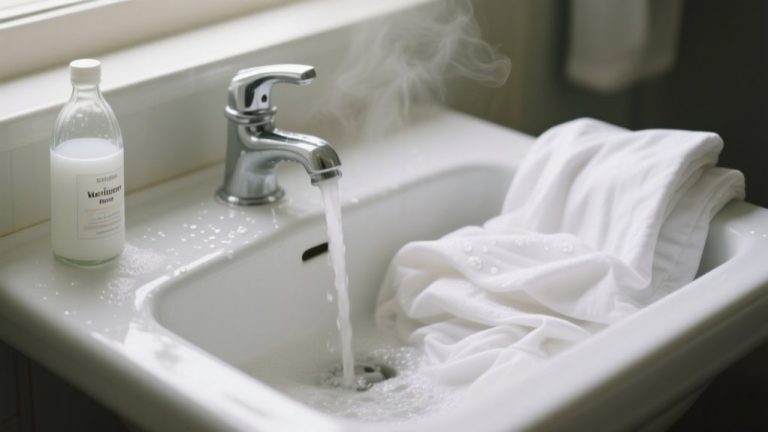
Laundry stripping is a deep-cleaning method that removes built-up detergent, fabric softener, mineral deposits, and body oils from your towels, sheets, and blankets. You soak items in hot water mixed with Borax, washing soda, and powdered detergent for several hours to restore their original cleanliness and absorbency.
It’s especially useful for thicker fabrics but not recommended for delicate ones. If you want to understand how to do it safely and maintain your fabrics longer, keep exploring these practical steps.
Key Takeaways
- Laundry stripping is a deep cleaning method that removes detergent, fabric softener, mineral buildup, and body oils from linens.
- The process involves soaking fabrics in hot water with Borax, washing soda, and powdered detergent for 4-5 hours.
- It restores fabric absorbency and cleanliness, acting as a “factory reset” for towels, sheets, and blankets.
- Stripping is best for thicker fabrics but not recommended for delicate materials like silk, lace, or wool.
- Frequent stripping varies by use, typically monthly for towels and every 2-3 months for regular clothes to maintain freshness.
What Is Laundry Stripping and Why It Matters
Although your regular laundry routine cleans most dirt and grime, it often leaves behind detergent, fabric softener, mineral buildup, and body oils that dull fabrics and reduce absorbency.
Regular laundry cleans dirt but often leaves behind buildup that dulls fabrics and reduces absorbency.
Laundry stripping is a deep cleaning method designed to remove buildup from linens like towels, sheets, and blankets.
By soaking these items in a hot water solution with Borax, washing soda, and powdered detergent for several hours, you effectively restore their original cleanliness and absorbency.
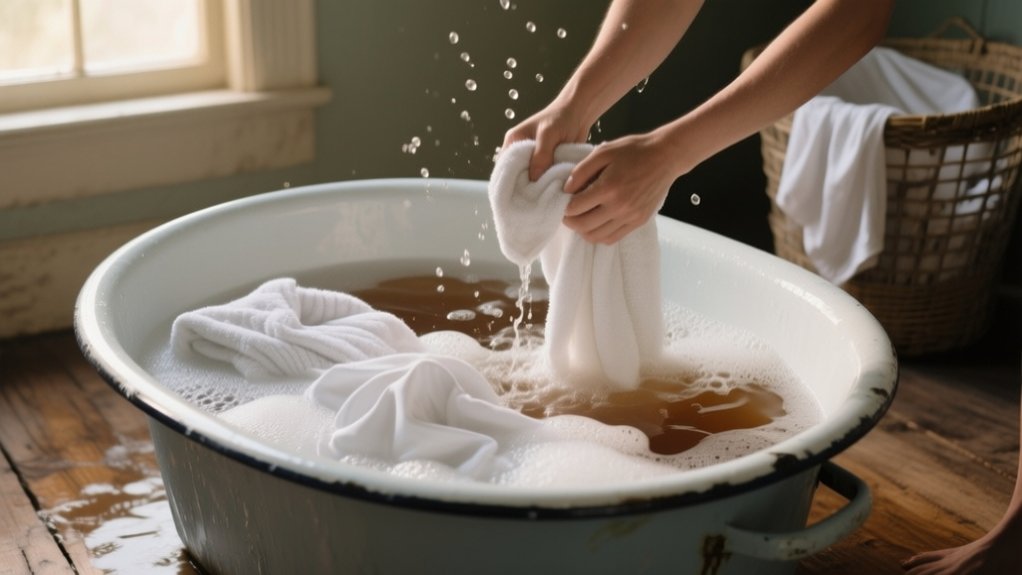
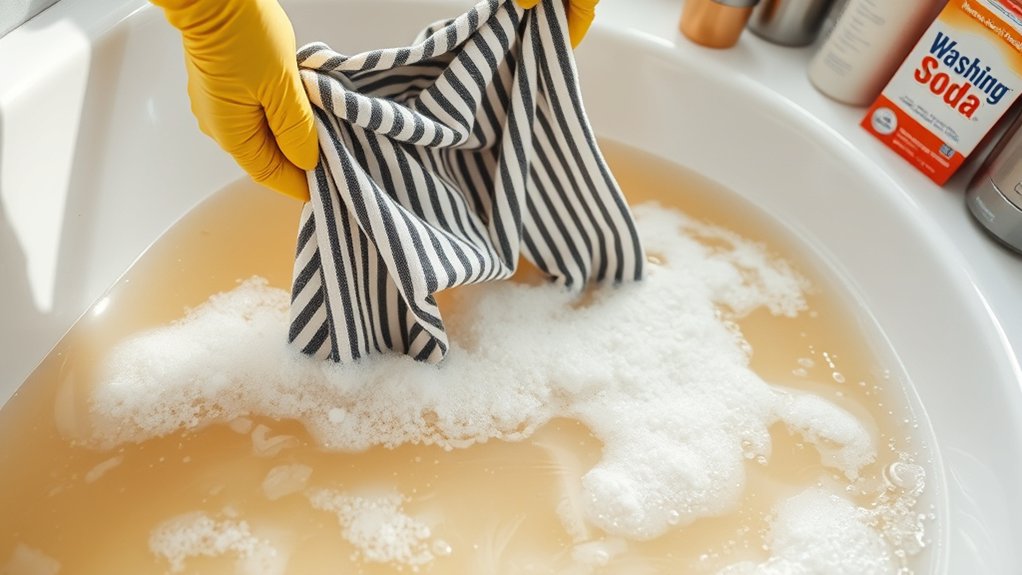
This process is especially useful for thicker fabrics that trap residue, resulting in murky water that shows buildup being removed.
While laundry stripping rejuvenates fabrics and eliminates odors, it doesn’t treat stains, so you’ll want to address those beforehand.
This method acts like a “factory reset” for your textiles, making it a practical step for deep fabric care.
Common Causes of Fabric Buildup in Laundry
You might think using more detergent means cleaner clothes, but actually, overdoing it can leave residue trapped in your fabrics.
Plus, hard water makes things worse by depositing minerals that stick to fibers, especially in towels and sheets.
When you get what’s causing the buildup, it’s easier to tackle it and keep your laundry really fresh.
Overusing Detergent
When detergent gets used in excess, it leaves behind residues that build up on fabrics, causing them to feel stiff and lose absorbency. Overusing detergent is a common cause of accumulated buildup, especially if you don’t measure the amount according to your load size.
Excess detergent creates a sludge that clings to fibers, trapping dirt and odors. That’s why your towels might smell musty or dry poorly.
While hard water can worsen this issue by combining minerals with leftover detergent, the key step is to avoid using too much detergent in the first place.
Always follow dosage instructions on your laundry products, and consider adding an extra rinse cycle to flush out any remaining residues. This helps maintain fabric softness and absorbency over time.
Hard Water Effects
Many households contend with hard water, which contains high levels of minerals like calcium and magnesium that cause fabric buildup over time. This buildup reduces the absorbency of fabrics like towels, making them feel stiff and less effective.
Hard water also interferes with detergents, causing residue to remain on your laundry instead of rinsing out completely. Over time, this mineral accumulation can dull fabrics, leaving linens dingy or yellowed.
To combat hard water effects, you can use water softeners or detergents specifically formulated to break down mineral deposits. These steps help restore your laundry’s absorbency and freshness by preventing and removing buildup caused by hard water.
Addressing hard water is essential for maintaining clean, soft fabrics with peak performance.
Which Laundry Items Benefit Most From Laundry Stripping?
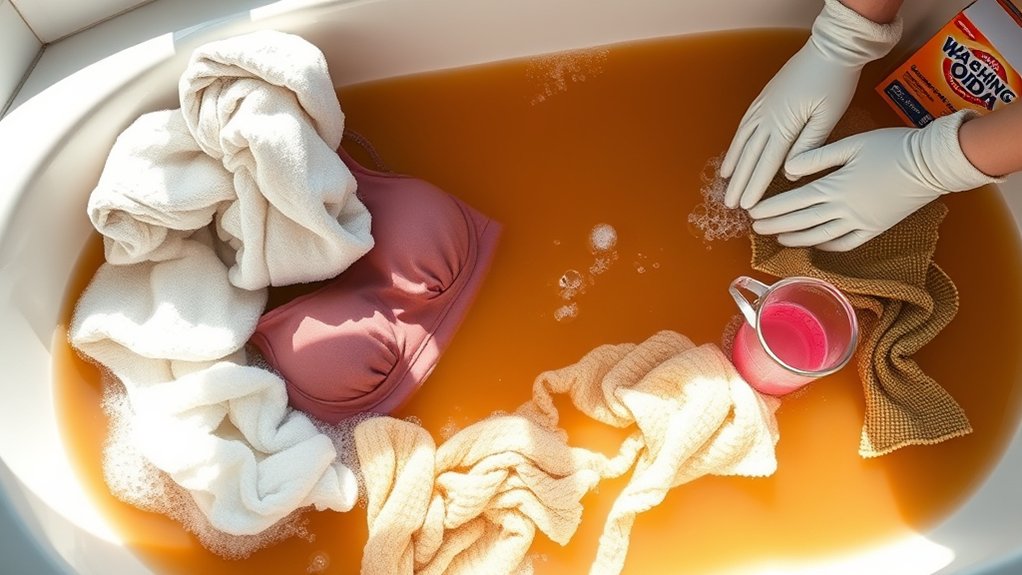
Which laundry items benefit most from stripping?
Laundry stripping works best on thicker fabrics that trap accumulated residue, like towels and sheets. Bath towels, hand towels, and washcloths often hold fabric softener and body oils that reduce absorbency, making stripping especially useful.
Sheets and pillowcases can regain brightness and freshness when they appear dull or musty.
Blankets, duvet covers, and mattress pads also benefit because their dense fibers tend to collect buildup over time.
While laundry stripping delicate fabrics isn’t generally recommended due to potential damage, sturdier items respond well.
Remember, stripping removes residue but won’t eliminate existing stains, so treat those before you strip.
Focus on heavier, residue-prone fabrics to get the most out of laundry stripping.
How to Strip Your Laundry Safely and Effectively
To strip your laundry safely and effectively, start by preparing a hot water solution with washing soda, Borax, and bleach-free powdered detergent.
You’ll want to soak your items for several hours, stirring occasionally to help loosen the buildup and keep an eye on how cloudy the water gets.
Once you’ve finished soaking, make sure to rinse your clothes thoroughly.
Then, run a clean wash cycle without any detergent to wash away any leftover residue.
This way, your laundry will come out fresh and clean!
Preparing The Stripping Solution
Start by filling a large tub halfway to three-quarters full with hot water to break down fabric buildup effectively.
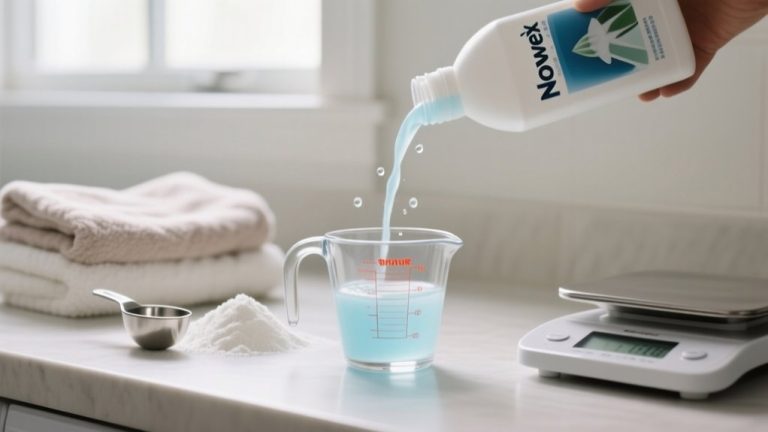
When preparing the stripping solution, add ¼ cup of washing soda, ¼ cup of Borax, and ½ cup of powdered laundry detergent without bleach. Stir gently until everything dissolves completely.
This mixture helps remove trapped dirt, oils, and residues in your fabrics. Once prepared, submerge your laundry items fully and soak for 4-5 hours.
This soaking period is essential to loosen buildup deeply embedded in fibers. Make certain the solution covers all items evenly.
Preparing the stripping solution carefully guarantees ideal results without damaging your clothes.
After soaking, you’ll be ready for the next step, where stirring and rinsing complete the removal process.
Soaking And Stirring Process
Once your stripping solution is ready and your laundry is fully submerged, you’ll want to occasionally stir the items to boost the cleaning action. This soaking and stirring process helps break down residue and buildup trapped in the fabric.
Follow these steps:
- Submerge your laundry completely in the hot water solution.
- Stir gently every 30-60 minutes to agitate the solution and release buildup.
- Let the items soak for 4-5 hours; cloudy water signals residue loosening.
- Avoid leaving items too long to prevent fabric damage.
Consistent stirring during soaking maximizes cleaning power, loosens embedded buildup, and guarantees residue lifts effectively.
This method safely restores fabric freshness before moving on to rinsing.
Post-Strip Rinsing Steps
After soaking your laundry for 4-5 hours, you’ll want to drain the tub and thoroughly rinse each item to remove any leftover residue and stripping agents.
During post-strip rinsing, focus on gently agitating the fabrics in clear water to avoid damage while ensuring all buildup is washed away.
Replace the rinse water as needed until it runs clear, signaling effective residue removal.
Next, run a normal wash cycle without detergent to flush out any remaining stripping solution.
Make sure to check care labels beforehand to confirm your items can withstand the water temperature used, as hot water may harm delicate fabrics.
Following these post-strip rinsing steps guarantees your laundry is residue-free and ready for regular washing.
Which Fabrics Should You Avoid When Stripping?
Which fabrics should you avoid when stripping your laundry? To protect your clothes, steer clear of these:
- Dark fabrics. Hot water can cause dye bleeding, ruining lighter items.
- Fabrics with spandex. The stripping solution’s pH may degrade elasticity, affecting fit and durability.
- Delicate fabrics like silk and lace. These risk damage and loss of shape during stripping.
- Wool. Stripping removes lanolin, weakening the fabric and altering texture.
Always check care labels before stripping to verify the fabric can handle hot water and the process itself.
Checking care labels ensures your fabrics withstand hot water and stripping for safe, effective deep cleaning.
Avoiding these fabrics helps maintain your wardrobe’s longevity and appearance while still benefiting from laundry stripping’s deep-cleaning power.
Can You Use Liquid Detergent or a Washing Machine for Laundry Stripping?
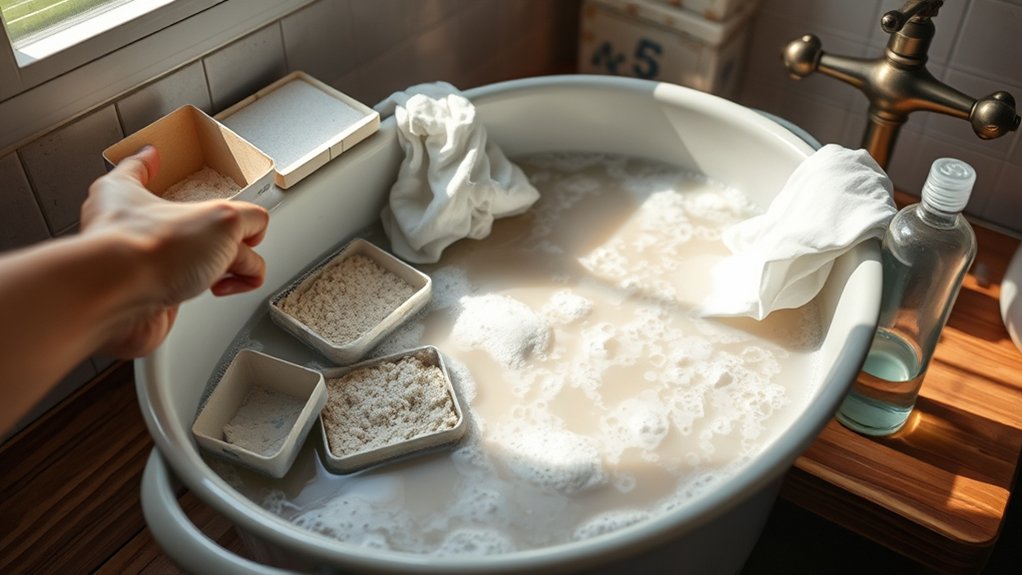
You probably don’t want to use liquid detergent for laundry stripping because it can leave behind residues that mess with the process.
Plus, a washing machine isn’t the best choice since it can’t keep the water hot enough or soak the clothes long enough to really break down the buildup.
For the best results, it’s better to strip your laundry by hand.
Use a mix of powdered detergent, washing soda, and Borax in hot water, and let everything soak to get those deep-down residues out.
Liquid Detergent Effectiveness
Although liquid detergents might seem convenient, they generally don’t work well for laundry stripping because they tend to leave behind more residue than powdered detergents.
You’ll find powdered detergents more effective because they:
- Dissolve thoroughly in hot water, ensuring deep fabric fiber penetration.
- Contain chemical properties that break down buildup better than liquid detergents.
- Enhance residue removal when combined with Borax and washing soda.
- Avoid leaving behind extra residue, unlike many liquid detergents.
For effective laundry stripping, stick to a soaking method using powdered detergent mixtures.
Liquid detergents often fail to break down trapped residues, so relying on them reduces the stripping’s effectiveness.
To achieve the best results, avoid liquid detergents entirely and follow the recommended powdered detergent stripping recipe.
Washing Machine Limitations
Powdered detergents work best for laundry stripping because they dissolve thoroughly and break down residue effectively, but the method you choose also matters.
Washing machine limitations often make them less ideal for laundry stripping. Most machines don’t fill with enough water or provide the soaking time needed to penetrate buildup fully.
Liquid detergents aren’t recommended since they don’t break down residue as well as powdered detergent.
If you want to use a washing machine, look for one with a deep fill option to guarantee enough water for effective stripping.
Always check fabric care labels before proceeding, as hot water and agitation can damage delicate items.
For thorough laundry stripping, soaking in a large tub remains the most practical method.
Best Practice Recommendations
When performing laundry stripping, liquid detergents generally aren’t your best choice because their additives can interfere with residue removal and leave behind buildup.
Instead, use powdered detergent without bleach for effective stripping.
Also, never rely on a washing machine. Opt for soaking items in a bathtub or bucket to guarantee full immersion and proper agitation.
Before you start, check care labels to make certain fabrics tolerate hot water and chemical solutions.
Keep these best practice recommendations in mind:
- Use powdered detergent free of bleach to protect fabrics.
- Soak items in a container, not a washing machine, for thorough cleaning.
- Always read care labels to avoid damaging delicate fabrics.
- Strip only light-colored or colorfast fabrics to prevent dye bleeding.
Following these tips guarantees successful laundry stripping without harming your clothes.
How Often Should You Strip Your Laundry for Best Results?
How often should you strip your laundry to keep it fresh and absorbent? Generally, laundry stripping every 1 to 3 months works well, depending on water hardness and use.
Towels and sheets, which trap more residues, benefit from monthly stripping. If you detect reduced absorbency or a musty odor, strip sooner.
Using the right detergent amount and adding an extra rinse can delay buildup and extend the time between stripping. Always check care labels to confirm fabrics tolerate the hot water needed for stripping.
| Laundry Item | Stripping Frequency | Key Benefit |
|---|---|---|
| Towels | Every 1 month | Restores absorbency |
| Sheets | Every 1 month | Removes residue |
| Regular Clothes | Every 2-3 months | Keeps freshness |
| Heavy Use Items | Every 1-2 months | Prevents buildup |
| Sensitive Fabrics | As needed | Protects fabric |
Tips to Prevent Fabric Buildup and Reduce Stripping Needs
Although stripping laundry can restore fabric freshness, you can reduce how often you need to do it by adjusting your washing habits.
Preventing buildup starts with how you use detergent and fabric softener. Follow these tips:
Effective buildup prevention begins with mindful use of detergent and fabric softener.
- Use less detergent and fabric softener than the package recommends to avoid residue buildup.
- Add an extra rinse cycle to wash out leftover detergent thoroughly.
- Don’t add detergent and fabric softener at the same time; this can cause sludge in your machine.
- Skip fabric softener on towels and workout clothes to prevent coating fibers and reducing absorbency.
Also, avoid overloading your washer to guarantee fabrics get properly cleaned and rinsed.
These steps will help keep your laundry fresh longer and reduce the need for stripping.
How Laundry Stripping Clears Away Buildup for Softer Fabrics
Even with careful washing habits, residues from detergents, fabric softeners, and body oils can build up over time. This is especially true for thicker fabrics like towels and sheets.
Laundry stripping targets this accumulated residue by soaking fabrics in a hot water solution with washing soda, Borax, and powdered detergent for several hours. This process lifts away buildup, resulting in noticeably softer fabrics.
| Benefit | Effect |
|---|---|
| Removes accumulated residue | Restores fabric absorbency |
| Targets thick fabrics | Enhances softness in towels/sheets |
| Reveals dirt in water | Confirms effective residue removal |
Adding Laundry Stripping to Your Laundry Care Routine
When you add laundry stripping to your routine every few months, you’ll keep towels, sheets, and gym clothes fresher and more absorbent.
Incorporate laundry stripping every few months to maintain freshness and boost absorbency of towels, sheets, and activewear.
To strip your laundry effectively, follow these steps:
- Use a stripping mix: ¼ cup washing soda, ¼ cup Borax, and ½ cup powdered detergent in hot water.
- Soak your laundry and watch the water turn murky or dark. This shows buildup lifting from the fabric.
- Always check care labels first. Avoid stripping delicate fabrics that are sensitive to hot water.
- Adopt proper washing habits by using less detergent and skipping fabric softener on towels and activewear. Detergent buildup makes a big difference.
Frequently Asked Questions
Can Laundry Stripping Cause Colors to Fade?
Yes, laundry stripping can cause colors to fade, especially on dark or vibrant fabrics. The hot water and chemicals can leach dyes, making colors bleed or dull.
To protect your clothes, avoid stripping colored or delicate items like spandex or wool.
Stick to light-colored or colorfast fabrics and always check care labels before you start.
This way, you’ll clean effectively without ruining your favorite garments.
Is Laundry Stripping Safe for Baby Clothes?
Laundry stripping isn’t safe for baby clothes because it can cause dye bleeding and damage delicate fabrics.
You’ll want to avoid hot water and harsh chemicals that might strip essential oils, making clothes rough and uncomfortable for sensitive skin.
Instead, stick to gentle detergents, follow care labels, and run extra rinse cycles.
This way, you keep baby clothes clean without risking damage or irritation.
What Ingredients Are Best for Homemade Laundry Stripping Solutions?
Think of laundry stripping as an intensive exploration into fabric cleanliness.
For the best homemade solution, mix ¼ cup washing soda, ¼ cup Borax, and ½ cup powdered laundry detergent in hot water. This combo works like a dream, breaking down grime and softening water to lift residues effectively.
Just avoid detergents with bleach, as they can damage fabrics during stripping.
Stir well to get the most out of your soak.
How Long Does the Laundry Stripping Process Take?
The laundry stripping process usually takes about 5 to 6 hours from start to finish.
You’ll spend 15 to 20 minutes preparing a hot water soak with your stripping ingredients.
Then, you let your items soak for 4 to 5 hours, stirring occasionally to boost effectiveness.
After soaking, you’ll run an extra rinse cycle to remove any leftover residue.
This thorough routine helps get your laundry truly clean.
Can Laundry Stripping Be Done in Cold Water?
You might imagine laundry stripping in cold water as trying to melt ice with a breeze. It’s ineffective and slow. You shouldn’t do it because cold water won’t dissolve key ingredients like Borax or washing soda, leaving buildup trapped in your fabrics.
Hot water penetrates fibers to break down residues thoroughly.
Conclusion
Laundry stripping can work wonders to refresh your fabrics by removing stubborn buildup. Remember, a stitch in time saves nine. Addressing buildup early prevents damage and keeps your laundry softer longer.
Use this method sparingly, avoid delicate fabrics, and combine it with regular care to maintain freshness. With the right balance, laundry stripping becomes a powerful tool in your routine, helping your clothes and linens feel clean and comfortable every time.