How To Remove Different Types Of Laundry Stains – Pro Tips
To tackle laundry stains effectively, act fast by rinsing with cold water and blotting gently to avoid spreading. Use specific treatments: cold water and vinegar for coffee, detergent and hot water for chocolate, hydrogen peroxide for red wine, and dish soap or baking soda for grease.
Test stain removers on hidden areas and avoid heat until stains are gone. With the right approach, you can master stain removal techniques and keep fabrics looking fresh and clean, with more expert tips ahead.
Key Takeaways
- Rinse stains immediately with cold water to prevent setting, especially for protein-based and dye stains.
- Blot stains gently to absorb excess liquid without spreading or rubbing the stain further.
- Pretreat stains using appropriate solutions like detergent, enzyme-based removers, or natural acids based on stain type.
- Soak stubborn stains in a detergent-water mix for at least 30 minutes before laundering on a gentle cycle.
- Avoid drying stained fabrics until stains are fully removed to prevent permanent setting or discoloration.
Types of Stains and Why They’re Hard to Remove
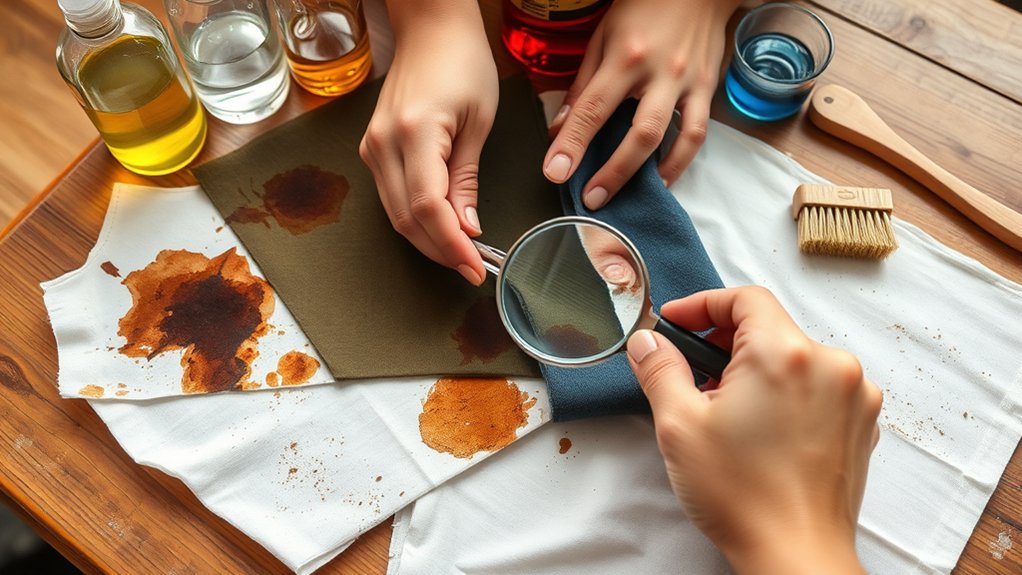
Although stains might seem similar at first glance, their composition and interaction with fabric fibers vary greatly. That’s why some are tougher to remove than others.
Protein stains, like blood, bond chemically with natural fibers, penetrating deeply because of their porous structure.
Protein stains such as blood chemically bond with natural fibers, deeply penetrating due to their porous nature.
Oily stains cling stubbornly, coating fabric fibers and resisting water-based cleaning. Dye-based stains chemically alter fabric color, which makes the stain removal process more complicated.
Immediate action is essential to prevent oxidation and stronger bonding. This leads to set-in stains that change fabric structure and become nearly impossible to remove. The longer you wait, the more these stains embed themselves, especially on natural fibers.
Understanding these differences helps you target your approach effectively. You can tackle each stain type with precision before it becomes a permanent mark on your clothes.
Quick Pretreatment Steps to Stop Stains From Setting
You’ve got to act fast when dealing with stains! Start by rinsing the stain with cold water to stop it from setting, especially if it’s protein-based.
Then, go ahead and apply a stain remover or a mild detergent solution. Let it soak for at least 10 minutes—this really helps.
Just remember to blot gently instead of rubbing, and always check the fabric care label before you begin treatment.
This way, you avoid any damage and keep your clothes looking great!
Immediate Stain Action
Three essential actions make all the difference when tackling fresh laundry stains. Act fast to prevent the stain from setting deep into the fabric fibers.
- Rinse the stained area immediately with cold water. This stops the stain from embedding and is especially vital for protein-based stains like blood.
- Use blotting, not rubbing, with a clean cloth or paper towel to absorb excess liquid without spreading the stain further.
- Pre-treat the stain using a suitable stain remover or a mixture of liquid detergent and water. Let it sit for several minutes before rinsing again.
Always consult fabric care instructions before proceeding to avoid damage.
Following these steps guarantees maximum stain removal success from the start.
Effective Pretreatment Techniques
When stains land on your clothes, acting quickly with the right pretreatment can prevent them from setting permanently. First, blot the stain gently to absorb excess liquid, but never rub because it spreads the stain.
Apply a stain remover suited to the stain type, then test for fabric safety on a hidden area. Next, soak effectively in water mixed with detergent for at least 30 minutes if the stain is stubborn. Gently scrub the fabric during soaking to enhance cleaning. Finally, rinse thoroughly before laundering.
| Step | Action |
|---|---|
| Act Quickly | Address stains immediately |
| Blot | Absorb excess liquid without rubbing |
| Apply Pretreatment | Use appropriate stain remover |
| Test for Safety | Patch test on hidden fabric area |
| Soak Effectively | Pre-soak and gently scrub before rinsing |
How to Remove Common Food and Drink Stains Like Coffee, Chocolate, and Wine
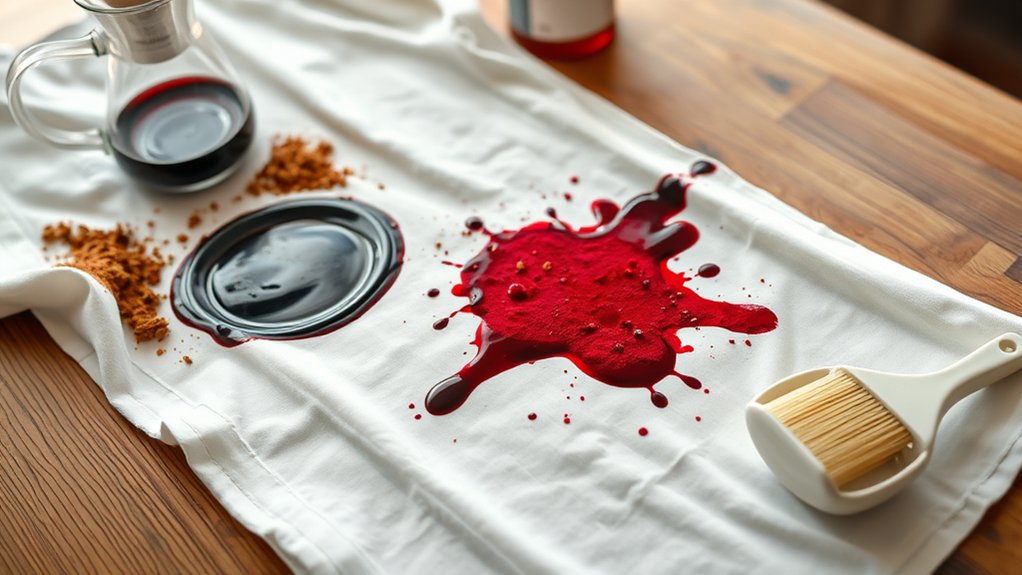
Although stains from coffee, chocolate, and wine can seem stubborn, acting quickly and using the right techniques can prevent permanent damage.
For coffee stains, blot with cold water immediately. Then pretreat with a mixture of vinegar, liquid detergent, and warm water before rinsing.
Chocolate requires gentle scraping first. Pretreat with liquid detergent and wash in hot water.
Red wine stains demand blotting, covering with salt or baking soda to absorb, then applying a hydrogen peroxide and dish soap mix as stain remover.
- Pretreat coffee stains with vinegar solution and rinse with cold water.
- Scrape chocolate off, then pretreat before washing hot.
- Blot red wine, absorb liquid with salt, then treat with peroxide and soap.
Always rinse and wash following fabric care instructions.
How to Remove Grease, Oil, and Household Stains
When you’re dealing with grease and oil stains, the first thing to do is blot up any extra residue.
Then, apply some liquid dish soap—it works great to break down those oils.
Now, if you’re handling household stains like ketchup or mustard, a good tip is to rinse the fabric from the back with cold water.
This helps stop the stain from spreading even more.
By following these simple steps, you’ll be able to get rid of tough stains without harming your clothes.
It really makes a difference!
Effective Grease Removal
Because grease stains can quickly become stubborn, you should act fast by blotting the excess oil with a paper towel before applying dish soap or liquid laundry detergent directly to the affected area.
To remove grease stains effectively:
- Blotting the stain removes excess oil. Then, apply detergent and let it sit for 10 minutes to break down the grease.
- For heavy stains, sprinkle an absorbent powder like baking soda, let it sit 15 minutes, then brush off.
- Wash the garment in the hottest water safe according to the care label with warm water to lift remaining grease.
If the stain persists, avoid drying. Instead, repeat treatment to prevent setting.
This method guarantees thorough grease removal without damaging fabrics.
Household Stain Solutions
Grease and oil stains often call for quick action, but household stains like ink, crayon, or wax require different approaches. For grease stains, apply liquid laundry detergent or dish soap and allow it to sit for 10 minutes before rinsing thoroughly to remove.
For oil stains, blot the excess, sprinkle baking soda to absorb oils, then wash in warm water. Tough stains like ink need you to sponge rubbing alcohol, rinse with cold water, and launder normally. Crayon or wax stains respond well to a baking soda-water paste scrub.
For heavy-duty stains, use an enzyme-based stain remover. Apply directly and allow it to sit before washing.
| Stain Type | Treatment Steps |
|---|---|
| Grease stains | Apply detergent, allow it to sit, rinse thoroughly |
| Oil stains | Blot excess, sprinkle baking soda, wash in warm water |
| Ink, crayon, wax | Sponge alcohol or baking soda paste, rinse with cold water |
How to Remove Protein-Based Stains Like Blood and Dairy
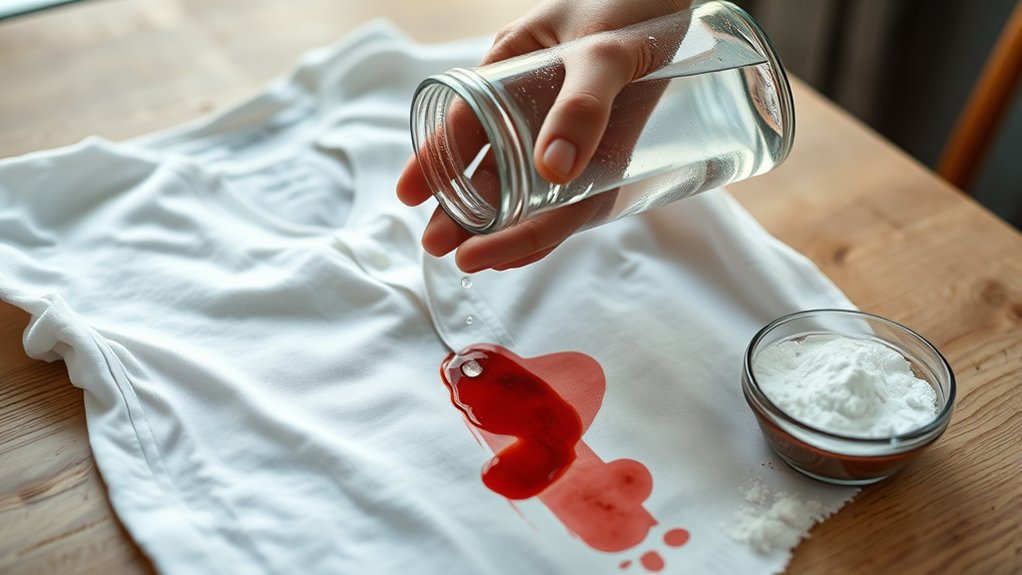
If you want to prevent protein-based stains like blood and dairy from setting into your fabric, rinse them immediately with cold water.
Hot water can cause proteins to bond with fibers, making removal harder.
Follow these steps for effective removal:
- For blood stains, soak the fabric in enzyme detergent for at least 30 minutes. This breaks down proteins and eases removal.
- Pre-treat dairy stains with an enzyme-based cleaner before laundering with mild detergent to lift the stain fully.
- Use a carefully tested mixture of hydrogen peroxide and dish soap for stubborn blood stains, but always test on a hidden area first to avoid damage.
Rinse the fabric thoroughly after treatment to prevent residue buildup and guarantee complete stain removal.
Remove Stains From Delicate Fabrics Without Damage
How do you remove stains from delicate fabrics without causing damage? First, always check the care label for specific cleaning instructions.
To remove stains like blood or dairy, rinse immediately with cold water. Hot water can set these stains permanently. Use a gentle, enzyme-based stain remover designed for delicate fabrics, and don’t skip the patch test on a hidden area to guarantee no discoloration.
Soak the fabric in cool water mixed with mild detergent for up to 30 minutes to lift stains without weakening fibers.
When washing, select the gentle cycle on your machine to protect the fabric’s integrity.
Finally, air dry your delicate items to avoid heat damage or shrinkage. These steps help you effectively remove stains while preserving your delicate fabrics.
Avoid Mistakes When Removing Stains and When to Re-Treat
Although treating stains quickly is essential, many people make mistakes that hinder removal. To avoid mistakes, follow these key steps when dealing with fresh stains:
- Always pre-treat the stain with an appropriate stain remover and let it soak before laundering. This helps improve effectiveness and stops the stain from setting into the fabric.
- Gently blot the stain instead of rubbing it, which can spread it or push it deeper. Use cold water to rinse the stain, especially for protein-based stains, to prevent them from bonding further.
- If the stain remains after washing, re-treat it before drying. Heat from the dryer can permanently set the stain, making it nearly impossible to remove afterward.
Frequently Asked Questions
Can Stain Removers Damage Washing Machines Over Time?
Yes, stain removers can damage your washing machine over time if you’re not careful. Harsh chemicals and bleach can corrode rubber seals and hoses, causing leaks.
Enzymes in some removers might degrade internal parts if not rinsed properly.
To protect your machine, follow manufacturer guidelines, avoid overusing strong chemicals, and regularly clean the drum and dispensers.
This maintenance helps prevent buildup and prolongs your washer’s lifespan effectively.
How Do Temperature Settings Affect Stain Removal Effectiveness?
You’ll be surprised to know that 85% of stains become permanent when treated with the wrong water temperature. Cold water works best on protein-based stains like blood, preventing them from setting.
Warm water suits everyday stains, lifting them effectively without damage. Use hot water for greasy stains, as it breaks down oils.
Always check fabric labels, since high heat can shrink or discolor delicate fabrics, making stain removal less effective and damaging your clothes.
Are Homemade Stain Removers as Effective as Commercial Products?
Homemade stain removers can be as effective as commercial products, especially for common stains like blood or dairy. This is thanks to enzyme-based ingredients like baking soda and hydrogen peroxide.
However, commercial removers often have specialized formulas that target tough or specific stains more efficiently.
You should test any solution on fabric first to avoid damage. Overall, homemade options offer a cost-effective, eco-friendly alternative.
But their effectiveness varies by stain type and fabric.
What Should I Do if a Stain Sets After Drying Clothes?
If a stain sets after drying, don’t panic. About 60% of set-in stains can still be removed with proper care.
First, avoid heat to prevent further bonding.
Soak the fabric in cold water for 30 minutes to loosen the stain.
Then apply an enzyme-based remover or a hydrogen peroxide and dish soap mix. Gently rub with a soft brush.
Rinse thoroughly and repeat if needed for stubborn stains.
Can Stain Removal Techniques Differ for Colored Versus White Fabrics?
Yes, stain removal techniques should differ for colored and white fabrics.
You’ll want to use gentler treatments and cold water for colored items to prevent color bleeding and fading.
For whites, you can apply stronger bleach-based solutions and hot water to tackle tough stains effectively.
Always test enzyme-based removers on a hidden area of colored fabrics first.
Checking care labels helps you choose the safest method without damaging your clothes.
Conclusion
Think of stain removal like defusing a ticking time bomb. The quicker you act, the less damage you face. Studies show that treating stains within 30 minutes boosts removal success by 50%.
By understanding each stain’s nature and using targeted methods, you’re not just cleaning fabric—you’re preserving your wardrobe’s life. Remember, patience and precision turn stubborn stains into mere memories, keeping your clothes fresh and flawless every time.