Can You Dry Clean Throw Pillows – What To Know
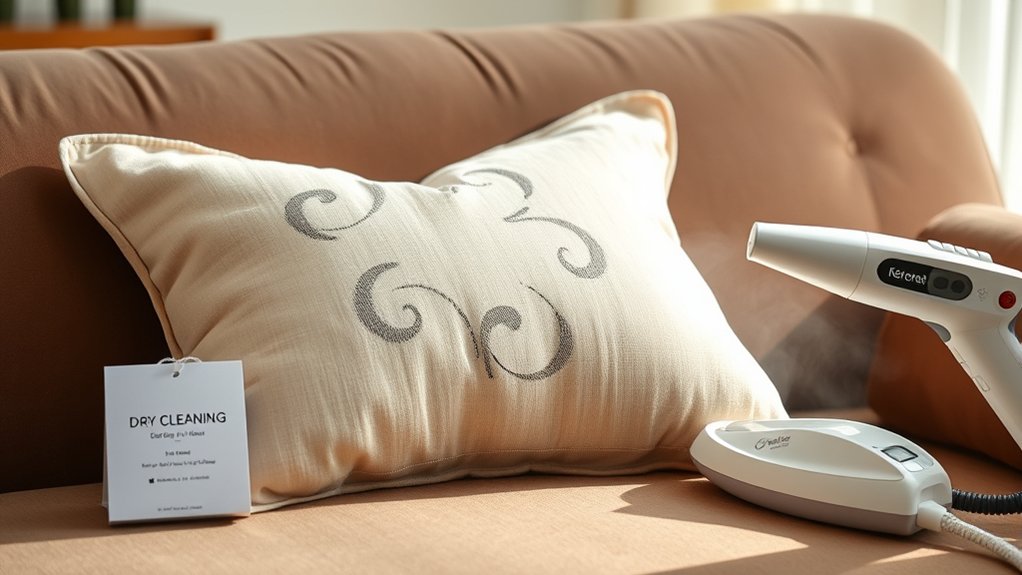
You can dry clean throw pillows, especially those made from delicate fabrics like silk, velvet, or wool, or labeled “Dry Clean Only.” Dry cleaning preserves fabric integrity, prevents shrinking, and removes stains effectively without soaking.
While down pillows are generally safe, foam inserts usually aren’t suitable for dry cleaning. Always check care labels and remove covers before professional cleaning. Proper maintenance between cleanings also extends pillow life.
To fully protect and care for your pillows, understanding these details is essential. It’s all about knowing what works best for your specific pillow type. That way, you keep them looking great and lasting longer.
Can You Dry Clean Throw Pillows? When and Why

Although many throw pillows can be spot cleaned or washed at home, you should dry clean those made from delicate fabrics like silk or velvet, especially if they’ve embellishments. Dry cleaning is essential for preserving the fabric integrity of these decorative pillows. Regular washing risks shrinking, color fading, or damaging delicate fibers.
When pillows are labeled “Dry Clean Only,” following this guidance guarantees they maintain their shape and appearance.
Professional cleaning excels at thorough stain removal without soaking the fabric. This prevents water damage common in home washing.
For effective pillow care, dry cleaning protects both the surface and intricate details. It extends the life of your luxury throw pillows.
Trusting experts guarantees a meticulous clean while safeguarding delicate fabrics.
How to Identify Fabrics That Need Dry Cleaning
First, take a look at the care label on your throw pillow to see if it says “Dry Clean Only.” Fabrics such as silk, velvet, wool, suede, and leather often require dry cleaning to keep their texture and shape intact.
If your pillow has delicate trims or if you’re not sure what the fabric is, it’s a good idea to check with a professional cleaner. That way, you can make sure your pillow stays in great condition without any damage.
Fabric Types Requiring Dry
When you’re unsure whether your throw pillow requires dry cleaning, the first step is to examine its fabric type and care label.
Certain delicate fabrics demand careful attention to avoid damage, especially when water can cause shrinkage or distortion.
Focus on these fabric types:
- Silk – prone to fading and shrinking if wet, silk needs professional dry cleaning.
- Velvet – delicate and easily crushed, velvet benefits from dry cleaning’s gentle process.
- Wool – water can felt wool fibers, so dry cleaning preserves its texture and shape.
- Suede – avoid water entirely; only professional dry cleaning safely cleans suede.
Always consult the manufacturer’s care label. If it states “Dry Clean Only,” trust that dry cleaning is the safest option to maintain your pillow’s quality and longevity.
Care Label Indicators
Identifying whether your throw pillow needs dry cleaning often hinges on understanding the care label indicators. Check the manufacturer’s care label for care label symbols, especially a circle, which means dry cleaning is recommended or required.
Pay close attention to labels displaying “Dry Clean Only.” These direct you to use professional dry cleaning services to protect delicate fabrics. Fabric types like silk, velvet, and certain wool blends commonly have such instructions to prevent damage.
Some labels include specific cleaning instructions or symbols indicating which solvents or dry cleaning processes to use. If the care label is missing or unclear, it’s safest to assume that delicate or high-end fabric types need dry cleaning. Following these guidelines helps you maintain your throw pillow’s quality without risking damage.
How to Read Care Labels for Dry Cleaning Instructions
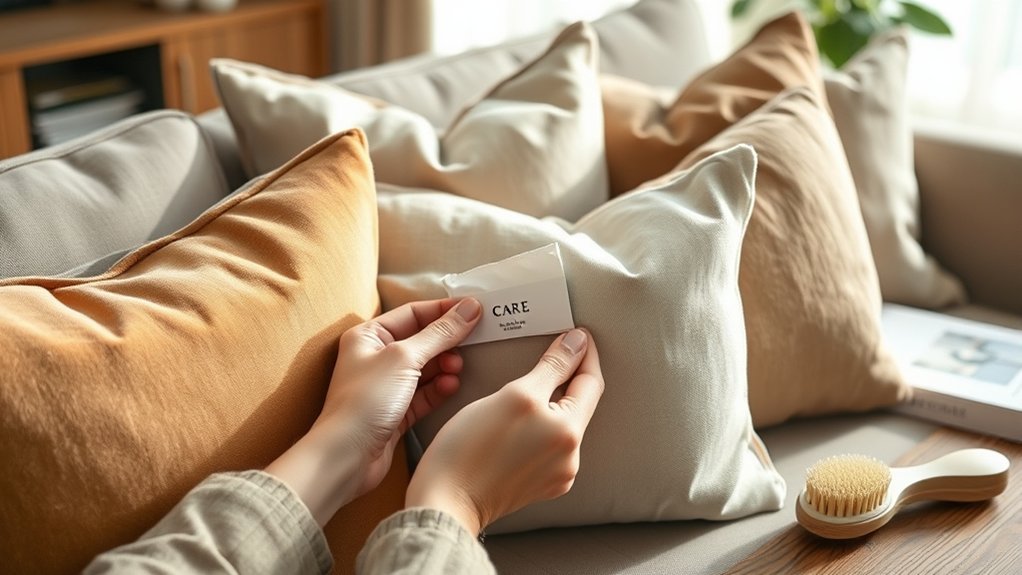
Many care labels feature specific symbols, like a circle containing the letters “D” or “P,” that clearly indicate if dry cleaning is recommended or required for your throw pillow.
To properly read care labels for dry cleaning instructions, follow these steps:
- Identify dry cleaning symbols. Look for circles with letters that signal if dry cleaning is permitted or mandatory.
- Note any “Dry Clean Only” warnings, which mean you shouldn’t attempt home washing.
- Check for solvent type and temperature restrictions to ensure fabric safety during cleaning.
- Review additional instructions for special handling, like steaming or delicate treatment.
Ignoring care label instructions risks fabric damage or shrinkage. Always rely on these precise symbols and instructions to maintain your pillow’s quality through proper dry cleaning.
It’s a simple way to keep your pillows looking great without any surprises. Just take a moment to read those labels carefully!
Can You Dry Clean Pillows With Foam or Down Filling?
You can definitely dry clean down-filled pillows safely. This method helps get rid of dirt and allergens while keeping their fluffy loft intact.
On the other hand, foam pillows aren’t a good fit for dry cleaning. The chemicals and the agitation involved can actually harm the foam’s structure.
Foam Pillow Cleaning
When it comes to foam pillows, dry cleaning is generally not recommended because harsh chemicals can damage the foam core. To take good care of your foam pillows, here’s what you should do:
First, remove the foam insert before cleaning the cover, especially if it’s made of delicate fabrics. Then, spot clean the foam insert gently. Avoid soaking or submerging it in water since that can harm the foam.
Let the foam air dry completely to prevent mold or deterioration.
If you’re thinking about dry cleaning shredded foam inserts, check with the manufacturer first. But remember, solid memory foam should never be dry cleaned.
Following these steps helps keep your foam pillows in great shape and extends their lifespan without the risk of damage from harsh dry cleaning solvents.
Down Pillow Care
Unlike foam pillows, down pillows respond well to professional dry cleaning. This helps maintain their fluffy loft and prevents feather clumping. Dry cleaning also preserves the natural oils in the feathers, which are essential for the pillow’s longevity and comfort.
However, always check the manufacturer’s care label before proceeding, since some down pillows may have specific instructions. You should avoid dry cleaning foam-filled pillows because the chemicals can damage the foam’s structure.
Professional dry cleaning keeps down pillows in optimal condition by maintaining feather integrity and natural oils. This extends their lifespan and keeps them feeling cozy.
| Aspect | Down Pillows |
|---|---|
| Cleaning Method | Professional dry cleaning |
| Suitable Filling | Feathers with natural oils |
| Care Label Advice | Always follow manufacturer’s instructions |
| Benefits | Maintains loft, prevents clumping |
| Avoid | Foam or shredded foam pillows |
Dry Cleaning Suitability
How can you determine if your pillow is suitable for dry cleaning? Start by checking the care label and fabric suitability. Foam pillows generally aren’t dry cleaning-friendly, as the process can damage the foam.
Down or feather-filled pillows usually can be dry cleaned, but always verify with the care label or a professional cleaner. Remember, dry cleaning is ideal for pillows with delicate fabrics or embellishments that can’t withstand home washing.
Here’s what you should do:
- Inspect the care label for dry cleaning instructions.
- Remove foam inserts before dry cleaning.
- Confirm fabric suitability, especially for delicate fabrics.
- Consult a professional cleaner if unsure about your pillow’s filling.
Following these steps ensures proper care without damaging your pillows.
Spot Cleaning vs. Dry Cleaning: When to Choose Each
Although both spot cleaning and dry cleaning help refresh your throw pillows, choosing the right method really depends on the fabric type and how dirty they are. Use spot cleaning for minor stains on washable fabrics, focusing only on the stained area.
Save dry cleaning for delicate fabrics like silk or velvet, especially when water or scrubbing might cause damage. Always check the care label first, and if you’re unsure about the fabric, it’s a good idea to ask a professional cleaner.
Here’s a quick guide to help you decide:
| Method | Suitable Fabrics | When to Use |
|---|---|---|
| Spot Cleaning | Most washable fabrics | Small stains, minor soil |
| Dry Cleaning | Delicate fabrics (silk, velvet) | Extensive stains, delicate fabrics |
| Professional Cleaner | All when unsure | Fabric safety concerns |
| Care Label | Always check | Guides method choice |
| Stains | Targeted cleaning | Full pillow cleaning |
How Dry Cleaning Protects Delicate Throw Pillow Fabrics
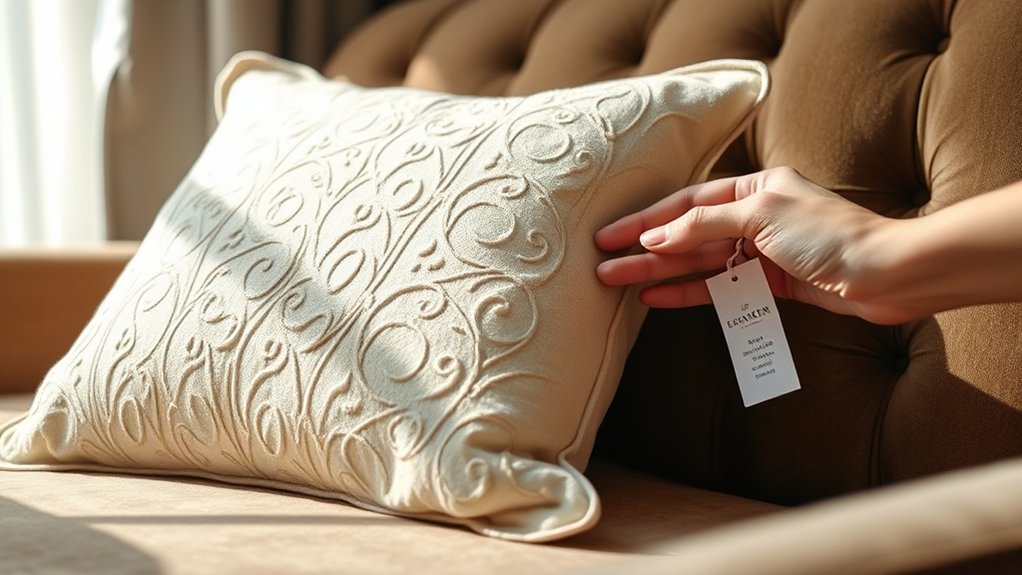
When you choose dry cleaning for your delicate throw pillows, you’re opting for a method that uses solvents instead of water. This helps prevent shrinking, warping, and fabric damage. It’s really essential for preserving the integrity of those delicate fabrics.
Choosing dry cleaning protects delicate throw pillows from shrinking, warping, and fabric damage by using gentle solvents instead of water.
Here’s how dry cleaning protects your pillows:
- It removes stubborn stains, oils, and dirt without harsh water or agitation.
- It uses gentle solvents that maintain the texture and intricate detailing of fragile fabrics like silk or velvet.
- It preserves color vibrancy and prevents fiber deterioration over time.
- It complies with “Dry Clean Only” labels to avoid risking fabric damage and guarantee proper preservation.
How to Prepare Throw Pillows for Professional Dry Cleaning
Before taking your throw pillows to a professional dry cleaner, you should remove any covers, shams, or cases and clean them separately. Check the care label for dry cleaning instructions and note any fabric restrictions. If your pillows have delicate fabrics like silk or velvet, be sure to inform the cleaner to guarantee proper handling.
Lightly vacuum the pillow surface to remove dust and debris. Also, make sure pillows are completely dry and free of moisture to prevent mold growth during cleaning.
| Step | Action |
|---|---|
| Remove pillow covers | Clean or spot treat separately |
| Check care label | Follow dry cleaning instructions |
| Vacuum & check moisture | Remove dust; ensure dryness |
Following these steps helps protect your pillows and ensures effective stain removal during professional dry cleaning.
Tips to Maintain Throw Pillows Between Dry Cleanings
After preparing your throw pillows properly for professional dry cleaning, maintaining them between cleanings helps extend their freshness and appearance. Here are key tips to keep your pillows in top shape:
Use pillow protectors to minimize dirt, oils, and allergens from reaching delicate fabrics. Spot clean stains promptly with a mild detergent and soft cloth to avoid damage, especially on delicate fabrics. Fluff and air out pillows regularly to preserve their shape and freshness.
For washable pillows, use a gentle cycle and avoid over-wetting. Otherwise, rely on professional cleaning for stubborn stains.
Regular vacuuming or shaking out your pillows also helps prevent dirt buildup and prolongs the time between professional cleaning sessions.
Keeping up with these simple steps can really make a difference in how your pillows look and feel over time.
Frequently Asked Questions
How Long Does the Dry Cleaning Process Take for Throw Pillows?
The dry cleaning process for throw pillows typically takes 1 to 3 days. Most cleaners finish and return standard pillows within 24 to 48 hours.
If your pillows need special treatments or the service is busy, it could take longer.
To get the most accurate timing, check directly with your dry cleaner since turnaround depends on their workload and equipment. This way, you’ll know exactly when to expect your pillows back.
Are There Any Risks of Color Fading During Dry Cleaning?
Yes, you risk color fading during dry cleaning, especially with vibrant or dark fabrics. Harsh chemicals or solvents can react with dyes, causing fading. If the dyes are delicate or untreated, they’re more vulnerable.
Also, improper handling like excessive agitation can weaken fibers, leading to color loss.
To protect your throw pillows, always request a spot test on a hidden area before full cleaning. This way, you can identify any potential fading issues beforehand.
Can Dry Cleaning Remove Pet Odors From Throw Pillows?
Yes, dry cleaning can effectively remove pet odors from throw pillows. It uses specialized solvents that neutralize embedded oils, dander, and bacteria without saturating the fabric.
You might need multiple sessions for deep-set smells, but professional dry cleaning often outperforms home washing in odor removal.
Some cleaners even offer odor-specific treatments, ensuring your pillows come back fresh and odor-free.
How Often Should Throw Pillows Be Dry Cleaned for Best Care?
You should dry clean throw pillows with delicate fabrics like silk, velvet, or embroidery every 6 to 12 months to maintain their appearance.
If the covers are washable and non-removable, clean them at home every 2 to 4 weeks instead.
Always keep an eye on your pillows for stains or odors.
This is especially important if you have pets or if there’s smoke nearby.
Just make sure to follow the manufacturer’s guidelines so you don’t accidentally damage the fabric by over-cleaning.
Is Dry Cleaning Environmentally Friendly Compared to Washing at Home?
Dry cleaning isn’t usually more environmentally friendly than washing at home. When you wash pillows yourself with mild detergent and cold water, you avoid harsh solvents and reduce chemical waste.
That said, some dry cleaners now use greener solvents, which can lessen environmental impact. Still, unless your dry cleaner uses these eco-friendly methods, home washing generally remains the better choice for minimizing pollution and conserving resources.
Conclusion
You can safely dry clean many throw pillows, especially those with delicate fabrics or tricky fillings. Did you know that 65% of homeowners overlook care labels, risking damage by improper cleaning? Always check your pillow’s tag before deciding.
Dry cleaning preserves fabric integrity and extends pillow life. But spot cleaning between sessions helps maintain freshness. It’s a simple way to keep things looking good.
By following these steps, you’ll keep your throw pillows looking their best and lasting longer. It’s all about giving them the right care.