How To Iron Dry Clean Only – Safe Guide
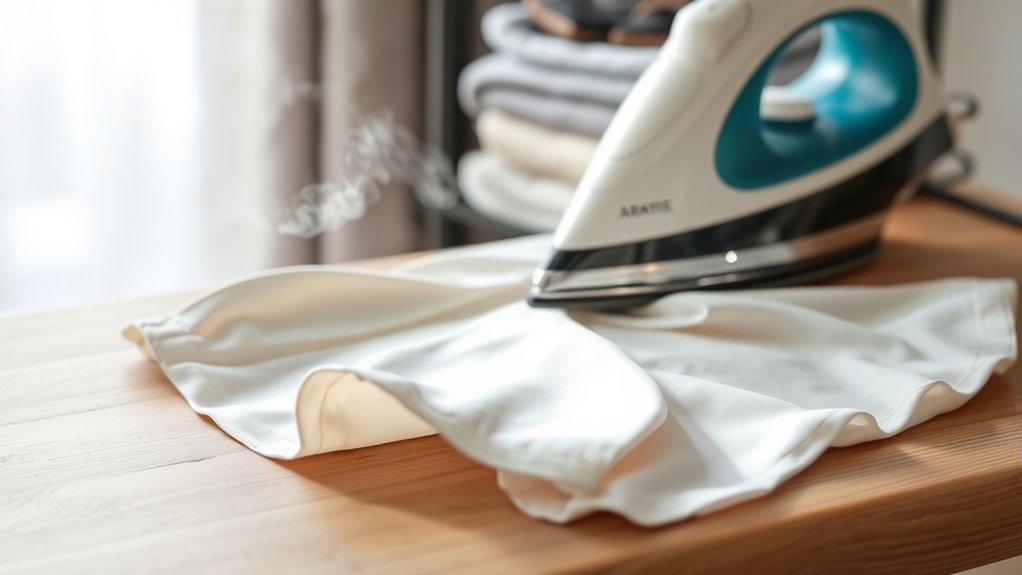
To safely iron dry clean only garments, first check for stains and follow the care label closely. Use a low heat setting, ideally “delicate” or “synthetic,” and always test the iron on a hidden area. Protect delicate fabrics and embellishments with a pressing cloth.
You might also want to consider steaming instead of direct ironing to avoid damage. Iron inside out and avoid prolonged heat exposure. Taking care with each step helps preserve your garment’s quality.
If you want, you can explore detailed tips to keep your clothes looking sharp and lasting longer. It’s all about being gentle and patient with your delicate pieces.
Check and Prepare Your Dry Clean Only Garment
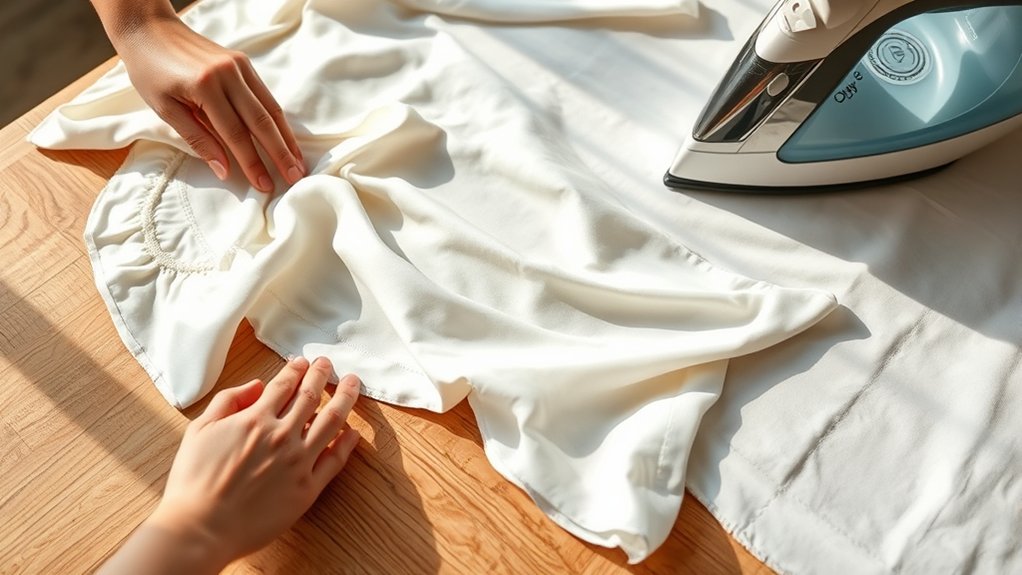
Before you start ironing your dry clean only garment, take a good look at it for any stains, dirt, or delicate embellishments. Preparing your garment properly is key to avoiding damage, especially with delicate fabrics. Be sure to check the care labels carefully to know the recommended iron temperature and any specific care instructions.
Make sure your garment is clean because ironing over dirt can actually set stains even more. When you’re dealing with delicate items, use a pressing cloth to cover ornamented or sensitive areas. This helps protect them from direct heat.
If you have stubborn wrinkles, try lightly spraying water before ironing. This loosens the fibers without soaking the fabric.
Set Up Your Ironing Space and Tools Safely
Once you’ve prepared your dry clean only garment, focus on setting up your ironing space and tools correctly to protect both your fabric and yourself. Start with a clean, flat, and stable ironing surface to avoid fabric damage or accidents.
Place a pressing cloth or clean cotton towel between the iron and delicate fabrics for added fabric protection.
Review the care label carefully to guide your temperature adjustment. Fill the iron with distilled water, ensuring the steam function operates properly if steam is necessary.
Maintain good workspace ventilation to prevent inhaling any fumes from the iron or fabric during ironing.
These precautions create a safe environment, preserving your garment’s integrity and your health while handling sensitive dry clean only items. It’s all about being careful and giving your clothes the attention they deserve.
Choose the Right Iron Settings for Delicate Fabrics
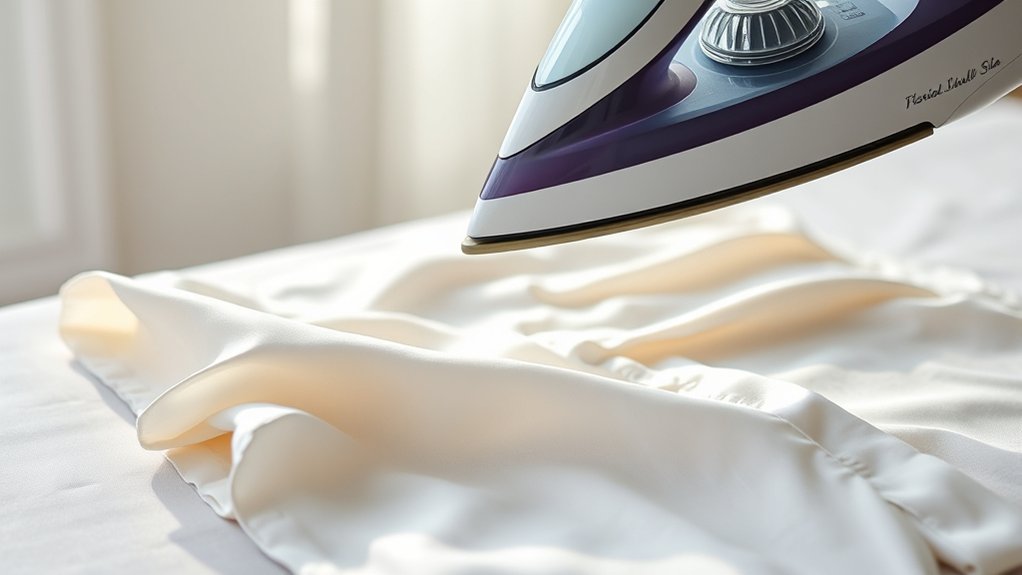
You’ll want to set your iron to the lowest heat, usually marked as “delicate” or “synthetic,” to protect dry clean only fabrics.
It’s always a good idea to check the care label first for exact temperature guidelines before you start.
Also, try testing the iron on a hidden spot to make sure the heat won’t damage the fabric.
That way, you can iron with confidence and keep your clothes looking great!
Temperature Settings By Fabric
Although ironing dry clean only garments can be tricky, selecting the right temperature setting for each fabric guarantees you avoid damage. Always start by checking the care label for specific temperature recommendations based on the fabric type.
Use the lowest iron temperature, often labeled “Delicate” or “Low,” for delicate fabrics like silk, wool, and acetate.
For synthetic fabrics such as nylon or polyester, choose a low or synthetic heat setting to prevent melting or shiny marks.
Cotton and linen require higher heat settings but test a small area first to avoid scorching.
To protect fabrics from direct heat, consider using a pressing cloth, especially on delicate fabrics.
Adjust heat settings gradually, making sure you protect fabrics while achieving a smooth finish. It’s always better to go slow and steady than rush and risk damage.
This way, you’ll keep your clothes looking great without any hassle.
Testing Iron Heat Levels
When handling delicate fabrics, start by setting your iron to the lowest heat level, often labeled “synthetic” or “delicate,” to minimize the risk of damage.
Before ironing the main fabric, always test the iron’s heat on an inconspicuous area of the garment. This lets you make sure the temperature is safe without risking visible damage.
Check the care label for specific temperature recommendations and never exceed the suggested heat level for dry clean only fabrics.
To protect the fabric even more, use a pressing cloth or a clean cotton towel between the iron and the garment.
Adjust the temperature gradually if needed, keeping a close eye on how the fabric reacts during each test.
This careful approach helps you keep delicate fabrics looking great while still getting rid of wrinkles effectively. It’s all about being patient and gentle with your ironing.
Protect Embellishments on Dry Clean Only Clothes
Since embellishments like sequins, beads, and plastic embroidery are sensitive to heat, you should always cover them with a clean cotton cloth before ironing. This simple step helps protect delicate decorations from melting or warping.
Avoid ironing directly over sequin or beaded areas, as applying pressure or heat can dislodge or damage them.
Remove any detachable ornaments such as pins or decorative buttons beforehand to prevent heat damage.
When you iron near embellished sections, use a low heat setting and gentle pressure for effective damage prevention.
Alternatively, consider using steam to smooth wrinkles safely without direct contact.
By carefully protecting embellishments during ironing, you maintain your dry clean only clothes’ appearance and prolong their lifespan without risking damage from heat exposure.
It’s a small effort that goes a long way in keeping your clothes looking great.
Iron Dry Clean Only Clothes Step-by-Step
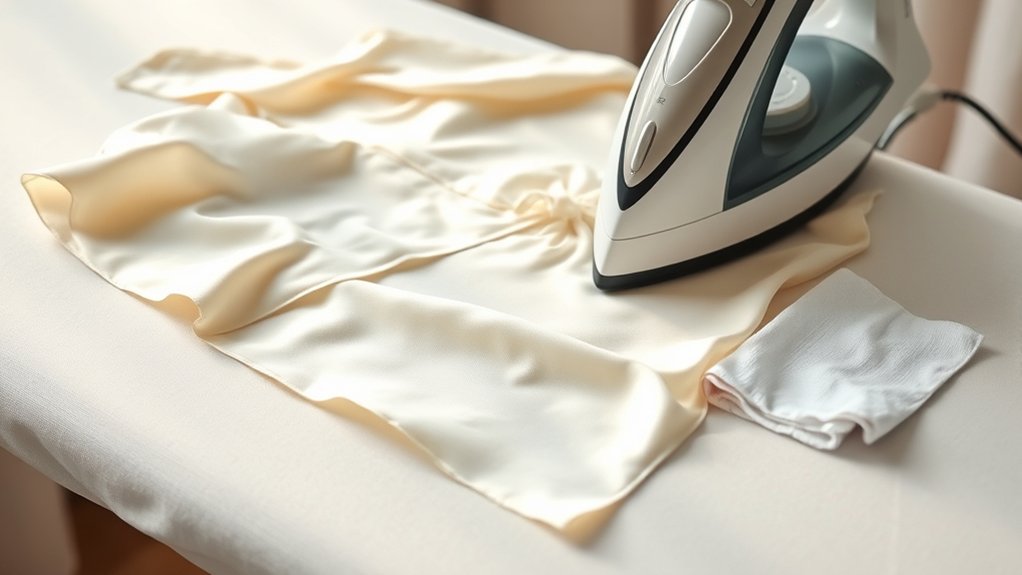
Before you begin ironing dry clean only clothes, always check the fabric care label to select the correct temperature setting. Use gentle heat to avoid damaging delicate fabrics.
Follow these steps to ensure proper fabric care and protection:
Set the iron to the lowest heat or silk/nylon setting and test on a hidden area.
Place a pressing cloth over the garment to shield it from direct heat.
Iron the garment inside out to prevent shine marks and protect embellishments.
For stubborn wrinkles, rely on steaming rather than direct ironing.
This method offers safer wrinkle removal without risking damage.
Always handle dry clean only items with care, using gentle heat and protection to maintain their quality and longevity.
Use Steam and Pressing Cloths to Prevent Damage
You’ll want to use steam to gently relax the fibers before ironing. This helps reduce the risk of heat damage.
Also, always place a clean cotton or linen pressing cloth between the iron and the fabric. It acts like a shield for delicate materials.
When you press, go for a low to medium heat setting. Use brief, gentle motions to avoid stretching or burning the fabric.
Benefits Of Using Steam
How exactly does steam protect your delicate “Dry Clean Only” garments during ironing? Steam gently relaxes fabric fibers, reducing the risk of scorching caused by high temperatures. Unlike direct ironing, steam smooths out wrinkles without pressing harshly, which helps prevent fabric distortion and shine marks on delicate fabrics.
Plus, when you use a pressing cloth with steam, it creates a protective barrier that further shields your garment during pressing.
Using steam offers some key benefits: it minimizes direct heat exposure, preserving fabric integrity. It also effectively removes wrinkles without damaging fibers. And best of all, it extends garment lifespan by avoiding harsh ironing effects.
Choosing The Right Pressing Cloth
Although steam plays a crucial role in protecting your “Dry Clean Only” garments, choosing the right pressing cloth is just as important to prevent heat damage.
Use a clean, thin cotton or muslin pressing cloth to shield delicate fabrics from direct heat and avoid shiny marks. Make sure the cloth is slightly damp or apply steam to relax the fibers and minimize the risk of damage.
Lay the pressing cloth smoothly over the garment, getting rid of any wrinkles or bubbles that could cause uneven pressing.
Avoid synthetic materials as pressing cloths since they might melt or stick under heat.
Before you start, test the pressing cloth on a hidden area to make sure it doesn’t transfer color or cause any damage.
Taking these steps helps you protect your delicate fabrics effectively while ironing. It’s a simple way to keep your clothes looking their best without risking heat damage.
Techniques For Safe Pressing
When handling “Dry Clean Only” garments, applying steam with a pressing cloth is essential to protect delicate fibers from direct heat and prevent damage. Use a pressing cloth to shield delicate fabrics from scorching, and always set your iron to a low temperature appropriate for the fabric’s heat setting.
Employ steam rather than dry heat to relax fibers gently, avoiding fabric distortion and shine marks.
Remember these safe pressing techniques: hold the iron a few inches above the fabric to steam without direct contact. Use a gentle back-and-forth motion for 2-3 seconds per area.
If you run into stubborn wrinkles, just apply a light water spritz before steaming again. These steps help you press safely while keeping your garment’s integrity intact.
Maintain Dry Clean Only Clothes After Ironing
Why does proper maintenance matter after ironing dry clean only clothes? It helps you preserve the fabric’s integrity and the garment’s pressed appearance.
After ironing, carefully check for any remaining wrinkles and smooth them out with a gentle press to avoid damage, especially on delicate fabrics.
Always use a clean pressing cloth during ironing to prevent heat harm or shine marks.
Let the garment cool completely before wearing or storing to set the shape and prevent new wrinkles.
Follow the care label instructions closely to maintain quality.
For storage, hang your dry clean only clothes on padded hangers or fold them with tissue paper. Proper maintenance after ironing guarantees your clothes look sharp longer and safeguards the fabric against unnecessary wear.
Hang dry clean only clothes on padded hangers or fold with tissue paper to keep them sharp and protected.
It really makes a difference in keeping your clothes looking their best!
Why You Should Handle Dry Clean Only Clothes With Care
How carefully do you handle your dry clean only clothes? These garments are made from delicate fabrics like silk or wool that need gentle care to avoid damage.
If you’re not careful, especially with heat during ironing, you could cause permanent issues like shrinking or warping.
It’s best to rely on professional cleaning and follow ironing guidelines to keep their texture and color looking great.
To keep your dry clean only items in top shape, remember to avoid direct contact with hot irons so you don’t scorch or melt the fabric.
Use the proper care techniques recommended for delicate fabrics. And always handle your garments gently to help them maintain their shape and last longer.
Frequently Asked Questions
Can I Use a Home Dry Cleaning Kit Instead of Professional Services?
You shouldn’t rely on a home dry cleaning kit instead of professional services for “Dry Clean Only” garments. These kits aren’t designed to handle delicate fabrics or tough stains.
They might leave your clothes damaged or improperly cleaned.
To protect your investment and guarantee proper care, it’s best to trust experienced dry cleaners who use specialized solvents and equipment tailored for those specific needs.
You’ll get safer, more effective results that way.
How Often Should Dry Clean Only Garments Be Ironed?
Like a rare painting, you shouldn’t overwork your dry clean only garments. Iron them only when wrinkles truly demand it. You’ll want to limit ironing to after cleaning or when stubborn creases appear.
Frequent ironing risks weakening delicate fibers. So, treat your clothes gently by evaluating each wear and storage condition. Iron sparingly to keep their elegance intact.
This cautious approach ensures your garments stay as pristine as the day you bought them. Taking it slow with ironing really pays off in the long run.
What Should I Do if My Garment Gets Stained During Ironing?
If your garment gets stained during ironing, stop immediately and check where the stain came from. Gently blot it with a clean, damp cloth. Never rub, because that can make it worse.
Avoid ironing over the stain again since heat can set it permanently. If the stain doesn’t go away, you should get professional cleaning before trying anything else.
Always test any cleaning method on a hidden spot first to protect the fabric from damage.
Are There Specific Fabrics Labeled Dry Clean Only That Can Be Hand Washed?
Yes, some “Dry Clean Only” fabrics like silk, wool, and certain synthetics can be hand washed carefully. You should use cold water and a mild detergent. Always test a hidden spot first to check for colorfastness.
Avoid washing delicate embellishments by hand because they might get damaged. It’s a good idea to research your garment’s specific care instructions before hand washing. That way, you can prevent any irreversible damage and keep your clothes looking great.
Can Ironing Remove Wrinkles Without Steaming Dry Clean Only Clothes?
You’ve heard, “Look before you leap,” and that’s exactly what you should do with dry clean only clothes. Yes, you can remove wrinkles without steaming, but you must be cautious.
Use a low heat setting, iron inside out, and place a pressing cloth between the iron and fabric.
Apply gentle pressure and avoid steam to minimize damage risks. However, steaming or professional cleaning remains safer for delicate fabrics.
It’s always better to be safe than sorry when dealing with these kinds of materials.
Conclusion
Handling dry clean only clothes is like walking a tightrope. You need balance, care, and the right tools. By preparing properly and choosing gentle settings, you can protect delicate details and keep your garments looking pristine without risking damage.
Remember, patience and precision are your allies. Treat each piece as a fragile masterpiece. Doing this will help extend its life while maintaining its elegance.
With careful attention, your dry clean only clothes will always be ready to impress.