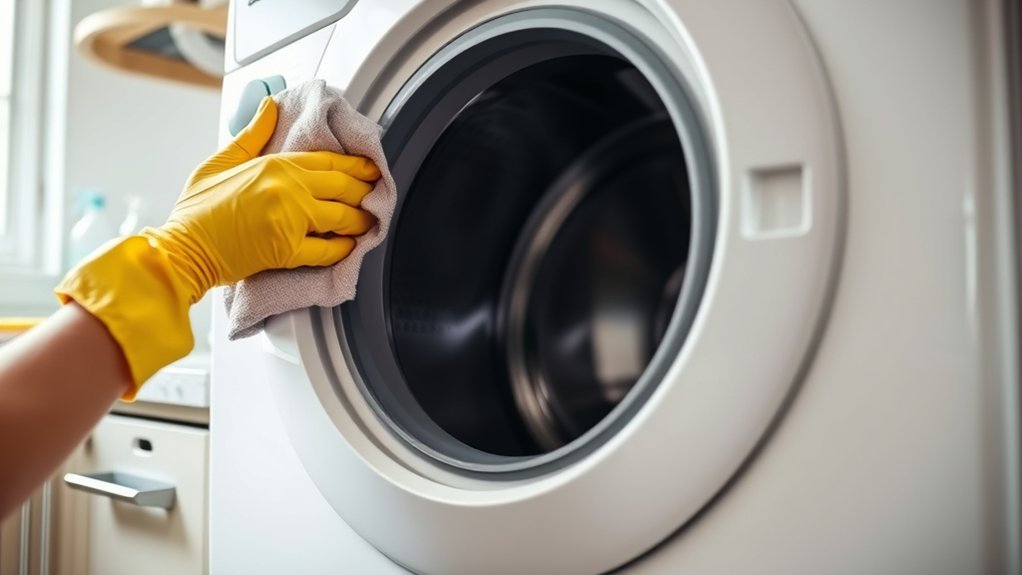
How To Clean A Frigidaire Washing Machine – Guide
To clean your Frigidaire washing machine, first gather microfiber cloths, warm soapy water, a small brush, and washer cleaner. Unplug your machine, empty detergent compartments, and remove the filter to clear debris.
Run a hot water cleaning cycle with washer cleaner or vinegar to refresh the drum. Scrub seals and the detergent dispenser to prevent mold buildup.
Wipe down the exterior carefully, avoid excess moisture, and leave the door open to air dry. More detailed steps will help you maintain your washer efficiently.
Gather Materials and Prepare Your Frigidaire Washer
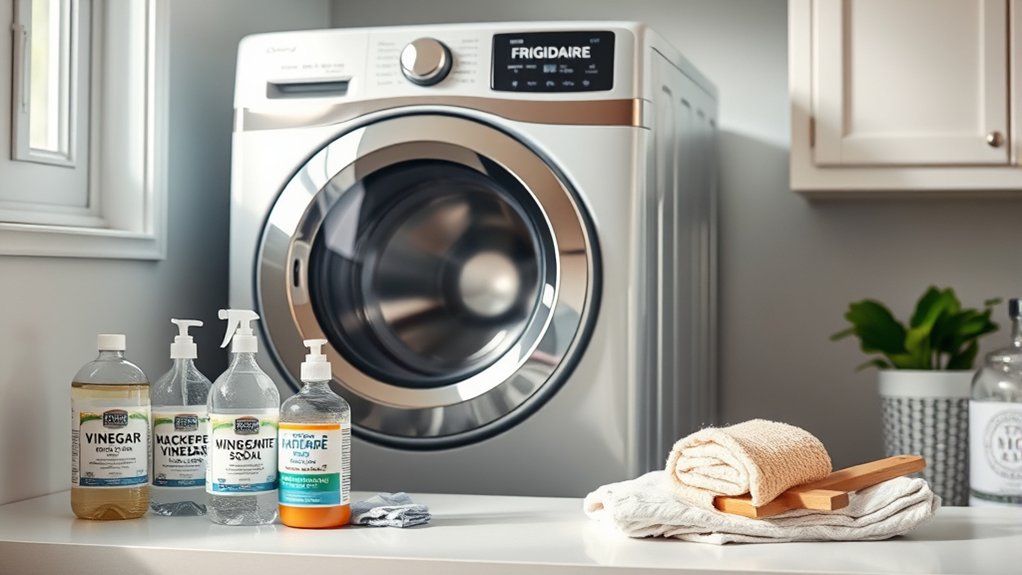
Before you begin cleaning your Frigidaire washing machine, gather all the necessary materials like a microfiber cloth, warm soapy water, a small brush, a spray bottle, and a specialized washing machine cleaner.
Next, unplug the washer to eliminate any risk of electrical shock during the cleaning process. Make sure to remove all clothes and empty the detergent compartments completely so you can access areas prone to residue buildup.
Having your cleaning supplies ready makes the whole process smoother. Follow the instructions on your chosen washing machine cleaner—whether it’s a tablet, powder, or liquid—for the best results.
Preparing the washer properly sets the foundation for effective cleaning and maintenance. Taking these steps will save you time and help prevent damage to the components, keeping your Frigidaire washer in great shape.
Drain and Clean Your Washer Filter Safely
When you unplug your Frigidaire washer, you can safely access the drain and filter without risking electrical shock. Begin by placing towels or a shallow tray beneath the drain panel to catch any water during removal.
Unplug your Frigidaire washer and place towels underneath to safely catch any water during filter access.
Carefully unscrew the drain dial or filter cover, controlling the water flow to prevent spills.
Remove the drain filter and inspect it for debris, lint, or foreign objects. Use a small brush or cloth to clear all buildup thoroughly.
Rinse the filter with warm water to verify it’s clean before reinstalling it.
Secure the drain panel tightly to maintain proper function. Prioritizing safety and thoroughness during this step helps maintain your washer’s efficiency and prevents potential drainage issues caused by debris accumulation in the drain filter.
Run a Hot Water Cycle to Refresh Your Frigidaire Washer Drum
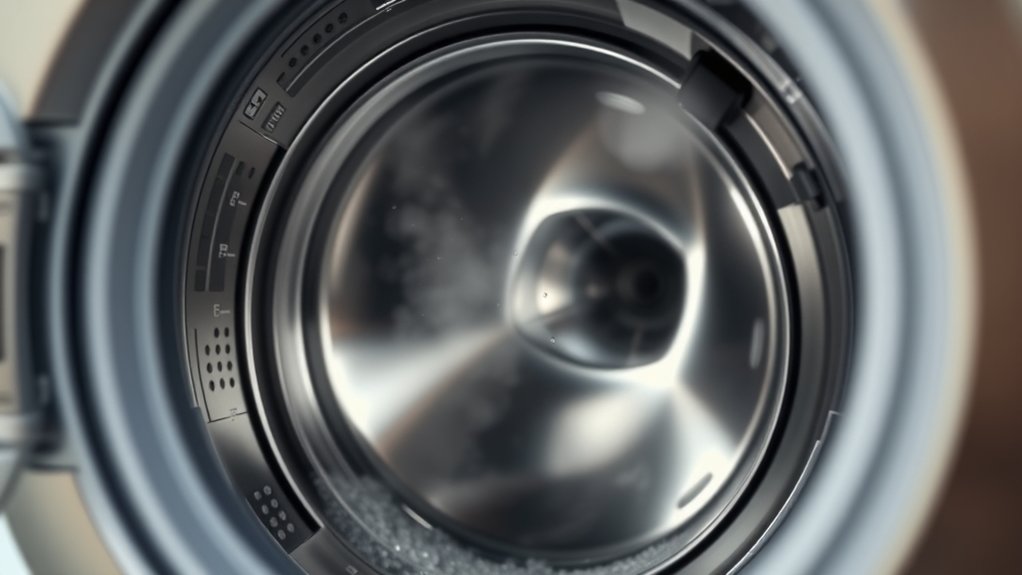
Run a hot water cycle with your Frigidaire washer empty to dissolve soap scum, mineral deposits, and detergent residue effectively. Go ahead and select the hottest water setting available to get the best cleaning power.
You might also want to add a washing machine cleaner or some white vinegar to give it an extra boost.
Doing this once a month really helps keep the drum fresh. Plus, it prevents any unpleasant odors and stops mold from building up. It’s a simple step that makes a big difference!
Benefits Of Hot Water
How often do you refresh your Frigidaire washer drum with hot water? Running a hot water cycle monthly is essential for effective cleaning. Hot water dissolves detergent residues, soap scum, and mineral deposits, guaranteeing your washer stays hygienic.
It also kills bacteria, mold, and eliminates odors that accumulate over time. Hot water breaks down greasy or oily buildup better than cold water, providing a thorough clean. Regular hot water cycles prolong your washer’s lifespan by preventing mold growth and maintaining hygiene.
| Benefit | Effect |
|---|---|
| Dissolves residues | Removes detergent and mineral buildup |
| Kills bacteria and mold | Eliminates odors and harmful microbes |
| Breaks down grease | Ensures thorough cleaning |
| Prolongs washer lifespan | Prevents mold, maintains hygiene |
Proper Cycle Selection
Although many washers offer various cleaning cycles, selecting the appropriate one is crucial to effectively refresh your Frigidaire washer drum. Use the “Tub Clean” or “System Clean” cycle selection if your model includes it. These are specifically designed to run a hot water cycle that dissolves detergent residues, mineral deposits, and mold.
Always verify the drum is empty before starting. For enhanced cleaning, add a washing machine cleaner or a vinegar and baking soda mixture to the drum before initiating the hot water cycle.
Running this cycle at least once a month maintains excellent cleanliness and prevents odors. Proper cycle selection ensures your washer’s interior stays fresh and operates efficiently without damaging clothes or leaving buildup behind.
Enhancing Drum Cleanliness
When you select a hot water cycle with a washing machine cleaner, you activate a process that dissolves detergent residues, soap scum, and mineral buildup inside your Frigidaire washer drum. This cycle raises the temperature to effectively break down organic matter, bacteria, and mineral deposits, ensuring thorough sanitization.
Before starting, make sure to remove all clothing or items. This allows hot water to circulate freely, reaching every drum surface for peak drum cleanliness.
Running this cycle monthly prevents mold growth and eliminates musty odors, keeping your washing environment fresh and hygienic.
Regular use of the hot water cycle not only refreshes the drum but also helps prolong your washer’s lifespan. It prevents buildup that can impair function.
Scrub Seals and Detergent Dispenser on Your Frigidaire Washer
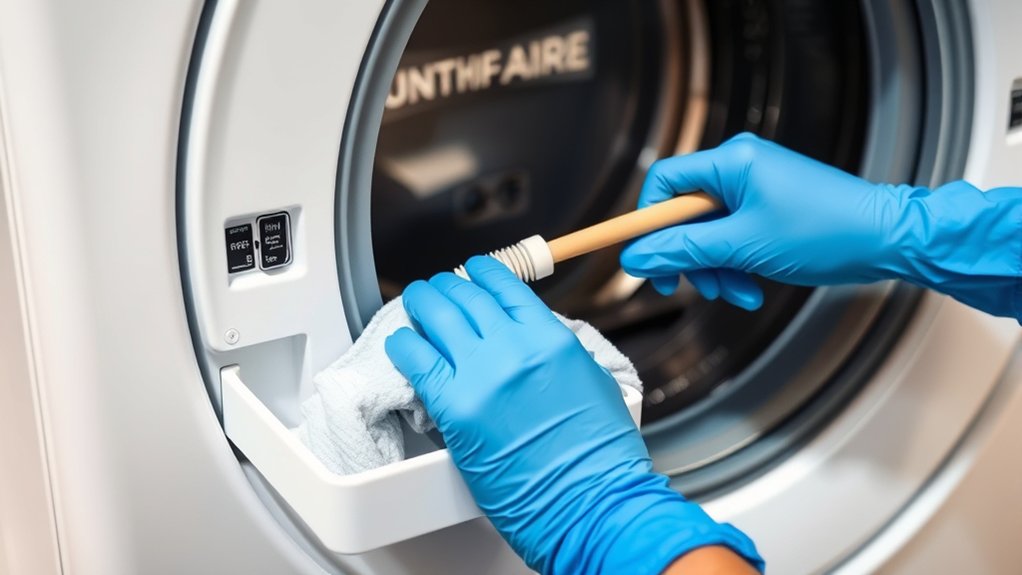
First, take out the detergent dispenser drawer and let it soak in warm, soapy water to help loosen any buildup.
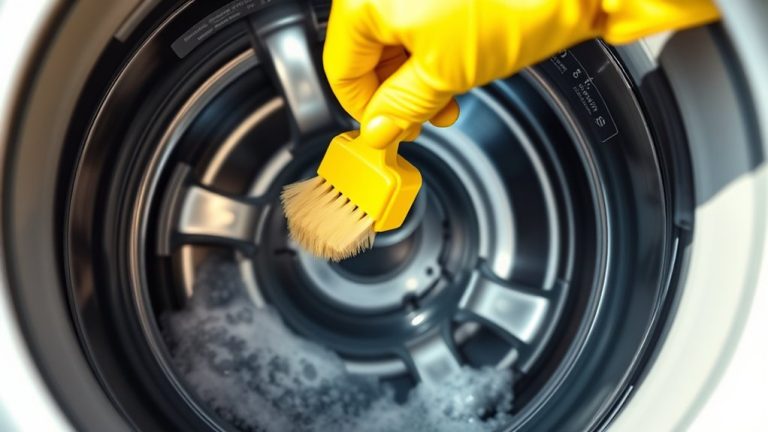
While that’s soaking, pull back the rubber door seal folds and give them a good scrub with a soft brush to get rid of mold and residue.
Once you’ve cleaned everything, make sure to wipe all the areas dry to keep mold and odors from coming back.
Cleaning Rubber Seals
Since mold and detergent buildup often hide in the folds of the rubber gasket, you’ll need to pull back the seals carefully to access these areas.
Use a damp cloth or a soft brush dipped in warm, soapy water to scrub the rubber seals thoroughly, focusing on crevices where mold buildup accumulates.
After scrubbing, wipe the seals with a clean, damp cloth to remove loosened residue.
Regular cleaning of these rubber seals is crucial to prevent mold growth and unpleasant odors.
Avoid harsh chemicals that can degrade the gasket.
By maintaining the rubber seals with consistent cleaning, you’ll extend your Frigidaire washer’s lifespan and guarantee peak hygiene.
This step complements detergent dispenser care but focuses solely on the gasket’s condition and cleanliness.
Taking a little extra time here really pays off in the long run.
Detergent Dispenser Care
Although cleaning the detergent dispenser may seem straightforward, thoroughly scrubbing the dispenser drawer and surrounding seals is essential to prevent buildup and mold growth. Start by removing the detergent dispenser drawer and soaking it in warm, soapy water to loosen residue.
Use a small brush to scrub the drawer and adjacent areas, ensuring all detergent deposits and potential mold are eliminated.
Make sure to pull back the rubber gasket around the door to clean trapped dirt, soap scum, or mold in the folds. After scrubbing, wipe down the seals and dispenser area with a damp cloth to keep everything fresh and clean.
Finally, dry all components thoroughly before reinserting the detergent dispenser. This step helps avoid moisture buildup, which can lead to mold.
Regular care like this will keep your Frigidaire washer’s detergent dispenser clean and hygienic.
Preventing Mold And Odors
Keeping the detergent dispenser and rubber gasket clean helps reduce buildup. But preventing mold and odors takes regular attention to these areas. You need to actively remove dirt, mold, and detergent residue to keep your washer fresh.
Start by pulling back the rubber gasket and scrubbing it with a damp cloth or soft brush. This helps clean hidden mold and grime.
Next, remove the detergent dispenser tray. Soak it in warm, soapy water, then scrub it thoroughly to get rid of odors and buildup.
After every wash, wipe the door seal and gasket folds with a clean, damp cloth. Then disinfect with equal parts water and white vinegar. This will help stop mold growth.
Finally, leave the door and detergent drawer slightly open after cleaning. This promotes drying and prevents mold and musty odors from forming.
Clean the Washer Tub and Door Edges Thoroughly
To clean the washer tub and door edges thoroughly, start by wiping the inside of the tub with a damp cloth and mild detergent to remove residue and prevent mold buildup.
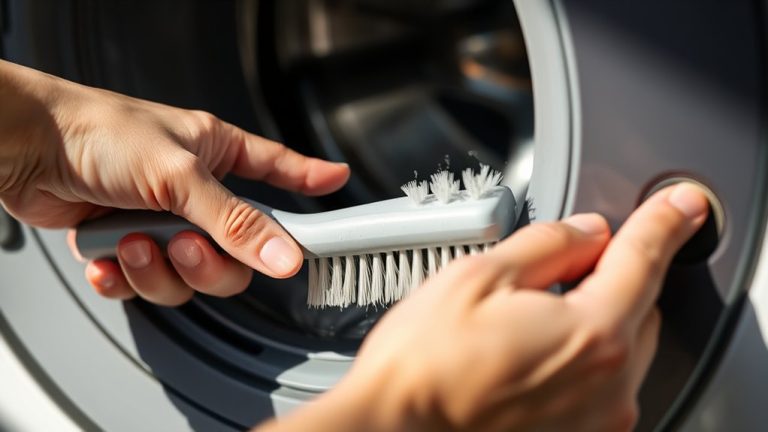
Next, pull back the rubber door seal folds and scrub with a soft brush to eliminate dirt, mold, and detergent buildup.
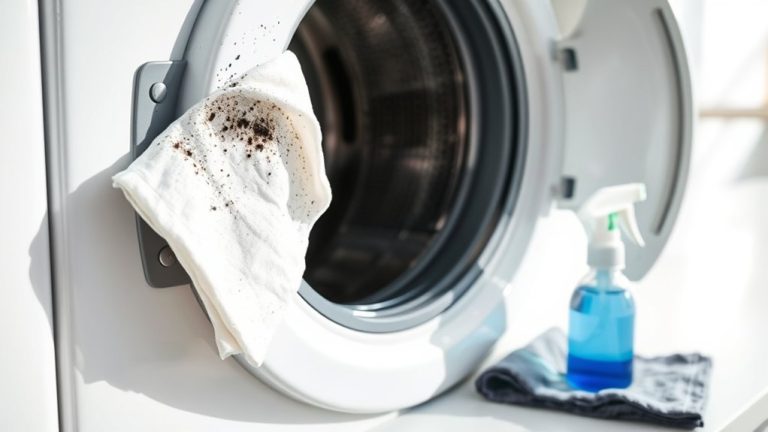
Use a clean, damp cloth to wipe around the door edges and gasket, ensuring all crevices are free of debris.
Then, run a hot water cycle with a washer cleaner or a vinegar and baking soda mixture to disinfect both the washer tub and door edges.
After completing these steps, leave the door slightly open to allow the interior and seal to dry completely.
This helps prevent musty odors and keeps your washing environment fresh and clean.
Wipe Down the Exterior and Control Panel Gently
When you clean the exterior and control panel, use a damp microfiber cloth to gently wipe the surfaces. Be sure to avoid excess moisture because it can cause water damage to the electronic components. This also helps keep the machine’s finish looking nice.
Try not to use harsh chemicals or abrasive cleaners since they can scratch or degrade the exterior.
Focus on key areas:
- Carefully clean around the door and detergent dispenser where residue tends to build up.
- Wipe the control panel softly to protect the buttons and display from moisture.
- Make it a habit to regularly clean seams and edges to prevent dust and grime from accumulating.
Prevent Odors and Keep Your Washer Fresh
Although your washing machine handles the heavy lifting, you need to take steps to prevent odors and keep it fresh. For effective odor prevention, remove clothes promptly after each cycle and leave the lid open to reduce moisture buildup. Wipe the rubber seal and door area after every wash to prevent mold buildup.
Regularly clean the top and sides of your washer with a damp cloth to reduce dirt accumulation that fosters mold growth. Incorporate the Tub Clean cycle monthly; this removes residue and inhibits mold and mildew inside the drum.
Guarantee proper ventilation around your washer to minimize humidity and discourage mold formation.
Consistent washer maintenance using these methods will keep your Frigidaire washing machine operating efficiently and smelling fresh. It’s all about staying on top of these simple habits to enjoy a fresh and clean washer every time!
Fix Common Washer Problems After Cleaning
Keeping your Frigidaire washing machine clean helps reduce odors and mold, but you might still run into common issues after maintenance. To fix washer problems after cleaning, follow these simple steps:
Maintaining a clean Frigidaire washer reduces odors, but some issues may still arise after cleaning.
First, keep an eye on error codes during or after cleaning cycles. These codes help you spot specific malfunctions early on.
Make sure your laundry loads are properly balanced and free of debris. This prevents unbalanced loads and drainage problems that can cause headaches.
Also, check hoses, filters, and door seals regularly for blockages or damage. These parts can cause leaks or mechanical failures if neglected.
Taking care of these points quickly helps keep your washer performing at its best. Running the right cleaning cycles and addressing error codes promptly will keep things running smoothly and extend your machine’s life.
And don’t ignore persistent odors or error messages—they usually mean there’s an underlying issue that needs fixing after cleaning.
Frequently Asked Questions
Can I Use Bleach Instead of Vinegar to Clean My Frigidaire Washer?
Yes, you can use bleach to clean your Frigidaire washer, but you need to dilute it properly and use it sparingly. Excessive bleach can damage rubber seals and other components. Always follow the manufacturer’s guidelines to prevent harm.
For routine cleaning, vinegar is safer and gentler. It effectively removes odors and mold without risking damage.
Save bleach for occasional deep disinfecting. Just make sure you rinse thoroughly afterward to protect your washer’s parts.
How Often Should I Replace Hoses on My Frigidaire Washing Machine?
You should replace hoses on your Frigidaire washing machine every 3 to 5 years to prevent leaks and ruptures. Regularly inspect hoses for wear, cracks, or bulges and replace them immediately if damaged.
Consider upgrading to stainless steel braided hoses for increased durability.
Always follow your user manual’s guidelines for specific intervals. Proactive replacement helps you avoid sudden water damage during operation and keeps your washer running safely and efficiently.
It’s a simple step that can save you a lot of hassle down the road.
Is It Safe to Use Fabric Softener During the Cleaning Cycle?
Using fabric softener during your cleaning cycle isn’t as safe as a phone booth in a digital age. You shouldn’t use it because it can leave residues that reduce cleaning effectiveness and promote buildup on your drum and seals.
For best results, run the cleaning cycle with just water and a washing machine cleaner. Always check your Frigidaire’s manual to confirm, but generally, avoid fabric softener to keep your washer performing at its best.
What Should I Do if My Washer Leaks After Cleaning?
If your washer leaks after cleaning, first check and tighten all hose connections to prevent loose fittings.
Inspect the door seal and gasket for damage or debris causing water escape.
Make sure the drain filter is correctly installed and unclogged.
Avoid overloading the machine to reduce stress on seals.
Finally, verify the detergent dispenser and drum are aligned and free of buildup that might cause leaks.
Addressing these points should stop the leak.
Can I Clean My Frigidaire Washer With Baking Soda Instead of Commercial Cleaners?
Yes, you can clean your Frigidaire washer with baking soda instead of commercial cleaners. Just add half a cup of baking soda directly into the drum or detergent dispenser, then run a hot water cycle.
For a deeper clean, try combining baking soda with white vinegar during the rinse cycle. This helps remove odors and buildup really effectively.
This natural method breaks down residue and keeps your washer smelling fresh without any harsh chemicals.
Give it a try regularly to keep your machine in great shape!
Conclusion
By following these steps, you’ll keep your Frigidaire washer running like a well-oiled machine. Regular cleaning prevents odors and buildup, ensuring peak performance and longevity.
Think of maintenance as giving your washer a revitalizing breeze. Simple, quick actions save you from future headaches.
Stay consistent and address issues promptly. Your washer will reward you with efficient, reliable service every load.
Keep it clean, keep it strong.