What To Do If You Get Oxiclean On Your Skin – Safety Steps
If you get OxiClean on your skin, rinse it off immediately under cool, gently running water for at least 15 minutes, especially if irritation develops. Remove contaminated clothing, shoes, or jewelry while rinsing, and don’t scrub or apply creams, oils, or other cleaners.
Check the product label for first-aid instructions, and call Poison Control if you’re unsure what to do. Seek medical care for severe pain, blistering, or persistent symptoms. A few simple precautions can also help prevent future contact.
Rinse OxiClean Off Your Skin Right Away
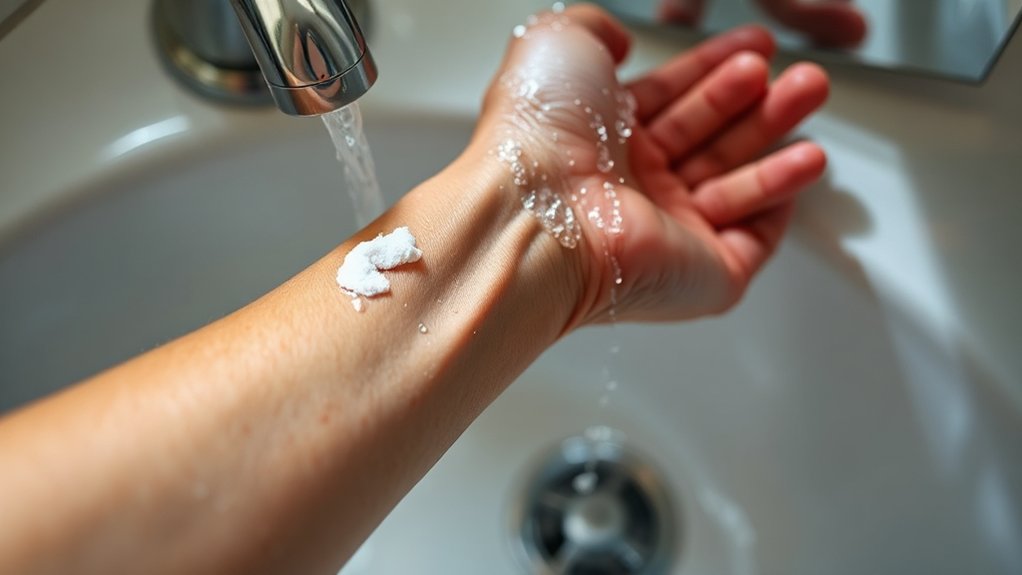
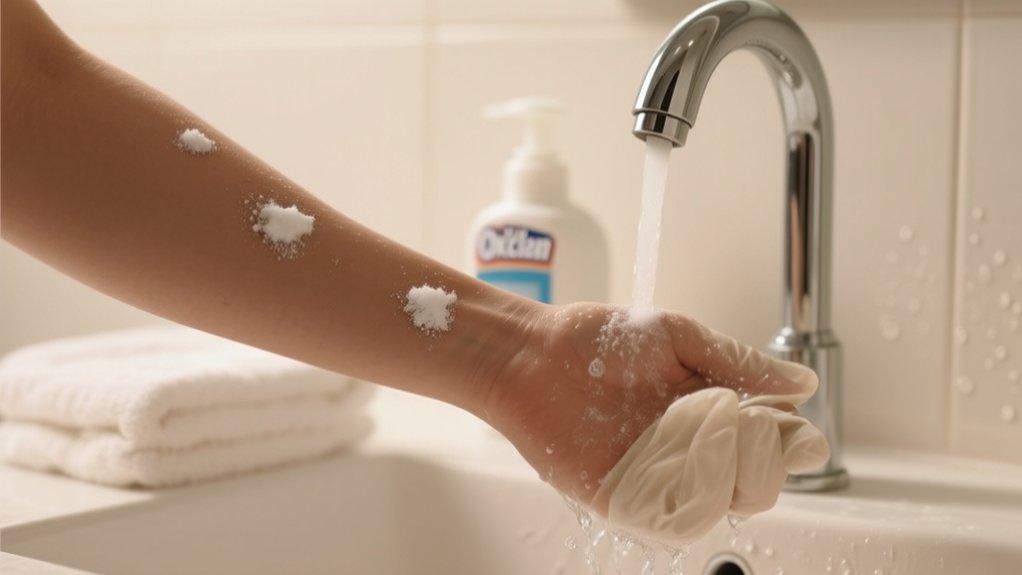
Rinse OxiClean off your skin immediately under cool, running water. Hold the affected area beneath a gentle stream and let the water flush away the product. Keep rinsing for at least 15 minutes, especially if you feel burning, stinging, or irritation.
Rinse OxiClean from skin under cool, running water for at least 15 minutes, especially if burning or irritation occurs.
Don’t scrub or rub your skin; friction can make irritation worse. If the product covers a large area, use a shower to rinse thoroughly. For a small spot, run clean water over it continuously, directing runoff away from unaffected skin.
Avoid hot water, which may increase discomfort. Don’t apply creams, oils, or other products while you rinse.
If irritation persists, worsens, or you develop pain or a rash, contact a medical professional or poison control for guidance.
Keep the product container nearby so you can share its ingredients.
Remove Contaminated Clothing and Jewelry
Remove any clothing, shoes, or jewelry that OxiClean has touched as soon as you can. Contaminated fabric or metal can keep the product against your skin and prolong exposure.
Take items off carefully, avoiding contact with unaffected areas.
If a garment sticks to your skin, don’t pull it; continue rinsing the area and seek medical advice for help removing it.
Place contaminated clothing and accessories somewhere others won’t touch them. Keep them away from children, pets, and clean belongings.
Don’t wear them again until you’ve washed them separately according to the care label, using plenty of water.
Handle them cautiously, and wash your hands afterward.
If OxiClean got inside gloves, shoes, or jewelry, remove those items too. Check your skin beneath them, since product may have collected there.
Continue rinsing any exposed skin, and contact Poison Control or a healthcare professional if irritation persists or you’re unsure what to do.
Avoid Scrubbing or Applying Other Products
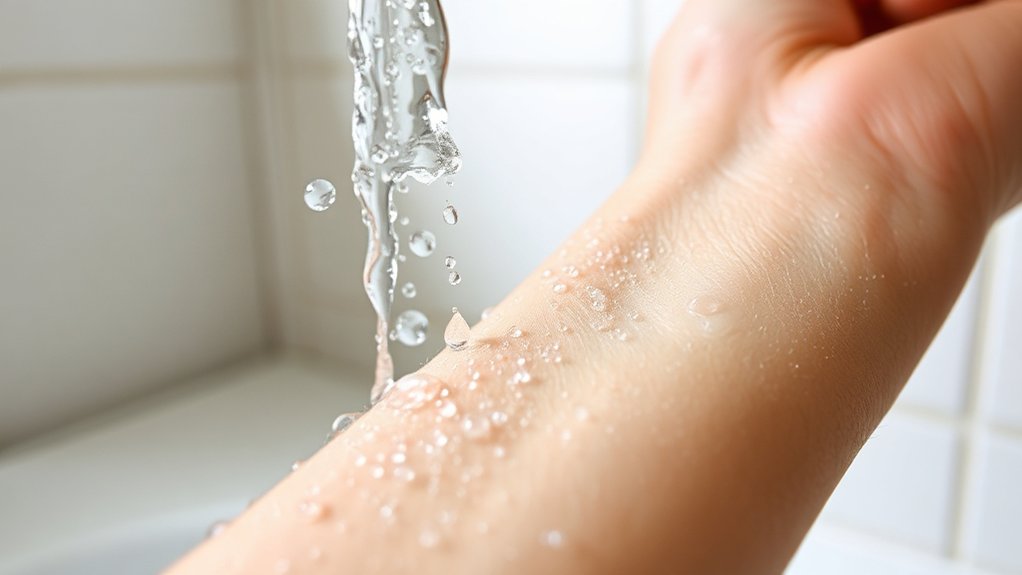
Don’t scrub your skin because friction can make irritation worse.
It’s best to steer clear of using other cleaners on the affected area.
Also, hold off on applying creams and oils until you’ve rinsed your skin thoroughly.
Don’t Scrub the Skin
After rinsing off OxiClean, pat your skin dry instead of scrubbing it. Use a clean, soft towel and gently blot the affected area. Rubbing can irritate skin that’s already sensitive from contact with the product, making redness, stinging, or discomfort worse.
Don’t use a washcloth, brush, or rough towel to try to remove lingering residue.
Once your skin is dry, leave it alone and let it recover. Avoid scratching, picking, or repeatedly touching the area, even if it feels itchy.
Don’t apply creams, oils, or other products unless a medical professional recommends them. They may irritate your skin or make it harder to assess a reaction.
Check the product label for first-aid guidance. If irritation persists, worsens, or blisters develop, contact a healthcare professional or poison control for advice.
Avoid Other Cleaners
While your skin recovers, avoid using other cleaners or household products to remove OxiClean residue. Don’t reach for bleach, vinegar, ammonia, disinfectants, or laundry detergent. Mixing products can create harmful fumes or reactions, and applying them to irritated skin may worsen the injury.
Rinse the affected area with plenty of cool, running water instead, following the product label’s first-aid directions. Keep contaminated clothing away from your skin, and don’t use tools or abrasive materials to lift residue.
If the product remains on your skin after thorough rinsing, or you develop persistent pain, redness, swelling, or blistering, contact a medical professional or poison control for guidance. Have the product container or label available so you can identify its ingredients.
Avoid experimenting with remedies; use water and professional advice to guide your next steps.
Skip Creams and Oils
Skip creams, oils, and other products on the affected skin; they can trap residue or irritate the area further. Don’t scrub, either. Rubbing may worsen irritation, especially if your skin feels tender or looks red.
| Avoid | Why | Do instead |
|---|---|---|
| Creams | May irritate skin | Rinse with water |
| Oils | Can hold residue | Keep skin product-free |
| Scrubbing | Can increase irritation | Let water rinse gently |
| Home remedies | May trigger reactions | Follow label guidance |
After rinsing, gently pat the area dry with a clean towel. Leave it uncovered if comfortable. Don’t apply lotions, ointments, or makeup until irritation settles or a healthcare professional advises you.
Check the product label for first-aid instructions. If pain, redness, or swelling persists or worsens, contact a medical professional or poison control for guidance.
Check the Label for Skin-Contact First Aid
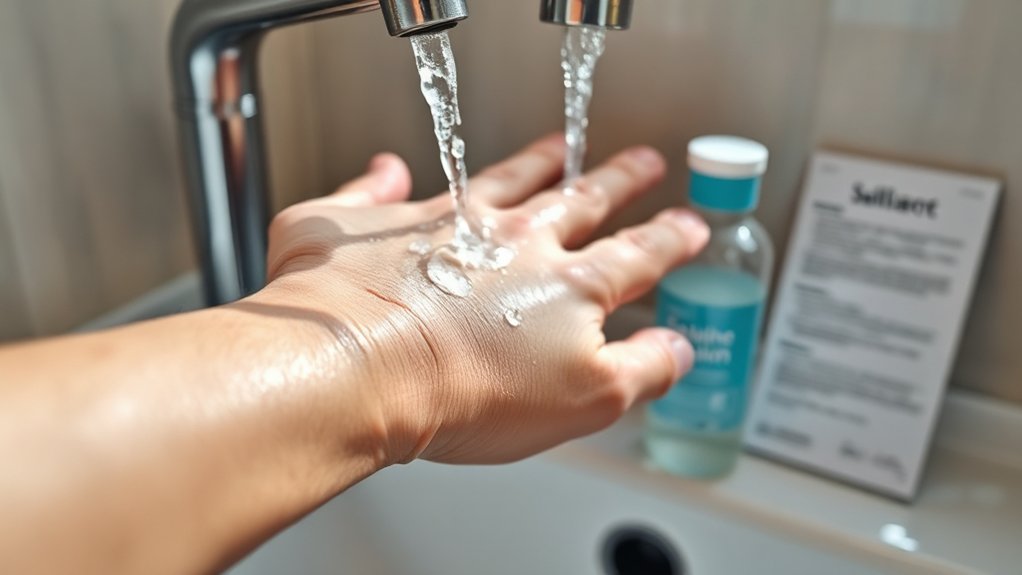
Check the product label first, since OxiClean formulas may give different skin-contact instructions.
Read the first-aid section for the exact steps recommended for the product that touched you. Don’t assume all powders, sprays, and liquids have identical ingredients or directions.
- Find the product name and check that the label matches the container involved.
- Read the skin-contact instructions, including how long to rinse and whether to remove contaminated clothing.
- Follow those directions carefully, and check any warnings about irritation or other symptoms.
If the label says to rinse, use plenty of clean, lukewarm running water and avoid scrubbing.
Take off clothing or jewelry with product on it while you rinse, if you can do so safely. Keep the container nearby so you can refer to its ingredients and directions.
Don’t substitute advice for another OxiClean product; its label may specify different first aid.
Call Poison Control if You’re Unsure
If you’re not sure how serious your skin exposure is, just give Poison Control a call for guidance.
It helps to have the OxiClean package handy so you can easily share the product name and ingredients.
Be ready to explain how much got on your skin, when it happened, and any symptoms you’re experiencing.
When to Call Poison Control
Call Poison Control if you’re unsure how much OxiClean got on your skin, how long it stayed there, or whether your symptoms need medical attention.
Don’t wait for discomfort to become severe before asking for guidance. Contact Poison Control promptly if you notice a reaction or need help deciding what to do next.
Call emergency services for severe symptoms, such as trouble breathing, fainting, or rapidly worsening swelling.
For less urgent concerns, Poison Control can help you assess the exposure and recommend appropriate next steps. Call especially if:
- Your skin remains painful, red, or irritated after rinsing.
- You develop blistering, a rash, or increasing swelling.
- You’re uncertain whether the product caused your symptoms.
If symptoms worsen while you’re seeking advice, get urgent medical care.
When in doubt, make the call; professional guidance can help you respond safely.
Information to Have Ready
Before contacting Poison Control, gather the product container or label, the time of exposure, how much got on your skin, how long it stayed there, and any symptoms.
Note whether you rinsed the area and for how long. If you know the product’s ingredients or concentration, have that information ready, too.
Tell the specialist your age, relevant health conditions, and whether the product touched your eyes, mouth, or broken skin. Keep the container nearby so you can read its directions and warnings accurately.
Don’t delay rinsing your skin to collect details; use clean, running water first. If you can’t find the label, describe the product and its packaging as clearly as possible.
Answer questions honestly, and follow the specialist’s advice. If symptoms worsen, seek urgent medical care.
Get Medical Care for Severe or Lasting Symptoms
Seek medical care promptly if you develop severe pain, blistering, swelling, or symptoms that persist after rinsing OxiClean off your skin. Don’t wait for symptoms to worsen. Contact a healthcare professional or go to an urgent care clinic.
If you’re unsure how serious your exposure is, call Poison Control for guidance.
When you seek help, share clear details so clinicians can assess your exposure. Tell them which OxiClean product contacted your skin and when it happened.
Explain how much product touched you, how long it remained, and how you rinsed the area. Describe your symptoms and any first aid you’ve tried.
Bring the product container or a photo of its label if available. Follow medical advice, and don’t apply creams or other treatments unless a professional recommends them.
Call emergency services if you have trouble breathing, faintness, or rapidly worsening symptoms.
Watch for Skin Irritation or Blisters
Even after rinsing, watch the affected skin for redness, itching, burning, or blisters. These signs may appear right away or develop over several hours.
Check the area periodically, noting whether symptoms improve, stay the same, or worsen.
Mild irritation may settle, but don’t ignore changes such as increasing pain, swelling, warmth, or spreading redness.
Mild irritation may settle, but watch for increasing pain, swelling, warmth, or redness that spreads.
If a blister forms, don’t pop or peel it; broken skin can become infected.
Keep the area clean, and cover it loosely with a sterile, nonstick dressing if needed.
Avoid applying products that sting or irritate the skin.
If symptoms persist, worsen, or concern you, contact a healthcare professional for advice.
Seek urgent care for severe pain, extensive blistering, or signs of infection, such as pus or fever.
Tell the clinician which product contacted your skin and when.
Prevent Future OxiClean Skin Contact
To prevent future skin contact, wear gloves when handling OxiClean and follow the product label’s directions. Protect your eyes, too, and work in a well-ventilated area. Keep the powder or solution away from your face, and don’t touch it with bare hands, even briefly.
- Prepare carefully: Read the label before mixing, use the recommended amount, and add the product as directed to avoid splashes.
- Store it safely: Keep OxiClean in its original, closed container, away from children, pets, food, and moisture.
- Clean up promptly: Rinse measuring tools and surfaces after use, remove gloves without touching their outer surfaces, and wash your hands afterward.
If your gloves tear or product spills, stop and rinse exposed skin with plenty of water.
Replace damaged gloves before continuing.
Frequently Asked Questions
Can Oxiclean Cause a Chemical Burn?
Yes, OxiClean can cause skin irritation or a chemical burn, especially if you touch concentrated product, leave it on your skin, or have sensitive skin.
You may notice redness, pain, itching, or blistering.
Rinse the affected area under cool running water for at least 15 minutes, and remove contaminated clothing or jewelry.
Don’t scrub or apply other chemicals.
Seek medical help for severe symptoms, blistering, or persistent pain.
Is Oxiclean Dangerous if It Gets in Your Eyes?
Yes, OxiClean can irritate or injure your eyes, especially in concentrated form.
If it gets in your eye, rinse immediately with clean, lukewarm water for at least 15 to 20 minutes. Hold your eyelids open and remove contact lenses if they come out easily.
Don’t rub your eye or apply other products.
Call Poison Control or seek urgent medical care, especially if pain, redness, blurred vision, or irritation continues.
What Should I Do if a Child Gets Oxiclean on Their Skin?
If a child gets OxiClean on their skin, remove contaminated clothing and rinse the area under cool, running water for at least 15 minutes.
Wash gently with soap; don’t scrub or apply other chemicals.
Check the product label since formulas vary.
If irritation, pain, redness, or blistering develops, contact Poison Control or a healthcare professional.
In the U.S., call Poison Control at 1-800-222-1222.
Seek urgent care for severe symptoms.
Does Oxiclean Cause an Allergic Reaction?
Yes, OxiClean can cause an allergic reaction in some people, though irritation is more common.
You might notice itching, redness, swelling, hives, or a rash after contact.
Rinse the affected skin thoroughly with cool water and remove contaminated clothing.
If symptoms worsen, spread, or don’t improve, contact a healthcare professional.
Get emergency help for trouble breathing, facial or throat swelling, or severe dizziness.
Keep the product away from children and follow its label.
Can Diluted Oxiclean Still Irritate Skin?
Yes, diluted OxiClean can still irritate your skin. Even a weak solution may cause redness, itching, or dryness, especially if you have sensitive skin or leave it on for a while.
Picture a single drop spreading across a dinner plate: dilution reduces the cleaner’s concentration, but it doesn’t make it harmless.
Rinse your skin thoroughly with cool water, remove contaminated clothing, and stop using the product if irritation develops.
Conclusion
If you get OxiClean on your skin, rinse it off promptly with plenty of cool water. Remove contaminated items and follow the product label. Don’t scrub or apply other products.
Call Poison Control if you’re unsure what to do, and seek medical care for severe or lasting symptoms. Watch for irritation or blisters, even after rinsing.
Prevention matters. Poison centers handle more than two million exposure cases each year, so keep cleaners stored safely and follow directions to reduce avoidable risks.