How Does A Downy Ball Work – Simple Breakdown
If you’ve ever wondered why your fabric softener doesn’t always seem to work the way it should, you’re not alone. Many people struggle with messy dispenser trays, residue buildup, or clothes that just don’t feel as soft as expected. A Downy Ball offers a simple solution, and once you understand how it works, using it becomes surprisingly easy.
A Downy Ball works by releasing liquid fabric softener at the perfect time during your washer’s rinse cycle, ensuring ideal softening without using your machine’s dispenser. You fill its built-in chamber with the right amount of softener, place the ball inside the drum, and it automatically dispenses the softener when water dilutes the chamber’s contents. This approach avoids residue buildup, especially in older machines. Keep following for insights on measuring, avoiding waste, and maintenance.
What Is the Downy Ball and How Does It Work?
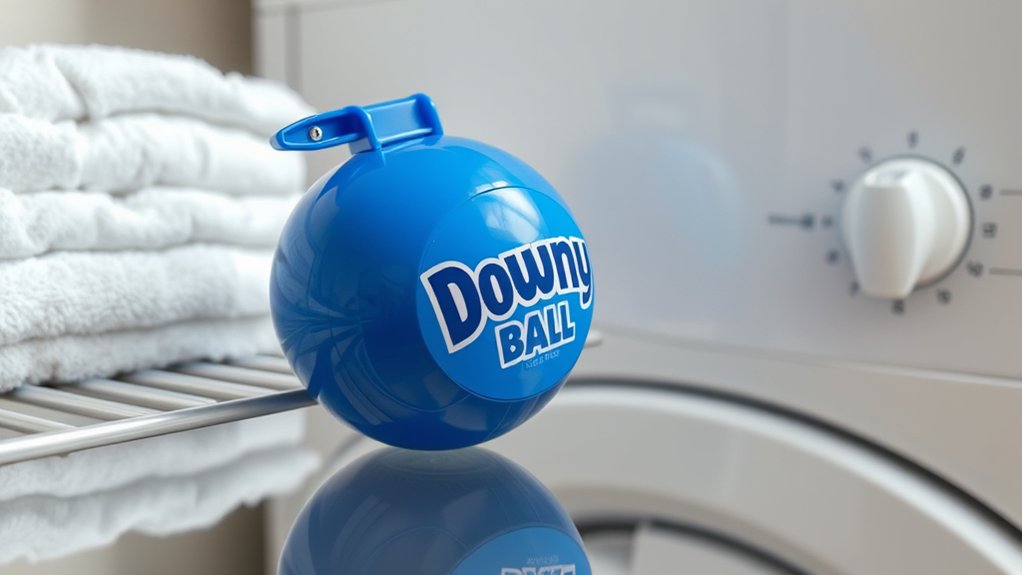
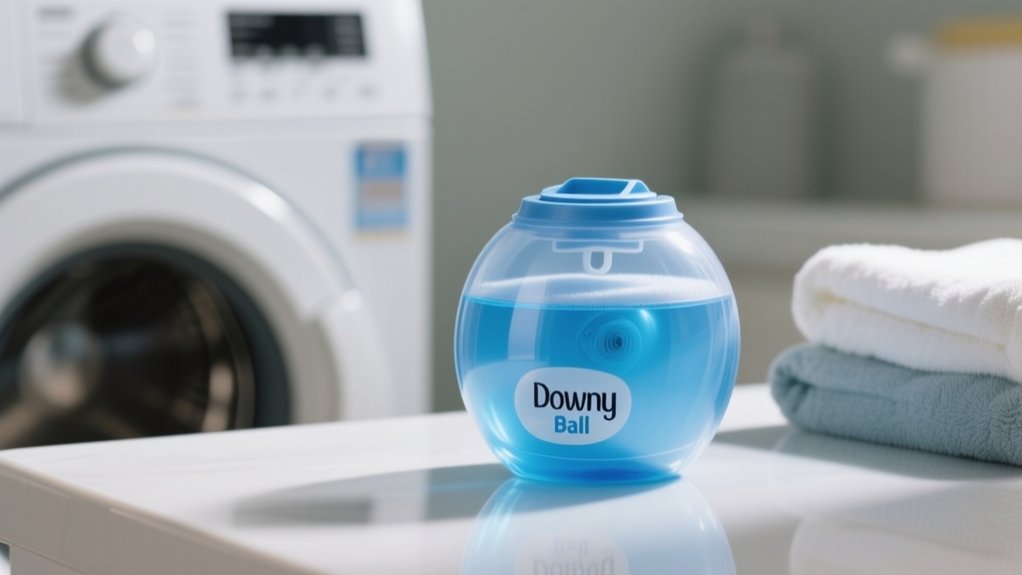
The Downy Ball is a specialized laundry tool that dispenses liquid fabric softener at the ideal moment during the wash cycle. You fill the ball with fabric softener, then place it into the washing machine drum before starting the wash.
The Downy Ball releases fabric softener precisely when rinsing starts for optimal laundry care.
As the cycle progresses, agitation causes the softener to release through a small opening in the ball, precisely when rinsing begins. This timing guarantees the softener doesn’t get washed away prematurely, optimizing its effectiveness.
You’ll want to start with a small volume of softener to prevent waste and adjust based on your laundry load. Since the Downy Ball works with various fabric softener brands and concentrations, it offers flexibility and consistency.
Its design eliminates reliance on machine dispensers, reducing residue buildup and enhancing fabric care.
Why the Downy Ball Is Ideal for Older Washing Machines
If your washing machine lacks modern dispenser technology, the Downy Ball offers a reliable solution for delivering fabric softener at the precise moment it’s needed.
Older washers often don’t have automated dispensers, so the Downy Ball’s design guarantees timely release during the rinse cycle, optimizing softener effectiveness. It prevents buildup and residue commonly caused by direct liquid softener application in older machines, reducing maintenance and clogging risks.
The ball’s compatibility with various fabric softener brands and concentrations adds versatility to your laundry routine.
Using smaller amounts inside the Downy Ball minimizes waste and compensates for uneven softener distribution typical of older washers.
How to Measure Fabric Softener With the Downy Ball
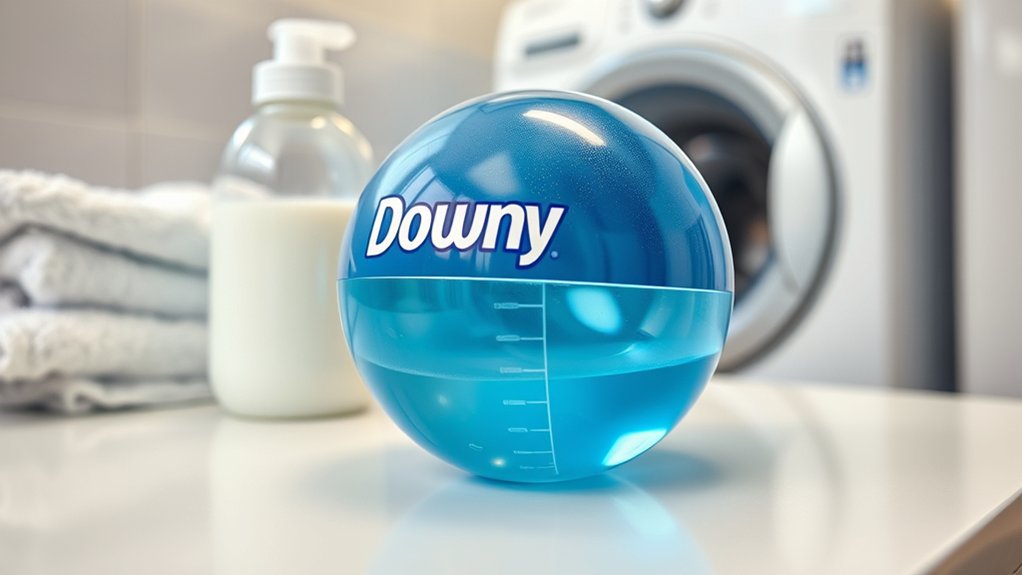
Accurately measuring fabric softener with a Downy Ball guarantees ideal softness and prevents waste. The ball features a built-in measuring chamber, enabling you to pour fabric softener precisely to the indicated fill line.
After filling, securely close the ball and place it atop your laundry before starting the wash cycle. Its design assures the softener is released only during the rinse cycle, promoting even distribution throughout your fabrics.
Begin with the minimum recommended amount, then adjust based on your load size and softness preferences.
To maintain measurement accuracy and effective dispersal, regularly clean the Downy Ball to remove any residue buildup. This systematic approach guarantees consistent, controlled fabric softener usage tailored to your washing needs.
How to Avoid Wasting Softener With the Downy Ball
A measured amount works best when the dispenser is loaded correctly.
Start With Small Amounts
Since the Downy Ball releases fabric softener during the rinse cycle, start by filling it with only a small amount, around a quarter to half of the recommended dosage, to evaluate its effectiveness without wasting product. This controlled initial volume allows you to monitor how your laundry responds to the softener, preventing over-application.
Adjust the quantity based on load size and fabric type, as fabric density influences absorption rates. Starting small minimizes the risk of excessive softener buildup, which can degrade fabric quality or cause residue.
Experiment with varying concentrations to identify the best balance between softness and product conservation.
Additionally, regularly inspect the Downy Ball for residue or clogs, since blockages can hinder proper dispensing, leading to inefficient softener use and potential wastage.
Measure Softener Precisely
When you measure fabric softener with the Downy Ball, the device guarantees that only the needed amount is released during the rinse cycle, preventing overuse. Its design guarantees precise timing and measured dispensing, which contrasts with direct bottle pouring that often leads to excess softener.
You should start by filling the ball with a small quantity to test effectiveness and adjust accordingly, minimizing waste.
The ball’s internal mechanism helps distribute the softener evenly throughout the load, avoiding over-soaking and uneven fabric treatment.
By regularly experimenting with different softener concentrations within the ball, you optimize consumption, guaranteeing efficiency without compromising softness.
This precise measurement approach maximizes product usage, reduces unnecessary expenditure, and improves overall laundry care consistency.
Monitor Softener Dispersion
Although the Downy Ball automates softener release during the rinse cycle, actively monitoring its dispersion remains essential to avoid waste. Start with a small softener amount to identify the ideal dosage for your load. Overfilling causes excess dispersion, leading to fabric residue and softener waste.
Regular cleaning prevents buildup that can impair the ball’s release mechanism. Observe post-wash fabric feel and adjust softener quantity accordingly.
| Parameter | Recommendation |
|---|---|
| Initial Softener Use | Start with minimal amount |
| Overfilling Risk | Avoid to prevent residue/waste |
| Maintenance | Clean regularly for proper flow |
| Performance Check | Assess fabric softness post-wash |
How to Clean and Maintain Your Downy Ball
Proper maintenance of your Downy Ball guarantees peak performance and longevity. To guarantee ideal function, follow these steps:
- Fill the Downy Ball with warm water and a small amount of mild detergent. Shake gently to dislodge any residual softener or buildup.
- Rinse thoroughly under running water, removing all detergent traces to prevent contamination during use.
- Allow the ball to air dry completely before storage or reuse, preventing mold or mildew formation.
Additionally, routinely inspect the ball for wear or damage, replacing it if you notice cracks or deformities.
Avoid harsh chemicals or abrasive tools, as these can degrade the plastic surface and compromise dispensing accuracy.
Adhering to this maintenance routine preserves the integrity and efficiency of your Downy Ball over time.
Downy Ball vs. Dryer Sheets: Which Softener Is Best?
How do you decide between using a Downy Ball and dryer sheets for fabric softening?
The Downy Ball dispenses liquid softener during the rinse cycle, ensuring even distribution and minimizing waste, unlike dryer sheets, which you discard after each load.
Dryer sheets offer convenience and scent but can leave a residue on lint screens, reducing dryer efficiency over time.
The Downy Ball suits older washers by preventing dispenser build-up common with liquid softeners.
It delivers consistent softening, while dryer sheets’ effectiveness varies and they pose flammability risks.
Though you’ll need to fine-tune the softener amount with the Downy Ball, it proves more economical long-term compared to repeatedly buying dryer sheets.
Frequently Asked Questions
Can the Downy Ball Be Used With All Types of Fabric Softeners?
Yes, you can use the Downy Ball with most liquid fabric softeners, but it is not compatible with dryer sheets or non-liquid types. Check the fabric softener’s label for proper use so you get the expected results.
Is the Downy Ball Safe for Use in High-Efficiency Washers?
Yes, you can use the Downy Ball in HE washers, but you should measure fabric softener carefully to help prevent residue buildup. Its design is meant to disperse the softener without excess sudsing, which can help support your machine’s performance.
How Long Does the Downy Ball Typically Last With Regular Use?
Several years with regular use, with many Downy Balls lasting through hundreds of laundry cycles. Proper cleaning and storage can help maintain its integrity and keep performance consistent over time.
Can I Use the Downy Ball for Liquid Detergent as Well?
No. The Downy Ball is engineered for fabric softener release during the rinse cycle, not for liquid detergent. Liquid detergents require precise dilution and timing, which the ball’s mechanism can’t effectively handle.
Does the Downy Ball Affect Washing Machine Warranties?
No, using a Downy Ball typically won’t void your washing machine warranty. Manufacturers usually accept fabric softener accessories, but you should still follow your machine’s guidelines and keep your usage records in case there is a warranty dispute.
Conclusion
Now that you understand how the Downy Ball works, you can optimize your laundry routine with precision. It’s a clever device that releases fabric softener exactly when needed, especially suited for older washing machines.
By measuring carefully and maintaining your Downy Ball, you’ll avoid waste and keep your clothes soft. Think of it as the Swiss watch of laundry tools, timely, efficient, and reliable, outperforming dryer sheets in targeted softening every time.