How To Use Downy Ball – Full Guide
If you’ve ever wondered whether you’re using your Downy Ball the right way, you’re not alone. Many people struggle with getting fabric softener to release at the right time or worry about overfilling it and making a mess. The good news is that once you know the basics, it’s simple to use and can make laundry day a lot easier.
To use your Downy Ball, fill it with fabric softener up to the line matching your load size, avoiding overfilling to prevent clogging. Secure the lid tightly, then place the ball directly in the washer drum before starting your cycle. Front-load or top-load machines work.
The softener will release automatically during the rinse cycle for even distribution. Follow proper measuring and maintenance to get the best results. Keep going to uncover tips and troubleshoot common issues for ideal use.
What Is a Downy Ball?
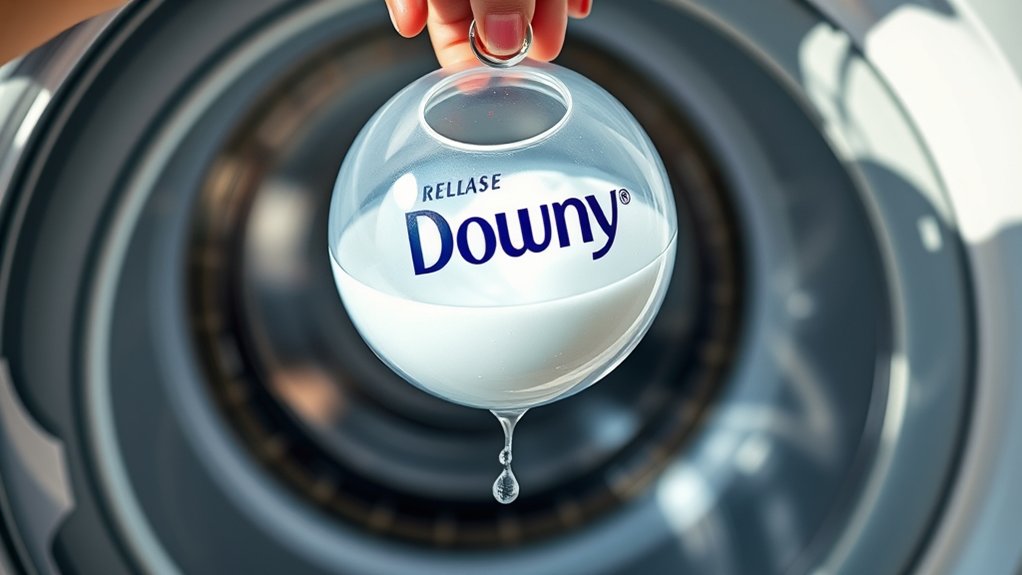
A Downy Ball is a simple plastic device that automatically dispenses liquid fabric softener during your washing machine’s rinse cycle. Its unique design guarantees the softener releases precisely when needed, providing even distribution throughout your laundry.
You fill the ball to the indicated line, which corresponds to your load size, so you use the right amount every time.
The Downy Ball works with both front load and top load machines, making it a versatile choice for various laundry setups. To use, you just fill the ball, close it securely, and place it on top of your clothes in the drum before starting the wash.
Compatible with front and top load washers, simply fill, secure, and place on clothes to dispense softener automatically.
This eliminates the need to add fabric softener manually during the rinse cycle, simplifying your laundry routine efficiently.
How to Fill and Load Your Downy Ball
The next section explains how to use the ball during the wash cycle.
Filling the Downy Ball
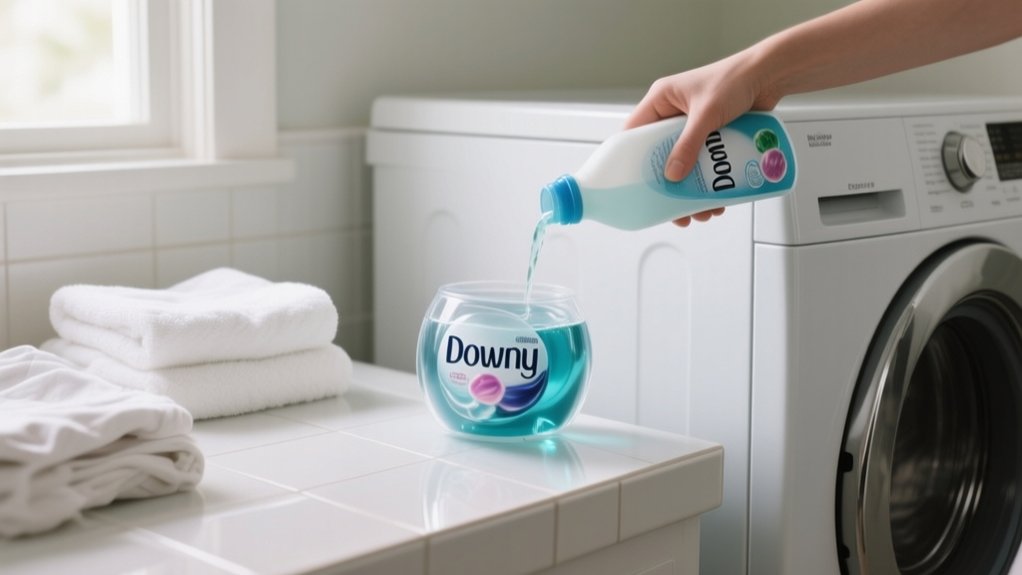
Start by opening the top lid of the Downy Ball and pouring in the recommended amount of fabric softener up to the designated fill line for your load size. Avoid overfilling to prevent clumping or clogging, ensuring the softener releases properly during the rinse cycle. After filling, securely close the lid to avoid leaks.
Here’s a quick reference for filling amounts:
| Load Size | Fill Line Level |
|---|---|
| Small (1-3 lbs) | Up to first line |
| Medium (4-7 lbs) | Up to second line |
| Large (8-12 lbs) | Up to third line |
| Extra Large | Up to maximum fill line |
Following these steps guarantees your Downy Ball functions effectively for soft, fresh laundry.
Loading Into Washer
Place your filled Downy Ball directly into the washer drum at the beginning of the wash cycle to guarantee it releases fabric softener during the rinse phase.
Follow these steps to load it correctly:
- Open the top lid and pour fabric softener up to the indicated line based on load size.
- Securely close the lid to prevent leaks during washing.
For front-load washers, place the Downy Ball directly into the drum, not the dispenser.
For top-load washers, you may also place the Downy Ball into the center agitator’s fabric softener cup to enable automatic release.
Using Your Downy Ball With Any Washing Machine
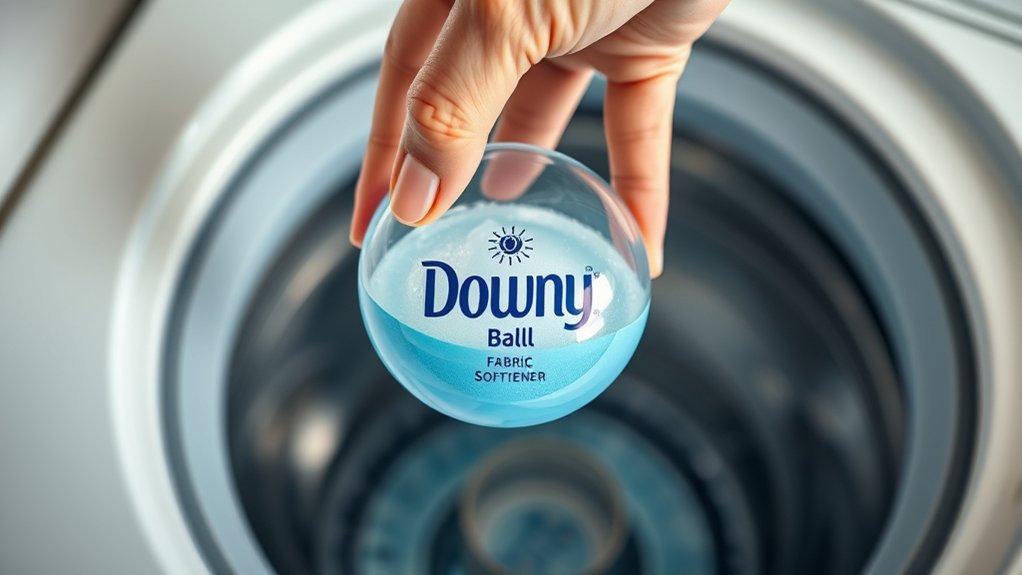
Although washing machines vary, you can use the Downy Ball effectively with any model, whether front or top load.
To get the best results, fill the ball to the indicated line according to your load size, using the cap for accurate measurement. Place the Downy Ball directly into the empty drum before adding your laundry.
This placement guarantees the fabric softener releases at the ideal time during the rinse cycle, conditioning your clothes evenly.
Make sure not to overfill the ball, as this could interfere with the washing process. Following the instructions on the Downy Ball assures proper use and compatibility across different machines, providing you with a convenient, versatile, and efficient way to soften your laundry every time.
Measuring Fabric Softener for Your Downy Ball
Proper dosage keeps residue low, and the next section explains safe washer placement.
Proper Dosage Amount
When measuring fabric softener for your Downy Ball, you’ll want to use the cap from your Downy bottle, filling it according to your load size. Use the highest line for large loads, the middle for medium loads, and the lowest for small loads. This helps you dispense the correct amount without waste or residue buildup.
Follow these steps:
- Fill the cap to the appropriate line based on your load size.
- Pour the measured softener into the Downy Ball without exceeding the cap’s fill line.
- Securely close the Downy Ball, ready for use in the wash.
- Always check your fabric softener’s dosing instructions for product-specific guidelines.
Using the right dosage ensures even distribution during the rinse cycle.
It also helps protect your clothes from excess residue.
Load Size Consideration
Measuring the right amount of fabric softener is only part of the process; considering your load size plays a key role in achieving ideal results with your Downy Ball.
Use the cap to measure softener: fill to the highest line for large loads, the middle line for medium loads, and the lowest for small loads. This guarantees you avoid excess softener and maintain fabric care.
Before placing the Downy Ball in the washer, make certain it contains the correct amount for your load.
Also, avoid overloading the drum, leaving at least 6 inches of space. This allows the Downy Ball to move freely and release softener effectively during the rinse cycle, optimizing softness and fragrance for your laundry.
Tips for Getting the Best Results With Your Downy Ball
Three essential steps can help you get the best results with your Downy Ball.
First, fill the ball according to your load size, using the cap’s measurement lines to avoid overuse or underuse of fabric softener.
Second, place the Downy Ball on top of your laundry, ensuring it can release the softener during the rinse cycle effectively.
Third, avoid overloading the washer so the ball moves freely and disperses softener evenly throughout the load.
Additionally, follow these tips:
- Use the Downy Ball in both traditional and high-efficiency machines, but always check your washer’s manual first.
- Regularly clean the Downy Ball to prevent residue buildup and maintain consistent performance.
- Monitor the amount of fabric softener you use according to your fabric type.
- Position the ball properly to maximize softener release.
Fixing Common Downy Ball Problems
Troubleshooting your Downy Ball guarantees it works smoothly and dispenses fabric softener at the right moment. If it doesn’t release softener, first check that you’ve filled it to the correct line and securely closed the lid before starting the cycle.
To prevent clogging, clean the ball regularly with warm, soapy water, focusing on the release hole.
If the ball sinks, verify it’s not overfilled and that your washer cycle suits its design.
In case of leakage, inspect the seal for damage or improper closure, which can cause premature softener release.
Frequently Asked Questions
Can I Use the Downy Ball With Powdered Detergent?
Yes, you can use the Downy Ball with powdered detergent. Add the powder directly into the washer drum before placing the ball, then let the ball release fabric softener during the rinse cycle.
Is the Downy Ball Safe for All Fabric Types?
No, not for every fabric. You shouldn’t use the Downy Ball on flame-resistant children’s sleepwear or fluffy fabrics unless the label says fabric softener is safe.
It’s fine for most washable fabrics, especially dark ones, if you follow the instructions carefully.
How Do I Clean and Maintain My Downy Ball?
Rinse your Downy Ball with warm water after each use and soak it now and then in warm water with mild detergent. Avoid harsh cleaners, check it for damage, and store it in a cool, dry place.
Can the Downy Ball Be Used in High-Efficiency (HE) Machines?
Yes, you can use the Downy Ball in high-efficiency machines. It is designed to release fabric softener during the rinse cycle for even distribution, which helps avoid premature dispensing.
Does the Downy Ball Work With Cold Water Washes?
Yes, you can use the Downy Ball with cold water washes. It releases fabric softener during the rinse cycle, and filling it correctly helps it distribute more evenly.
Conclusion
Using a Downy Ball makes fabric softening simple and effective. For example, Sarah, a busy mom, found it saved her time and prevented softener stains on clothes.
By filling it correctly and measuring the softener precisely, you’ll enjoy fresh, soft laundry without hassle. Follow these tips, and your washing routine will improve instantly.
Give it a try—you’ll wonder how you ever did laundry without it!