Is Persil Laundry Detergent Toxic – Safety Facts
Worried about whether your laundry detergent is actually safe for your family? You’re not alone. Many people want clothes that come out clean without exposing sensitive skin, kids, or pets to harsh ingredients. If you’ve been asking questions about Persil, it makes sense to look a little closer.
Persil laundry detergent contains chemicals like 1,4-dioxane and undisclosed fragrance components, which may pose health risks and affect fabric durability. Its optical brighteners can leave residues that irritate sensitive skin and harm the environment.
Some users report skin reactions due to these ingredients. While Persil offers effective cleaning, evaluating its label carefully and considering non-toxic or hypoallergenic alternatives is wise.
Exploring ingredient specifics will help you better understand its safety profile and family suitability.
Which Harmful Chemicals Are in Persil Detergent?
What harmful chemicals does Persil laundry detergent contain? Persil may include 1,4-dioxane, a byproduct formed during manufacturing, which is linked to potential health risks but often remains undisclosed on labels. The detergent also contains fragrance components that might include phthalates, known endocrine disruptors identified by health authorities.
Additionally, some Persil variants incorporate surfactants and other substances that can provoke allergic reactions or skin sensitivities, especially in individuals with pre-existing conditions. Because regulatory standards for the term “non-toxic” are lacking, the actual safety profile of these ingredients and their long-term effects remain uncertain.
You should be aware that these chemicals may pose risks even if they aren’t explicitly listed, making it important to evaluate ingredient transparency when selecting a detergent.
How 1,4-Dioxane and Optical Brighteners in Persil Affect Fabric Safety
Beyond the potential health concerns tied to chemicals like phthalates and surfactants, two specific components in Persil warrant attention for their effects on fabric safety: 1,4-dioxane and optical brighteners.
1,4-dioxane, a manufacturing byproduct, can remain in trace amounts and may contribute to fabric degradation over time. Although present in small quantities, its persistence raises concerns about long-term fiber weakening.
Optical brighteners are designed to make fabrics appear whiter by fluorescing under light. They adhere to fibers but leave residues that can accumulate.
These residues may affect fabric integrity and provoke irritation in sensitive individuals.
Also, optical brighteners aren’t biodegradable, which could affect both fabric longevity and environmental safety.
Understanding these components helps you evaluate Persil’s overall impact on fabric preservation and safety.
Why Persil’s Fragrance Raises Health Concerns
Although fragrances enhance the scent of Persil laundry detergent, they often contain undisclosed chemicals that can pose health risks. These fragrances may include phthalates, known endocrine disruptors, and other compounds not fully disclosed due to limited regulatory oversight.
Residual fragrance chemicals can remain on fabrics post-wash, potentially exposing you to allergens or harmful substances over time.
| Concern | Details |
|---|---|
| Chemical Disclosure | Fragrance ingredients often remain undisclosed |
| Endocrine Disruption | Phthalates may interfere with hormonal systems |
| Residual Exposure | Fragrance residues can persist on laundered fabrics |
| Regulatory Oversight | Limited regulation limits consumer transparency |
Understanding these factors helps you evaluate Persil’s fragrance safety more critically.
Can Persil Cause Skin Irritation or Allergies?
Residue on clothing can linger after washing, especially on items worn against sensitive skin.
Skin Sensitivity Concerns
If you have sensitive skin, you might experience irritation or allergic reactions from Persil laundry detergent due to its fragrance and optical brighteners.
These components can provoke skin sensitivity, particularly when residual chemicals remain on fabrics after washing.
Additionally, some Persil formulations contain phthalates, which may affect skin health over time.
Consumer reports have documented occasional skin reactions linked to certain Persil products, emphasizing precaution.
To minimize risks, consider these points:
- Fragrance and optical brighteners in Persil can cause irritation.
- Residual detergent on fabrics increases skin contact risk.
- Phthalates present potential long-term skin health concerns.
- Testing on a small skin area before full exposure is advisable.
For sensitive skin, hypoallergenic or fragrance-free detergents offer safer alternatives.
Allergenic Ingredients Overview
Building on concerns about skin sensitivity, it’s important to examine the specific allergenic ingredients present in Persil laundry detergent that may trigger irritation or allergic reactions.
Persil contains fragrance components, which can include undisclosed compounds such as phthalates, recognized allergens and endocrine disruptors.
Some Persil formulations also incorporate optical brighteners, known to cause irritation in sensitive individuals due to residual presence on fabrics.
Additionally, 1,4-dioxane, a byproduct sometimes found in Persil, has been linked to skin irritation.
If you have sensitive skin or allergies, these residual chemicals may provoke adverse reactions.
To minimize risks, carefully review the ingredient list for known allergens or irritants before use. This precaution helps you assess the potential for skin reactions when laundering with Persil.
Residue Impact on Skin
Several ingredients in Persil laundry detergent, including fragrances and optical brighteners, can leave residues on clothing that may cause skin irritation or allergic reactions in sensitive individuals. These residues may persist after washing, increasing skin exposure and potential sensitivity.
You should consider the following points:
- Residual chemicals on fabrics can trigger or worsen dermatitis in sensitive users.
- Some formulations may contain phthalates, known endocrine disruptors linked to skin sensitivity.
- Lack of full ingredient transparency complicates risk assessment for allergic reactions.
- Conducting patch tests or choosing hypoallergenic detergents can help minimize adverse skin effects.
If you have sensitive skin or allergies, take precautions when using Persil to avoid irritation caused by residual detergent compounds.
What Evidence-Based Non-Toxic Standards Mean for Persil’s Safety
When you evaluate Persil’s safety through evidence-based non-toxic standards, you’ll find that every ingredient is rigorously screened against established hazard criteria rather than relying on marketing claims. This process helps identify and minimize potentially harmful substances, such as 1,4-dioxane and endocrine-disrupting phthalates.
However, some Persil formulations still contain optical brighteners and fragrances with undisclosed chemicals, which can leave residues causing skin irritation.
Certain Persil formulas include optical brighteners and hidden fragrance chemicals that may cause skin irritation.
Because federal definitions for “non-toxic” are lacking, you should interpret safety claims cautiously and review ingredient information critically. Evidence-based standards emphasize transparency and scientific evaluation, aiming to reduce health risks linked to detergent exposure.
Ultimately, these standards help you make informed decisions, recognizing that not all Persil products fully meet non-toxic criteria despite rigorous screening efforts.
How to Read Persil’s Label for Toxic Ingredients
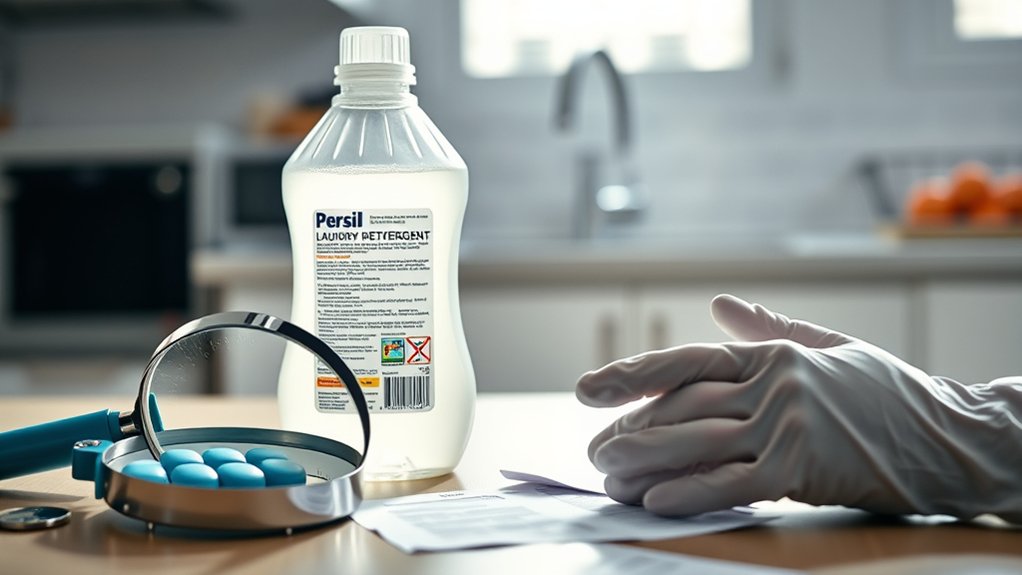
Although Persil’s packaging may appear straightforward, deciphering its label requires careful attention to identify potentially toxic ingredients. You should examine the list for known harmful substances and ambiguous terms that may mask risks.
Focus on these key points:
- Check for 1,4-dioxane, a toxic byproduct linked to detergents.
- Identify optical brighteners, which can remain on fabrics and cause skin exposure.
- Note fragrance components, as they may contain undisclosed phthalates, endocrine disruptors.
- Be cautious with terms like “natural” or “eco-friendly” since federal regulation is lacking.
Always look for credible safety certifications and contact Persil directly if ingredient details are unclear. This approach helps you assess toxicity accurately and make informed decisions.
What Safer Alternatives Exist for Sensitive Skin and Families?
If you need a laundry detergent that minimizes skin irritation, opting for hypoallergenic formulations is essential. These products are specifically designed to reduce allergic reactions by excluding common irritants such as fragrances, dyes, and phosphates.
You should also consider plant-based detergents, which typically use gentler cleaning agents and avoid toxic chemicals like 1,4-dioxane and phthalates. Brands such as Seventh Generation and Ecover provide eco-friendly, non-toxic alternatives, with transparent ingredient labeling.
Always review the detergent’s ingredient list carefully and seek certifications from reputable organizations that verify safety and environmental claims.
This approach guarantees that the detergent you choose is safer for sensitive skin and suitable for family use, reducing the risk of irritation or allergic responses effectively and reliably.
Frequently Asked Questions
How Does Persil’s Environmental Impact Compare to Other Detergents?
Persil is generally more chemically intensive than certified green detergents, so its environmental impact is usually higher. Compared with eco-friendly options, it may include optical brighteners, fragrances, and potential contaminants like 1,4-dioxane.
It is also likely to be less biodegradable than those alternatives. If you want the lower-impact choice, a certified green detergent is usually the better fit.
Can Persil Detergent Affect Septic Systems or Water Quality?
Yes, Persil detergent can affect septic systems and water quality. Its surfactants and chemicals may disrupt septic function, and optical brighteners plus potential contaminants like 1,4-dioxane can contribute to water pollution and ecosystem imbalance.
Is Persil Safe to Use on Baby Clothes and Cloth Diapers?
No, many people avoid Persil on baby clothes and cloth diapers because of possible skin irritation from residues and undisclosed fragrance chemicals. If you do use it, choose detergents with transparent ingredients and safety certifications to better protect sensitive infant skin.
How Effective Is Persil at Removing Common Allergens From Fabrics?
Persil can remove up to 99% of common allergens like dust mites and pollen by breaking down protein-based allergens effectively, based on independent tests. Results depend on following the usage instructions precisely, so using it as directed matters most.
Does Persil Offer Fragrance-Free or Hypoallergenic Product Options?
Yes, Persil offers fragrance-free and hypoallergenic options, such as the ProClean Sensitive Skin line. These products are dye-free and dermatologist-tested, and they’re formulated to help minimize skin irritation and allergic reactions for sensitive skin.
Conclusion
When it comes to Persil, you should treat its safety like a double-edged sword: effective cleaning but with potential risks. Harmful chemicals such as 1,4-dioxane and optical brighteners may pose concerns, especially for sensitive skin or allergies. By carefully reading labels and understanding evidence-based standards, you can make informed choices.
If safety is your priority, exploring non-toxic alternatives might be the wise path forward, much like choosing a trusted compass to navigate uncertain waters.