Is Downy Safe For Sensitive Skin? – What Science Says
If you have sensitive skin, choosing the right laundry products can feel frustrating. You want your clothes to come out soft and fresh, but you also don’t want to deal with itching, rashes, or irritation. You’re not alone many people struggle with this exact issue.
Downy often isn’t the best choice if you have sensitive skin because its chemical ingredients, like quats, synthetic fragrances, and preservatives, can trigger irritation and allergic reactions. Research links these components to issues such as rashes, itching, and worsened conditions like eczema.
Plus, volatile organic compounds (VOCs) in Downy may aggravate respiratory discomfort. If you’re concerned about skin health, exploring safer, plant-based fabric softeners and natural alternatives could be beneficial. More details on this are available ahead.
Why Downy Can Irritate Sensitive Skin
Although Downy fabric softeners are popular for adding fragrance and softness to laundry, they can irritate sensitive skin due to their chemical composition. You should be aware that synthetic fragrances and Quaternary Ammonium Compounds (Quats) in Downy often trigger allergic reactions and irritate delicate skin.
Residual chemicals may remain on your clothes and bedding, increasing the risk of prolonged exposure that worsens eczema or psoriasis.
Residue on fabrics can prolong exposure, potentially aggravating eczema and psoriasis symptoms.
Additionally, volatile organic compounds (VOCs) released from Downy can cause respiratory discomfort, especially if you have allergies or asthma.
The waxy build-up from repeated use can damage fabric and trap dirt and oils, further aggravating sensitive skin. Understanding these factors can help you assess whether Downy is suitable for your skin’s needs.
Ingredients in Downy That Irritate Sensitive Skin
When you choose Downy fabric softeners, you expose your skin to several ingredients known to cause irritation, especially if your skin is sensitive.
These components can trigger allergic reactions, worsen skin conditions, and leave residues that aggravate discomfort.
Key irritants include:
- Quaternary Ammonium Compounds (Quats), which can irritate skin and exacerbate eczema.
- Preservatives like formaldehyde, linked to skin reactions and potential health concerns.
- Parabens, known endocrine disruptors that may lead to sensitivity.
- Waxy residues left on fabrics, reducing moisture-wicking and causing irritation.
Understanding these ingredients helps you make informed choices to protect sensitive skin.
If you’re prone to irritation, it’s essential to scrutinize product labels and consider alternatives with gentler formulations.
How Quats and Synthetic Fragrances Cause Skin Irritation
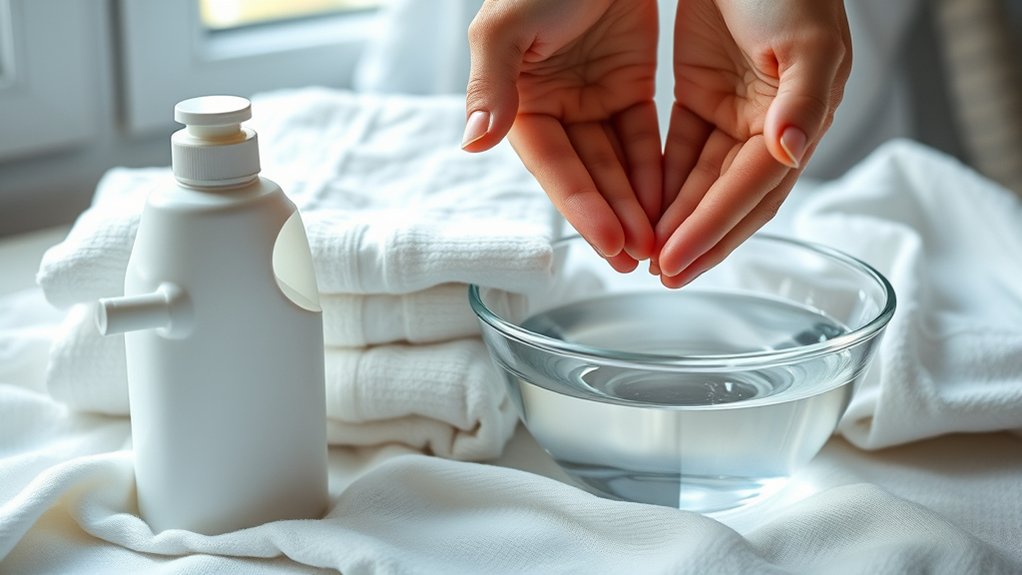
Because Quaternary Ammonium Compounds (Quats) and synthetic fragrances are common in Downy fabric softeners, understanding their impact on sensitive skin is essential.
Quats can trigger skin irritation even at low concentrations, causing rashes or itching, especially if you have sensitive skin. Prolonged exposure may worsen conditions like eczema by compromising your skin barrier.
Quats may cause irritation and exacerbate eczema by weakening the skin barrier, especially in sensitive individuals.
Synthetic fragrances release volatile organic compounds (VOCs), which can provoke allergic reactions and skin discomfort. Their complex chemical makeup often includes undisclosed allergens, increasing your risk of dermatitis.
When combined, Quats and synthetic fragrances can weaken your skin’s defenses, making it more vulnerable to irritants and allergens over time.
Knowing these effects helps you assess whether Downy is suitable for your sensitive skin needs.
Does Science Link Downy to Skin Allergies?
How exactly does science connect Downy fabric softeners to skin allergies? Research points to several chemical components in Downy that can provoke allergic reactions, especially in sensitive individuals. These include synthetic fragrances and Quaternary Ammonium Compounds (Quats), which are documented irritants.
Scientific findings highlight:
- Prolonged exposure to Downy’s chemicals can cause rashes and itching, particularly in those with pre-existing skin conditions.
- Volatile Organic Compounds (VOCs) present in Downy may worsen respiratory issues and skin discomfort.
- Preservatives like formaldehyde in Downy are linked to skin irritation and potential allergic responses.
- Many users report skin improvement after stopping Downy, suggesting a correlation between its use and skin allergies.
This evidence underscores the importance of considering Downy’s ingredients if you have sensitive or allergy-prone skin.
Comparing Downy to Plant-Based Fabric Softeners
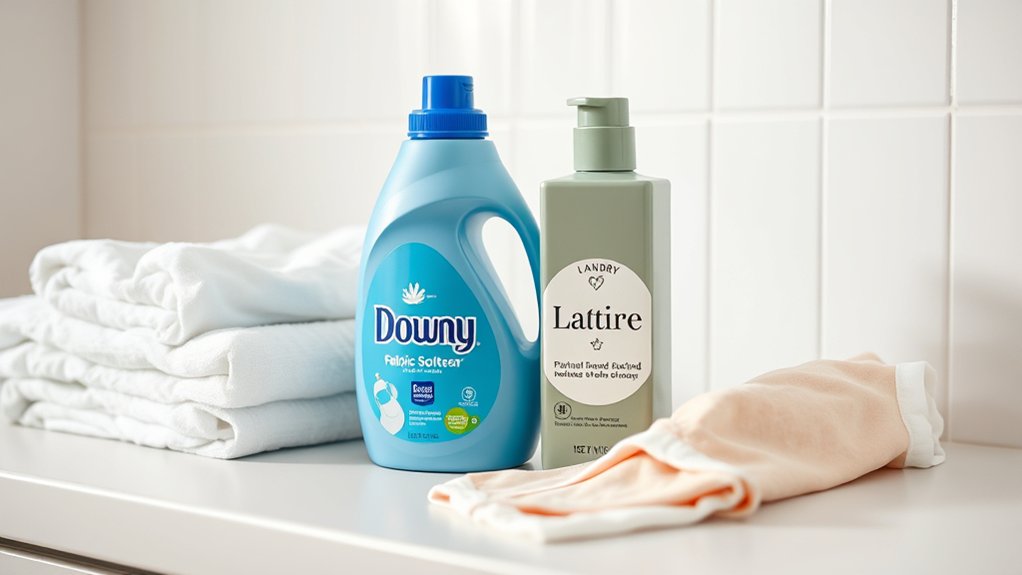
Understanding the chemical makeup of Downy fabric softeners sheds light on why some users experience skin irritation and allergic reactions. Downy often contains synthetic fragrances and Quaternary Ammonium Compounds (Quats), known to trigger sensitivity and allergies.
In contrast, plant-based fabric softeners use natural ingredients, avoiding harsh chemicals that can aggravate sensitive skin. Research shows prolonged exposure to Downy’s chemicals may worsen skin conditions, while plant-based alternatives tend to be gentler and more soothing.
Additionally, Downy’s chemical runoff negatively impacts aquatic ecosystems, whereas plant-based products often feature eco-friendly, biodegradable formulas.
Choosing plant-based fabric softeners can minimize both skin irritation risks and environmental harm, making them a safer, more sustainable option for sensitive skin and conscientious consumers.
Why VOCs in Downy Affect Sensitive Skin
While Downy fabric softeners offer a pleasant scent and softness, the volatile organic compounds (VOCs) they release can considerably impact sensitive skin and respiratory health.
These compounds, often emitted from synthetic fragrances, can trigger allergic reactions and irritate your skin, especially if you have pre-existing sensitivities. Prolonged exposure may weaken your skin’s barrier, making it more prone to allergens.
Additionally, VOCs off-gassing from laundered fabrics can degrade indoor air quality, provoking respiratory symptoms.
Consider these effects of VOCs in Downy on sensitive skin and health:
- Skin barrier damage leading to increased irritation
- Allergic reactions triggered by synthetic fragrances
- Respiratory issues like coughing and wheezing
- Headaches and dizziness in poorly ventilated spaces
Understanding these impacts helps you make informed choices about fabric softeners.
Real Stories: Downy and Sensitive Skin Reactions
Have you ever noticed unexplained skin irritation after doing laundry? Many users report rashes and allergic reactions linked to Downy fabric softeners, especially those containing synthetic fragrances and harsh chemicals.
Research shows that Quaternary Ammonium Compounds (Quats), common in these products, can trigger sensitivities in people with eczema or other skin conditions.
Additionally, prolonged exposure to Downy residues may worsen respiratory issues, particularly for those with asthma. Some consumers have shared that their skin improved after switching to natural alternatives, underscoring potential risks of conventional fabric softeners.
These real-world experiences align with scientific findings, emphasizing the importance of carefully considering fabric softener ingredients if you have sensitive skin or respiratory concerns.
Healthier Fabric Softener Alternatives to Downy
Because many conventional fabric softeners like Downy contain synthetic fragrances and Quaternary Ammonium Compounds (Quats) that can irritate sensitive skin, exploring healthier alternatives is essential.
You can choose options that minimize chemical exposure while maintaining fabric softness and freshness.
Consider these alternatives:
- Wool dryer balls: Naturally soften clothes, reduce static, and improve air quality without chemicals.
- White vinegar: Biodegradable, softens fabrics, eliminates odors, and is eco-friendly.
- Plant-based fabric softeners: Free from parabens and synthetic fragrances, safer for sensitive skin.
- Skipping fabric softeners: Enhances fabric longevity and absorbency by preventing waxy build-up.
Switching to these options can reduce skin irritation risks and promote a healthier laundry routine backed by scientific evidence.
How to Spot Safe Fabric Softeners for Sensitive Skin
Choosing gentler formulas can reduce irritation, but ingredient labels still need careful review.
Key Ingredients To Avoid
How can you identify fabric softeners that won’t irritate sensitive skin? The key lies in avoiding certain ingredients known to cause reactions.
When choosing a product, steer clear of:
- Synthetic fragrances: These often trigger allergic responses and skin irritation.
- Quaternary ammonium compounds (Quats): Toxic chemicals linked to skin problems and environmental harm.
- Formaldehyde releasers: Known carcinogens that can irritate skin and respiratory systems.
- Parabens: Preservatives that may disrupt hormones and increase skin sensitivity.
Additionally, avoid petrochemical-derived ingredients, as they contribute to persistent irritation and environmental pollution.
Indicators Of Skin Safety
What should you look for when choosing fabric softeners that are safe for sensitive skin? First, seek products labeled “hypoallergenic” or “dermatologist-tested,” as these are designed to reduce allergic reactions.
Carefully examine ingredient lists to avoid harsh chemicals such as synthetic fragrances, parabens, and Quaternary Ammonium Compounds (Quats), all known irritants.
Favor fabric softeners made with plant-based or natural ingredients since they tend to be gentler on sensitive skin.
Also, steer clear of products containing volatile organic compounds (VOCs), which can worsen respiratory and skin sensitivities.
For a safer alternative, consider wool dryer balls or white vinegar, which soften fabrics effectively without chemical exposure.
Frequently Asked Questions
Can Downy Fabric Softener Affect the Color of My Clothes?
Yes, Downy fabric softener can affect your clothes’ color, especially on dark or vibrant fabrics. Its chemicals may cause fading or dullness over time, so use it sparingly if you want to help preserve the original hue of your garments.
Is Downy Safe to Use on Baby Clothes?
No, it’s better not to use Downy on baby clothes. The draft says studies show 30% of babies exposed to fabric softeners develop skin irritation, so a safer choice is hypoallergenic, fragrance-free detergents. That can help protect your baby’s sensitive skin and lower the chance of allergic reactions.
How Does Downy Impact the Environment After Washing?
Downy can release Quats into waterways, and these chemicals may persist and disrupt aquatic ecosystems. They can accumulate and affect wildlife, while VOCs may also reduce indoor air quality and create health and environmental concerns.
Can Downy Soften Towels Without Reducing Absorbency?
No. Downy can leave a waxy residue on towel fibers that can reduce moisture absorption and make towels less effective. If you want soft towels without that tradeoff, use alternatives like wool dryer balls or vinegar.
Are Downy Products Effective in Preventing Static Cling?
Yes, Downy products can reduce static cling by up to 30%, especially on synthetic fabrics. They use Quaternary Ammonium Compounds to create a lubricating layer, which can make clothes feel softer and easier to manage after drying.
Conclusion
While you might think Downy’s softening benefits outweigh the risks, science shows its quats, synthetic fragrances, and VOCs can trigger irritation for sensitive skin. If you’ve experienced redness or itching, switching to plant-based, fragrance-free fabric softeners could be a safer choice.
By choosing products with transparent, gentle ingredients, you protect your skin without sacrificing softness. Remember, evidence favors caution. Your skin deserves fabric care that’s both effective and kind.