How To Clean Washing Machine Pipes – Guide
You’ll want to start by unplugging your washer and turning off the water supply for safety. Remove the drain hose by loosening clamps, then clear debris using a drain snake or hot water flush.
Next, clean the drain filter by rinsing it under warm water, and take a flashlight to inspect pipes for blockages or damage. Reassemble everything securely, then run a short cycle to check for leaks or any issues.
Keep following these steps, and you’ll master full maintenance and clog prevention in no time. It’s easier than you might think once you get the hang of it!
Signs Your Washing Machine Pipes Need Cleaning
If you notice water remaining in the drum after a cycle or experience slow drainage, your washing machine pipes likely need cleaning. A clogged drain often causes this issue, preventing water from exiting efficiently.
You might also detect unpleasant odors coming from the machine. These smells come from stagnant water and mold buildup inside blocked pipes.
Slow drainage or even water backing up into the drum signals a partial or complete clog.
If your clothes come out damp or with soap residue, it’s a sign of a drainage problem linked to pipe obstruction.
Unusual noises like rattling or gurgling near the drain area also point to debris or blockages.
Recognizing these signs early helps you avoid worsening clogs and keeps your washing machine running smoothly.
Tools and Materials Needed for Cleaning Washing Machine Pipes
To clean your washing machine pipes effectively, you’ll want to gather a few essential tools first. Things like screwdrivers, pliers, and a drain snake come in handy when dealing with blockages.
For materials, distilled white vinegar, baking soda, and boiling water are great for breaking down any buildup inside the pipes.
Oh, and don’t forget to wear safety gear like gloves and goggles to keep yourself protected while you work. It’s always better to be safe than sorry!
Essential Cleaning Tools
Although cleaning washing machine pipes can seem straightforward, having the right tools guarantees you tackle blockages efficiently and safely. Proper cleaning tools help you inspect, access, and clear pipes without causing damage or mess.
Key essential cleaning tools include:
- Drain snake: Dislodges deep clogs within pipes.
- Drain filter: Prevents debris from entering and clogging the drainage.
- Flashlight or inspection mirror: Allows you to see inside pipes clearly.
- Pliers or screwdriver: Loosen hose clamps and remove components securely.
Additionally, keep a bucket and towels ready to catch water spills during the process. These tools work together to ensure a thorough cleaning while protecting your washing machine’s plumbing.
Using the right cleaning tools saves time and prevents costly repairs. It really makes the job easier and less messy.
Recommended Cleaning Materials
Having the right tools sets the stage, but selecting appropriate cleaning materials guarantees you tackle buildup and blockages effectively. Start by preparing a solution of distilled white vinegar and baking soda, which breaks down soap scum and mineral deposits inside the washing machine pipes.
Use a drain snake or auger to dislodge stubborn clogs deep within the drain hose. For surface debris, employ a long, flexible brush or an opened-up paper clip to clear water holes and pipe openings carefully. Keep towels, gloves, and a small bucket handy to manage any water spills.
After cleaning, flush the pipes with boiling water or a warm vinegar solution to prevent future mold and dirt accumulation. These cleaning materials assure thorough maintenance and best washing machine performance.
How to Remove and Clean the Washing Machine Drain Hose
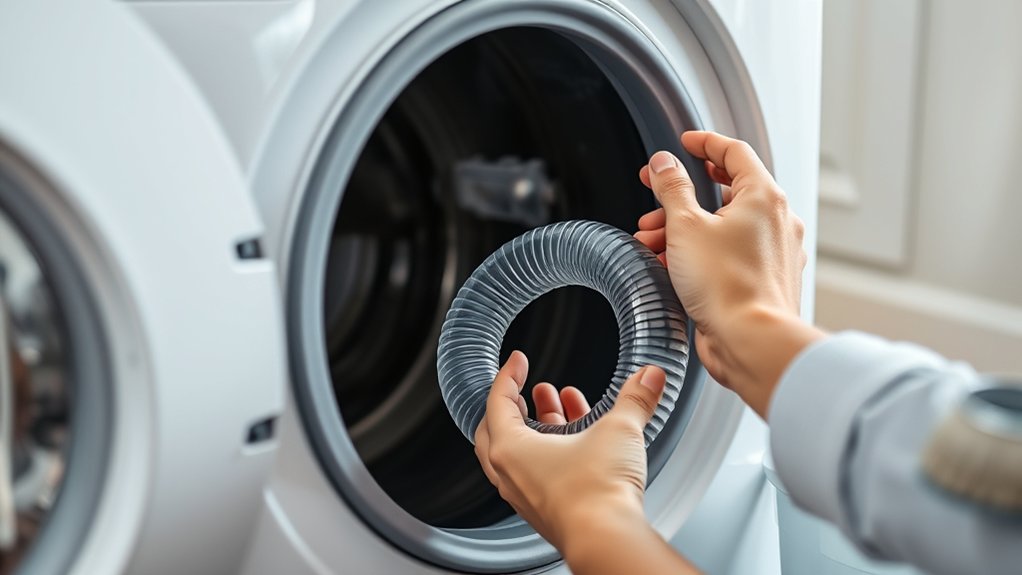
Before you remove the washing machine drain hose, make sure you disconnect the appliance from both the power supply and water sources to avoid any hazards.
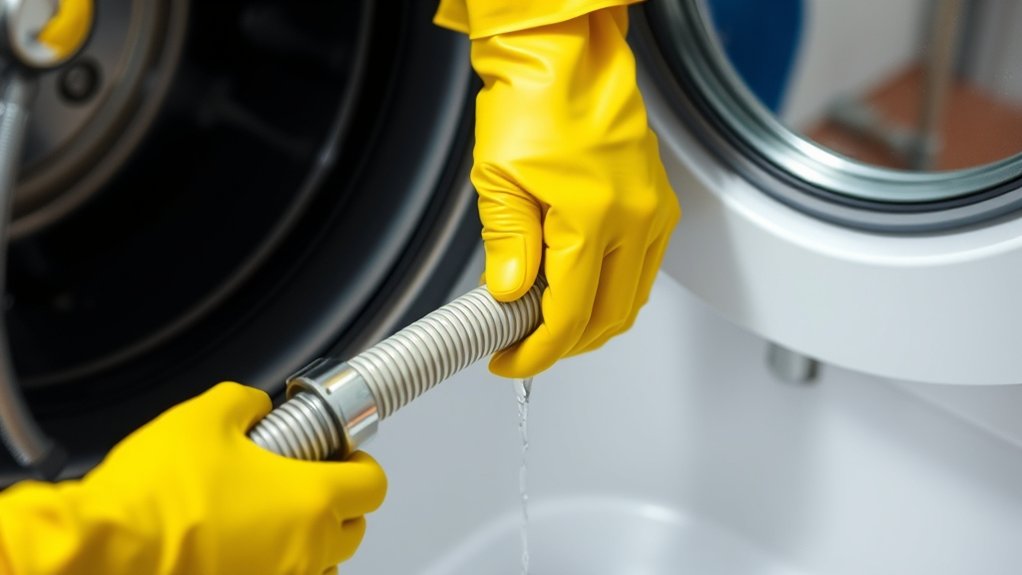
Use pliers or a screwdriver to loosen the clamps securing the drain hose to the machine and wall drain.
Inspect the hose carefully for blockages like lint, hair, or soap scum, and remove debris with a wire coat hanger or needle-nose pliers.
Flush the hose thoroughly with hot water or a drain snake to clear deep clogs.
Finally, reattach the hose securely and run a short cycle to ensure proper drainage.
Key steps for cleaning the drain hose:
- Disconnect power and water sources
- Detach hose clamps carefully
- Manually remove visible blockages
- Flush hose with hot water or drain snake
How to Clean the Drain Filter and Inspect Drain Pipes
After confirming your washing machine drain hose is clear, focus on the drain filter and the connected drain pipes. First, unplug the machine and locate the drain filter. It’s usually behind a panel at the bottom front or inside the agitator.
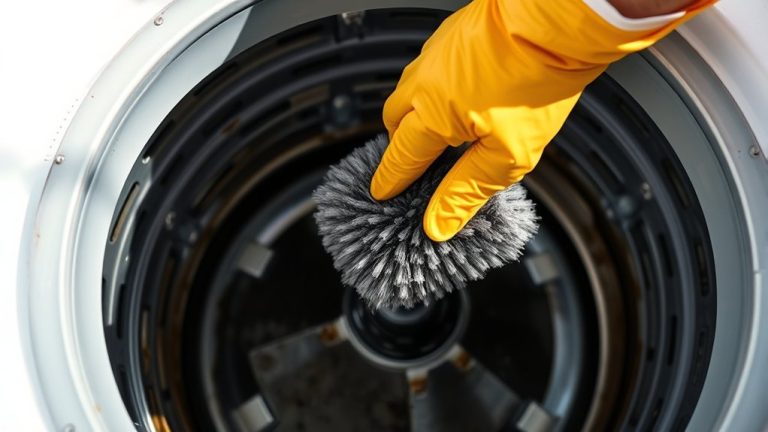
Place a bowl or towel underneath before removing the filter to catch any residual water. Rinse the drain filter under warm running water. Use a brush to remove lint, soap residue, and dirt.
Next, inspect the drain pipe linked to the filter with a flashlight. Check for blockages or damage.
For effective cleaning, use a drain snake or a long brush to clear any debris from the drain pipe.
Finally, reassemble all components securely before running a test cycle. This ensures proper drainage and function.
How to Clear Stubborn Clogs in Washing Machine Pipes
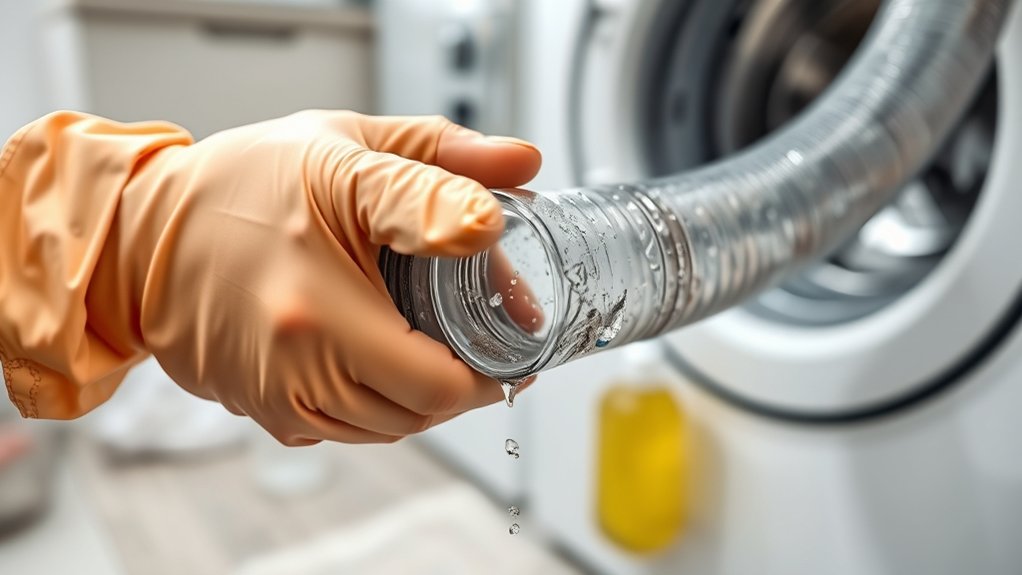
First, you’ll want to figure out exactly where the clog is by checking the drain pipe for any slow water flow or backups. Once you’ve pinpointed the spot, grab a drain snake or auger—these tools are great for reaching in and breaking up those tough blockages.
Next, take it step-by-step: try flushing the pipe with a mix of boiling water, baking soda, and vinegar. This combo can work wonders on stubborn debris.
Don’t forget to remove the drain filter too, since it can trap a lot of gunk. If the clog is still hanging around, soaking the pipes might just do the trick.
Identifying Drain Pipe Blockages
Although stubborn clogs in washing machine pipes often show up as slow drainage or water backing up into the drum, figuring out the exact cause means you need to check things out carefully. Start by looking closely at the drain pipe with a flashlight to spot any visible blockages like lint or hair. This kind of detailed inspection helps you find buildup that mightn’t be obvious but still blocks the flow.
Here are some key steps to identify drain pipe blockages:
- Look for debris and lint buildup
- Check inside the pipe for trapped hair or soap scum
- Watch how water flows during a wash cycle
- Pay attention to any foul smells that might mean organic buildup
Doing a thorough inspection is really important. It helps you tell the difference between surface clogs and deeper blockages so you can get rid of the clog properly.
Tools For Clearing Clogs
When tackling stubborn clogs in washing machine pipes, having the right tools makes the job more efficient and thorough. A drain snake is essential for reaching deep blockages. Its flexible wire maneuvers through bends to dislodge debris effectively.
You can also use basic plumbing tools like a bent coat hanger or a long wire to manually unclog accessible hoses. Before mechanical clearing, try applying a mixture of boiling water, vinegar, and baking soda to break down buildup. It really helps to loosen things up.
Furthermore, use a small brush or an old toothbrush to scrub inside accessible pipes and filters. This removes any leftover dirt and grime.
After cleaning, make sure to secure clamps properly to prevent leaks. Equipping yourself with these tools ensures you can clear clogs efficiently and keep your washing machine pipes in good shape. It’s all about being prepared and taking the right steps.
Step-by-Step Clog Removal
Having the right tools at hand, like a drain snake and cleaning brushes, really sets you up for effective clog removal. Start by disconnecting the drain hose. Then flush it with hot water and vinegar to get rid of any debris.
Next, take out the drain filter and give it a thorough cleaning. This helps eliminate trapped lint and small objects that could cause issues.
After that, use a drain snake or auger to break up any stubborn clogs deep inside the pipes.
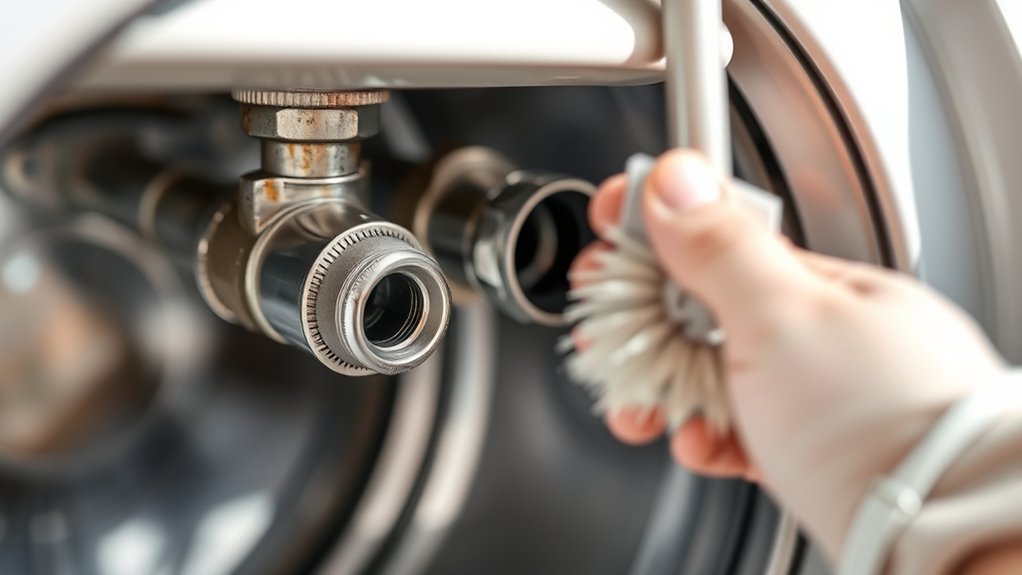
For more precise clearing, try inserting an opened-up paper clip or a long brush into the water holes to dislodge buildup.
Once everything is clean, make sure to securely reassemble all the components.
Finally, run a test cycle to check that the clog removal worked.
- Flush drain hose with hot water and vinegar
- Clean drain filter thoroughly
- Use drain snake for deep clogs
- Clear water holes with a brush or paper clip
How to Reassemble and Test Your Washing Machine Drain System
Before you finish, reattach the drain hose and filter securely. Make sure all clamps are tight to prevent leaks. Confirm that the drain hose is positioned correctly and firmly connected to both the machine and the drain outlet.
Securely reattach the drain hose and filter, ensuring all clamps are tight to prevent leaks.
Next, plug the washing machine back into the power outlet and turn on the water supply valves. Run a short rinse or drain test cycle without laundry to check that the system drains properly.
While the test cycle runs, watch closely for any leaks, unusual noises, or pooling water around the drain hose and filter area. After the cycle is complete, double-check the drain hose and filter connections to make sure they’re still secure.
This final step confirms your reassembly was successful and that your washing machine drain system is working efficiently without any leaks.
Maintenance Tips to Prevent Washer Pipe Clogs
To prevent washer pipe clogs, you should regularly clean the drain filter every three to six months and inspect the drain hose for kinks or improper positioning that could restrict water flow. Maintaining your drainage system is essential to avoid soap residue buildup and debris accumulation that can cause blockages.
Follow these maintenance tips:
- Clear lint and debris from the drain filter monthly to ensure unobstructed water flow.
- Check the drain hose for bends or compression that impede drainage.
- Run a hot water cycle mixed with vinegar or baking soda monthly to dissolve soap residue inside pipes.
- Schedule routine inspections to detect and address early drainage system issues before clogs develop.
Consistent attention to these details will keep your washer pipes clear and functioning efficiently.
Just a little effort goes a long way in preventing annoying blockages!
Frequently Asked Questions
Can Harsh Chemicals Damage Washing Machine Pipes?
Yes, harsh chemicals can damage your washing machine pipes. They degrade rubber and plastic components, causing cracks and leaks. Over time, strong cleaners weaken pipe material, increasing failure risks and repair costs.
Chemical reactions with mineral deposits create corrosive substances that erode pipe interiors and seals. Excessive use can also wear down gaskets, leading to water damage.
Manufacturers recommend using mild agents to keep pipe integrity intact and avoid voiding warranties. So, it’s best to stick with gentle cleaners whenever possible.
How Often Should Washing Machine Pipes Be Professionally Inspected?
Oh sure, just wait until your pipes burst before inspecting them! You should have your washing machine pipes professionally checked every 1 to 2 years to catch wear, blockages, or damage early.
If your plumbing’s older, or you face hard water and heavy use, aim for annual inspections. This preventive step helps you avoid costly repairs and extends your machine’s lifespan.
Don’t risk neglect. Schedule inspections regularly for smooth operation.
Are There Eco-Friendly Alternatives for Cleaning Washing Machine Pipes?
Yes, you can use eco-friendly alternatives to clean your washing machine pipes. Distilled white vinegar and baking soda effectively break down buildup without harsh chemicals. Running hot water cycles with these natural cleaners helps maintain cleanliness and prevent mold.
You might also try enzymatic drain cleaners made from natural enzymes to dissolve organic debris safely.
For mechanical methods, flushing with hot water or using a drain snake avoids chemical use entirely while keeping pipes clear. These options are gentle on the environment and still get the job done.
Can Washing Machine Pipe Clogs Affect Water Pressure?
Just like a garden hose clogged with debris limits water flow, washing machine pipe clogs reduce your water pressure. You’ll notice slower fills, longer cycles, or incomplete rinses because blockages restrict water movement.
These obstructions cause inconsistent pressure and prevent your machine from performing efficiently. To keep your washing machine running smoothly, it’s important to clear these clogs regularly.
Doing this helps maintain peak water flow and avoids pressure drops or drainage issues. So, don’t let those blockages slow you down!
Is It Safe to Use a High-Pressure Water Jet to Clean Pipes?
Yes, you can use a high-pressure water jet to clean pipes, but only if the pipes are durable, like PVC or metal. You shouldn’t risk using it on older or flexible pipes, as they may crack or split.
Always check pipe condition first, adjust water pressure appropriately, and wear protective gear.
It’s a good idea to consult a professional to avoid damaging joints or causing leaks. This is especially important in corroded or poorly connected systems.
Taking these precautions helps keep everything safe and sound.
Conclusion
Keeping your washing machine pipes clean is like maintaining clear arteries in your home’s plumbing system. By regularly inspecting, removing clogs, and cleaning hoses and filters, you guarantee smooth water flow and prevent costly backups.
Follow each step carefully, use the right tools, and don’t skip maintenance to keep your washer running efficiently. A little routine care goes a long way in extending your machine’s lifespan and avoiding plumbing headaches.