Espresso Extraction Time: How Long Should It Take?
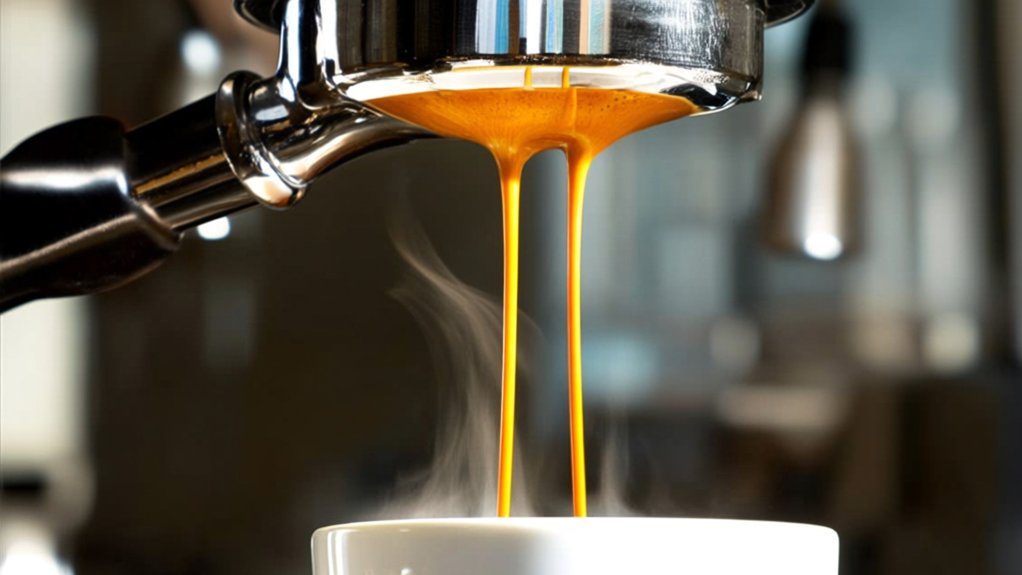
You should time your espresso shot from pump start or first drip, aiming for a total extraction time of 25–30 seconds. This includes about 5 seconds of pre-infusion to guarantee even saturation and balanced flavor.
Adjust grind size, dose, and tamping to stay within this range. Doing so helps you avoid sour or bitter notes.
Understanding these timing nuances helps you consistently extract rich, complex flavors. Keep exploring these factors to perfect your espresso craft.
When Should You Start Timing Your Espresso Shot?
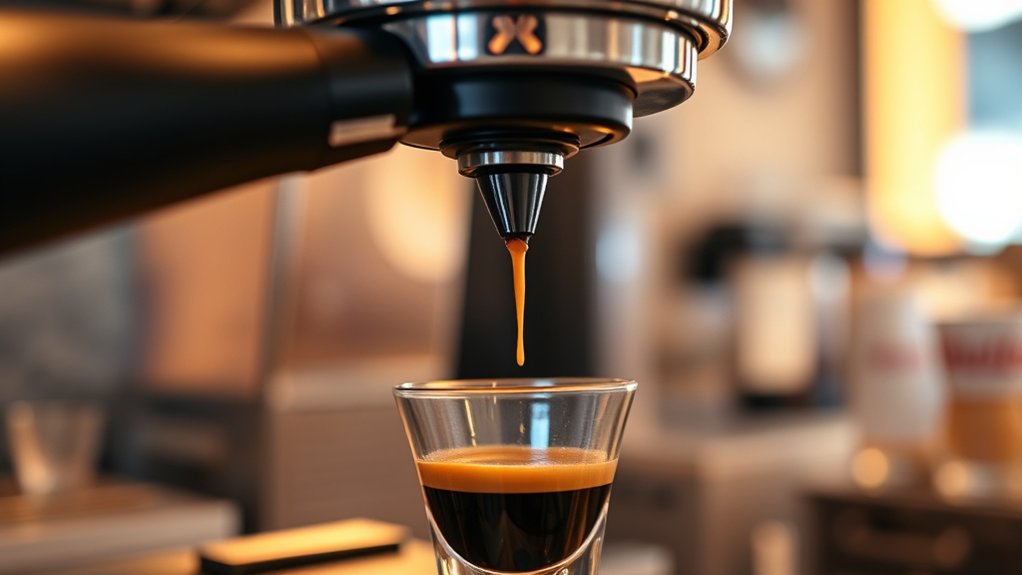
Although it might seem straightforward, knowing exactly when to start timing your espresso shot is essential for consistency and flavor. You should begin timing the moment you activate the pump or see the first drip. Some espresso machines with auto-start features handle this automatically, starting the timer as soon as the first drop appears.
Including pre-infusion in your timing is crucial since it affects extraction quality. If the first drip arrives earlier or later than expected, adjust your timing to keep shot duration accurate.
Consistently starting your timer at the same point each time helps maintain uniformity in taste. Understanding the role of pre-infusion in the extraction process ensures better control over flavor development.
Ideal Espresso Shot Times for Single and Double Shots
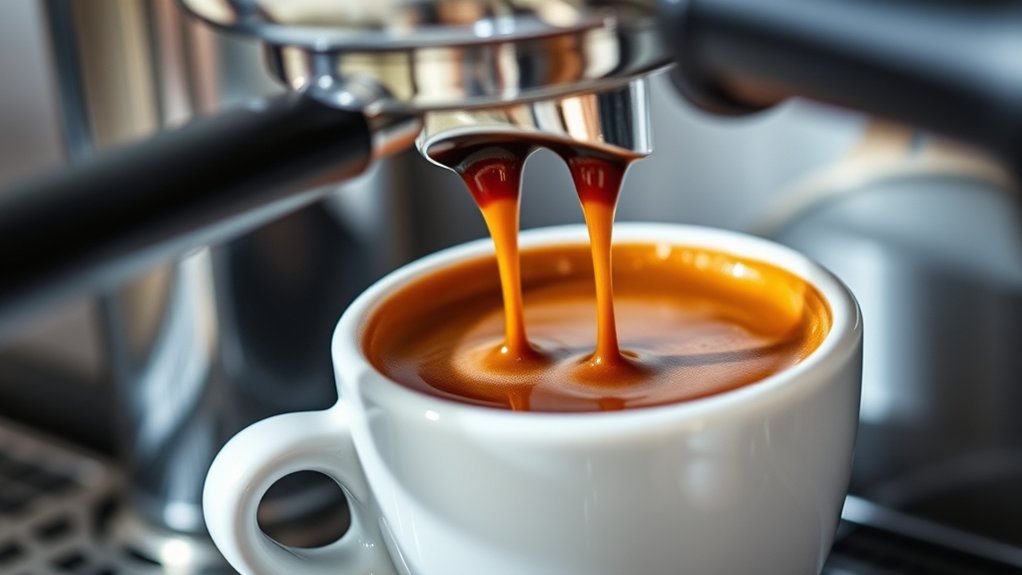
Once you start timing your espresso shot at the right moment, focusing on the ideal extraction time becomes the next key step. Whether you pull a single or double shot, aim for 25 to 30 seconds to achieve maximum flavor and crema.
Consistency in timing ensures balanced results. But remember, dose and yield differ between shot types.
Consistency in timing is key, but keep in mind dose and yield vary by shot type.
To maintain this timing, adjust grind size or coffee dose as needed. Don’t overlook espresso machine maintenance and coffee bean freshness. Both greatly impact extraction efficiency.
- Target 25-30 seconds for both single and double shots
- Use dose adjustments to control yield
- Modify grind size to fine-tune shot time
- Keep your espresso machine clean and calibrated
- Use fresh beans for consistent extraction profiles
How Pre-Infusion Affects Your Espresso Shot Time
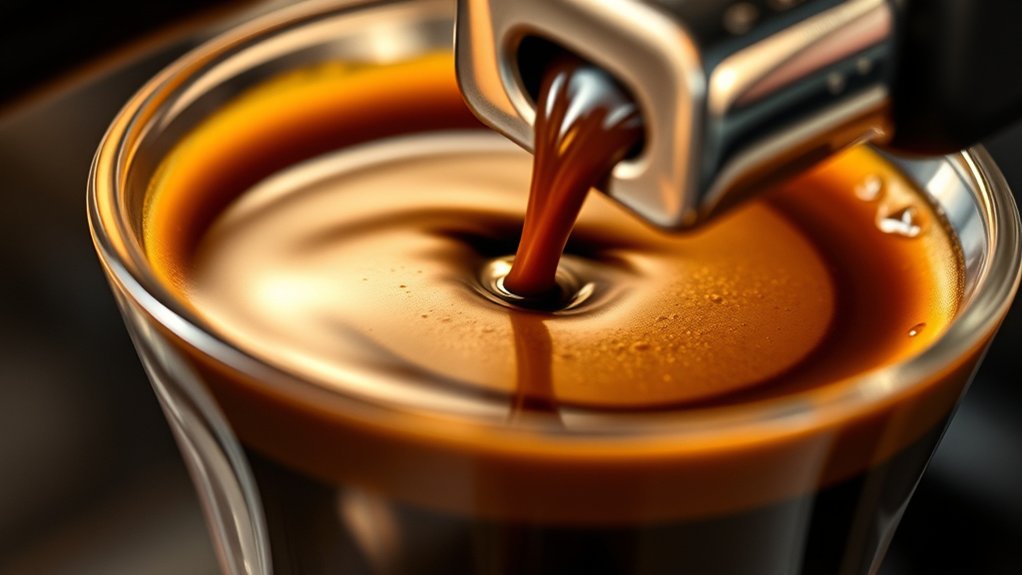
You’ll begin pre-infusion by gently wetting the grounds at a low pressure for around five seconds. This helps prevent channeling and ensures an even extraction.
Because of this initial step, your total shot time usually gets a bit longer—often stretching out to 35-40 seconds. So, you’ll want to adjust your timing to account for that.
Getting a handle on how pre-infusion affects both flavor and shot duration is really important when you’re trying to dial in a balanced espresso.
Pre-Infusion Basics
Because pre-infusion wets the coffee grounds at low pressure for several seconds before full extraction, it directly impacts your espresso shot time. This initial phase prepares the coffee bed, promoting even saturation and preventing channelling. When you factor in pre-infusion, your total brew time naturally extends, enhancing flavor and aroma while reducing bitterness.
To optimize pre-infusion, consider these key points:
- Adjust pre-infusion duration between 5–10 seconds for balance
- Confirm coffee bean quality for consistent extraction
- Maintain your machine regularly to keep pressure stable
- Recognize that longer pre-infusion increases total shot time
- Use pre-infusion to improve flavor clarity and reduce harshness
Understanding pre-infusion basics helps you manage your espresso timing more effectively and produce better shots. It’s a simple step that can make a big difference in how your espresso tastes.
Timing Adjustments Needed
Although pre-infusion typically lasts around 5 seconds, extending this phase means you’ll need to adjust the total shot time to keep the extraction just right. When you increase pre-infusion, it delays the start of full extraction, often pushing your shot beyond the usual 25-30 seconds.
To keep extraction balanced, start timing at pump activation or first drip, including pre-infusion in your measurement. This way, you guarantee even saturation, which is super important when you consider brewing temperature and how fresh your coffee beans are.
Cooler brewing temperatures or older beans might need longer pre-infusion to bring out the flavors properly. By recalibrating the total shot time based on your pre-infusion duration, you stay in control of extraction quality and avoid under- or over-extracting.
This helps you get a consistent, well-balanced espresso every time.
Flavor Impact Analysis
Extending pre-infusion changes more than just your shot’s timing. It directly shapes the espresso’s flavor profile. By properly pre-infusing for 5-10 seconds, you evenly wet the grounds, promoting extraction consistency and reducing channeling.
This leads to a more balanced flavor and richer complexity. When you lengthen pre-infusion, total shot time can stretch to 35-40 seconds, which affects sweetness, acidity, and body. Keep these points in mind:
- Pre-infusion wets grounds evenly, enhancing extraction consistency
- Reduces channeling, improving flavor balance
- Includes initial wetting in total shot time for accuracy
- Longer pre-infusion increases flavor complexity
- Adjusting pre-infusion duration directly impacts sweetness, acidity, and body
Mastering pre-infusion helps you achieve a consistently balanced, flavorful espresso shot. It’s a simple step that makes a big difference.
How Grind Size and Dose Affect Espresso Shot Time and Flavor
When you adjust grind size and dose, you directly influence the espresso shot time and its resulting flavor profile. Finer grind sizes increase resistance, which extends shot time and enhances extraction. On the other hand, coarser grinds shorten shot time and can risk sour or weak flavors.
It’s important to maintain grind consistency and dose precision because that helps isolate the effects of grind on extraction. Overdosing slows extraction down, causing bitterness. Underdosing speeds it up, which leads to sourness.
Properly balancing these variables lets you fine-tune shot time for the best flavor and crema.
| Grind Size | Effect on Shot Time | Flavor Outcome |
|---|---|---|
| Fine | Longer | Balanced, rich, bitter |
| Coarse | Shorter | Under-extracted, sour |
| Dose Precision | Controls extraction | Avoids bitterness/sourness |
How to Adjust Espresso Shot Time for Different Coffee Roasts
Since coffee roasts vary widely in their density and flavor compounds, you’ll need to adapt your espresso shot time to match each roast’s characteristics.
Lighter roasts typically require longer extraction times, while darker roasts need shorter ones to avoid bitterness. Proper coffee storage and maintaining bean freshness also impact how you dial in your shot time.
Keep these points in mind:
- Start with 30-40 seconds for lighter roasts; 20-25 seconds for darker ones
- Use finer grind size for lighter roasts, coarser for darker
- Recalibrate shot timing when switching roasts, adjusting based on taste
- Modify dose or tamp pressure alongside grind adjustments
- Monitor bean freshness and storage to ensure consistent extraction
Adjusting these variables will help you get the best flavor from any roast.
How to Spot Under- or Over-Extraction by Espresso Shot Time
You can tell your espresso is under-extracted if the shot pulls in less than 25 seconds. It usually tastes sour or thin, and you might notice a pale crema with a fast flow.
On the other hand, over-extraction happens when the shot takes longer than 30 seconds. That often brings out bitter flavors, along with a thick, dark crema and a slow pour.
If your shot time is off, don’t worry—you can tweak things like your grind size, dose, or tamp pressure. These small adjustments help you find that sweet spot between 25 and 30 seconds, giving you a balanced and tasty espresso.
Signs of Under-Extraction
Although a quick espresso shot might seem efficient, it often signals under-extraction, especially if it flows in less than 18 seconds with a pale, thin crema. When this happens, the shot tends to taste sour, watery, or flat, lacking the depth and complexity you want.
Factors like coffee bean freshness and tamping pressure affect extraction, so tweaking these can help.
Watch for these signs of under-extraction:
- Fast, light-colored pour resembling honey or water
- Pale, thin crema on the shot
- Sour or flat flavor profile
- Uneven or channeled puck appearance
- Extraction time under 18 seconds
Adjusting grind size finer or increasing dose can improve contact time and balance your espresso’s flavor. Give it a try and see how your shot transforms!
Indicators of Over-Extraction
When your espresso shot drags beyond 30 seconds, it’s a clear sign of over-extraction. This often brings out bitter, ashy, or harsh flavors.
You’ll notice the flavor balance tipping toward unpleasant bitterness, overshadowing the espresso’s natural sweetness and complexity.
Visually, the crema consistency becomes a key indicator. Expect an excessively dark, oily crema paired with a slow, syrupy pour.
The puck left behind will feel hard and resistant when pressed. This signals that too many compounds have been extracted.
Taste remains your most reliable guide. An over-extracted shot delivers a burnt, astringent aftertaste that masks nuanced flavors.
Adjusting Shot Time
Since espresso extraction time directly impacts flavor, learning to spot under- or over-extraction by shot duration is essential for dialing in your brew. Shots pulling between 25-30 seconds usually signal proper extraction, while times under 20 or over 35 seconds indicate issues.
Adjusting your approach based on shot time helps optimize flavor, especially when considering coffee bean varieties and equipment calibration.
Shots under 20 seconds often taste sour and weak, which means they’re under-extracted. Shots over 35 seconds tend to be bitter and harsh, showing signs of over-extraction.
You can also tell by the crema and flow—thin, pale crema and watery flow suggest under-extraction. On the other hand, thick, dark crema and slow pour indicate over-extraction.
To fix shot time and extraction quality, modify your grind size, dose, or tamp pressure. It’s also important to regularly calibrate your equipment and adapt to different coffee bean varieties. This way, you’ll get consistent results every time.
Troubleshooting Your Espresso Shot Time
If your espresso shot pulls too quickly or drags on too long, adjusting grind size and dose can help you hit the ideal 25-30 second extraction window.
Different coffee bean varieties require grind adjustments. Lighter roasts often need finer grinds, while darker roasts extract faster.
Also, your espresso machine type influences flow rate and pressure, so calibrate accordingly. If your shot runs too fast, grind finer or increase the dose. If it takes too long, try a coarser grind or reduce the dose to avoid bitterness.
Watch for visual cues. Thin, pale crema and rapid flow signal under-extraction. Dark, thick crema and slow flow suggest over-extraction.
Uneven tamping or distribution causes channeling and inconsistent times. Clean your machine regularly to prevent clogs and maintain steady extraction.
Frequently Asked Questions
What Equipment Affects the Accuracy of Espresso Extraction Timing?
You’ll find grind size and portafilter pressure essential for accurate extraction timing. Using a well-calibrated portafilter and consistent grind guarantees stable water flow. This lets your timer or scale precisely measure how long your espresso extracts.
Getting these right makes a big difference in dialing in your shot. It’s all about keeping things steady so you can focus on the timing without surprises.
How Does Water Temperature Stability Influence Espresso Shot Time?
Steady, stable water temperature sharpens shot timing, so you’ll consistently craft clean, crisp espresso.
When temperature fluctuates, extraction speeds shift, causing inconsistent durations and flavors. You’ll want precise control to perfect each pour effortlessly.
Can Espresso Extraction Time Impact Caffeine Content?
Yes, espresso extraction time impacts caffeine variability by affecting extraction efficiency. You’ll get more caffeine with longer times, but over-extraction risks bitterness.
Controlling time helps manage caffeine levels, and it works alongside dose and grind adjustments. So, it’s really about finding the right balance to get the flavor and caffeine you want.
What Role Does Tamping Pressure Play in Espresso Shot Duration?
Tamping pressure controls espresso shot duration like a maestro directing an orchestra. Too hard or soft tamping can mess up the grind size’s effect, causing uneven flow or channeling.
You’ll get consistent shots by mastering tamping pressure. It’s all about finding that sweet spot where everything flows just right. Keep practicing, and your espresso will thank you!
How Does Espresso Machine Maintenance Affect Extraction Consistency?
You’ll keep extraction consistency by maintaining your espresso machine, ensuring stable pressure and temperature. This boosts flavor profile and aroma development, preventing channeling and uneven shots.
Conclusion
Think of your espresso shot time as the heartbeat of your brew. Too fast, and it’s a rushed story. Too slow, and it’s a dragged note. By mastering timing, you reveal the rich symphony of flavors each coffee bean holds.
Adjust grind, dose, and pre-infusion with care. You’ll craft a balanced, vibrant shot every time. Trust the process, and your espresso will sing with every pull.