Can You Dry Clean Couch Cushions – Care Tips Explained
You can dry clean couch cushions labeled “Dry Clean Only” to protect delicate fabrics like silk or linen. Always follow care tags closely, remove covers gently, and avoid water-based cleaning to prevent damage or color run.
Spot clean with a dry cloth and consider professional cleaning for stubborn stains or heavy soil. Choosing experts preserves your cushions’ look and lifespan.
Keep these tips in mind, and you’ll be prepared to maintain your cushions safely and effectively.
What “Dry Clean Only” Means for Couch Cushions
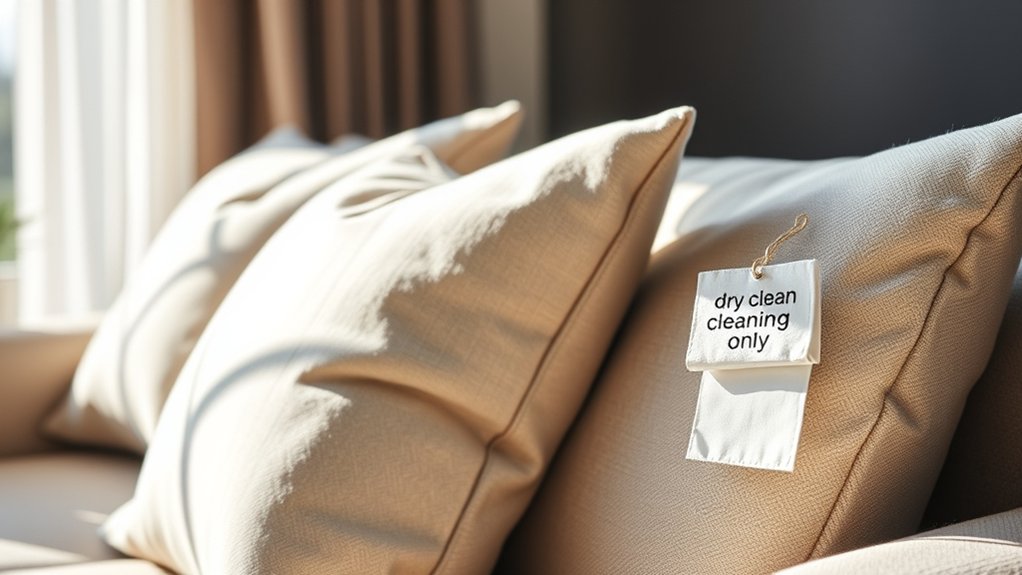
While the label “dry clean only” might make you think your couch cushions can’t be cleaned at home, it actually means you need to avoid water-based methods that could damage the fabric. Water can cause fabric dye to run, shrink the material, or leave water stains, especially on natural fibers like linen.
For effective stain removal, professional dry cleaning uses specialized solvents that protect the fabric dye and prevent discoloration.
Household dry-cleaning kits exist, but they don’t guarantee thorough stain removal and mightn’t suit every fabric.
Following the manufacturer’s care instructions is essential to avoid voiding warranties or worsening damage.
How to Identify Dry Cleanable Couch Cushions
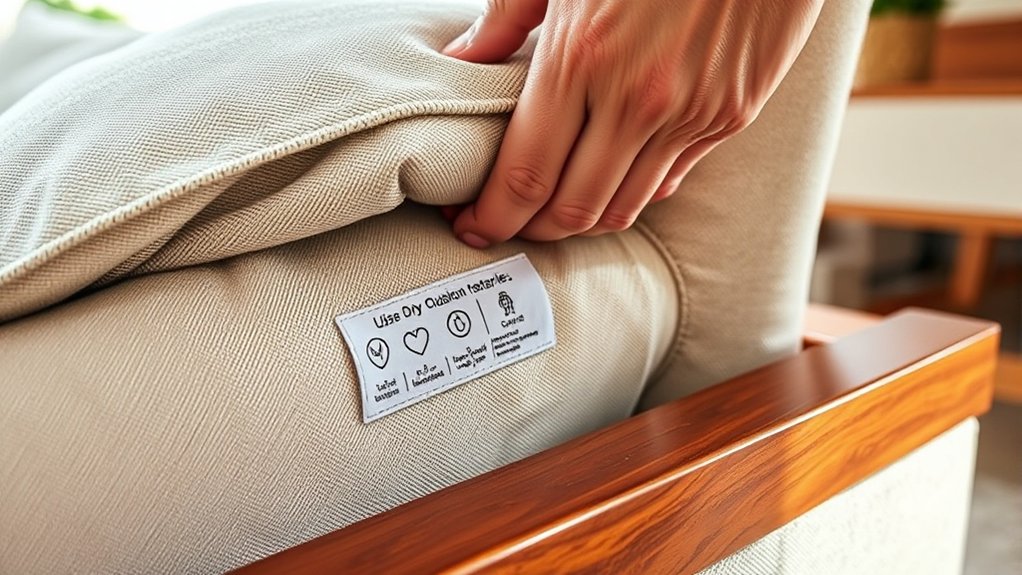
To identify if your couch cushions need dry cleaning, start by examining their care labels for specific cleaning codes like “S” for solvent-based cleaning or “X” for no liquids. Check for a dry clean symbol—a circle—or instructions stating “dry clean only.”
Check care labels for cleaning codes like “S” or “X” and look for dry clean symbols before cleaning cushions.
Fabric durability plays a key role. Delicate natural fibers such as silk or linen often require dry cleaning, while synthetic fabrics might tolerate other methods.
Consider how often you clean your cushions. Frequent cleaning might demand a more durable fabric or professional care to maintain appearance.
If labels are missing or unclear, consult the manufacturer or retailer for guidance. Being precise about these details helps you decide if dry cleaning is suitable, ensuring your cushions stay in great shape without risking damage.
How to Prepare Couch Cushions for Dry Cleaning
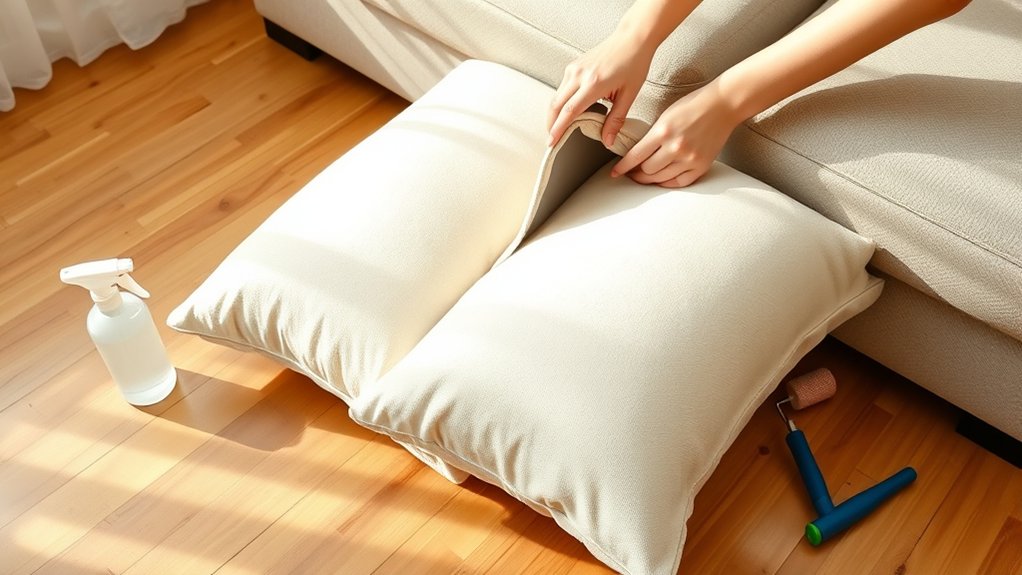
First, gently take off the cushion covers, being careful not to harm the cushions underneath.
Then, take a look at the care tags to see if there are any special dry cleaning instructions or warnings.
Doing this helps you handle each cushion the right way and avoid any damage during the cleaning process.
Remove Covers Carefully
Before you remove the cushion covers, make sure to check the care labels for any specific dry cleaning instructions or fabric restrictions.
When handling different fabric textures, use gentle removal techniques to avoid damage. Unfasten zippers or Velcro slowly and carefully, ensuring you don’t tear or stress the material.
To protect the fabric surface, turn each cover inside out before fully removing it. This also helps prevent dirt or oils from transferring during handling, so be sure your hands are clean.
Keep track of each cover by labeling them or noting their position on the couch.
This step guarantees you can reassemble the cushions correctly after dry cleaning, preserving both the fabric texture and overall look of your couch cushions. It might seem like extra work, but it’s definitely worth it in the long run.
Inspect Care Tags
When you inspect the care tags on your couch cushions, you’ll discover essential information about whether the fabric requires dry cleaning or can tolerate other cleaning methods. Look for the “Dry Clean Only” (S) code and any specific symbols that guide safe cleaning. Removing covers helps you check tags and test fabric durability.
Always perform colorfastness testing on a hidden spot with a solvent-based cleaner to avoid discoloration. Follow all manufacturer instructions precisely before proceeding. It’s a good habit to be cautious with any cleaning method you choose.
| Care Tag Symbol | Meaning | Action Required |
|---|---|---|
| S | Dry Clean Only | Use solvent-based cleaners |
| W | Water-Safe | Can use mild water cleaning |
| X | No Cleaning | Spot clean only |
| P | Dry Clean/Perc | Use perchloroethylene |
Safe Spot Cleaning for Dry Clean Only Couch Covers
Although dry clean only couch covers require extra care, you can safely remove spots without water or liquid cleaners by using a dry, white cloth or soft brush to lift dust and debris. Different upholstery textures need gentle cleaning tools to avoid damage.
Choose a soft-bristled brush for delicate fabrics and a lint-free cloth for smoother weaves.
For small stains, apply a dry-cleaning solvent designed for upholstery. But always test it first on a hidden patch to check for discoloration.
When spills happen, blot immediately with a dry cloth, working from the stain’s edges inward to prevent spreading.
Remember, avoid moisture and follow the manufacturer’s care instructions closely. These steps keep your dry clean only covers fresh without risking damage from improper cleaning.
Just take it slow and be gentle!
Why You Should Let Pros Handle Delicate Fabrics
Because delicate fabrics like silk and natural fibers react unpredictably to home dry-cleaning methods, you should trust professionals to handle these materials. Their specialized equipment and tailored solvents protect fabric durability, preventing shrinkage, discoloration, or distortion.
When you try DIY dry cleaning, you risk leaving residues or water stains that damage the fabric’s texture and appearance. Professionals know how to read fabric codes and choose the safest cleaning approach, reducing these DIY risks considerably.
By relying on experts, you preserve your couch cushions’ look and longevity, ensuring delicate fabrics stay intact without compromising quality.
In short, letting pros handle delicate fabrics is the smartest way to maintain your cushions’ fabric durability and avoid costly DIY mistakes.
When to Avoid Water on Dry Clean Only Couch Cushions
If your couch cushions are labeled “dry clean only,” you shouldn’t use water-based cleaning methods on them. Water can cause color bleeding, fabric shrinkage, and stubborn water stains.
Exposure to water may also turn fibers yellow or brown, which can really damage the fabric’s look. You’ll want to avoid water especially if your cushions have delicate fibers like linen or if the care label warns against water.
Using household water cleaners might even void your warranty or cause irreversible damage. So, it’s better to be safe than sorry.
| Risk | Cause | Result |
|---|---|---|
| Color bleeding | Water exposure | Faded or stained fabric |
| Fabric shrinkage | Water and heat | Misshapen cushions |
| Water stains | Improper cleaning | Difficult to remove marks |
Always follow the labels and check with pros before cleaning dry clean only cushions with water.
Tips to Maintain Dry Clean Only Cushions Between Cleanings
While professional cleaning is essential for dry clean only cushions, you can keep them looking fresh between sessions by vacuuming regularly with an upholstery attachment to remove dust and prevent dirt buildup. This routine helps maintain fabric durability and extends the time between professional cleanings.
Regular vacuuming with an upholstery attachment keeps dry clean only cushions fresh and prolongs fabric durability.
Spot clean small stains immediately using a dry-cleaning solvent or a mild, fabric-specific product. Never use water-based solutions, as they can cause damage or discoloration.
Rotate and fluff cushions frequently to preserve their shape and distribute wear evenly. This supports fabric longevity.
To refresh the fabric surface without risking harm, use a soft-bristle brush or compressed air.
How to Know When It’s Time to Call a Pro
Knowing when to call a professional for your dry clean only cushions can save you from costly mistakes and fabric damage. If stains are large, deeply set, or resist stain removal techniques, it’s time to seek expert help.
Also, if you notice persistent odors or discoloration that don’t improve with regular odor treatment, that’s another sign to get professional cleaning. When care labels say “Dry Clean Only” and home methods fail, trust a pro.
Using professional services is especially important for delicate fabrics or natural fibers to avoid damage.
| Situation | When to Call a Pro | Reason |
|---|---|---|
| Large or deep stains | Immediately | Effective stain removal needed |
| Persistent odors/discoloration | After home treatment fails | Specialized odor treatment |
| Unknown fabric code | Before cleaning | Prevents fabric damage |
| Heavily soiled cushions | When heavy dirt is visible | Ensures thorough cleaning |
Frequently Asked Questions
Can I Dry Clean Couch Cushions at Home Without Damaging Them?
You shouldn’t dry clean couch cushions at home, as DIY solutions may damage fabric or filling. Instead, focus on regular cushion maintenance like vacuuming and spot cleaning to keep them fresh without risking shrinkage or warping.
It’s better to avoid trying to dry clean them yourself because you might end up causing more harm than good. Just stick to simple care routines, and your cushions will stay in great shape longer.
What Solvents Are Safe for Spot Cleaning Dry Clean Only Cushions?
Oh sure, just pour anything on your cushions! But if you want solvent safety, stick to perchloroethylene or hydrocarbon-based solvents for spot cleaning.
Test first, use sparingly, and avoid water-based cleaners to prevent damage.
It’s all about protecting your cushions while getting the spot out without causing more harm. Just take it slow and be careful!
How Often Should Dry Clean Only Couch Cushions Be Professionally Cleaned?
You should have dry clean only couch cushions professionally cleaned every 12 to 18 months to keep the fabric durable.
If you have pets or kids, you might want to clean them more often. This helps prevent damage and keeps the cushions looking good.
Regular cleaning really helps preserve their appearance over time.
Are There Eco-Friendly Dry Cleaning Options for Couch Cushions?
Like choosing the right path in a green forest, you can opt for eco-friendly methods using green solvents to dry clean couch cushions. These sustainable options minimize chemicals, keeping your cushions fresh and the planet healthier.
It’s a win-win situation, really. You get a clean couch, and you’re also doing your part to protect the environment. Plus, many green solvents are gentle on fabrics, which means your cushions last longer.
Can Dry Cleaning Remove Pet Odors From Couch Cushions?
Yes, dry cleaning effectively handles pet stain removal and odor elimination by penetrating deep into fabrics. You’ll find it especially useful for tackling tough pet odors.
But keep in mind, persistent smells might need repeated treatments for complete freshness. It’s a great option if you want to freshen up your couch cushions without soaking them. Dry cleaning can really make a difference!
Conclusion
Caring for your dry clean only couch cushions is like handling a treasured telegram, delicate and precious. Always prep them carefully and trust professionals when in doubt to avoid damage. Spot clean gently and avoid water to preserve the fabric’s integrity.
Between cleanings, keep things fresh with regular vacuuming and airing. When stains stick around or cushions lose their charm, it’s time to call in the pros. Taking these steps helps your cushions stay sharp and comfortable for years.