Does Oxiclean Bleach – Quick Answer
If you’ve ever wondered whether OxiClean can replace bleach, you’re not alone. Many people want a safer, effective way to brighten laundry and clean tough stains without damaging fabrics or creating risky chemical reactions. It can get confusing fast, especially when products seem similar but work very differently. That’s why it helps to understand what OxiClean actually does before using it.
You can’t use OxiClean as a traditional bleach because it relies on hydrogen peroxide-based oxidation, not chlorine like bleach does. These two work differently chemically and don’t produce the same whitening effects.
Mixing OxiClean and bleach is unsafe, as their reaction releases oxygen gas and unstable compounds, reducing cleaning efficiency and posing hazards. Instead, use them separately and follow safety guidelines to avoid damage. Explore further to understand their interactions and safer cleaning alternatives.
OxiClean and Bleach: How They Work
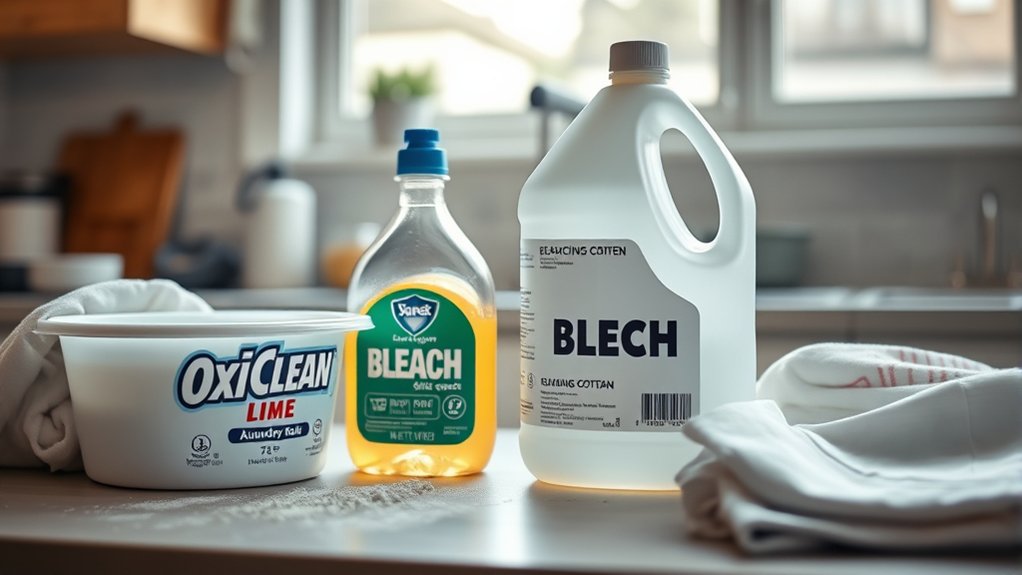
Although both OxiClean and bleach serve as powerful cleaning agents, they operate through distinct chemical mechanisms that affect their stain-removal and disinfecting capabilities.
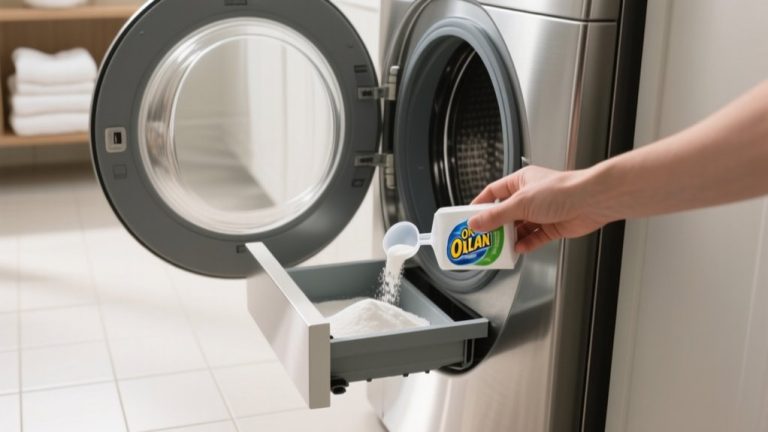
When you activate OxiClean with water, it releases hydrogen peroxide and soda ash. This combination effectively breaks down organic stains by oxidizing and lifting them from fabrics or surfaces.
OxiClean releases hydrogen peroxide and soda ash, oxidizing and lifting organic stains from fabrics and surfaces.
Bleach, primarily composed of sodium hypochlorite, acts differently. It serves as a strong disinfectant and whitening agent by targeting bacteria and germs through chlorination.
Understanding these mechanisms helps you appreciate why each excels in specific cleaning tasks.
You should also note that their chemical differences mean you need to use them separately to avoid hazardous reactions, which will be discussed later.
For now, focus on how each agent works independently to optimize your cleaning strategy.
Can You Mix OxiClean and Bleach Safely?
Understanding how OxiClean and bleach function separately sets the stage for evaluating their compatibility. OxiClean releases hydrogen peroxide upon activation, while bleach contains sodium hypochlorite.
When mixed, these chemicals can interact, increasing oxygen gas production. This reaction may elevate pressure in closed containers, risking leaks or bursts.
Due to these hazards and the potential release of harmful gases, you should avoid combining OxiClean and bleach. Using them separately guarantees chemical stability and safety.
Always prioritize proper ventilation and wear protective gear when handling bleach or other strong cleaning agents. By following these precautions, you reduce exposure risks and maintain a safer cleaning environment.
Mixing these substances compromises safety and isn’t advisable under any circumstances.
Chemical Reactions of OxiClean and Bleach
These reactions can also leave residues that affect how surfaces and fabrics clean up afterward.
Reaction Mechanism Explained
Because OxiClean releases hydrogen peroxide upon activation and bleach contains sodium hypochlorite, mixing these two substances initiates a chemical reaction that generates oxygen gas.
This reaction proceeds through unstable intermediates, which can rapidly decompose, creating gas and increasing pressure. Additionally, the oxidative properties of both agents interfere with each other, reducing cleaning efficacy.
Key points to evaluate:
- Hydrogen peroxide (H2O2) reacts with sodium hypochlorite (NaOCl), producing oxygen (O2) and potentially harmful byproducts.
- The generation of oxygen gas can build pressure in confined spaces, posing physical risks.
- The interaction diminishes stain removal effectiveness due to compromised oxidizing functions.
Understanding this mechanism clarifies why these substances should never be combined during cleaning.
Safety Risks Involved
The chemical reaction between OxiClean’s hydrogen peroxide and bleach’s sodium hypochlorite poses significant safety hazards you should never ignore.
When combined, these chemicals generate oxygen gas rapidly, increasing pressure in closed containers and risking leaks or bursts. This gas evolution also creates hazardous breathing conditions, posing respiratory risks.
You must avoid mixing these substances to prevent pressurized explosions and inhalation dangers. Additionally, their interaction can damage fabrics and surfaces, so always test on small areas before use.
To protect yourself, wear gloves and masks when handling either product, and never apply them simultaneously.
Following these precautions guarantees safety and prevents unwanted chemical hazards associated with the reactive interplay of OxiClean and bleach.
Risks of Mixing OxiClean and Bleach
Although OxiClean and bleach are both effective cleaners individually, mixing them poses significant risks that compromise safety and cleaning efficiency. When combined, the hydrogen peroxide in OxiClean reacts with bleach’s sodium hypochlorite, producing hazardous gases and oxygen.
These reactions create multiple dangers:
- Oxygen gas buildup in closed containers can cause pressure increases, leading to leaks or bursts.
- Harmful gases released pose serious respiratory hazards if inhaled, especially in poorly ventilated areas.
- The chemical interaction neutralizes both cleaners’ active ingredients, reducing their overall effectiveness.
To minimize risks, you should always use these products separately and follow manufacturer instructions precisely.
Proper ventilation remains critical to prevent toxic fume inhalation when handling either product. Avoid mixing to maintain a safe environment and maximize cleaning performance.
Benefits of Mixing OxiClean and Bleach
When you combine OxiClean and bleach carefully, you can leverage their complementary cleaning mechanisms to address a broader range of stains and disinfect surfaces more effectively. OxiClean’s oxygen-based formula targets organic stains by releasing hydrogen peroxide, while bleach excels at whitening and sanitizing fabrics.
This synergy can streamline your cleaning process, saving time on complex tasks by simultaneously lifting stains and disinfecting.
| Feature | OxiClean | Bleach |
|---|---|---|
| Cleaning Action | Oxygen-based stain lifting | Whitening and sanitizing |
| Target Stains | Organic stains | Discoloration and germs |
| Disinfecting Power | Moderate (H2O2 release) | Strong |
| Application Speed | Moderate | Fast |
| Combined Use Benefit | Enhanced stain removal & disinfection | Streamlined cleaning process |
Using OxiClean and Bleach Separately for Best Results
Because mixing OxiClean and bleach can release harmful gases, you should always use them separately to guarantee safety and enhance cleaning effectiveness.
Mixing OxiClean and bleach produces harmful gases; always use them separately for safe, effective cleaning.
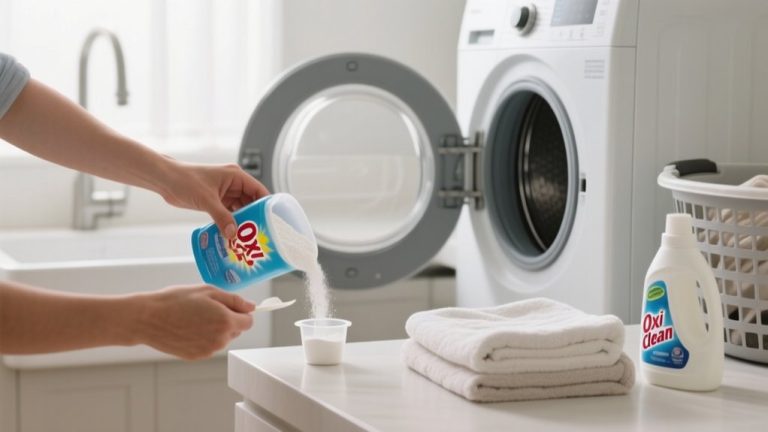
Start by activating OxiClean with water to target organic stains like wine or coffee. After thoroughly rinsing, apply bleach only if you need additional whitening or disinfection.
Follow these steps for ideal results:
- Pre-treat stains with OxiClean, confirming it penetrates fibers effectively.
- Rinse fabrics completely to remove residual OxiClean before bleach application.
- Test fabrics for colorfastness prior to bleaching to avoid damage or discoloration.
Always verify proper ventilation and wear protective gear when handling bleach.
This method prevents chemical hazards while leveraging each product’s strengths precisely.
Safer Alternatives to Mixing OxiClean and Bleach
Safer cleaning methods work best when you match the product to the stain type.
Vinegar And Baking Soda
Two common household substances, vinegar and baking soda, offer a safer alternative to mixing OxiClean and bleach for cleaning purposes.
Vinegar’s acidity dissolves stains, while baking soda acts as a mild abrasive that lifts dirt without harsh chemicals. When combined, they produce carbon dioxide gas, creating a fizzing action that dislodges grime effectively.
This reaction avoids the toxic fumes and chemical hazards linked to bleach or OxiClean mixtures.
Here’s why you might choose this combo:
- It neutralizes odors and removes stains safely on various surfaces.
- It’s eco-friendly and reduces chemical exposure risks.
- It works well on fabrics and countertops, but always test a small area first.
Using vinegar and baking soda provides a powerful, non-toxic cleaning method.
Hydrogen Peroxide Combinations
While OxiClean and bleach mixtures pose chemical risks, hydrogen peroxide offers a safer, effective alternative for stain removal and disinfection. It breaks down organic stains without generating harmful gases, enhancing safety during use.
When combined with dish soap, hydrogen peroxide forms a potent stain remover capable of lifting stubborn residues from diverse surfaces.
For gentler cleaning, dilute hydrogen peroxide in a 1:1 ratio with water; this solution maintains fabric integrity while providing antibacterial and brightening effects, especially on white fabrics.
However, always test on a small, hidden area first to prevent potential color damage or material degradation.
Employing hydrogen peroxide combinations allows you to achieve effective cleaning and disinfection without the hazards inherent in mixing OxiClean and bleach.
Natural Fabric Brighteners
Natural fabric brighteners offer safer alternatives to mixing OxiClean and bleach by leveraging mild, effective agents like lemon juice, baking soda, and white vinegar. These options minimize chemical risks while maintaining fabric integrity and brightness.
Consider the following:
- Lemon juice contains citric acid, a natural bleaching agent that whitens fabrics without harsh chemicals.
- Baking soda acts as a gentle abrasive and water softener, enhancing detergent performance and odor removal.
- White vinegar brightens fabrics, removes odors, and softens fibers when added during the rinse cycle.
Additionally, diluted hydrogen peroxide can safely tackle tough stains, while enzyme cleaners break down organic stains enzymatically.
These methods provide precise, reliable fabric brightening without the adverse effects linked to bleach or aggressive OxiClean mixtures.
Safety Precautions for Bleach and OxiClean
Because bleach and OxiClean contain reactive chemicals, you must take specific safety precautions to prevent hazardous exposure and chemical reactions.
Always guarantee proper ventilation to avoid inhaling harmful gases that may form during use. You should wear protective gloves and masks to prevent skin irritation and respiratory issues.
Importantly, never mix bleach with OxiClean, as this combination can produce toxic gases and increase pressure inside sealed containers, posing explosion risks.
Adhere strictly to product instructions for both agents to minimize accidents and guarantee effective application. Before full use, test the cleaner on a small, inconspicuous fabric or surface area to verify compatibility and prevent damage.
These measures maintain safety and control chemical hazards during cleaning tasks.
Summary: Best Practices for Using OxiClean and Bleach
When using OxiClean and bleach, you should always apply them separately to prevent dangerous chemical reactions. OxiClean, an oxygen-based stain remover, differs fundamentally from bleach, which contains sodium hypochlorite and acts as a disinfectant and whitener.
To optimize safety and effectiveness, adhere to these best practices:
- Use OxiClean and bleach in distinct cycles or areas, ensuring thorough rinsing and ventilation between applications.
- Wear protective gear such as gloves and masks when handling bleach to reduce exposure to harmful fumes.
- Conduct a patch test on a discreet fabric section before full application to confirm compatibility and prevent damage.
Following these guidelines minimizes hazards, protects fabrics, and maintains cleaning efficacy without risking toxic gas formation or fabric degradation.
Frequently Asked Questions
Can Oxiclean Remove Stains From Colored Fabrics?
Yes, you can remove stains from colored fabrics using OxiClean. It releases hydrogen peroxide to target organic stains without fading, but you should test a small area first to check colorfastness before full application.
How Long Should Oxiclean Soak on a Stain?
Soak stains in OxiClean for 1 to 6 hours, adjusting the time for stain severity and fabric type. For tougher stains, an overnight soak often helps. Fully submerge the fabric and rinse it thoroughly afterward.
Is Oxiclean Safe for Use on Carpets?
Yes, you can use OxiClean on carpets if you dilute it properly and test a small hidden area first. Follow the manufacturer’s directions, and apply it promptly to fresh stains when possible. Avoid harsh bleach versions, since they can affect carpet fibers and colors.
Can Oxiclean Be Used in Cold Water?
Yes, you can use OxiClean in cold water if you fully dissolve the powder first. It activates at lower temperatures, but tough stains may need a longer soak. This can help preserve fabric colors and reduce energy use.
Does Oxiclean Have a Strong Odor?
No, OxiClean does not have a strong odor. Its oxygen-based formula has a mild scent that is faint and fresh indoors, especially compared with bleach. The smell can seem more noticeable depending on the room, but it is generally far less intense than bleach’s odor.
Conclusion
You shouldn’t mix OxiClean and bleach; they’re like oil and water, reacting unpredictably and risking toxic fumes. Instead, use them separately to harness their full power safely. OxiClean excels at lifting stains with oxygen-based cleaning, while bleach disinfects and whitens.
Following safety precautions guarantees effective results without chemical hazards. Remember, precision in application beats reckless mixing every time, keeping your cleaning both efficient and safe.