Does Persil Contain 1 4 Dioxane – The Truth
Many people want a laundry detergent that gets clothes truly clean without leaving behind hidden concerns. If you’ve been wondering whether Persil contains 1,4-dioxane, you’re not alone. It’s a common question, especially for families trying to make safer choices for everyday products.
Yes, Persil detergent does contain measurable levels of 1,4-dioxane, a likely carcinogen commonly found in many laundry products due to its formation during surfactant manufacturing. Independent tests show some Persil formulas exceed safety limits like California’s Prop 65 threshold of 30 micrograms daily exposure.
Labels often don’t disclose this risk, which can impact your health over time. Understanding these facts can help you make safer laundry choices and consider alternatives.
What Is 1,4-Dioxane and Why It Matters in Laundry Detergents
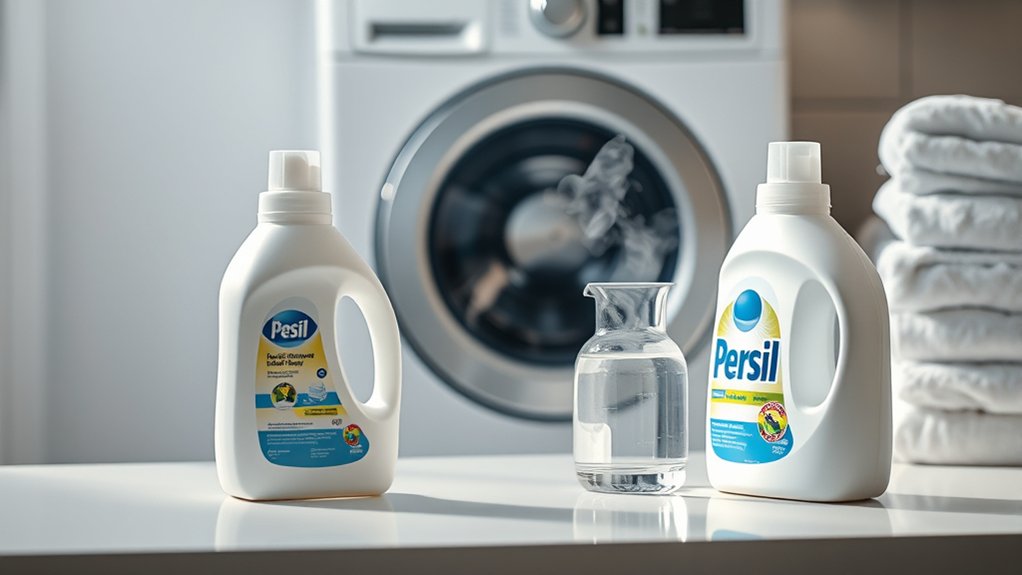
1,4-Dioxane is a synthetic industrial chemical that often appears as an unintended byproduct in laundry detergents, including some Persil formulations.
You should know it’s classified by the EPA as a likely carcinogen, linked to increased cancer risks through chronic exposure in animal studies.
Because 1,4-dioxane dissolves easily in water, it can contaminate tap water and remain on your laundry, increasing your exposure.
Independent tests reveal that detergents like Persil and Tide may contain measurable levels, with Tide reported as high as 89 parts per million.
Regulatory standards such as California’s Proposition 65 set a daily exposure limit of 30 micrograms, highlighting the importance of understanding this chemical’s presence.
Knowing this helps you make informed decisions about the products you use daily.
What Tests Reveal About 1,4-Dioxane in Persil Detergent
Independent testing has uncovered concerning levels of 1,4-dioxane in Persil laundry detergent, raising questions about consumer safety.
Studies, including one by Women’s Voices for the Earth, found several Persil products exceeding regulatory limits for 1,4-dioxane.
These tests showed that some Persil formulations contain concentrations comparable to other major brands like Tide, which measured between 63 and 89 parts per million.
This evidence highlights the persistent presence of 1,4-dioxane, a byproduct of manufacturing, in detergents without clear disclosure.
As you evaluate your detergent choices, it’s essential to recognize how these findings underscore ongoing risks and the need for greater transparency.
Understanding test results helps you make informed decisions about the products you use daily and advocates for safer ingredient standards.
How 1,4-Dioxane Forms During Detergent Manufacturing
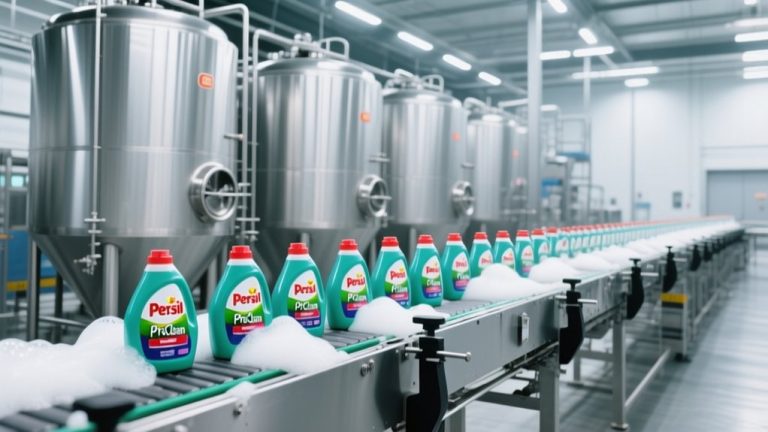
During detergent production, 1,4-dioxane often emerges as an unintended byproduct, primarily through the ethoxylation of fatty alcohols and other raw materials. This chemical isn’t intentionally added but results from the synthesis of surfactants, essential for cleaning efficacy.
The ethoxylation process, which attaches ethylene oxide molecules to fatty alcohols, can generate trace amounts of 1,4-dioxane due to side reactions. Its concentration varies considerably depending on the raw materials and manufacturing techniques employed.
Because 1,4-dioxane is a likely carcinogen, regulatory bodies like the EPA monitor its levels closely. Manufacturers are actively developing and adopting reformulation strategies to reduce or eliminate 1,4-dioxane in detergents.
Understanding this formation pathway is key to evaluating contamination risk and guiding safer production practices in laundry detergents like Persil.
Health Risks of 1,4-Dioxane in Persil and Laundry Products
The unintended presence of 1,4-dioxane in Persil and similar laundry products raises significant health concerns you should consider.
Classified as a likely carcinogen, prolonged exposure to 1,4-dioxane links to increased risks of liver and kidney cancers. Independent tests reveal that some laundry detergents contain 1,4-dioxane levels exceeding California’s Proposition 65 safety limits.
Prolonged exposure to 1,4-dioxane in some detergents may increase liver and kidney cancer risks.
Beyond carcinogenic risks, regular use may cause skin irritation and respiratory problems.
These findings highlight that even trace amounts in everyday products like Persil can impact your health over time. Being aware of these risks empowers you to make informed choices and encourages seeking safer, eco-friendly alternatives that minimize your exposure to potentially harmful byproducts in laundry detergents.
How Regulations Address 1,4-Dioxane in Household Products
Although 1,4-dioxane poses known health risks, federal regulations haven’t yet set specific limits or disclosure requirements for its presence in household products like Persil.
This regulatory gap contrasts with stricter standards in food, drugs, and some states like California. You should note these differences when evaluating product safety and labeling.
| Regulation | Limit |
|---|---|
| California Prop 65 | 30 micrograms/day exposure |
| California Drinking Water | 2 ppm (reducing to 1 ppm by Dec 2023) |
| FDA (Food & Drugs) | 10 ppm |
Despite these standards, household products often escape regulation, allowing 1,4-dioxane levels to exceed state limits. Manufacturers face challenges reformulating products to comply with tightening rules.
Why “Free and Gentle” Labels Mislead About 1,4-Dioxane
You might assume that a “Free and Gentle” label guarantees a product is free from harmful chemicals, but this isn’t always true when it comes to 1,4-dioxane. These labels can mislead you by implying absolute safety while 1,4-dioxane, a carcinogenic byproduct, may still be present.
Here’s why:
- Manufacturers often don’t disclose 1,4-dioxane, despite its known risks.
- Independent tests have found significant levels of 1,4-dioxane in detergents labeled “Free and Gentle,” including Persil.
- Federal regulations don’t require disclosure or limits on 1,4-dioxane, allowing its presence even in “safe” products.
- The label’s implication of health focus contradicts the reality of hidden carcinogens, underscoring a transparency gap in labeling practices.
Safer Laundry Detergent Alternatives Without 1,4-Dioxane
Since many popular detergents, including some Persil formulations, contain 1,4-dioxane, you need to evaluate safer alternatives that prioritize transparency and health.
Eco-friendly brands like Green Llamas use pure coconut oil soap as a natural surfactant, effectively cleaning without 1,4-dioxane’s harmful effects.
Choosing biodegradable detergents not only minimizes your exposure to toxic chemicals but also supports environmental sustainability.
Independent testing reveals that many conventional products exceed safe 1,4-dioxane levels, so scrutinizing ingredient lists and seeking brands that openly disclose components is essential.
By selecting detergents free from harmful byproducts, you reduce health risks and ecological impact.
Prioritizing these safer options aligns with evidence-based concerns and offers a practical approach to healthier laundry care.
How to Reduce Your 1,4-Dioxane Exposure in Laundry Choices
When selecting laundry detergents, prioritizing those labeled as “free from 1,4-dioxane” greatly reduces your exposure to this harmful chemical.
You can further minimize risks by making informed choices based on product composition and usage.
Consider these four actionable steps:
- Choose detergents with fewer synthetic ingredients, as 1,4-dioxane often forms during the manufacture of petrochemical-based surfactants.
- Opt for biodegradable, eco-friendly brands like Green Llamas that use natural ingredients and avoid toxic byproducts entirely.
- Review independent lab testing results that disclose 1,4-dioxane presence to verify product safety claims.
- Wash clothes in cold water, since high temperatures can increase the off-gassing of harmful chemicals from detergents.
Frequently Asked Questions
Does 1,4-Dioxane Affect the Scent or Cleaning Power of Persil?
No, 1,4-dioxane doesn’t affect Persil’s scent or cleaning power. The fragrance and stain removal come from specific compounds and enzymes, so the presence of 1,4-dioxane doesn’t enhance or diminish Persil’s performance.
Can 1,4-Dioxane Exposure Occur Through Skin Contact With Detergent?
Yes, you can absorb 1,4-dioxane through skin contact with detergent. Its high water solubility can allow penetration, and the risk of systemic exposure is greater with prolonged or repeated use. Minimizing skin contact is the practical step to reduce exposure.
How Does Persil Compare in Price to 1,4-Dioxane-Free Detergents?
Persil generally costs less, around $10–$20, while 1,4-dioxane-free detergents often range from $12–$25. The higher price can reflect eco-friendly ingredients and certifications, along with health-focused marketing strategies.
Are There Specific Persil Product Lines With Lower 1,4-Dioxane Levels?
Yes, some Persil lines, especially “free and clear” variants, tend to have lower 1,4-dioxane levels. But you still need independent testing to confirm the specific chemical content of any product accurately.
Is 1,4-Dioxane Found in Other Household Cleaning Products Besides Detergent?
Yes, you can find 1,4-dioxane in household products beyond detergent, including dish soaps, body cleansers, shampoos, and air fresheners. Some products may exceed safety limits, so check product formulations carefully before you buy or use them.
Conclusion
So, you want spotless clothes but don’t fancy a side of 1,4-dioxane? Persil might promise cleanliness, but that sneaky contaminant can still hitch a ride. Regulations try to keep it in check, though labels like “free and gentle” might make you chuckle in disbelief.
If you care about your health and the planet, consider safer detergents and smart laundry habits, because who knew your laundry day could be a chemistry lesson in disguise?