Does Laundry Detergent Kill Germs – The Truth
Laundry detergent helps remove dirt and bacteria by loosening and rinsing them away but doesn’t kill germs on its own. Many common pathogens, especially with cold or low-temperature washes, survive laundry cycles.
Hot water above 140°F and proper machine use improve germ removal, but detergent lacks disinfecting power. So, you’ll need additional sanitizers or disinfectants to effectively eliminate microbes.
Understanding the role of temperature, additives, and machine maintenance can greatly enhance your laundry’s hygiene.
Key Takeaways
- Laundry detergent removes dirt and bacteria but does not kill germs due to lack of strong disinfecting agents.
- Cold water and low washing temperatures increase germ survival, while hot water above 140°F effectively kills bacteria.
- Overloading washing machines reduces agitation and rinsing, limiting detergent’s ability to remove germs properly.
- Specialized laundry sanitizers or disinfectants are necessary to enhance germ elimination during washing cycles.
- Regular washing machine maintenance and proper drying practices prevent bacterial buildup and cross-contamination.
Why Laundry Detergent Can’t Fully Kill Germs
Although laundry detergent effectively lifts dirt and bacteria from fabrics, it doesn’t fully kill germs because it lacks strong disinfecting agents. You should know that laundry detergent primarily works by loosening and removing bacteria rather than destroying harmful germs.
Water temperature plays a significant role; washing with hot water above 140°F increases your chances to kill germs effectively, while cold water limits this effect.
Overloading your washing machine reduces agitation and rinsing, which compromises detergent’s ability to remove bacteria.
To enhance sanitation, you can combine detergent with specific sanitizers or use higher temperatures.
Moreover, it’s important to clean your washing machine regularly, as residual bacteria can accumulate and reduce overall hygiene during laundry cycles.
Understanding these factors helps you manage laundry hygiene more effectively.
What Types of Germs Survive Laundry Cycles
When you wash your clothes, certain germs like Staphylococcus aureus, E. coli, and Salmonella can survive typical laundry cycles, especially if you use cold water or low temperatures.
These bacteria persist in damp environments such as laundry hampers and on fabrics like undergarments and workout clothes, where close body contact and sweat promote bacterial growth.
Bacteria thrive in damp laundry areas and on fabrics with close body contact and sweat.
Moreover, hard-to-kill germs, including norovirus and some fungal spores, may endure standard washing procedures.
The washing machine itself can harbor bacteria, potentially re-contaminating laundry during cycles.
Research shows Staphylococcus aureus can remain viable post-wash if sanitation is inadequate and low-temperature settings are used.
Consequently, while laundry removes many germs, some bacteria and pathogens survive, emphasizing the need for careful laundering practices to reduce microbial presence effectively.
How Laundry Detergent Cleans Clothes
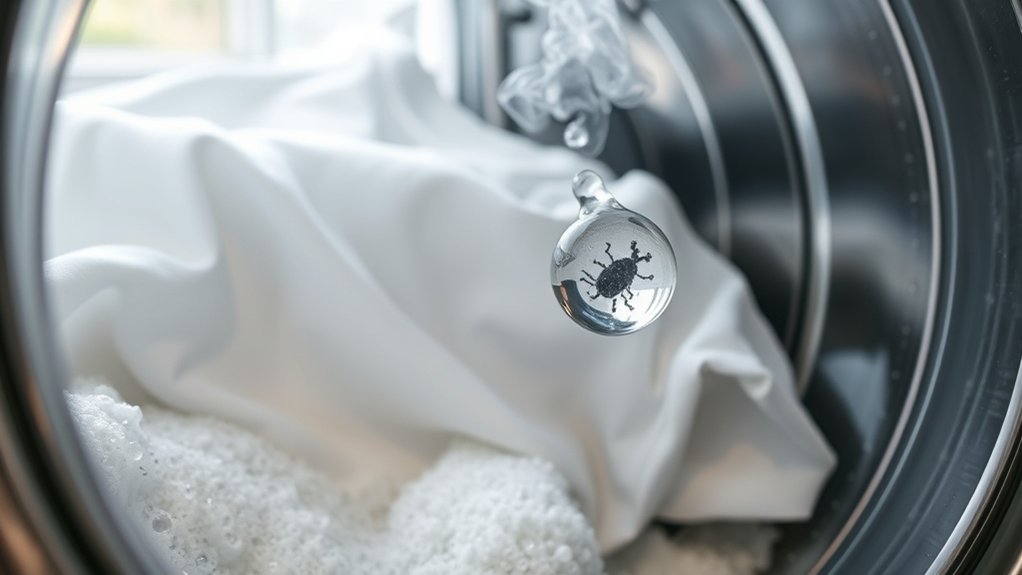
You know how laundry detergent works? It’s all about the surfactants inside it. These little molecules break down stains and dirt by reducing surface tension. That’s what helps lift those pesky particles right off your fabric fibers.
Then, the surfactants surround and trap the soil, making it easy to rinse away with water.
Once you get how this cleaning process works, you’ll see just how important detergents are for keeping your clothes fresh and hygienic.
Detergent Cleaning Mechanism
Three key factors determine how laundry detergents clean clothes: surfactants, water temperature, and mechanical action.
Detergents contain surfactants that break down stains and loosen dirt, letting water rinse them away effectively. However, detergents alone don’t kill bacteria unless used with high temperatures or disinfectants.
Proper mechanical action, like agitation in washing machines, helps remove bacteria by dislodging particles from fabric fibers.
- Surfactants break down and lift dirt and bacteria from fabric surfaces.
- Water temperature influences detergent efficacy; hot water improves bacteria removal and can kill some germs.
- Mechanical action agitates clothes, helping to detach contaminants.
- Detergent prevents reattachment of bacteria to fabrics during rinsing.
Understanding this mechanism helps you optimize your laundry process to clean effectively.
Surfactant Role Explained
A key component in laundry detergents is surfactants, which lower water’s surface tension to penetrate fabrics more effectively. Surfactants in laundry detergent attach to both water and oil molecules, emulsifying greasy residues and allowing you to rinse away dirt and bacteria.
By reducing the adherence of these contaminants to fabric fibers, surfactants enhance the cleaning process, making it more efficient than traditional soap. Warm water further boosts surfactant activity, helping you dislodge bacteria more effectively during washing.
However, while surfactants assist in removing bacteria, they don’t directly kill germs. Killing germs typically requires additional sanitizing agents or elevated temperatures.
Understanding the role of surfactants clarifies how laundry detergent cleans clothes and supports hygienic laundering practices.
How Water Temperature Affects Laundry Detergent’s Germ Removal
You’ll find that hot water—usually above 140°F—really boosts germ removal. It helps the detergent work better and actually kills bacteria.
On the other hand, cold water often doesn’t do the trick when it comes to getting rid of harmful microbes like Staphylococcus aureus. These germs can survive a typical wash if the water isn’t warm enough.
Hot Water Germ Killing
Although many washing machines release hot water at around 130°F, this temperature often falls short of effectively killing all germs.
Water above 140°F is necessary to kill germs, as many bacteria can’t survive such high heat.
Hot water also improves laundry detergent’s ability to dislodge and rinse away bacteria.
To maximize sanitation, especially for heavily soiled or bacteria-prone items, use the hottest water setting your fabric can tolerate.
Consider these points:
- Most residential washing machines heat water to about 130°F, insufficient for complete germ elimination.
- Water temperatures above 140°F kill a broader range of bacteria more effectively.
- Hot water enhances laundry detergent’s germ removal action.
- Laundromat machines often reach these higher temperatures, providing better sanitation.
Cold Water Limitations
When you wash clothes in cold water below 60°C, laundry detergents struggle to eliminate many harmful bacteria effectively. Cold water considerably reduces the germ-killing effectiveness of detergents because it fails to activate certain enzymes designed to break down bacteria.
Harmful bacteria like Staphylococcus aureus can survive typical cold water cycles, increasing the risk of recontamination. While some laundry detergents claim efficacy in cold water, their antibacterial properties remain less potent compared to those used with higher temperatures.
Washing machines operating at temperatures above 60°C provide ideal conditions for germ removal, as many pathogens can’t survive in these warmer environments.
As a result, relying solely on cold water compromises the thorough elimination of microbes, limiting the overall hygiene of your laundry.
Why You Need More Than Detergent to Kill Laundry Germs
Because laundry detergent mainly removes dirt and stains without fully killing bacteria, relying on it alone won’t assure your clothes are germ-free.
Detergent doesn’t kill all germs, so your laundry routine must include additional measures to eliminate germs effectively.
Hot water is essential, as low temperatures allow bacteria like Staphylococcus aureus and E. coli to survive.
Using detergent alone lacks sufficient disinfecting power to kill germs thoroughly.
To improve germ elimination, consider these factors:
- Use hot water cycles to enhance bacterial kill rates.
- Avoid overloading the washing machine to assure proper agitation and rinsing.
- Maintain your washing machine to prevent bacterial buildup in seals and components.
- Understand that detergent alone can’t achieve complete disinfection without supplementary steps.
How to Boost Germ Killing With Laundry Additives
To enhance germ elimination during laundry, you can add specialized sanitizers or disinfectants that target bacteria beyond what detergent and water achieve.
Using a laundry sanitizer, such as Dettol Laundry Sanitiser, can kill 99.9% of germs even at low temperatures, boosting hygiene beyond what detergent removes alone.
Incorporate disinfectant additives like oxygen bleach to kill bacteria without harming colored fabrics.
Quaternary disinfectants applied at the wash cycle’s end effectively target residual germs while preserving fabric integrity.
For white fabrics, liquid chlorine disinfectants combined with hot water provide potent germicidal action.
Always follow dosage guidelines to maximize bactericidal effects and avoid residue buildup.
Best Practices for Disinfecting White and Colored Clothes
Adding specialized sanitizers to your laundry routine greatly enhances germ elimination, but tailoring disinfection methods to fabric type guarantees ideal hygiene without damage.
Using specialized sanitizers and fabric-specific methods ensures thorough hygiene without compromising garment quality.
To effectively disinfect white and colored clothes while preserving fabric integrity, consider these best practices:
- Wash white fabrics in hot water at 140°F with a liquid chlorine disinfectant to maximize germ kill.
- For colored fabrics, use the warmest water allowed by care labels and alternative disinfectants like pine oil or quaternary ammonium compounds to prevent color fading.
- Always dry clothes for at least 45 minutes; use high heat for whites, and lower heat per label instructions for colors.
- Incorporate a disinfectant in every wash cycle, as laundry detergent alone may not kill all germs, especially in cold washing.
Following these scientifically grounded steps guarantees effective germ control during washing.
Common Mistakes That Let Germs Survive Laundry
Several common mistakes in laundry routines allow germs to survive the wash cycle, undermining hygiene efforts.
One major error is relying on cold water, which limits germ-killing effectiveness since many bacteria and viruses thrive in cooler temperatures.
Overloading the machine reduces agitation and rinsing, preventing thorough removal of dirt and germs.
Another laundry myth is that detergent alone kills all bacteria; detergents mainly lift dirt, so without higher temperatures or disinfectants, harmful germs may persist.
Neglecting to wash heavily soiled items separately increases the risk of cross-contamination.
Furthermore, failing to clean the washing machine regularly allows bacterial buildup in seals and interiors, which can re-contaminate laundry.
Avoiding these mistakes is essential for effective hygiene and reducing microbial survival in your laundry.
Tips for Keeping Your Washing Machine Germ-Free
Although washing machines are designed to clean clothes, bacteria can accumulate in seals and interiors if maintenance is neglected.
To keep your machine clean and fresh, follow these tips:
- Use hot water (at least 140°F) during the wash cycle to effectively kill germs and bacteria.
- Regularly clean the washing machine every two months with a dedicated cleaner to eliminate up to 99.9% of bacteria, especially in rubber seals.
- Avoid overloading the machine to guarantee proper agitation and rinse, which helps remove germs from laundry.
- Keep the washing machine door open after use to reduce moisture buildup and inhibit bacterial growth.
Also, sanitize your laundry hamper regularly and avoid placing damp clothes directly into it to prevent bacteria proliferation.
These steps help maintain a hygienic washing environment.
Frequently Asked Questions
Can Laundry Detergent Remove Pet Odors Effectively?
Laundry detergent can remove pet odors effectively by lifting and rinsing away organic residues that cause smells.
However, it may not fully eliminate the bacteria responsible for odors.
To enhance results, you should use enzymatic detergents that break down urine or feces, wash items at the highest safe temperature, and consider adding pet odor eliminators or disinfectants.
Regular washing helps maintain freshness and reduces odor buildup over time.
Is Fabric Softener Safe to Use With Disinfectants?
You shouldn’t use fabric softeners with disinfectants because the softener’s coating can reduce the disinfectant’s effectiveness.
Fabric softeners are designed to soften fabrics and decrease static, not to kill germs.
Combining them may interfere with the germ-killing action, so it’s best to use disinfectants separately during the wash cycle.
Always follow manufacturer instructions to guarantee both safety and peak performance when laundering.
How Do Stain Removers Affect Germ Removal in Laundry?
Imagine you spill juice on your shirt before work. Stain removers help break down that stain, but they don’t fully kill germs. They use surfactants to dislodge bacteria, improving cleanliness but not guaranteeing sterilization.
You’ll get better germ removal if you combine stain removers with hot water or disinfectants.
Does Hand Washing Clothes Eliminate Germs Better Than Machine Washing?
Hand washing clothes doesn’t necessarily eliminate germs better than machine washing. You gain more control over water temperature and soaking time, which helps, but machines provide consistent agitation and circulation that dislodge bacteria effectively.
Washing in hot water above 140°F, usually easier in machines, markedly reduces germs.
Ultimately, the best germ removal depends on fabric type, detergent quality, and washing technique you use, not just the method itself.
Are Eco-Friendly Detergents Less Effective at Cleaning Germs?
Yes, eco-friendly detergents generally kill germs less effectively than conventional ones.
You should know they often lack strong antibacterial agents like chlorine, relying on natural surfactants and warm water to reduce bacteria.
If you want better germ removal, use warm or hot water and longer wash cycles.
Choosing eco-friendly detergents with added sanitizers can enhance their germ-killing ability while minimizing environmental impact.
Conclusion
Think of laundry detergent like a broom. It sweeps away dirt and some germs but doesn’t disinfect the floor. Studies show standard detergents reduce bacteria by about 90%, but stubborn pathogens can survive.
To truly kill germs, you need additional steps like hot water or disinfectants. Just as you wouldn’t stop at sweeping if you wanted a sterile floor, don’t rely on detergent alone for germ-free laundry.
Use proper additives and routines to guarantee thorough hygiene.