Can You Mix Oxiclean And Vinegar – Safety Facts
If you’ve ever wondered whether it’s safe to mix OxiClean and vinegar, you’re not alone. Many people want a simple, powerful cleaning solution, but it’s easy to worry about accidentally creating a dangerous reaction or ruining a surface. The good news is that understanding what happens when these two cleaners are combined can help you clean more safely and confidently.
You shouldn’t mix OxiClean and vinegar because their reaction creates peracetic acid, which can irritate your lungs, skin, and eyes. This fizzing process also neutralizes OxiClean’s cleaning power and risks damaging grout, stone, and fabric surfaces.
Using them together wastes effort and causes harm. Instead, apply OxiClean first, rinse thoroughly, then use vinegar separately. Understanding these risks and proper methods guarantees safe, effective cleaning. This is essential information if you want to avoid damage and health hazards.
What Happens When You Mix OxiClean and Vinegar?
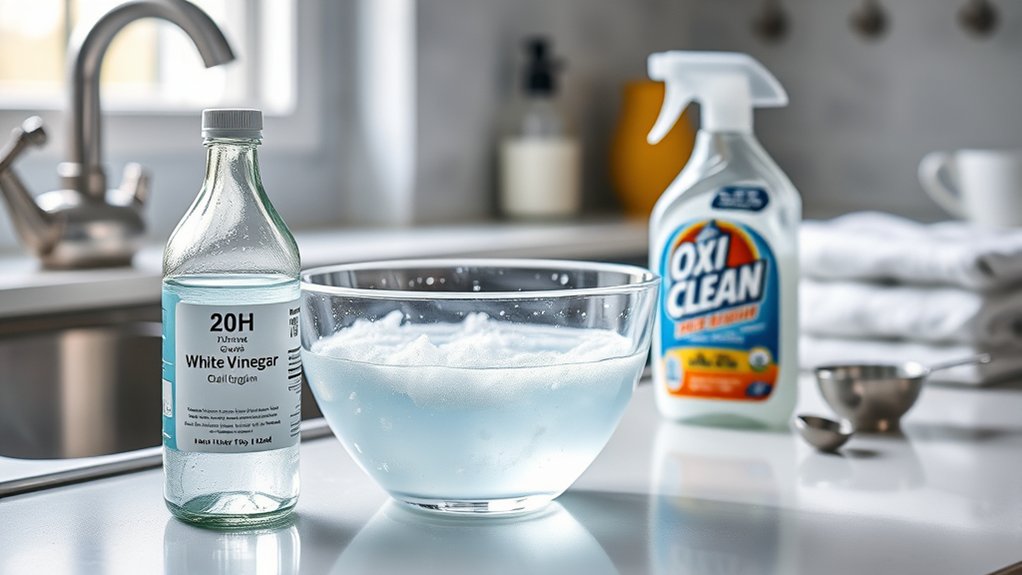
When you mix OxiClean and vinegar, a chemical reaction produces peracetic acid, a substance that can irritate your lungs, eyes, and skin.
This reaction causes OxiClean to lose its cleaning effectiveness quickly, considerably reducing its stain removal capabilities. Additionally, the fizzing generated during the mixture can damage surfaces such as grout, stone, and fabrics, potentially causing dull spots or discoloration.
Despite some online tips claiming enhanced cleaning power, evidence shows this combination is ineffective and poses risks.
To use both products safely, apply OxiClean and vinegar in separate cleaning steps rather than mixing them directly. This cautious approach helps you avoid harmful chemical reactions and preserves the integrity of your cleaning surfaces.
Why Mixing OxiClean and Vinegar Is Dangerous
The next section explains safer ways to clean with each product separately.
Harmful Chemical Reaction
Although combining OxiClean and vinegar might seem like a powerful cleaning method, it produces peracetic acid, a corrosive compound that can irritate your lungs, skin, and eyes. The reaction also releases fizz, which neutralizes OxiClean’s effectiveness and can damage surfaces like grout, fabric, and stone.
To avoid these harmful effects, use them separately during cleaning.
| Aspect | Effect |
|---|---|
| Chemical Reaction | Produces corrosive peracetic acid |
| Fizz Release | Neutralizes OxiClean’s cleaning properties |
| Surface Impact | Can damage grout, fabric, stone |
| Exposure Risk | Causes irritation to lungs, skin, eyes |
| Cleaning Recommendation | Use OxiClean and vinegar in separate steps |
Health Risks Involved
Because mixing OxiClean and vinegar produces peracetic acid, you risk exposure to a corrosive substance that can irritate your lungs, burn your eyes, and cause skin irritation.
This chemical reaction releases harmful fumes, posing significant health hazards, especially in enclosed spaces without proper ventilation.
Additionally, the reaction rapidly degrades OxiClean’s cleaning effectiveness, rendering both products less useful and wasting your effort.
Given these dangers, you should avoid combining them directly. Instead, use OxiClean and vinegar in separate cleaning steps, allowing proper rinsing and drying between applications.
Surface Damage Potential
Beyond the health risks posed by mixing OxiClean and vinegar, this combination can also cause significant damage to surfaces. When these substances interact, they create peracetic acid and fizz, which not only reduce cleaning effectiveness but also harm various materials.
You should avoid applying this mixture directly to your home surfaces because:
- Grout and stone can develop dull spots or discoloration due to the acidic reaction.
- Fabrics may suffer weakening or permanent staining from chemical exposure.
- Prolonged contact can degrade delicate finishes, compromising surface integrity.
These effects stem from the unstable chemical reaction between OxiClean’s active ingredients and vinegar’s acidity.
To protect your belongings, always use these cleaners separately in distinct steps rather than mixing them.
This approach guarantees safety and maintains surface quality.
Why Mixing OxiClean and Vinegar Seems Like a Good Idea (But Isn’t)
While combining OxiClean and vinegar might seem like a way to boost your cleaning power, doing so actually reduces OxiClean’s effectiveness and produces peracetic acid, a harmful compound that can irritate your skin and lungs.
Mixing OxiClean and vinegar lowers cleaning power and creates irritating peracetic acid, risking skin and lung health.
You might assume mixing strong cleaners enhances results, but this reaction rapidly depletes OxiClean’s active ingredients. The fizz you see signals this chemical transformation, not improved cleaning.
Additionally, peracetic acid poses health risks through skin contact and inhalation.
Beyond safety concerns, this mixture can damage surfaces like grout and fabrics, causing discoloration or dull spots.
How to Use OxiClean and Vinegar Safely Without Mixing Them
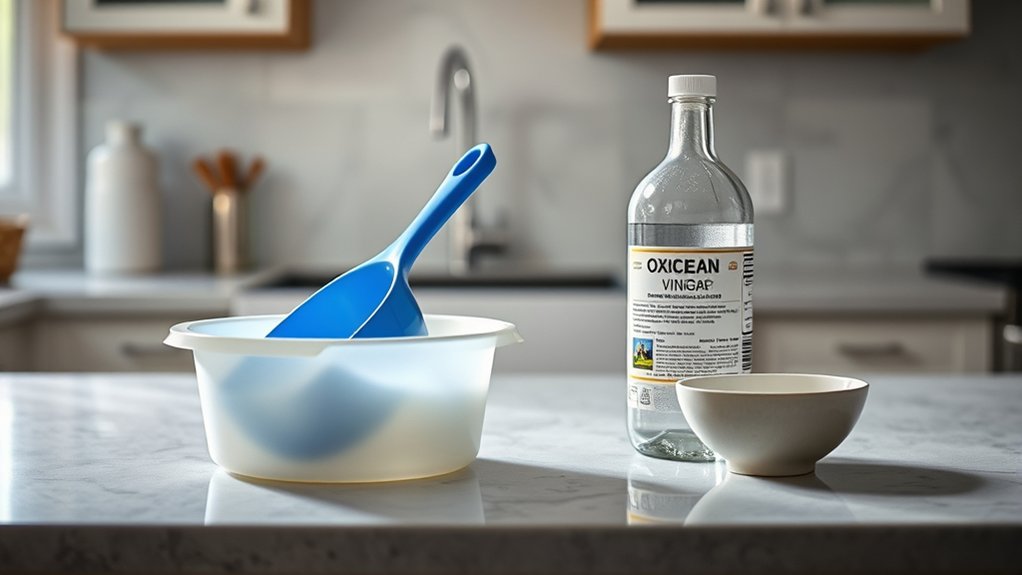
How can you harness the cleaning power of both OxiClean and vinegar without risking harmful chemical reactions? The key is to use them sequentially, never mixing them directly. Follow these steps:
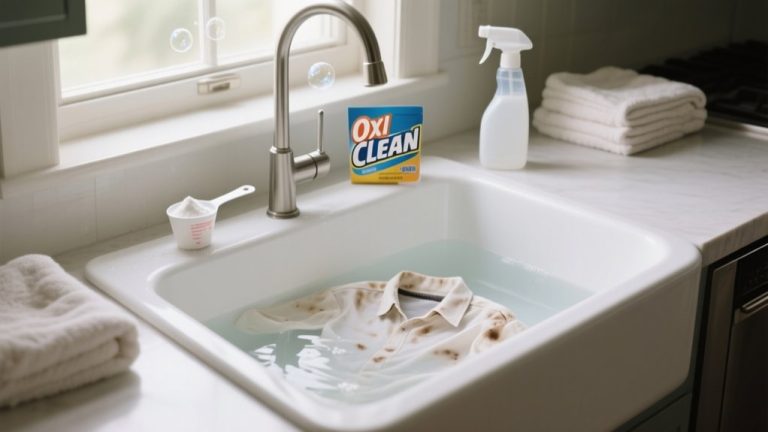
- Clean with OxiClean first, using warm or hot water to maximize stain removal.
- Then, rinse the area thoroughly to eliminate any residual OxiClean.
- After rinsing, apply vinegar separately for deodorizing or fabric softening.
- For laundry, add vinegar in the fabric softener dispenser during the final rinse cycle.
- Always perform a spot test on fabrics before full application to guarantee colorfastness and avoid damage.
Safe Alternatives to Mixing OxiClean and Vinegar
The next section explains safer cleaners for stains and odors in laundry.
Sequential Cleaning Steps
Three essential steps guarantee safe and effective use of OxiClean and vinegar without risking harmful chemical reactions.
First, apply OxiClean to the surface or garments and rinse thoroughly with water to remove any residue.
Second, after rinsing, use vinegar separately—either by applying it to the cleaned surface or adding it to the fabric softener dispenser during the rinse cycle in laundry.
Third, always perform a spot test on fabrics to verify no adverse reactions occur before proceeding with full treatment.
By following these sequential steps, you avoid mixing the two substances directly, which prevents the formation of harmful peracetic acid. This cautious approach maximizes cleaning efficiency while maintaining safety for both surfaces and users.
- Clean with OxiClean, then rinse well.
- Apply vinegar separately after rinsing.
- Conduct spot tests before full application.
Alternative Cleaning Mixtures
While applying OxiClean and vinegar sequentially minimizes risks, directly mixing these substances remains unsafe due to potential chemical reactions. Instead, use OxiClean for stain removal and rinse thoroughly before applying vinegar separately for deodorizing.
For gentle scrubbing, mix baking soda with vinegar; this combination safely tackles soap scum and mineral deposits without harmful effects.
To clean greasy surfaces, combine dish soap with vinegar, avoiding the risks linked to OxiClean-vinegar mixtures.
In laundry, apply OxiClean during the wash cycle and vinegar in the rinse cycle to maximize cleaning efficiency while preventing adverse reactions.
Always adhere to manufacturer guidelines and safety protocols when using cleaning products to avoid mixing incompatible chemicals and guarantee safe, effective results in your cleaning routine.
What to Do If You Accidentally Mix OxiClean and Vinegar
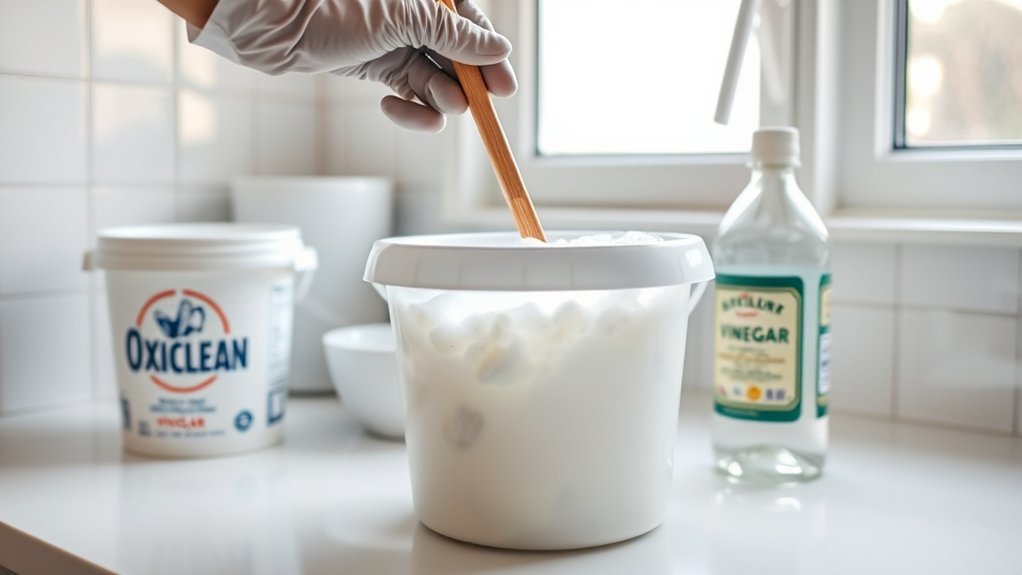
If OxiClean and vinegar accidentally mix, you should immediately ventilate the area to disperse harmful fumes, including peracetic acid.
This chemical reaction can produce irritants that pose health risks.
After ventilating, rinse the affected surface or skin with plenty of water to dilute the mixture and reduce irritation.
Rinse the affected area thoroughly with water to dilute chemicals and ease irritation after ventilating.
Avoid using or storing the mixture beyond six hours, as pressure buildup can create hazards.
Follow these steps:
- Ventilate the area thoroughly to disperse fumes safely.
- Rinse with water to dilute chemicals and minimize exposure.
- Dispose of any remaining mixture according to local hazardous waste guidelines.
Always wear gloves and protective eyewear when handling cleaning agents to prevent injury in case of accidental mixing.
Frequently Asked Questions
Can Oxiclean and Vinegar Be Used Together on the Same Surface?
Yes. Use OxiClean first, then rinse it off thoroughly before applying vinegar separately. Don’t mix them at the same time on the same surface, since that can create a harmful reaction and reduce cleaning effectiveness.
How Long Should I Wait Between Using Oxiclean and Vinegar?
24 hours is a good minimum to wait between using Oxiclean and vinegar. That gives the surface time to dry and helps avoid mixing the two products too soon.
Does Mixing Oxiclean and Vinegar Affect Laundry Colors?
Yes, mixing OxiClean and vinegar can alter laundry colors and leave fabric discoloration or dull spots. Avoid combining them directly, and test colorfastness first, especially on delicate or dyed fabrics.
Are There Specific Stains Oxiclean or Vinegar Handles Better Alone?
Yes. OxiClean works better on organic messes, while vinegar is better for mineral deposits and light rust. Using them separately lets you match the cleaner to the stain and avoid risking fabric damage from mixing products or using the wrong one.
Can Pets Be Harmed by Residues of Oxiclean or Vinegar?
Yes. Residues from OxiClean can harm your pets, causing gastrointestinal upset and irritation, and vinegar may cause digestive issues if ingested in large amounts. Rinse surfaces thoroughly and keep pets away until they are dry and residue-free.
Conclusion
You shouldn’t mix OxiClean and vinegar because it creates harmful reactions, releases irritating gases, and reduces cleaning effectiveness. You can use OxiClean for tough stains, vinegar for natural deodorizing, and both separately for a thorough clean.
Stay cautious, follow product instructions, and avoid combining chemicals. If you accidentally mix them, ventilate the area immediately and seek help if needed. Prioritize safety, maintain cleaning power, and protect your health every time you clean.