Can Oxiclean Kill You – The Truth
OxiClean can cause serious harm, but a small, accidental exposure is unlikely to be fatal if you act promptly. If you swallow it, rinse your mouth and don’t induce vomiting. For eye or skin contact, flush with water, and move to fresh air after breathing dust.
Seek urgent medical advice for significant exposure, severe symptoms, or uncertainty, and check the product label for specific hazards. Your risk depends on the amount, route, and formula, as the details below explain.
Can OxiClean Kill You? The Short Answer
Yes, OxiClean can be dangerous if someone swallows a large amount, inhales its dust, or gets the product in their eyes. However, a typical household exposure doesn’t automatically mean you’ll die.
The risk depends on the product’s ingredients, the amount, and how it enters your body. OxiClean products vary, and some contain sodium percarbonate, which can release hydrogen peroxide when mixed with water.
OxiClean’s risks vary by formula, amount, and exposure route; some products contain sodium percarbonate, which releases hydrogen peroxide in water.
Swallowing a substantial amount may cause serious irritation or injury, while breathing concentrated dust can irritate your airways. Eye contact can also cause harm.
Don’t assume every formula has the same risks, and check the specific product label. If you’re worried about a potentially serious exposure, contact Poison Control or emergency services for guidance.
Keep the container nearby so you can identify the exact product.
What Should You Do After OxiClean Exposure?
Act quickly, but don’t panic. Move away from any spilled powder, rinse exposed skin or eyes with plenty of water, and get fresh air if you’ve inhaled dust. Then take these steps:
Remove contaminated clothing and jewelry. Rinse skin for at least 15 minutes.
If the product got in your eyes, hold your eyelids open under gently flowing water and remove contact lenses if easy.
If you swallowed any, rinse your mouth. Don’t induce vomiting or try to neutralize it.
Keep the container or label nearby so you can share the exact product name and ingredients.
Call Poison Control for personalized guidance. In the U.S., dial 1-800-222-1222.
Contact emergency services for severe symptoms, trouble breathing, or loss of consciousness. Don’t wait for symptoms to worsen, and follow professional instructions.
How Does Risk Vary by Exposure Type?
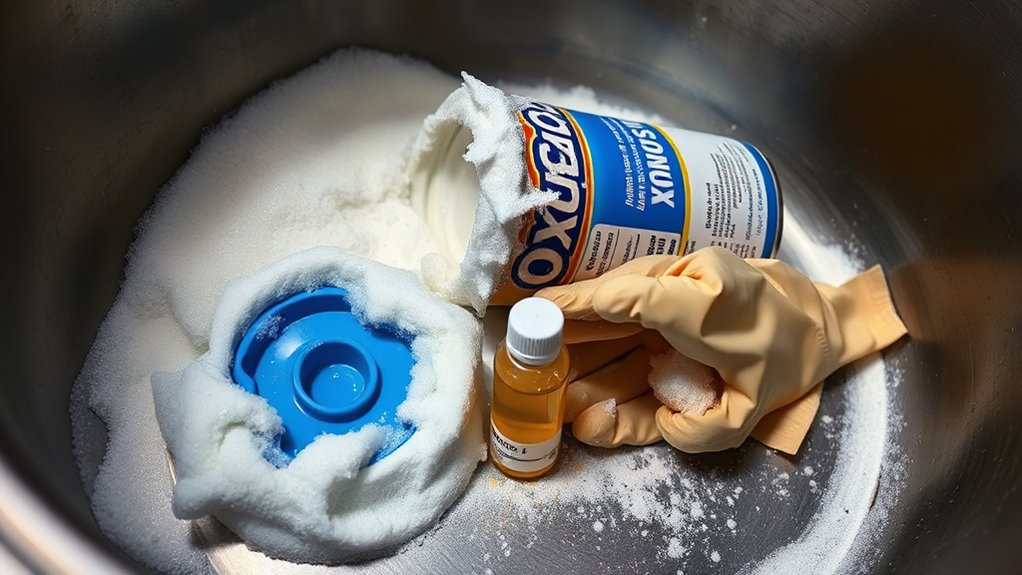
The danger depends on how OxiClean enters your body and which formula you used. If you swallow it, you may develop mouth or throat irritation, nausea, vomiting, or stomach pain. A large amount can cause more serious harm, so don’t assume a small-looking scoop is harmless.
If the powder or solution gets in your eyes, it can cause irritation, pain, and watering. A concentrated product or prolonged contact may injure the eye.
Skin contact may lead to redness, dryness, or irritation, especially if the product stays on your skin or you have sensitive skin.
Breathing dust or spray can irritate your nose, throat, or lungs, causing coughing or discomfort. Your risk rises with greater exposure, poor ventilation, and concentrated mixtures.
Follow the product label, and seek professional advice if symptoms persist or worsen.
Which OxiClean Ingredients Pose a Risk?
Because OxiClean formulas vary, check the label for the ingredients in your product. Several common components can irritate or injure you, especially in concentrated form or after swallowing.
- Sodium percarbonate releases hydrogen peroxide in water; it can irritate or burn your eyes, skin, and digestive tract.
- Hydrogen peroxide may sting and redden skin or eyes, while swallowing it can cause irritation and vomiting.
- Sodium carbonate is alkaline, like a harsh, soapy residue; it can irritate eyes, skin, and your throat.
- Surfactants and fragrances may trigger skin or eye irritation or an allergic reaction in sensitive people.
The exact risks depend on the product and exposure. Don’t assume a familiar brand name means every formula has identical ingredients or hazards.
Check the specific package’s ingredient list and hazard information to understand what it contains.
How Can You Use OxiClean More Safely?
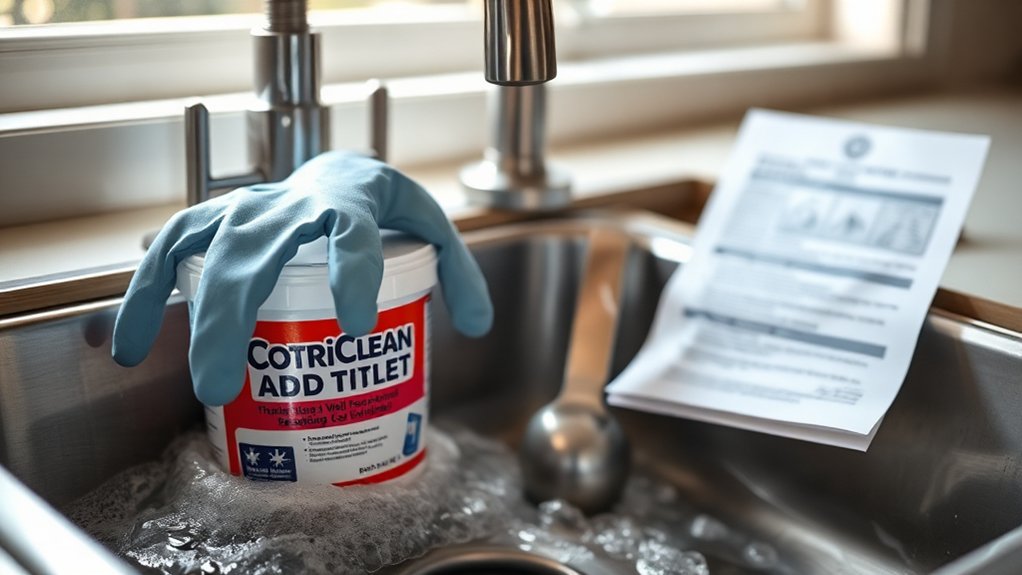
To reduce your risk, follow the directions on your specific OxiClean package and avoid mixing it with other cleaners.
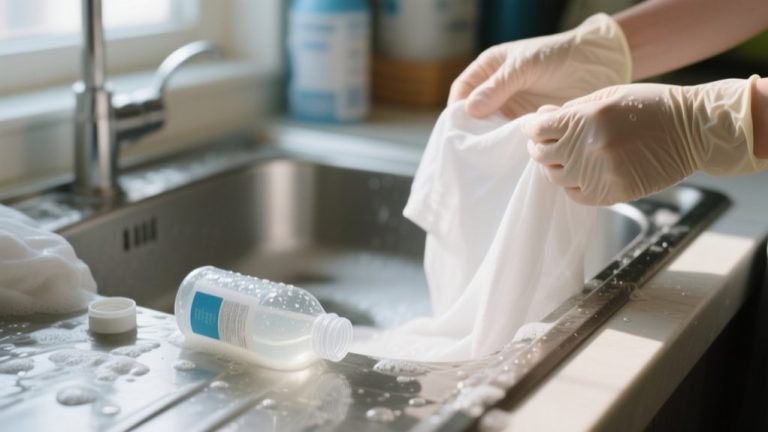
Wear gloves if you have sensitive skin, and don’t breathe in powder or dust.
Add the product to water as directed, rather than pouring water onto a pile of powder, which can create splashes. Use it in a well-ventilated area, and keep children and pets away while you work.
Don’t ingest the product or get it in your eyes. If you spill it, clean it up promptly without raising dust.
Store OxiClean in its original, closed container, away from heat, moisture, food, and children.
If it gets on your skin or in your eyes, rinse thoroughly with water. For ingestion or serious symptoms, contact Poison Control or seek urgent medical help.
Frequently Asked Questions
Can Oxiclean Damage Clothing or Household Surfaces?
Yes, OxiClean can damage clothing or household surfaces if you use it incorrectly. You might fade colors, weaken delicate fabrics, or discolor wood, metal, and other finishes, especially with strong solutions or prolonged contact.
Check the product label and your item’s care instructions first.
Test a hidden spot, avoid using it on wool, silk, or leather, and rinse treated surfaces thoroughly.
Don’t mix OxiClean with other cleaners.
Does Oxiclean Expire or Lose Effectiveness Over Time?
Over time, OxiClean can lose effectiveness, so don’t count on it to work like new indefinitely.
Moisture and heat can speed that decline by causing the powder to clump or react prematurely.
Keep your product in its original, tightly closed container in a cool, dry place, and check its packaging for any expiration or best-by date.
If it’s damp, hardened, or noticeably less effective, it’s time to replace it rather than risk disappointment.
Is Oxiclean Safe to Use in Septic Systems?
Yes, you can generally use OxiClean in a septic system when you follow the label directions and use the recommended amount.
Its oxygen-based cleaner breaks down into substances that are less likely to disrupt septic bacteria than chlorine bleach.
Still, don’t dump large quantities into drains, and avoid combining it with other cleaners.
Check your specific product’s label, since formulas vary.
Also, contact your septic professional if your system has special requirements or problems.
Can Oxiclean Be Used on Colored Fabrics?
Yes, you can use OxiClean on many colored fabrics, but check the garment’s care label and the product directions first.
Test a hidden area by mixing the cleaner as directed, applying it, and waiting several minutes. Then rinse and check for color changes.
Don’t use it on wool, silk, leather, or fabrics labeled dry-clean only.
Avoid pouring concentrated solution directly onto clothing, and never mix OxiClean with chlorine bleach or other cleaners.
Is Oxiclean Tested on Animals?
OxiClean’s lab coat doesn’t come with a clear animal-testing verdict: Church & Dwight, its maker, says it doesn’t test finished products on animals unless law requires it.
But that doesn’t necessarily cover every ingredient or supplier.
You won’t find a universal cruelty-free certification for OxiClean, either.
If you want certainty, check the company’s latest policy and look for recognized certification seals before buying.
Labels can be slippery little soap operas.
Conclusion
OxiClean can harm you if you swallow it, breathe in its dust, or get it in your eyes, but careful use can keep risks low. If exposure happens, act quickly: rinse skin or eyes, move to fresh air, and contact Poison Control for guidance.
Keep the product away from children, pets, and food, and follow the label’s directions. Don’t mix cleaners. With sensible storage and simple safety steps, you can clean confidently and protect yourself and your household.