Is Oxiclean Free Non Toxic – Is It Safe?
OxiClean Free is fragrance- and dye-free, but you shouldn’t assume it’s non-toxic or harmless. Its powder and dissolved solution can irritate your skin, eyes, or airways, especially if you swallow it, inhale dust, or have prolonged contact.
You can use it more safely by following the label, avoiding spills, and keeping it away from children and pets. If exposure occurs, rinse or flush the affected area and contact Poison Control for guidance.
A few precautions and gentler alternatives are worth considering.
Is OxiClean Free Non-Toxic and Safe to Use?

Is OxiClean Free non-toxic? It’s marketed as a fragrance-free, dye-free cleaner, but that doesn’t automatically make it harmless. You can use it safely when you follow the label, measure carefully, and keep it away from children and pets.
Avoid swallowing the product or getting it in your eyes, and don’t breathe dust when handling the powder. Wear gloves if you have sensitive skin, and wash your hands after use.
For routine laundry, dissolve the recommended amount in water and use it as directed. Don’t mix it with other cleaners, and never use it in a way the label doesn’t allow.
Keep the container closed and stored in a dry place. If you experience irritation or feel unwell after exposure, stop using it and contact a medical professional or poison control for guidance.
Which OxiClean Free Ingredients Pose Risks?
You might run into some risks with sodium percarbonate—it can irritate or even harm you if it’s not handled properly.
Surfactants are another thing to watch out for since they can irritate your skin or eyes.
And enzymes? Well, they can cause sensitivity in some folks.
Sodium Percarbonate Risks
Sodium percarbonate, the oxygen-based bleaching agent in OxiClean Free, can irritate your eyes, skin, and airways, especially when you handle the powder or breathe its dust. You may notice redness, itching, coughing, or a sore throat after exposure. The risk rises if you pour the product carelessly, work in a poorly ventilated space, or create airborne powder.
Keep it away from your face, and don’t shake or toss it where dust can spread. If the powder gets in your eyes, rinse them gently with clean water for several minutes and seek medical advice if irritation continues. Wash exposed skin with water.
If you inhale dust and develop breathing trouble, move to fresh air and get urgent help.
Store the container securely, follow its label, and keep the product away from children and pets.
Surfactant Irritation Potential
Although OxiClean Free avoids added fragrances and dyes, its surfactants can still irritate sensitive skin or eyes. These cleaning agents help loosen soil and grease, but direct contact may cause redness, dryness, itching, or stinging, especially if you have sensitive skin.
Eye exposure can trigger burning and watering. The risk depends on the product’s concentration, how long it touches you, and whether you rinse thoroughly. Follow the label, avoid breathing powder or mist, and don’t let the product sit on your skin.
Wear gloves if you handle it often or know your skin reacts to cleaners. If it gets in your eyes, rinse with clean water for several minutes. For persistent irritation, stop using the product and seek medical advice.
Keep the container closed and out of children’s reach.
Enzyme Sensitivity Concerns
Beyond surfactants, enzyme ingredients may also concern people with sensitivities. OxiClean Free formulas can vary, so check your product label for enzymes such as protease, amylase, or mannanase.
These ingredients help break down stains, but you may react to enzyme dust or residue, especially if you have allergies, asthma, or sensitive skin. Use this quick guide to picture where exposure can happen:
| Ingredient or exposure | Possible concern |
|---|---|
| Protease | Skin or eye irritation |
| Amylase | Allergy symptoms if inhaled |
| Mannanase | Sensitivity to enzyme residue |
| Powder dust | Coughing or airway irritation |
Follow label directions, avoid breathing powder, and rinse treated fabrics thoroughly. Wear gloves if you’re prone to reactions.
Stop using the product if symptoms appear, and seek medical advice for severe or persistent symptoms.
Can OxiClean Free Irritate Skin, Eyes, or Lungs?
OxiClean Free can irritate your skin, especially if you have it on for a long time.
If it splashes into your eyes, it might cause irritation, so be sure to rinse them out with water right away.
Also, if you breathe in the dust or mist, it can irritate your lungs.
Skin Irritation
Even a “Free” formula can irritate you if it contacts your skin, eyes, or lungs. When OxiClean Free powder or solution touches your skin, its cleaning ingredients may cause redness, dryness, itching, or a stinging sensation. Your risk can increase with prolonged contact, concentrated mixtures, or sensitive skin.
“Free” generally refers to the absence of certain fragrances or dyes; it doesn’t mean the product can’t irritate you. If you spill it on yourself, remove contaminated clothing and rinse the affected skin thoroughly with plenty of cool water. Don’t scrub, since friction may worsen irritation.
Wash your hands after handling the product, and consider wearing gloves when mixing or using it. If discomfort persists, worsens, or a rash develops, contact a healthcare professional and check the product label for first-aid guidance.
Eye and Lung Exposure
Skin contact isn’t the only concern. OxiClean Free can irritate your eyes or airways, especially if powder becomes airborne or a concentrated solution splashes.
If powder gets in your eyes, you may feel burning, redness, or watering. Rinse gently with clean water for at least 15 minutes, and remove contact lenses if they come out easily. Get medical advice if irritation continues.
You might cough or feel throat or breathing irritation if you inhale dust, particularly while pouring the product in a poorly ventilated space.
Avoid creating dust, and use it where fresh air can circulate. If you develop trouble breathing, move to fresh air and seek urgent medical help.
Don’t mix OxiClean Free with other cleaners; mixing products can create hazardous reactions. Follow the package directions, and keep the container closed when you’re not using it.
Is OxiClean Free Safe Around Children and Pets?
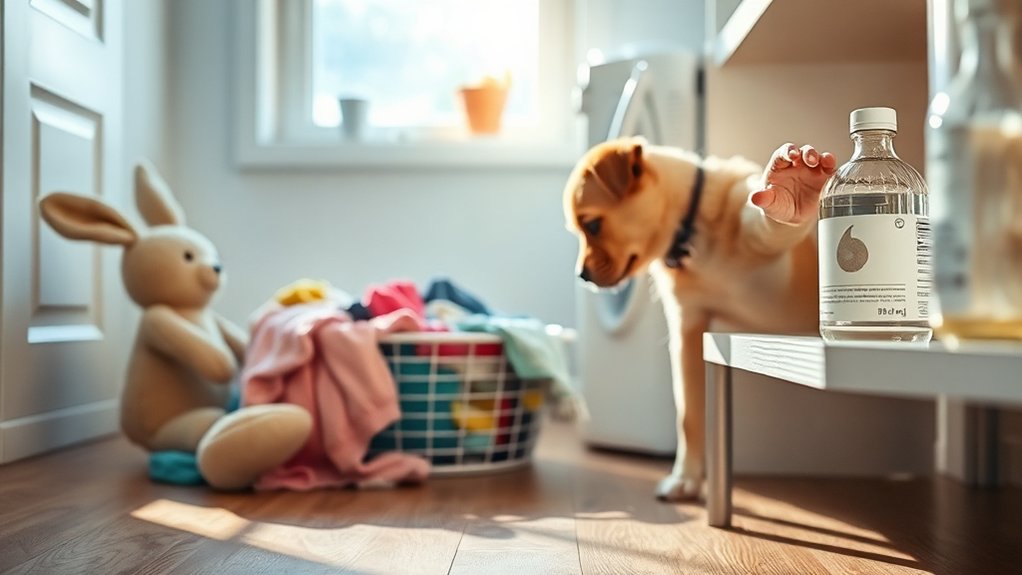
With careful storage and use, OxiClean Free can be used in homes with children and pets, but it isn’t harmless. Its powdered formula contains sodium percarbonate, which can irritate skin, eyes, and airways, and swallowing it may be dangerous.
Keep the container sealed and stored high up, behind a childproof latch, or in another locked area your children and pets can’t reach. Don’t leave scoops, spills, or dissolved solution unattended; pets may lick it, and young children may mistake powder for food.
Use the product only as directed, and keep children and animals out of the laundry area while you measure, mix, or store it.
Never transfer OxiClean Free into food or drink containers. Check the label for product-specific precautions, since formulas can vary.
What Should You Do After Exposure to OxiClean Free?
If OxiClean Free gets on you or someone else, act promptly: rinse exposed skin or eyes with plenty of water. Move to fresh air after inhaling dust, and don’t induce vomiting if it’s swallowed.
| Exposure | What to do |
|---|---|
| Skin | Remove contaminated clothing; rinse skin thoroughly. |
| Eyes | Flush gently with water for 15–20 minutes; remove contacts if easy. |
| Inhalation | Get fresh air; seek help for breathing trouble. |
| Swallowing | Rinse mouth; don’t give anything to an unconscious person. |
| Symptoms | Call Poison Control or a medical professional. |
If irritation, pain, coughing, or nausea persists or worsens, contact a healthcare professional promptly. In the United States, call Poison Control at 1-800-222-1222 for guidance. Elsewhere, contact your local poison center.
Keep the product label or package available so responders can identify its ingredients. Call emergency services for severe symptoms, trouble breathing, vision problems, or loss of consciousness. Don’t wait for symptoms to worsen before seeking urgent help.
How Should You Use and Store OxiClean Free Safely?
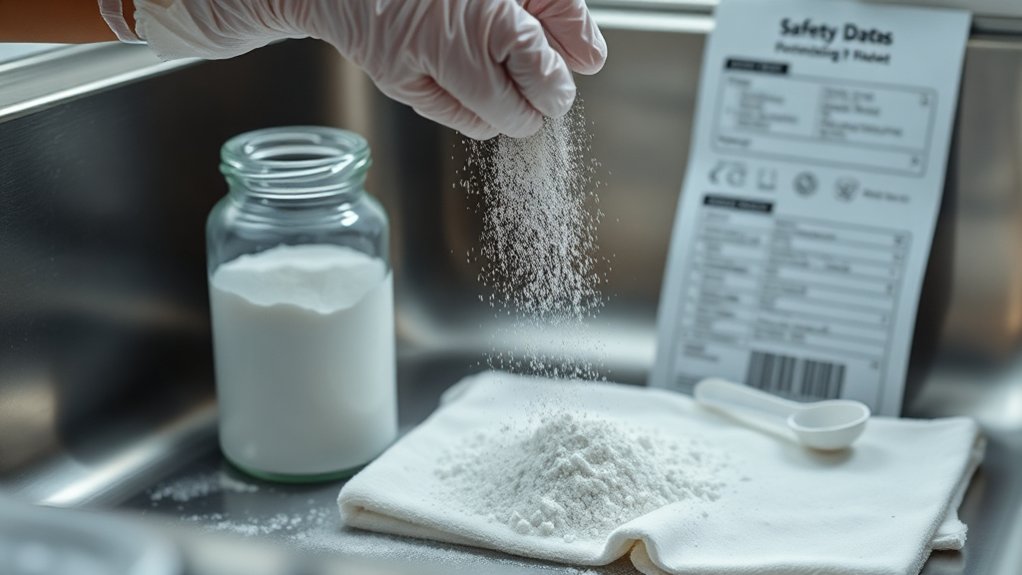
To use OxiClean Free safely, follow the package directions and wear gloves if you have sensitive skin. Measure the recommended amount rather than guessing, and dissolve the powder as directed before adding laundry.
Don’t mix it with other cleaners, especially products containing chlorine bleach or ammonia. Use it only for approved purposes, and test an inconspicuous area when treating fabrics to check for colorfastness.
Keep the powder out of your eyes and avoid breathing dust. Handle it gently and close the container promptly.
Store OxiClean Free in its original, tightly sealed container in a cool, dry place. Keep it away from moisture, heat, and direct sunlight, which can affect the product.
Place the container where children and pets can’t reach it, and don’t transfer the powder into food or drink containers.
Wash your hands after handling it, and wipe up spills carefully according to the label.
When Should You Choose a Gentler Cleaner?
Choose a gentler cleaner when you have sensitive skin, need to clean items that may be damaged by stronger products, or prefer to limit exposure to irritating ingredients. OxiClean Free lacks added fragrances and dyes, but its cleaning agents can still irritate some people. Check the label, test products on a hidden spot, and follow care instructions before cleaning.
Consider a milder option when you’re washing baby clothes or items that touch sensitive skin. Or when cleaning delicate fabrics, finishes, or surfaces. Also, if you manage asthma or sensitivity to airborne products, a gentler cleaner might be better.
Choose a gentler cleaner for baby clothes, sensitive skin, delicate materials, or sensitivities to airborne products.
You might want a formula with fewer potential irritants, too. And if you’re just cleaning small messes that don’t need a powerful stain remover, a gentler choice works well.
Choose products labeled for your specific material, and never assume “natural” means harmless. Wear gloves if needed, ventilate the area, and stop using a cleaner if irritation occurs. For persistent symptoms, contact a healthcare professional.
Frequently Asked Questions
Does Oxiclean Free Contain Bleach?
Yes, OxiClean Free contains an oxygen-based bleaching agent called sodium percarbonate, which releases hydrogen peroxide in water.
It doesn’t contain chlorine bleach, so you won’t find the same ingredient used in many traditional household bleaches.
You can use it to help remove stains and brighten laundry, but make sure to check the product label for directions and fabric warnings.
Don’t mix it with chlorine bleach or other cleaners, and always follow the package’s safety instructions.
Is Oxiclean Free Safe for Septic Systems?
Yes, OxiClean Free is generally considered safe for septic systems when you use it as directed.
One useful benchmark: the U.S. EPA recommends limiting household bleach to about ¾ cup per 1,000 gallons of septic-tank capacity per day.
OxiClean Free isn’t chlorine bleach, but that figure shows why moderation matters.
Don’t pour concentrated product into a drain, and avoid excessive use.
Follow the label, and check with your septic professional if you’re unsure.
Can Oxiclean Free Remove Stains From Delicate Fabrics?
Yes, you can use OxiClean Free on some delicate fabrics, but test first and follow the garment’s care label.
Dissolve the powder completely in cool water, then spot-test an inconspicuous area for color changes.
Avoid using it on wool, silk, leather, or fabrics labeled dry-clean-only.
Don’t soak delicate items unless the label permits it; instead, gently dab the stain and rinse thoroughly.
If you’re unsure, choose a fabric-specific stain remover.
Does Oxiclean Free Leave Residue on Laundry?
Yes, OxiClean Free can leave residue if you use too much, don’t dissolve it fully, or overload your washer.
Think of excess powder as a guest who won’t leave. Measure the amount listed on the package, dissolve it in water when directed, and give clothes enough room to rinse.
If you spot powder or feel stiffness after washing, run an extra rinse cycle.
Always follow your washer’s instructions and the product label.
Is Oxiclean Free Tested on Animals?
OxiClean Free is generally reported as not tested on animals, but you should verify the current policy before buying.
Church & Dwight, its manufacturer, says it doesn’t conduct animal testing on finished products unless law requires it. However, that statement doesn’t necessarily cover every ingredient or supplier.
OxiClean Free also isn’t widely recognized as certified cruelty-free by organizations such as Leaping Bunny.
Check the brand’s latest disclosures if cruelty-free purchasing matters to you.
Conclusion
OxiClean Free isn’t automatically non-toxic just because it lacks added fragrance and dyes. Used as directed, it can clean effectively, but its oxygen-based ingredients may still irritate your skin, eyes, or lungs. Concentrated powder deserves care around children and pets.
Picture a harmless-looking scoop turning into a cloud when mishandled: the label matters. Wear gloves if needed, avoid breathing dust, store it securely, and choose a gentler cleaner if you want fewer exposure concerns at home.